Before Asimov, there was Rokeya.
A Muslim feminist in colonial Bengal dreamt up “Ladyland” — a world where men are confined to the mardana and women run science, politics, and public life.
Issue 1 of Alter Magazine — The Secret History of Indian Science Fiction, by @gautambhatia88.
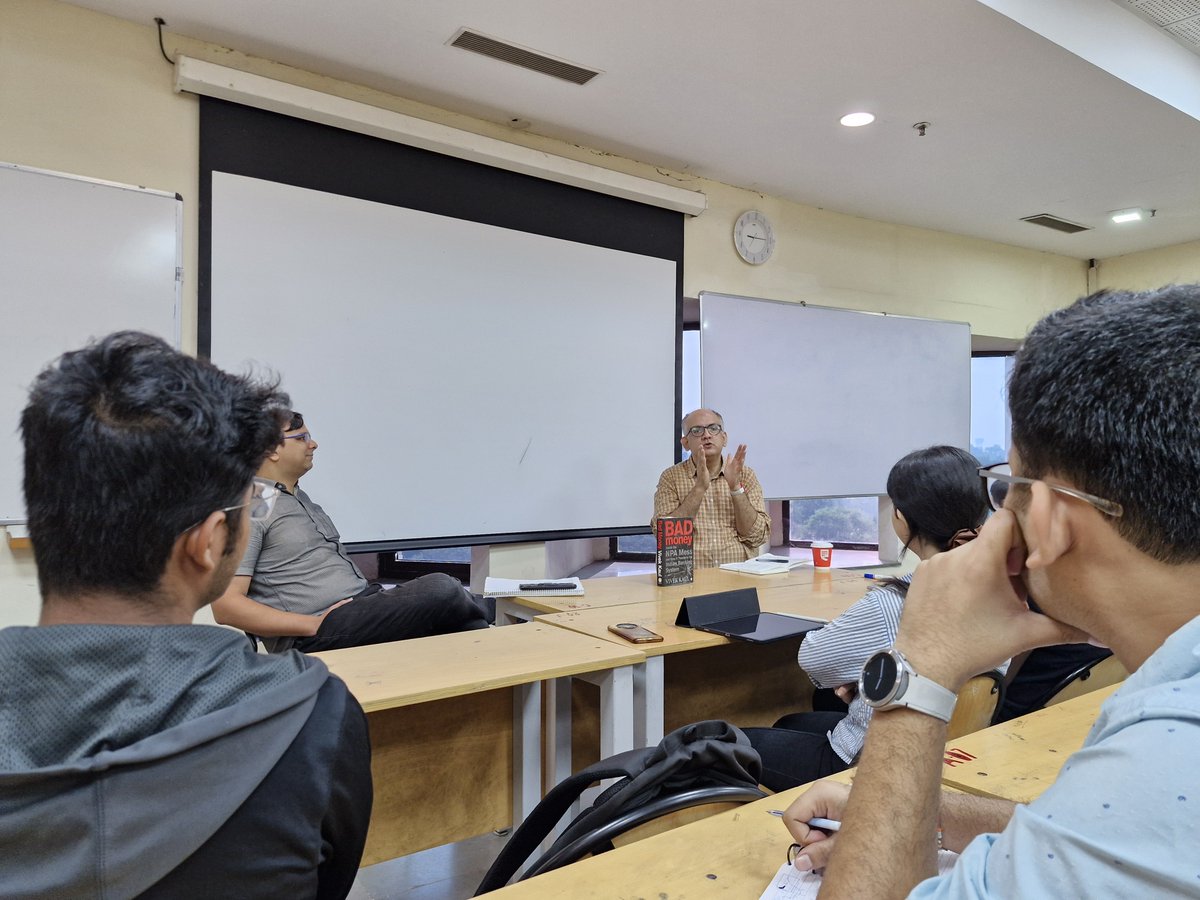
Really enjoyed speaking to the public policy students at IIT Delhi today. Great questions and a lively discussion.
Thank you Rohit Chandra @rohitreads for inviting me.
One of the most thoughtful biographies I've read in recent years. Full of engineering detail, insight from Visvesvaraya's life, and broader thinking on how this affect Indian engineering as a rising profession. Lovely review of a biographical origin story of Indian engineering.
The career of M. Visvesvaraya, arch-technocrat and statesman, throws much light on how India embraced the idea of modernisation through industrialisation. Aashique Iqbal reviews Aparajith Ramnath's book published by @PenguinIndia
https://t.co/i8rIB5wIgA
As much of North India melts amidst a heat wave, I interview @aditya_vpillai, a doctoral researcher at King’s College/ Visiting Fellow @SFC_India. We talk about Heat Action Plans and the politics of shade. Listen here! https://t.co/dRGtvTSq3p
@TMigrationStory
Close to 40 Gw of #RenewableEnergy projects tendered in 2023-24 have failed to find takers.
More than a year later, central agencies haven't been able to sign power sale agreements with state govts for these projects.
Meanwhile more tenders keep rolling..
https://t.co/FHM8RaHxqv
We stand on the shoulders of giants: @kuntala2 , @DrTongia , Dietmar Rothermund to mention a few. I hope you enjoy the piece, and as usual, comments and feedback are welcome and appreciated.
About a year and half ago, @Sandeeppaii , Suravee Nayak, Sree Harica and I started putting together a review article for WIRES Climate Change on India's complicated relationship with its coal industry.
We've done our best to summarize things, but perhaps more importantly, our references span some of the most important work which has been done in this space.
Chokepoint Capitalism by Rebecca Giblin and Cory Doctorow addresses this point in a slightly different space, the market for creative labour https://t.co/qRnsSPKBP2
Platforms may start with the intent of increasing competition, but we've seen many of them (including most of Big Tech) eventually move towards reducing competition and trying to undermine the very companies who used their platform to provide value.
This is not creative destruction, it's bad faith extraction of value by loss-making, VC driven platforms.
This piece by Thomas Fenn lays out this point beautifully for restaurants and their relationship with food delivery platforms in India.
https://t.co/mzzioK8q9v
📢📢ANNOUNCEMENT! Episode 4 of "L is for Labour" is just out! Part of our video explainer series on the world of work in India, this episode takes a close look at Street Vending. Link: https://t.co/ZTa9L0068i
@namrataraju is back with her engaging video explainer series, L is for Labour. In this episode she unpacks the ingredients of street vending work in India, examining issues like informality and contestations over public spaces. Watch here: https://t.co/1jmjJF3e2o
One of my reflections on building a Public Policy career is to get as much work experience as possible. Even the finest schools cannot capture the complex mesh of interests, people, power dynamics, incentives and voice. You have to be in places where you are able to learn and absorb this environment. Policy issues are too dynamic, information is becoming cheaper by the day due to tech advances. The one thing that AI cannot do at least for now is "work the system". Too many Indian students are in a hurry to commit themselves to a post graduate degree, but Public Policy is definitely one field where if you go for a degree just after undergrad, you are doing yourself a big disservice. Atleast 3-4 years perhaps should be even mandatory for admission to a policy school. It helps you have a clearer vision of where you see yourself in this (unstructured) space and what you need to get there.
Delighted to close the year with the publication of my book "Lessons in State Capacity from Delhi's Schools". This book is an effort to bring the voices of the frontline state - block officers, teachers, health workers - into the debate on state capacity in India (1/10) 🧵