The next leg of #Ethereum is building fast!
To celebrate I'm giving away 0.05 ETH ($180.00)
To enter:
🔹Follow me
🔹Tag 3 crypto friends
🔹Comment your Bitcoin & Ethereum price targets for Q1 2026
Let’s see who’s got the best crystal ball
#Crypto#ETH#BTC#Giveaway#investing
Emilie Choi says TradFi embracing crypto has made it boring. Some OG crypto people are "devastated" by that.
The Coinbase COO is bullish on crypto as infrastructure: 24/7, global, no middleman, and no one else "gets to judge your financial transactions." There's "so much appealing about updating that system."
"TradFi is really just embracing crypto infrastructure," she tells Turner Novak on @ThePeelPod. That's why it feels boring now. "But it's obviously much needed."
FT @emiliemc@TurnerNovak@ThePeelPod
#Ethereum hâlâ çok güçlü.
Bu size saçma gelebilir ama geçmişe dönüp baktığınızda anlayacaksınız.
$BTC karşısında 2017-18 yıllarından değil yakın zaman 2025 yılından bahsediyorum.
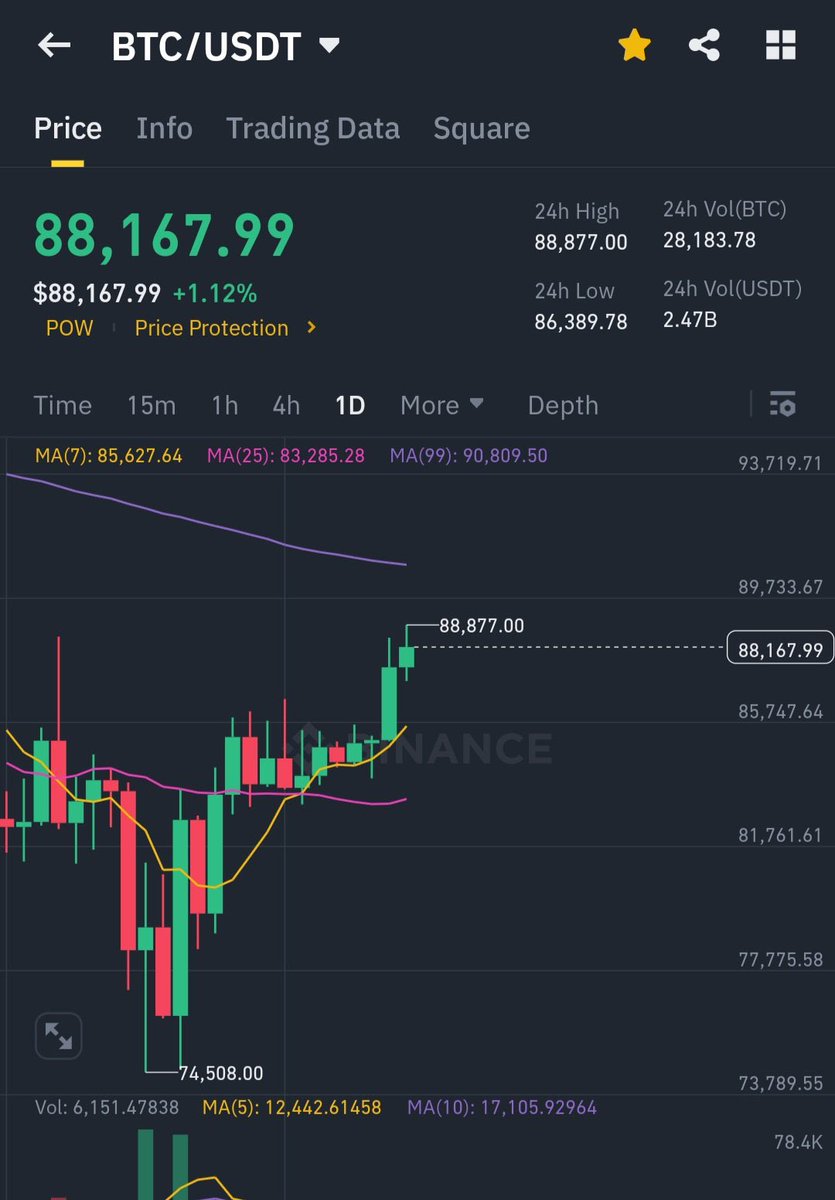
Btc 88K$ seviyesinde iken Eth 1580$ seviyesinde idi..
Şuanda 67K $ iken $ETH 2000$ seviyelerinde
A $260 BILLION ASSET MANAGER IS USING ETHEREUM AS AN OFFICIAL LEGAL REGISTER
“We've now sort of promoted Ethereum to be an official source of records for ownership of regulated funds in the UK.”
Ian Wallis of Baillie Gifford, founded in 1908, explains the milestone achieved alongside BNY Mellon and UK regulators.
🔹 No separate vehicle
🔹 No off-chain ownership register
🔹 The token itself represents legal ownership
With those on-chain records extending into Hong Kong and Singapore, public Ethereum is becoming core infrastructure for regulated global capital markets.
Ethereum generates about $5.7 trillion of value for the economy built on it.
The market prices ETH at $246 billion. That’s 4.3% of it.
Today I’m publishing the second edition of my annual Ethereum-as-infrastructure valuation report. Here’s the essence of it.
1/ Ethereum is a public good, so value it like one
Nobody can buy shares in TCP/IP, yet the Internet is the most valuable infrastructure ever built. Its protocols charge almost nothing. Their value shows up everywhere except in their own revenues.
Ethereum is in the same position. Valuing it by its fees, or comparing it to a company, misses most of what it does. Last year I argued it should be valued the way we value the Internet: through what it enables, not what it charges.
2/ Three buckets, like the Internet
The Internet’s value comes in three parts: the companies built on it, the economic activity it carries, and the surplus people get for free. Ethereum maps onto the same three:
a) Ecosystem value: the assets and companies built on Ethereum, at market prices. $127B.
b) Flow value: the economic activity Ethereum settles, mainly stablecoins, plus trading, lending and tokenized assets. $70T a year of dependent flows, worth $3.0T.
c) Trust surplus: what users would pay for trust in the traditional system, minus what they pay on Ethereum. Custody, reconciliation, settlement delays, counterparty risk. Worth $2.6T.
Add a small credit for the EVM standard used by other chains, and Ethereum’s system value comes to about $5.7 trillion.
3/ Every rate is anchored to something real
I didn’t want numbers that look picked to land somewhere. So:
Ethereum is credited by using Visa’s take on the payments it carries, about 0.3%. Visa is the richest settlement network on earth, so that’s a ceiling, not an average.
The trust cost removed is 25 basis points, weighted toward wholesale settlement rather than expensive retail payments.
Annual values are capitalized at 7%, assuming Ethereum’s activity never grows from today. For a network that has grown every year, that’s deliberately conservative.
4/ ETH’s market cap is the benchmark, not part of the total
This is the biggest change from last year. Counting ETH inside the total would double count. So the model compares what Ethereum enables with what the market pays for ETH.
For every $1 the market pays for ETH, Ethereum generates about $23 of value for the ecosystem built on it.
5/ But ETH shouldn’t be worth all of it
Part of that value belongs to others: L2 tokens, DeFi protocols, shares in Robinhood, Circle and Coinbase, a stake in Tether. And public goods never capture everything they enable. That’s the whole point of them.
So the real question is: what share can ETH capture?
The Internet gives us an answer. The companies built on it are worth roughly 10–20% of the economic value it creates. Apply the midpoint, 15%, to Ethereum, and ETH would be worth about $7,000. That’s 3.5× today’s price.
Today the market credits ETH with less than 5%. Under half the low end of the Internet’s range.
6/ The number that’s hardest to argue with
Forget the capitalization multiple entirely. Each year, Ethereum enables about $389 billion of value. That’s 1.6× ETH’s entire market cap.
Ethereum enables more value every year than the market currently pays for ETH in total.
7/ What’s new: a live model you can challenge
This year the report isn’t static. Every figure comes from a live dashboard that refreshes hourly from public sources. You can inspect every input and formula, and use simulation mode to change the assumptions.
I wanted a model anyone could check and challenge. If you disagree with an assumption, change it and see what happens. https://t.co/Qi2z7fjrDo
8/ What it isn’t
It’s not a price target, and it’s not a forecast. It’s a snapshot of today, measuring the gap between what Ethereum enables and what ETH is credited with. Either ETH’s capture of its own ecosystem rises toward Internet-like levels, or the market is pricing in that it never will.
That’s the debate this framework makes explicit.
The Internet reorganized information. Ethereum is reorganizing trust.
Full report: https://t.co/mwmJ5nuc2Z
PDF: https://t.co/YRqhyzd46F
Live model: https://t.co/Qi2z7fjrDo
An expanded version will appear in my upcoming book, TRUSTSHIFT: Ethereum and the Reinvention of Trust. https://t.co/5zfc94ppeP
@Matt_Hougan Sounds like the ideology you had that was very steadfast and calculated now has shifted to a “i don’t know how or when but eventually I think we will be good”
ETHEREUM HOSTS $154 BILLION. WHO ACTUALLY NEEDS TO OWN ETH?
Ethereum already hosts $138.7 billion in stablecoins and $15.2 billion in tokenized real-world assets.
But every dollar moving onto Ethereum does not create another dollar of demand for ETH.
This is why Vitalik's latest argument is so important.
The real opportunity is institutions moving beyond using Ethereum to actually holding ETH as collateral, reserve capital and a productive asset.
Tom Lee @fundstrat is already positioning BitMine for that future, with 6.07 million ETH representing 4.97% of the supply.
Here's the distinction investors need to understand:
Tokenization creates demand for Ethereum's infrastructure.
Institutional demand to own ETH is what could translate that adoption into lasting value for the token.
The metric worth watching isn't just how many trillions move onchain.
It's how much ETH the financial system decides it needs to own.