We will conduct a serious review of NASA material in search of UAPs and anomalies (and I'll be looking for transients, too 😉).
The effort is led by former NASA Associate Administrator for Space Policy and Partnerships Mr. Mike Gold and is being carried out together with Disclosure Foundation Executive Director Jordan Flowers, theoretical physicist Dr. Maaneli Derakhshani, aerospace engineer Dr. Travis Taylor, former Under Secretary for Science and Technology at the U.S. Department of Homeland Security Dr. Reggie Brothers, clinical psychologist Dr. Stephen Bruehl, and myself.
Looking forward to uncovering anomalies with this incredible team.
See:
https://t.co/Xay05z0czB
This is HUGE news.
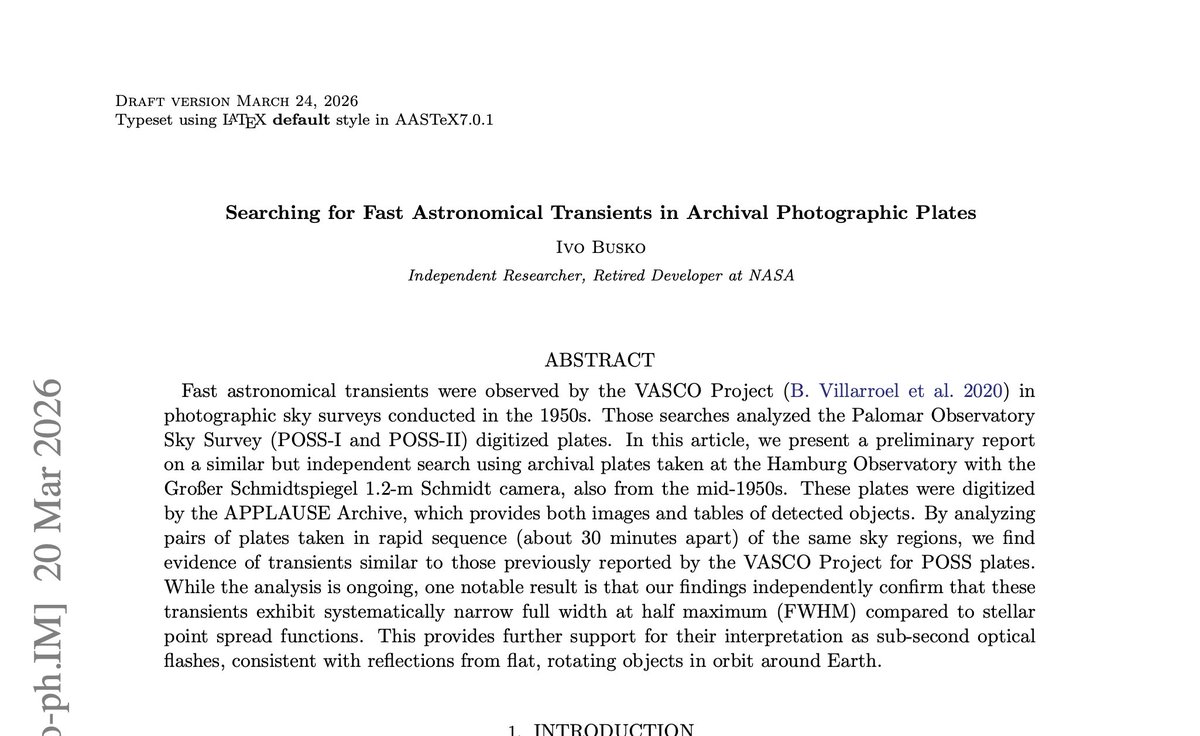
PhD astronomer and former NASA engineer Ivo Busko has single-handedly driven a final nail into the coffin of the contamination-based hypotheses (e.g. plate defects and cosmic rays) proposed to explain the VASCO transients. He did so using one of the most creative approaches in astronomy I have ever seen: by analysing pre-Sputnik photographic plates from a German telescope known to suffer from severe optical distortions (aberrations), he demonstrated that the transients appear on these plates and exhibit the same optical distortions as the stars themselves. They are slightly narrower and sharper than the stars, consistent with brief flashes.
This is a crucial result. It shows that the transient light passed through the telescope optics, meaning the transients originate from real objects producing light, rather than from plate defects or cosmic-ray contamination that hit the plate. Dr Busko has also shown that the transients cluster spatially and are associated with periods close to nuclear tests. See the example of the triple transient with optical comas.
This is the greatest gift. Congratulations, Ivo.
I'm happy beyond belief.
Read Ivo Busko's paper: https://t.co/6CT58wnsKJ
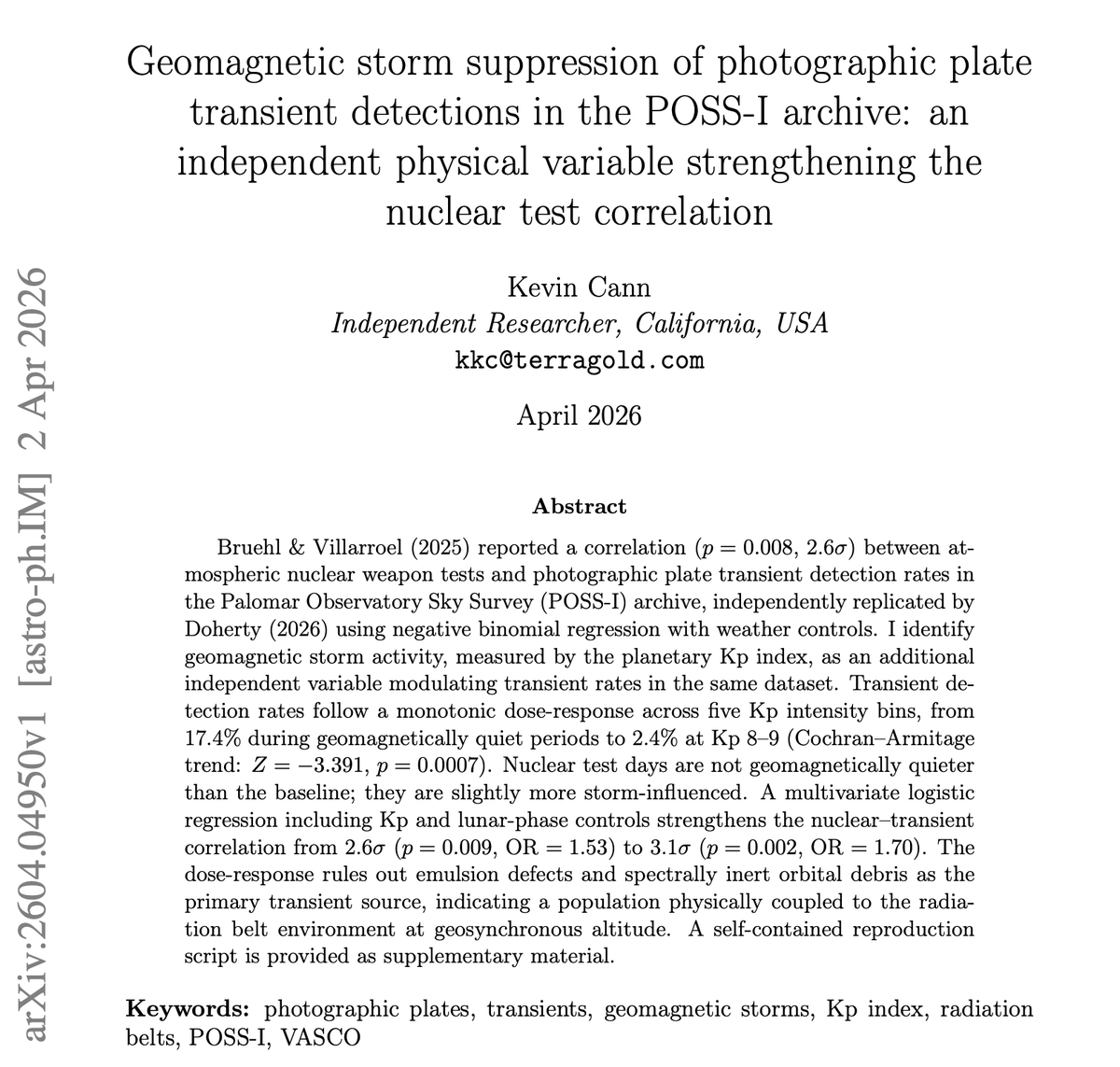
Dear @ProfAviLoeb . I very much enjoyed reading your text. I appreciate the respectful critique and the ideas you bring to the discussion. I would just like to point out that neither the deficit in the Earth's shadow at 42,000 km altitude nor Kevin Cann's anticorrelation of transient detections with the geomagnetic storm index Kp can be explained by the cosmic-ray hypothesis for the transients. If cosmic rays were responsible, we would expect to see a correlation, not an anticorrelation. Nevertheless, please keep the good ideas coming!
https://t.co/ArP81jTcQS
A historic moment. I’m genuinely very happy with this first release of UFO-related reports from the White House. The Apollo 17 report describes flashes strikingly similar to those detected by the VASCO team -- transient flashes we believe originate from flat, highly reflective and tumbling objects in Earth orbit. Large numbers of them. I feel deep gratitude to the Sol Foundation for supporting me and my team. We will continue doing all we can to bring light to these mysterious objects.
The mystery deepens. An independent researcher has uncovered an unexpected anticorrelation between VASCO transient detections and geomagnetic storm activity. This finding seriously challenges explanations based on cosmic rays or plate defects, even without considering the deficit of transients in Earth’s shadow.
Read the preprint: https://t.co/WmELOQFSgk
I’m grateful to independent researchers who have the courage and integrity to examine this topic seriously and in good faith.
What a lovely surprise this morning! ☀️Independent detections of similar transients in European plate archives — exactly the kind of cross-validation this field needs. So it’s not just Palomar anymore.
The study was carried out by a retired NASA scientist.
This is how a signal begins to emerge from the noise.
https://t.co/5Gq8HLm0u5
Scientific stigma should not decide what research is allowed to circulate among scientists. Two published and peer-reviewed papers from our team—on transients, UFOs, nukes, and the Earth-shadow deficit—remain blocked on arXiv. I'm incredibly grateful to colleagues standing up for open science, and to the Disclosure Foundation, Christopher Mellon and his team for helping make this visible. 🙏 @jordanflowers@GregoryScaduto
New paper from VASCO :)
https://t.co/vymXrwTW4E
We have posted a response on arXiv to the critique by Watters et al. (2026).
Their analysis relies on a heterogeneous dataset reduced by 95% — a small sample lacking essential time and date information and originally constructed for a different scientific purpose (the search for a true vanishing star). Our reply addresses the resulting loss of statistical power and the methodological consequences.
The transients remain on the plate.
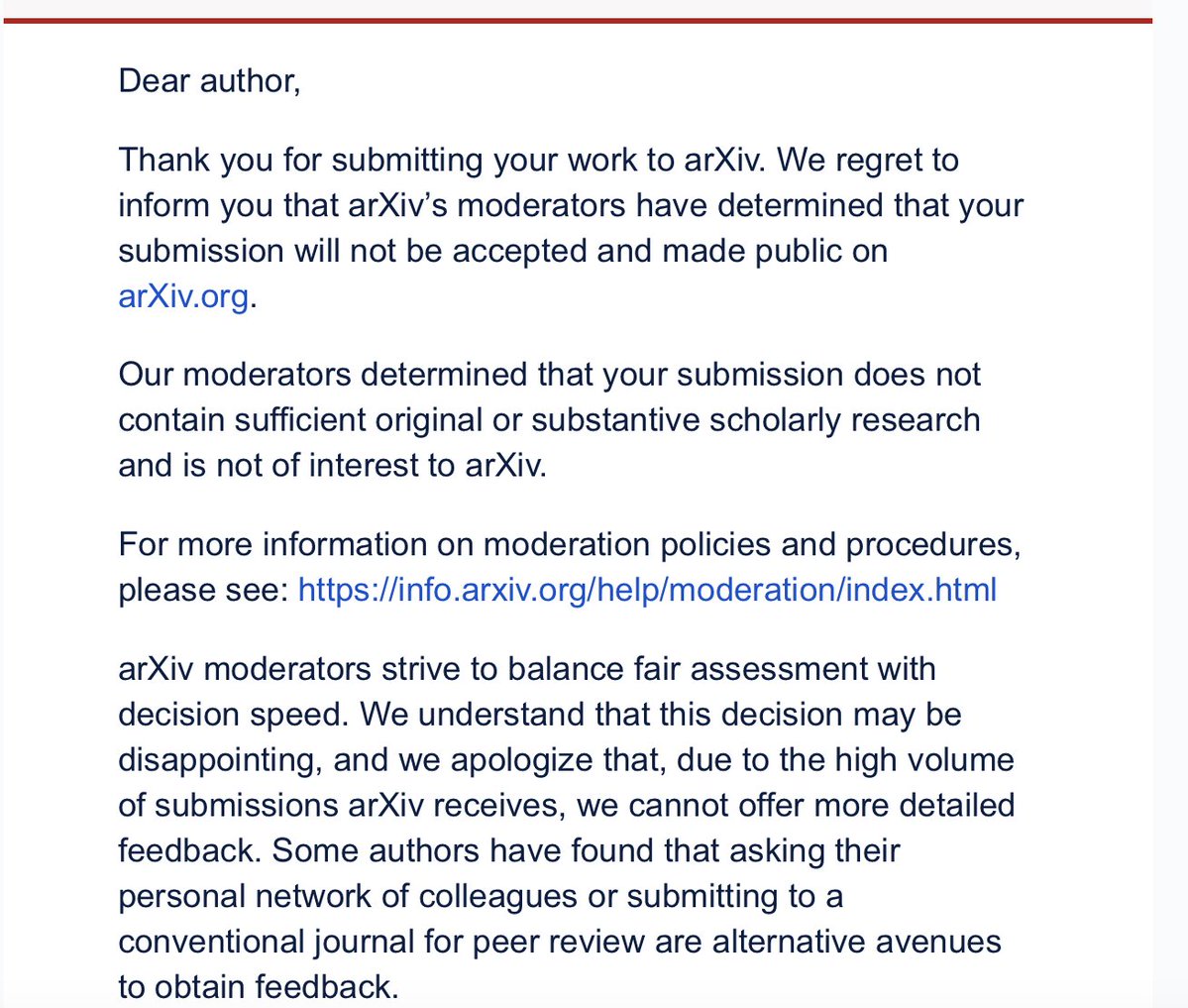
Our peer-reviewed and published papers on UAPs were blocked by arXiv. They claim it’s not of interest or original enough. This shows the stigma is still strong, and gatekeepers are stopping the free flow of new science. It’s unacceptable that this is allowed.
arXiv is where physicists and astronomers share preprints — if a paper isn’t there, it almost doesn’t exist.
It serves as the central hub for open scientific exchange, where unpublished, newly accepted, and even rejected manuscripts are shared so that other researchers can read, test, and build upon the work. It’s how ideas circulate rapidly and transparently — long before (and sometimes regardless of) formal publication. Now, both of our accepted and peer-reviewed papers — in PASP and Scientific Reports — have been rejected from arXiv server: in one case I was told to replace an older work; in the other, that the research was “not of interest” to arXiv.
Empirical results, peer review, and publication in high-quality journals are no longer enough to satisfy the gatekeepers. Scientists are being prevented from reading new results. The UFO stigma remains strong. @arxiv@Arxiv_Daily@ArXiv_articles@Cornell
Wonderful news. 🌟💫✨
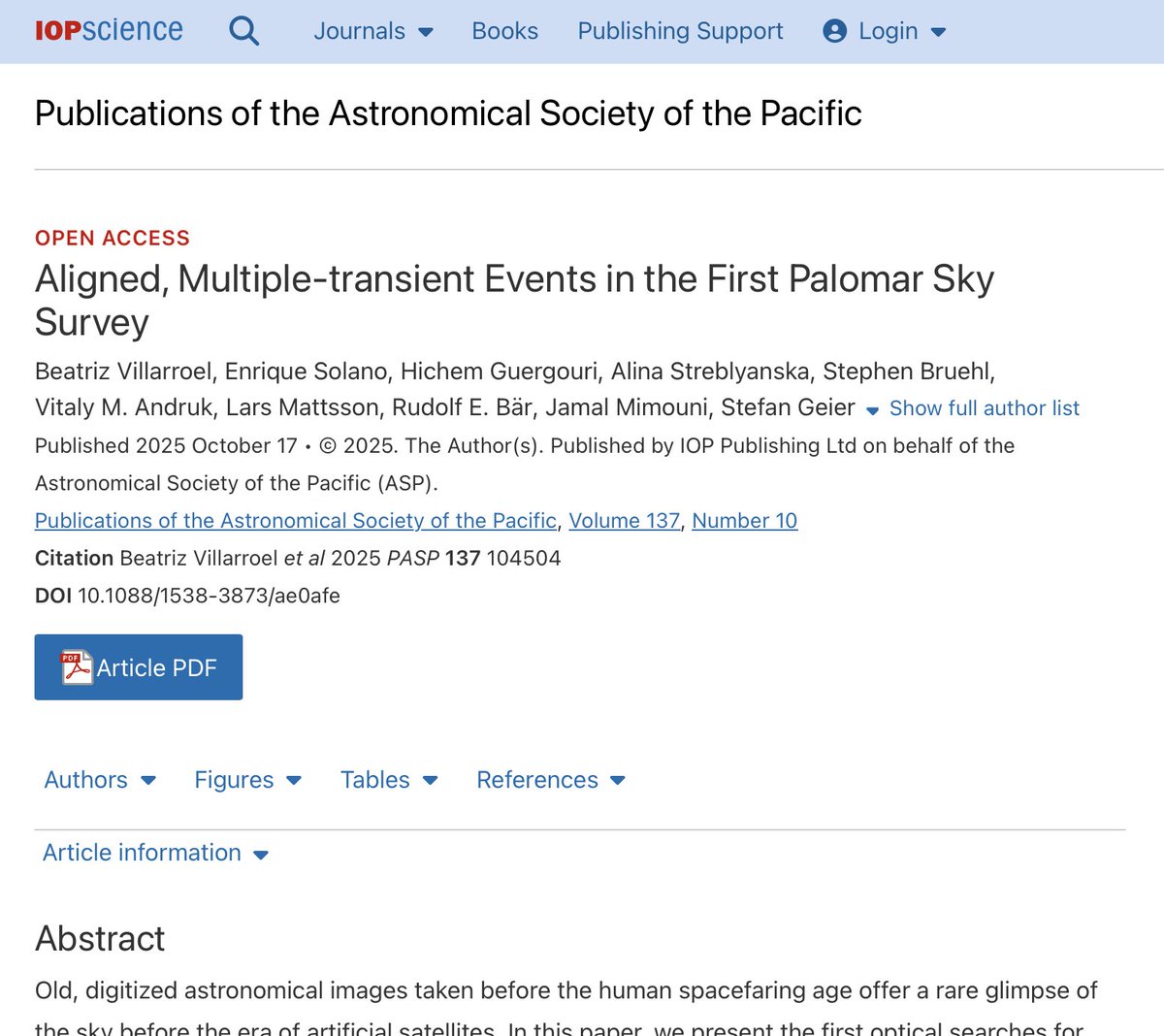
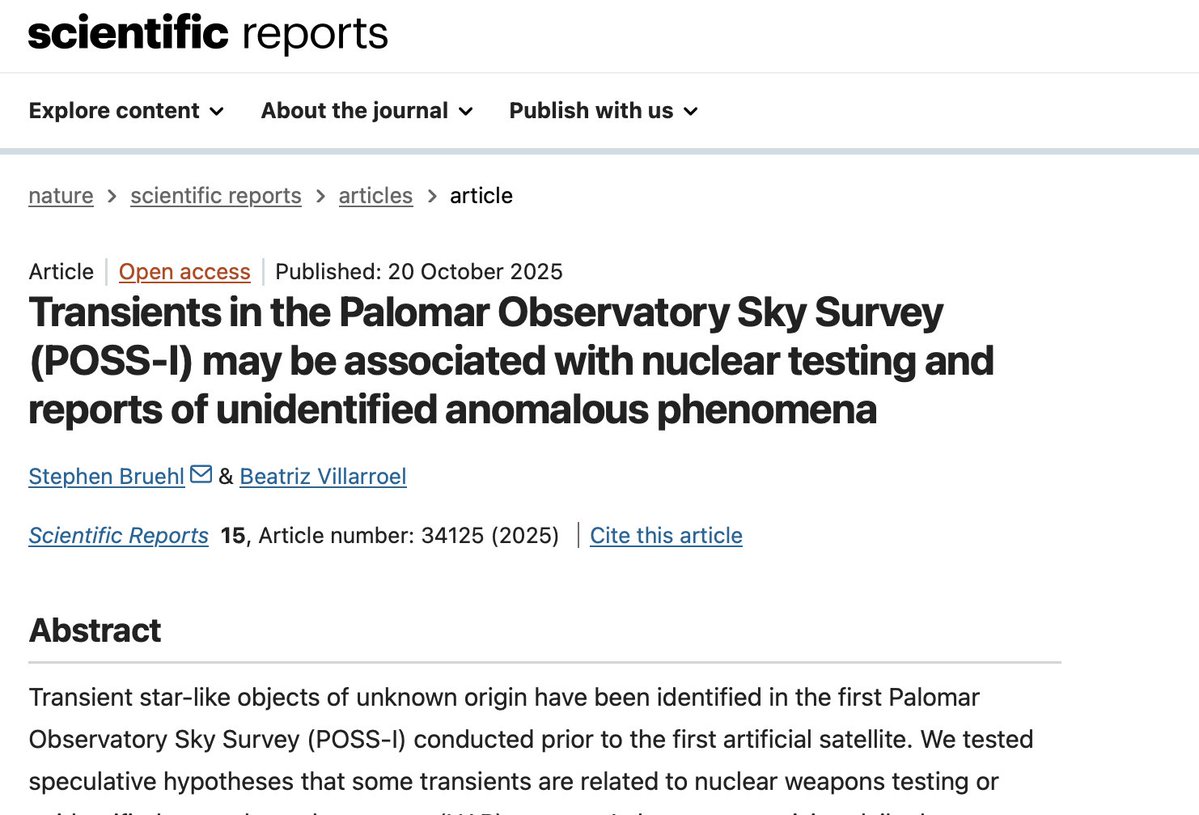
Our two new VASCO papers are now peer-reviewed, accepted and published — and they reveal some extraordinary things:
- We find statistically significant correlations between short-lived transients on pre-Sputnik sky plates, UFO sightings, and above-ground nuclear tests.
- We show a 22σ deficit of transients inside Earth’s shadow — consistent with a fraction of these events originating from solar reflections from flat, highly reflective surfaces in orbit before the human Space Age began.
Together with our earlier MNRAS paper, these results form a triptych of new methods to investigate UAP using astronomical data. Three independent high-level journals — and three independent peer review processes.
These latest results raise a bold question.
And yes… you know which.
Press release (Stockholm University): https://t.co/zr2nvFUs8b
Scientific Reports: https://t.co/GE7TDo4HyN
PASP: https://t.co/6vnbOIJGqR
Some followers may be tired of seeing me dealing with such accounts. But seems like tons of people already believe that Silent Hill 2's story is abt rape. If no one points out the misidentification, it will spread further more and become an accomplished fact eventually.