I just released a Claude Skills package for my Clean Architecture template, and it's free.
Here's why I built it. Every AI coding assistant I've used has the same problem: ask it to add a feature and you get code that works but doesn't look like yours. Different folder structure, exceptions where I use results, MediatR where I don't, tests that mock everything.
So I taught Claude Code my conventions. The template now ships with agent skills: markdown files that describe exactly how I build features. Vertical slices, custom command and query handlers, Result-based error handling, minimal API endpoints, and the tests to go with them.
Now I type "/add-feature snooze a todo until a given date" and get the command, the validator, the handler with an ownership check and a domain event, the endpoint, and the tests. Built and verified, in the same shape as every other feature in the solution.
Grab the template and the skills come with it: https://t.co/M5JHepMeRp
Most MCP tutorials stop at building a server, connecting to Claude Desktop, screenshot the chat, and done.
But that doesn't teach you how to ship something real.
In this tutorial, Balajee teaches you how to build an MCP server in Python, containerize it with Docker, & connect it to Claude Code from the terminal.
https://t.co/yMR2zgJEUA
With the emergence of AI agents, devs are adjusting how they build applications.
And in this in-depth guide, @atuohaa walks you through using these tools to build a Flutter app.
You'll use tools like Antigravity and Stitch, learn about how skills work, and more.
https://t.co/cWlA3gpVRH
I thought I knew PostgreSQL pretty well until I came across this.
PostgreSQL can replace way more than just your database.
- Queues.
- Cron jobs.
- Redis.
- MongoDB.
- Vector DBs.
- Audit logs.
- Even parts of Kafka.
I'm not saying you should replace every tool in your stack with Postgres.
But I do think most startups introduce Redis, Kafka, MongoDB and a dozen other services much earlier than they actually need them.
Definitely worth reading if you're building backend systems. It made me question a lot of assumptions I had.
https://t.co/MWm4mW58M9
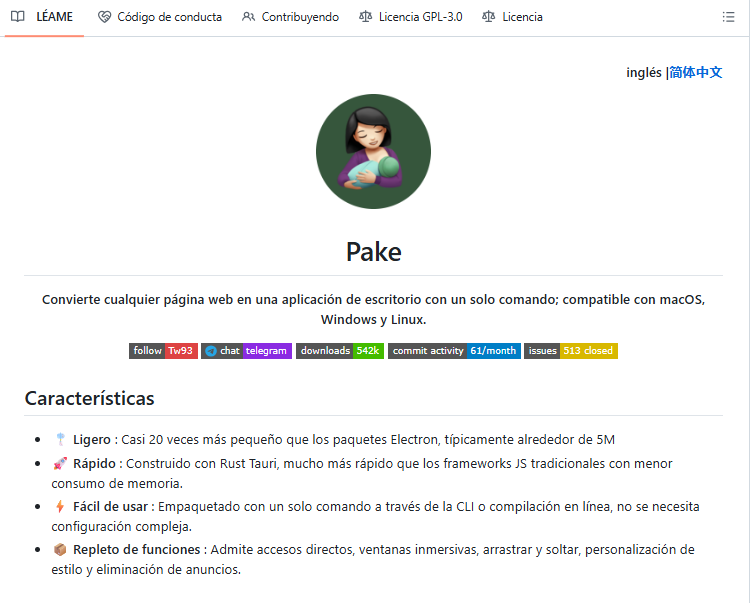
UN DESARROLLADOR SE HARTÓ DE QUE SUS APPS DE ESCRITORIO LE DEVORASEN LA RAM Y CREÓ PAKE
Electron es el truco sucio detrás de casi toda app de escritorio moderna: meten Chrome entero dentro. Por eso Slack pesa 524 MB y Discord 265. No es la app, es el navegador que llevan encima.
→ Pake usa Rust + Tauri y el WebView nativo del sistema
→ Convierte cualquier web en app de escritorio con un solo comando
→ Slack pasa de 524 MB a 8 MB, Discord de 265 MB a 9 MB
→ Builds listos para ChatGPT, Grok, Gemini, YouTube y más
→ 51k stars en GitHub, open source, gratis
50 veces menos memoria. Sin Chrome escondido dentro. Sin pagar nada.
Aquí te explico cómo funciona 👇
FlashDB is an ultra-lightweight embedded database designed for IoT products, offering key-value and time series storage with flash-specific optimizations for reliability and longevity.
- Supports both key-value and time series database modes
- Wear leveling and power-off protection for extended flash life
- RAM usage near zero, very small footprint
- Insert and query performance under 4 ms per operation
Someone built Kubernetes that runs entirely in your browser.
This might be the easiest way to learn Kubernetes.
- No Docker.
- No Minikube.
- No Kind.
- No EKS.
- No installation.
Just open a webpage and start exploring Pods, Deployments, ReplicaSets, Nodes, scheduling, networking, and more.
The engineering behind it is incredible.
Kubernetes is written in Go, but instead of compiling it to the browser, the developer rewrote major Kubernetes components in TypeScript so they could run natively inside the browser.
This is one of the best examples of using AI I've seen.
AI helped port thousands of lines of Kubernetes code, while the developer manually reviewed everything and validated it with extensive tests to make sure it behaves like a real cluster.
⚠️ It's not for running production workloads.
It's built for learning, teaching, experimenting, and preparing for DevOps interviews.
Imagine onboarding new engineers or teaching Kubernetes without asking everyone to spend an hour installing Docker, configuring Minikube, or creating an EKS cluster.
I genuinely think projects like this will change how we learn infrastructure.
Interactive labs > Static documentation.
Blog Post: https://t.co/57kzSGIkyb
Every time I’ve regretted an architectural decision, it wasn’t because the design was “wrong”.
It was because I optimized for future problems that never came.
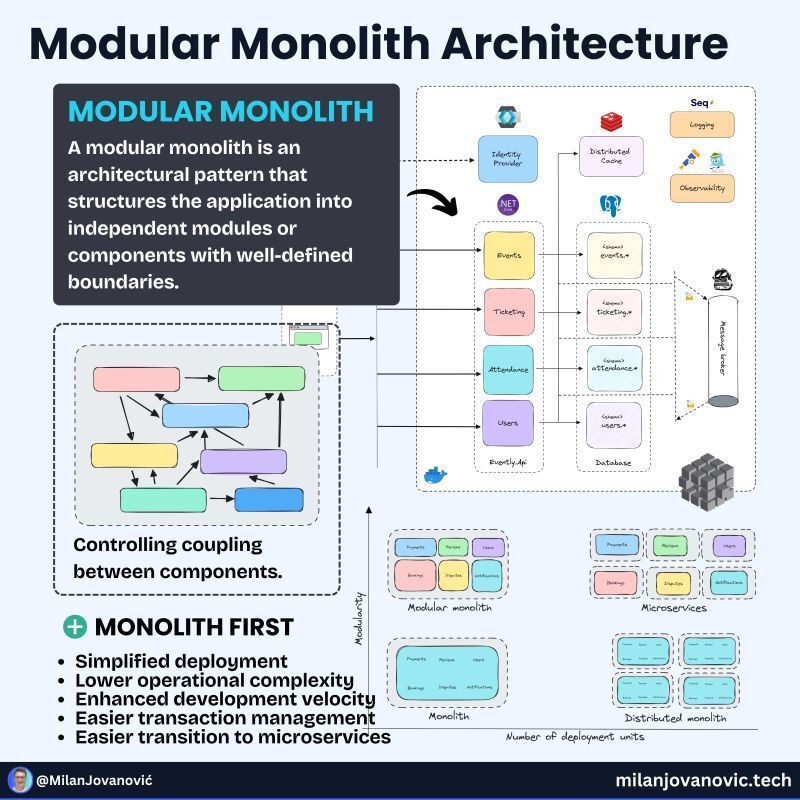
This is why I recommend starting with a modular monolith architecture.
- Fewer moving parts to begin with
- Simpler to create, deploy, and manage
- Better functionality and stability
- Cost-effective
Each module could be an independent microservice in the future.
This approach gives you high optionality.
What do you think about the "monolith first" approach?
Si no puedes ir al State of the Map Colombia 2026 en Bogotá, vamos a trasmitirlo en vivo por:
https://t.co/LqBD16hZtT
Toda la información en:
https://t.co/EZUIZj4mSl
3 y 4 de julio en la UNAL
#OSMColombia#OpenStreetMap#SotMCol2026