One of the stock market's most important warning signs is getting louder.
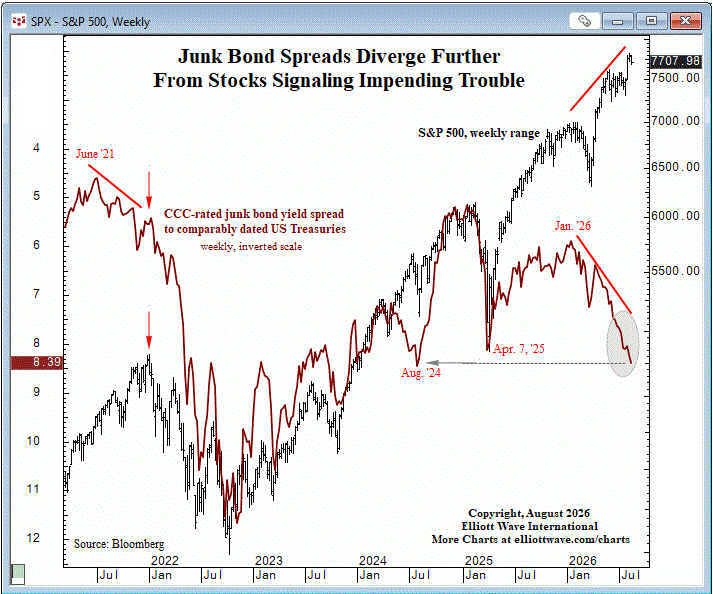
Junk bond spreads and equities usually move together.
When they don't, pay attention.
CCC-rated spreads have been widening for eight months while the S&P 500 has continued climbing to new highs.
A similar divergence preceded the 2022 market peak.
Credit markets may be flashing a warning that stock market bulls can't afford to ignore.
See our analysis and outlook for stocks, gold & silver, forex, interest rates and more: https://t.co/BDR0ZpxGc9
The most important line in the US economy just went flat, and it stays flat for 40 years.
The US population under 65, the part that works, stopped growing about a decade ago. The Census Bureau projects it holds roughly flat through 2065, then declines.
This is the anchor under everything. No growth in the working-age population means a lower speed limit for the economy, a breakeven pace of job growth near zero, and slow-and-flat as the base case for jobs, housing, and rates. Demographics is destiny, and destiny just went sideways.
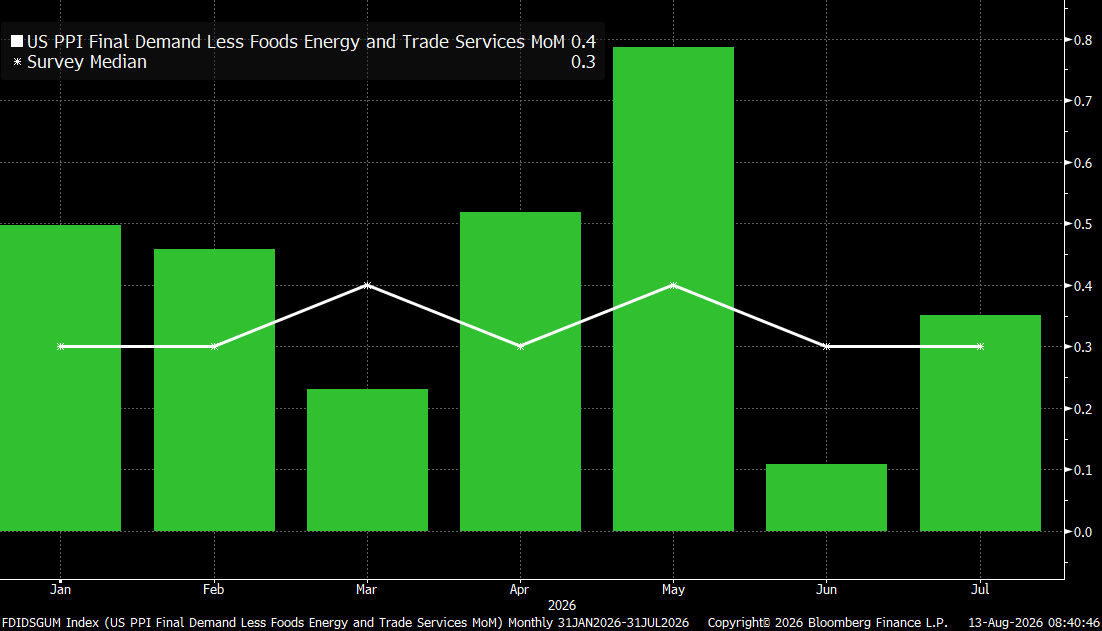
Super Core #PPI has now come in higher than consensus expectations in 5 of 7 months during 2026. Not sure what #economists want to admit they are simply too optimistic re #inflation.
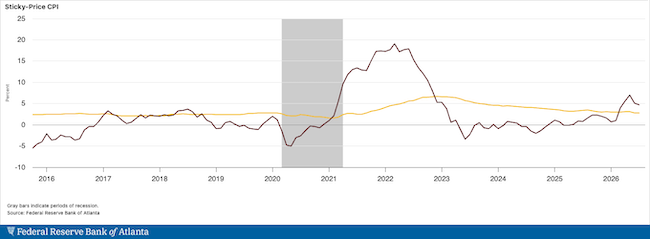
The Atlanta Fed's sticky-price consumer price index (CPI)—a weighted basket of items that change price relatively slowly—rose 3.5% (on an annualized basis) in July, following a 0.8% increase in June. On a year-over-year basis, the series is up 2.8%.
On a core basis (excluding food and energy), the sticky-price index rose 3.9% (annualized) in July, and its 12-month percent change was 2.2%.
The flexible cut of the CPI—a weighted basket of items that change price relatively frequently—decreased 6.0% (annualized) in July and on a year-over-year basis, the series is up 4.7%. See more: https://t.co/IfJf3RQdfT
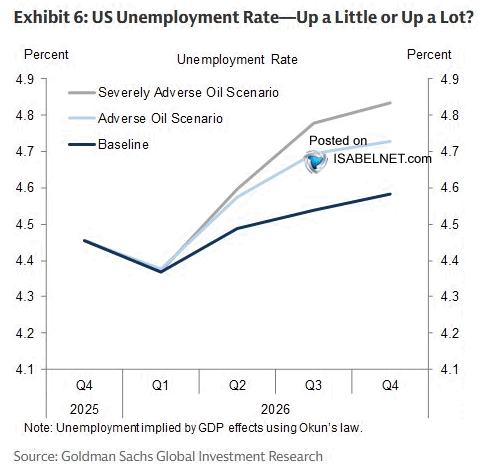
Oil price spike to impact growth and inflation. Treasury bond market focus likely to eventually flip to the growth slowdown. Credit markets under some pressure.
🇺🇸 Unemployment
Softer growth is set to nudge joblessness higher, with US unemployment seen near 4.6% by year‑end and closer to 4.9% under a harsher oil shock scenario
👉 https://t.co/blMxcoFA78
h/t @GoldmanSachs#labor#unemployment#jobs#GDP
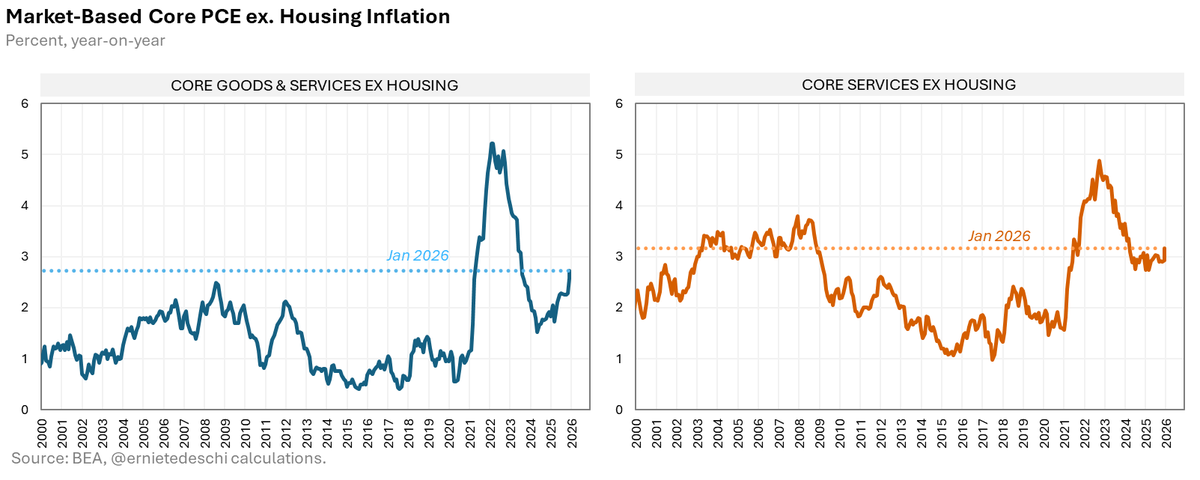
Services inflation breaking bad. PCE core services inflation excluding housing & financial imputations (right) finally broke out of the 2.7-3% range it's been in for two years, but to the upside, to 3.2%. Adding in core goods (left) yields 2.7% & an even-sharper recent breakout.
The K-shaped economy is the most consensus idea in the world. (Often with not a lot of critical analysis.) If the top of the K breaks or - more likely - the bottom recovers, US macro is gonna look v different to the Goldilocks view everyone holds right now
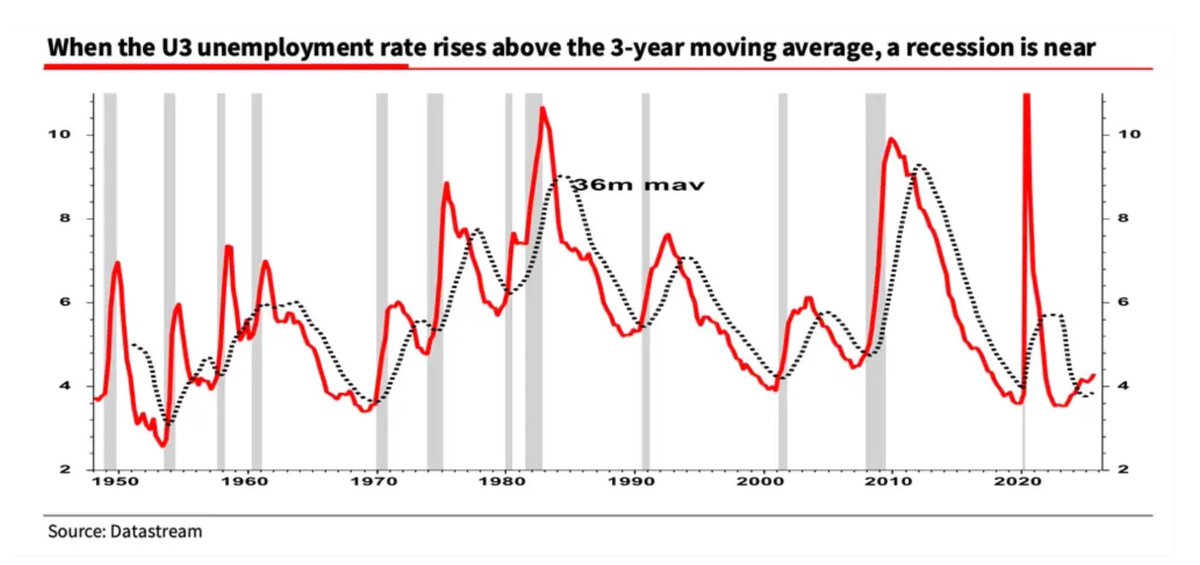
No-one is predicting a US recession in 2026 despite this simple indicator having a 100% track record of success. This time may well be different, but you've got to have a bloody good reason to ignore this. Are you feeling confident?
🚢 One of the clearest visuals on the potential impact of tariffs — daily inbound container vessel counts to the U.S. over the past year. (📈 Source: IMO & WSL Shipping)
EXPERTS WARN THE U.S. LACKS CAPACITY TO REPLACE 800,000 TONS OF IMPORTED SEMI-FINISHED COPPER ANNUALLY. THE TARIFFS RISK SUPPLY SHOCKS, HIGHER COSTS, AND CRITICAL INFRASTRUCTURE DELAYS.
🇺🇸Job
US job growth below 1.2% has historically signaled recession risk since 1960. In 2025, growth is under this threshold, yet the Fed considers the labor market healthy and sees no immediate need for further intervention
👉https://t.co/blMxcoFA78
@dailychartbook@jimwpaulsen
A couple of folks have crunched the numbers (Evercore ISI - their chart, below; @fcastofthemonth) and concluded that the U.S. weighted average tariff, with all Trump's new orders in effect, will be higher than under Smoot-Hawley.
What the Fed's economic projections show (but its rate projections do not, yet) is that the outlook has changed a lot in just three months, and the bar for cuts has gone up.
Not only did officials revise up their core PCE inflation forecast by three tenths (for the second straight time -- they went from 2.2% in Sept to 2.5% in Dec to 2.8% in March for year-end 2025), but a few officials also nudged up their forecasts for 2026 and even 2027. Also, 18 of 19 officials have inflation risks to the upside. The labor market will likely need to weaken to get cuts from here.
Powell suggested the inflation forecast changes were almost entirely due to trade policy changes. ("We now have inflation coming in from an exogenous source.")
I spoke to two former Fed officials who were there for the 2019 trade tensions and the 2021 pandemic inflation who think they will have a hard time looking through price resets due to tariffs.
“You’re basically saying, ‘Look, we have a potential inflation problem here. We’re going to be focused on that, and when we get more evidence about what’s happening on the growth side, we’re willing to react at that point—and not before.' No one would like to have to do it that way. But it may be that in this environment, that’s what they’re going to have to do.”
https://t.co/2wGzkRDDYp