Remembering Patrice Lumumba, the first legally elected prime minister of D.R Congo, on his birthday today.
He was assassinated in 1961 following a military coup supported by U.S.A & Belgian imperialism which was admitted by the State Dept in 2013 authorized by president Eisenhower
A THREAD
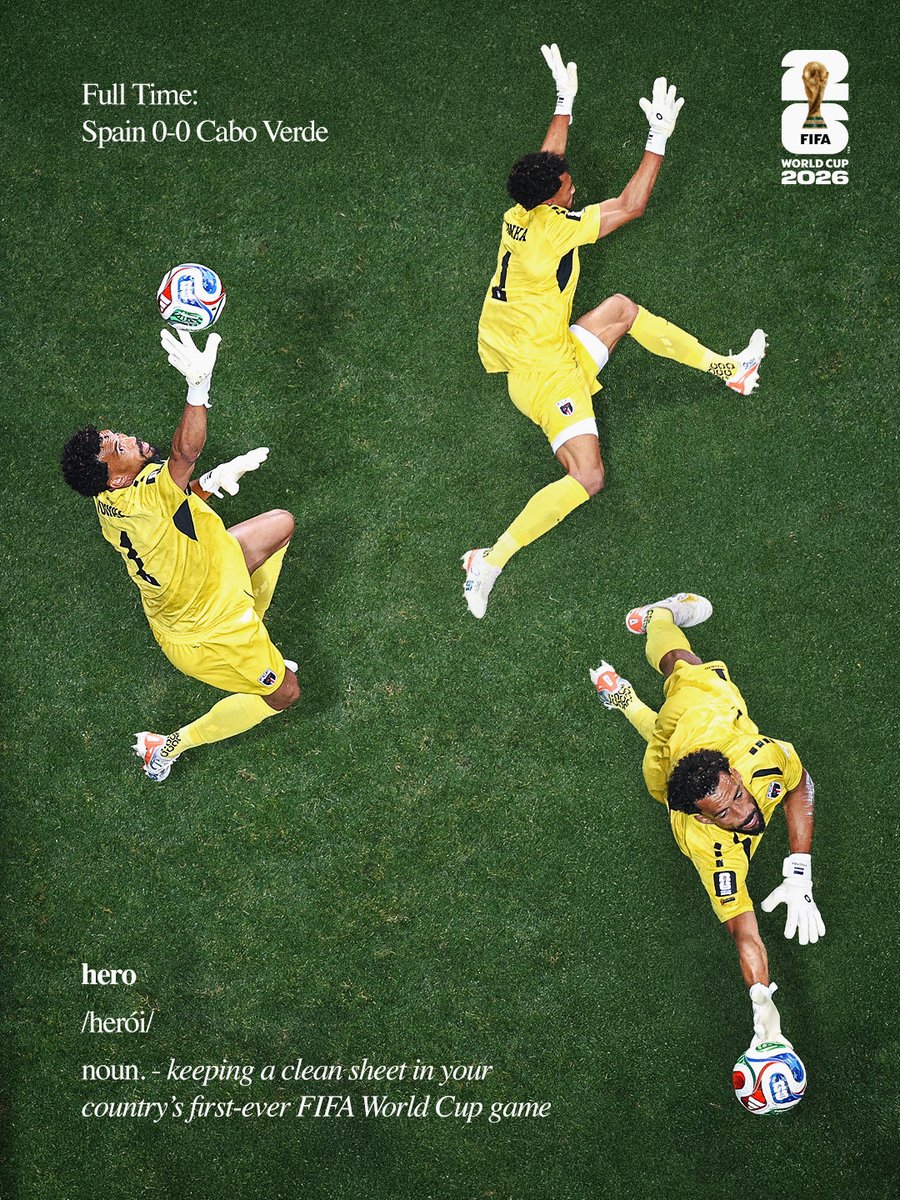
From @TheAthleticFC: Cape Verde’s Vozinha says U.S. visa issues stopped his mother from witnessing his World Cup heroics in person. The 40-year-old goalkeeper was visibly emotional on the pitch after the game. https://t.co/754zUIylGZ
Water is not a commodity. It is a birthright. It belongs to the earth, to other species, and to future generations. No corporation has the right to control it.
7 years ago on this day a powerful popular revolution in Sudan ousted Al-Bashir after 30 years in power and continued their struggle because it was never merely about regime change.
Britain has a long tradition of providing education to top students from #Sudan. Now they are banned for no good reason. ‘The law changed around me’: top Sudanese students blocked from UK universities by visa ban via @FT
https://t.co/lXlYZHgV2c
Looking to potentially interview international students who have had their student visas cancelled due to Mahmood's changes for a feature in The Independent. Please get in touch [email protected]#journorequest
Students from #Sudan, through no fault of their own, are now banned from the UK. This while @YvetteCooperMP our Foreign Secretry says she is campaigning for girls and women in Sudan and an end to the war. It's a cruel policy that will harm Sudan's best and brightest.
I called for a Canadian arms embargo and trade restrictions on the UAE until it stops funding the RSF and for Canadian weapons manufactures to be held accountable for their complicity plus bill c-233
From Sudan to Congo to Palestine, people are rising in solidarity against the same brutal system of genocide and mass violence. This system is supported and tolerated by the world’s powerful nations, which profit from exploiting the Global South. These conflicts are not isolated; they are part of a global order where human lives are sacrificed for profit and geopolitical control.
This kind of discourse that tries to compare the “ease” of condemning genocide in Sudan with the “difficulty” of condemning genocide in Gaza merely reproduces the very logic of the imperial center, a logic that fragments tragedy and turns it into a Western moral test about who may be criticized and who must remain untouchable. But the truth runs much deeper than that.
The Western capitalist system, in both its liberal and neoliberal forms, cares neither for Gaza nor for Sudan. Both are, in its eyes, sites of experimentation and domination, arenas for the projection of modern colonial violence.
In the Sudanese case, silence is not practiced because the empire is less complicit, as some claim, but because African blood holds no value in the global system of worth. Sudan is not a political subject for them but raw material for managed violence, an open field for Gulf capital’s mercenaries and for the Western intermediaries who profit from war just as they profit from humanitarian relief.
The West does not attack those who denounce the massacres of the Rapid Support Forces because it seeks to protect neither the victim nor the perpetrator, but rather the market structure that sustains the war itself. As long as the destruction does not threaten its direct interests, it remains acceptable. And since the victims are Black, their deaths cause no disturbance to the imperial conscience, a conscience built upon racial hierarchy since the earliest centuries of colonialism.
As for Palestine, the issue is not that it is dearer to the empire’s heart, but rather that it is more embarrassing to it because it exposes the empire’s inner architecture. It lays bare the organic relationship between Western capital and the Zionist project, between genocide and profit, between massacre and political legitimacy. The West suppresses every voice of solidarity with Gaza because it sees Israel as its own direct extension, the old colonizer wearing an Eastern mask.
Sudan, meanwhile, represents the empire’s other face, the one that requires no justification at all. There, no one is asked to explain away Black death, because it is already integrated into the global system’s logic.
The world, then, is not governed by moral standards or freedom of expression, but by a racial hierarchy that decides whose lives are mourned and whose are forgotten. The issue is not that Gaza receives more attention or Sudan less; both stand at opposite ends of the same tragedy, the tragedy of a global system that makes violence a condition of domination and racial inequality a condition of economic stability.
From this perspective, defending Sudan is no less central than defending Gaza. Both are not acts of humanitarian solidarity, but positions of resistance against the entire imperial system and its narrative, the narrative that divides between the white and the Black victim, between the blood deemed worthy of mourning and the blood rendered invisible.
The way anti-blackness works is that organized neglect and abandonment also serves a particular purpose. It obscures/hides US/Canadian complicity, the role of the UAE + other countries in fueling and profiting off of the war in Sudan. Let there be joint divestment campaigns (1/2