Finally out in @nature our article: "Self-templating assembly of soft microparticles into complex tessellations". When self-assembly meets M. C. Escher😁 https://t.co/Apm3mWTxf4 @ETH_en@soft_isa
🇪🇺 eu/acc
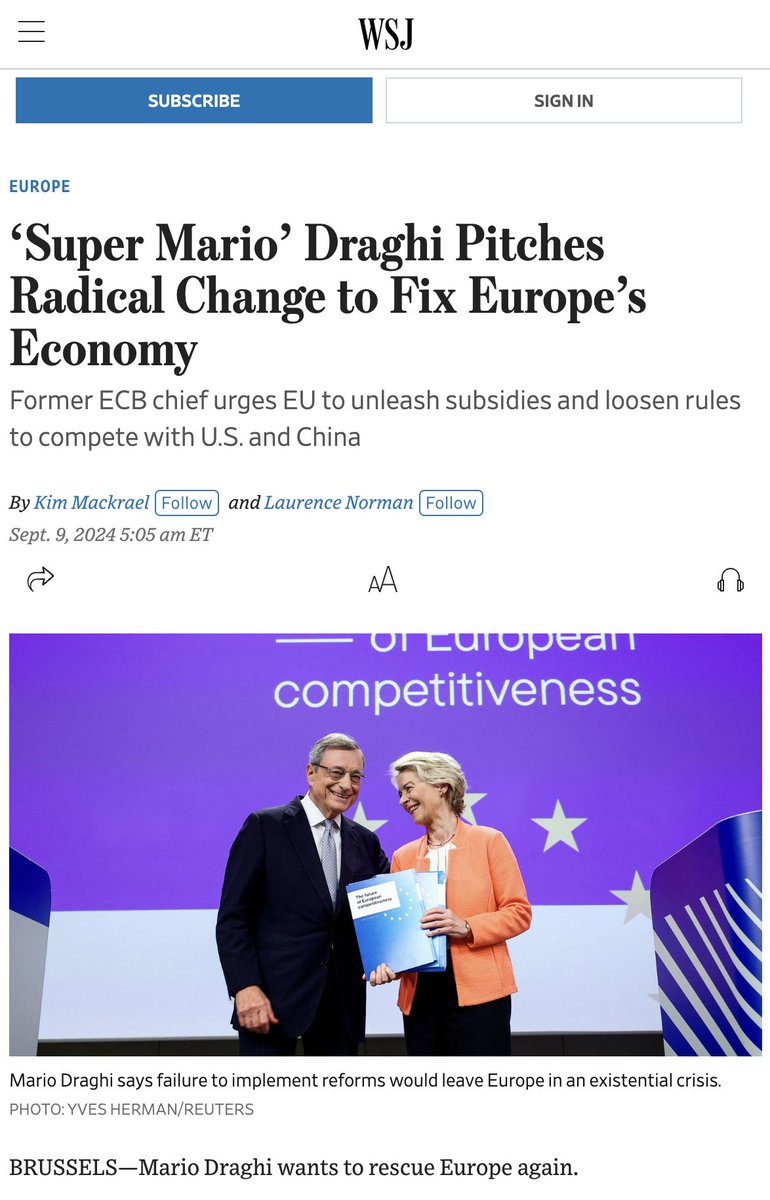
A few weeks ago Mario Draghi asked my recommendations for his report that came out today about European competitiveness
I had a call with him and summarized my problems with doing business in the EU
I wrote this which is included in the report presented to the European Union today:
1. Minimum revenue cut offs for current and new regulation
Exempt small businesses with annual revenues below €10 million from complex regulations like VATMOSS, GDPR, the EU AI Act, and certain labor laws. This approach encourages innovation and growth by allowing startups to focus on product development and market validation without the heavy burden of regulatory compliance. Once these businesses surpass €10 million, they will have the resources to comply with regulations, ensuring that growth is not stifled.
2. Simplify starting a pan-EU business with an EU-wide Incorporation (Inc.) business form
Currently, starting and operating a business across the EU is complex due to 27 member states, each with its own company registration requirements. To streamline this process and make it easier for entrepreneurs to operate across Europe, there should be a single, standardized business entity that applies uniformly across all EU countries. I call this the European Inc.
3. Start an EU business fully online, no physical offices, notaries, lawyers etc
To continue, right now starting a business in most EU member states it’s complicated, very time and resource intensive, and often involves lawyers and notaries. Instead, it should be as simple as going online to a centralized EU website, where entrepreneurs can register their business and details in just a few clicks. The entire process should be streamlined and efficient, allowing businesses to start operating immediately.
The EU government taxes and bookkeeping of this business should also be fully online in an EU portal/dashboard.
4. 0% corporate tax for first 3 years of any new business
Countries like Singapore have successfully attracted new businesses from around the world by giving them a massive tax discount during the first 3 years of business. Because they know that’s the most difficult time of a business: figuring out what product it makes and if there’s a market for it. That takes pressure off startups and business founders that they can focus on creating a great product and innovating.
5. Change tax on stock options: don't tax when a stock option is exercised, but tax it when the stock is sold
The current tax policy in the EU taxes stock options at the time they are exercised, creating a significant financial burden on employees who have not yet realized any tangible financial gain. This approach stifles innovation, discourages entrepreneurship, and places the EU at a competitive disadvantage compared to other regions like the United States.
I propose a simple change: Tax stock options when the stock is sold, not when the option is exercised.
6. Don’t see tech or AI as an enemy, but as a burgeoning and essential industry
The most popular companies in tech are focused on AI right now for a reason. It’s the next frontier of computing. The European Union seems to consider AI the enemy. Any technology can be used for good or bad. By regulating it even before Europe has made much contributions (Europe has almost no tech companies leading in AI), it has stifled any potential innovation in AI from the start.
Apart from the regulation itself, the optics of it make the EU look bad on a global scale. Why would tech founders move to Europe to start a business if the EU is actively positioning itself as Anti-AI?
AI has gigantic potential to be used for good: think of the medical field for diagnosis of diseases, generally in programming (it helps programmers to create software faster/better), etc.
This goes further than AI. The same applies to tech in general. It seems the EU is on a crusade against technology while not being able to compete in it itself. It feels a case of sour grapes: if we can’t build great technology in EU, nobody is allowed to do so!
7. Teach tech/coding/AI topics in all schools and unis
It would help a lot if the EU has a focus on teaching AI and tech in schools and universities. Making the new generation competitive in this field instead. To secure the future prosperity of the European Union, we must prioritize education in technology, coding, and AI across all levels of schooling, from primary education to universities. This strategic focus is not just an educational reform—it’s a critical investment in the future competitiveness, innovation, and economic resilience of the EU.
New post.
I tried to summarize my POV on Europe.
More importantly, i share share two small suggestions that, as a first step, could bring us back on track.
🇪🇺 eu/acc
https://t.co/OduvTf2JMA
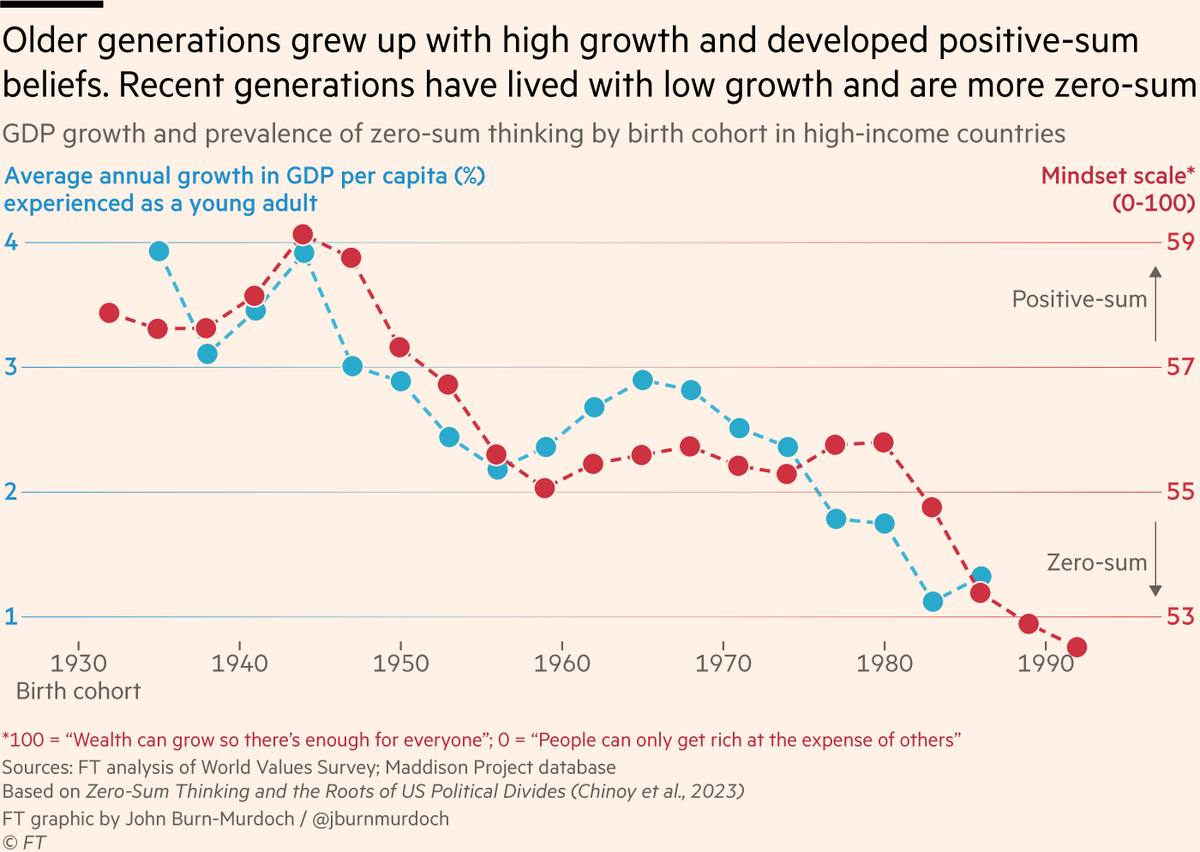
NEW: a recent study found a fascinating pattern
People are becoming more zero-sum in their thinking, and weaker economic growth may explain why
Older generations grew up with high growth and formed aspirational attitudes; younger ones have faced low growth and are more zero-sum
We use a polymer-bridge-based approach to stick a wide range of nanoparticles onto microparticle supports. Using this approach we decorate microparticles with composit films, and synthesize multifunctional designer microswimmers. Read about it @ChemMater https://t.co/2cSS1fHNu7
The Dutch intelligence and security service has released its annual report. It covers everything from the war in Ukraine, the economic threat posed by China and spying efforts to use the Netherlands to gain information on Nato and the EU.
https://t.co/VmknU8XJF1
How neat. Researchers claim to have found, at long last, an "einstein" tile - a shape that tiles the plane in a pattern that never repeats. First two authors appear to have no academic affiliations. https://t.co/T4UB6Ei6Lo
Phys. Rev. E 106, L052602 (2022) - Fitting an active Brownian particle's mean-squared displacement with improved parameter estimation https://t.co/JJKlgL1YAg
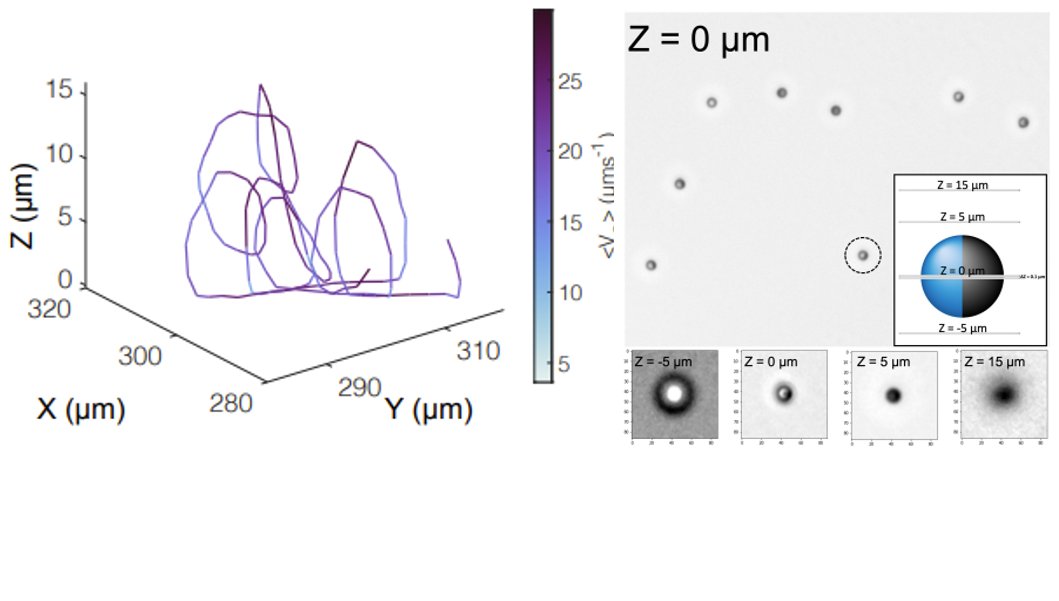
Just published and #openaccess, Tracking Janus microswimmers in 3D with machine learning led by Maximilian Robert Bailey, Fabio Grillo and Lucio Isa @soft_isa https://t.co/ZwjiVY201L
Max's paper "Fitting an active Brownian particle's mean-squared displacement with improved parameter estimation" has been selected to be an Editor's suggestion! @PhysRevE
Just another reason to check it out ;)
https://t.co/xprdzA6Cey
@dottorpax@ilfoglio_it Postmodernismo e rimozione, intesa come rifiuto della realtà, sono tra le prime parole che mi vengono in mente quando mi ritrovo a parlare (litigare) di politica in Italia. Grazie! Lettura amara e piacevole allo stesso tempo.
Do you think 3D tracking of Janus colloids requires fancy equipment? Think again!
We present to you a Machine Learning approach to track Janus microswimmers in 3D, using standard wide-field microscopy images: https://t.co/aUtMuit5T9
Congrats for another nice paper, Max!
“I consulted colleagues in the neuroscience and evolutionary biology community and found that Harari’s errors are numerous and substantial, and cannot be dismissed as nit-picking. Though sold as nonfiction, some of his narratives hue closer to fiction.” https://t.co/lfchnDlH0X
No need for a coffee - this one's easy.
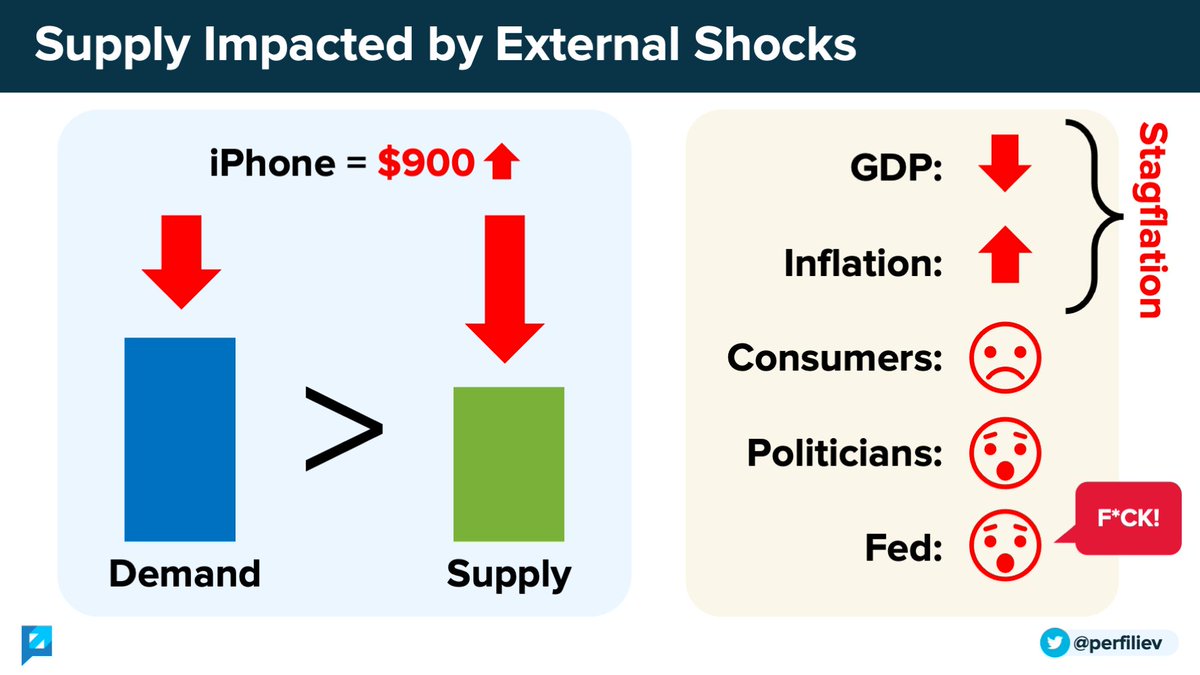
In this thread, you'll get a solid understanding of inflation and stagflation.
You’ll learn:
• How Fed can cause inflation
• How the growth/inflation relationship can break
• Current stagflation drivers
• Fed's failure to fix it 🧵👇
Feel free to translate & publish without even asking me so long as it is open to the public. (So far, Farsi, Ukrainian,& German plus a French [gated] versions).
https://t.co/xfjBJFBqFD
My (long) thoughts on the Ukraine war and international lawyers' critical responses thereto: On Eastern Europe, whataboutism, and westsplaining 👇 Some additional remarks below 🧵
https://t.co/1SXREzH6LU