Peter Brook’s paintings of winter weather are often lifted by a carefully considered touch of colour. In ‘Notice - One Miles Ahead’ the bright red road works sign and accompanying oil lamps catch the eye, creating a striking contrast with the snow as it blows across the road.
'Beach.' (c1928) Kenneth Macqueen developed a watercolour technique early in his artistic career that captures the freshness and spontaneity of a seascape. He sketched first, then made his pictures in the studio; the result, a simplified and reconfigured picture.
Degas did not just paint a café scene.
He wanted to show the dark side of modern life.
He captured urban loneliness:
You can sit right next to someone in a crowded room and still be totally alone.
He also exposed the reality of addiction.
Absinthe was a huge drug problem in Paris.
Degas did not paint a wild party. He showed the real effects: heavy silence and depression.
Other Impressionists painted picnics and dances.
Degas chose psychological realism.
He showed the real human cost of the city: isolation and boredom.
In a world full of people and screens, are we still trapped at Degas's café table?
Thursday 4 June 1663
In the Hall to-day Dr. Pierce tells me that the Queen begins to be brisk, and play like other ladies, and is quite another woman from what she was, of which I am glad. It may make the King like her the better, and forsake his two mistresses, my Lady Castlemaine and Stewart.*
*Nope
Barbara Palmer (Countess of Castlemaine) & Frances Stuart (Duchess of Richmond)
Queen Catherine as St Catherine of Alexandria, by Jacob Huysmans
Steely Dan’s “Aja” took over a year to make and used nearly 40 top session players.
Becker & Fagen’s perfectionism meant bringing in multiple musicians per part until the feel was right.
The album cost hundreds of thousands of dollars (very high for the time)
Friday 8 May 1663
Up very early and to my office …
Thence to my brother’s, and there took up my wife and Ashwell to the Theatre Royall, being the second day of its being opened. The house is made with extraordinary good contrivance, and yet hath some faults, as the narrowness of the passages in and out of the Pitt, and the distance from the stage to the boxes, which I am confident cannot hear; but for all other things it is well, only, above all, the musique being below, and most of it sounding under the very stage, there is no hearing of the bases at all, nor very well of the trebles, which sure must be mended.
The play was “The Humerous Lieutenant,” a play that hath little good in it, nor much in the very part which, by the King’s command, Lacy now acts instead of Clun. In the dance, the tall devil’s actions was very pretty.
The play being done, we home by water, having been a little shamed that my wife and woman were in such a pickle, all the ladies being finer and better dressed in the pitt than they used, I think, to be.
To my office to set down this day’s passage, and, though my oath against going to plays do not oblige me against this house, because it was not then in being, yet believing that at the time my meaning was against all publique houses, I am resolved to deny myself the liberty of two plays at Court, which are in arreare to me for the months of March and April, which will more than countervail this excess, so that this month of May is the first that I must claim a liberty of going to a Court play according to my oath.
So home to supper, and at supper comes Pembleton, and afterwards we all up to dancing till late, and so broke up and to bed, and they say that I am like to make a dancer.
King's House (Theatre Royal, Drury Lane)
There have been four theatres here since the first in 1663. For its first two centuries, Drury Lane could "reasonably have claimed to be London's leading theatre" and thus one of the most important theaters in the English-speaking world.
The Humorous Lieutenant (John Fletcher)
A tragicomedy. Highly praised by critics, it has been called "Fletcher's best comedy. Certain information on the play's date of authorship and early performance history is lacking. The drama was intitially published in the first Beaumont and Fletcher folio of 1647.
John Lacy
1615-1681. An English comic actor and playwright during the Restoration era. In his own time he gained a reputation as "the greatest comedian of his day" and was the favorite comic of King Charles II.
John Fletcher: “Following William Shakespeare as house playwright for the King's Men, he was among the most prolific and influential dramatists of his day; during his lifetime and in the Stuart Restoration, his fame rivaled Shakespeare's.” Wikipedia
Tuesday 5 May 1663
Up betimes and to my office, and there busy all the morning …
Dined at home, and after dinner up to try my dance …
Thence to my office busy writing letters, and then came Sir W. Warren, staying for a letter in his business by the post, and while that was writing he and I talked about merchandise, trade, and getting of money. I made it my business to enquire what way there is for a man bred like me to come to understand anything of trade. He did most discretely answer me in all things, shewing me the danger for me to meddle either in ships or merchandise of any sort or common stocks, but what I have to keep at interest, which is a good, quiett, and easy profit, and once in a little while something offers that with ready money you may make use of money to good profit. Wherein I concur much with him, and parted late with great pleasure and content in his discourse, and so home to supper and to bed. It has been this afternoon very hot and this evening also, and about 11 at night going to bed it fell a-thundering and lightening, the greatest flashes enlightening the whole body of the yard, that ever I saw in my life.
Sir William Warren (later knighted) was a prominent timber merchant supplying masts and deals to the Navy.
The Advice (barbell strategy: mostly safe & occasional high risk opportunities)
Avoid active trade: Ships, merchandise, or "common stocks" (early joint-stock ventures) are dangerous for outsiders. Warren’s warning against “common stocks” reflected real risks: these were volatile, insider-influenced, and illiquid compared to safe interest-bearing loans.
Prefer safe income: Money at interest (bonds, loans, etc.) offers "good, quiett, and easy profit."
Opportunistic plays: Keep cash ready for occasional high-return deals.
Warren’s words were prescient as in 1720, one of the first stock crashes occurred.
The South Sea Scheme (1720) was a British joint-stock company formed in 1711 to trade with South America and convert government debt into company shares. In 1720, wild speculation drove its stock from ~£100 to over £1,000 amid hype, bribery, and easy credit. The bubble burst in autumn, crashing prices and ruining thousands of investors in one of history’s classic financial manias.
William Hogarth’s famous satirical engraving “The South Sea Scheme”
Center: A wild merry-go-round (“Who’l Ride” / “Who will ride?”) with people from all social classes (a prostitute, clergyman, nobleman, old woman, etc.) riding truncated horse-like animals. A goat sits on top. This mocks the speculative frenzy as everyone wanted a ride on the bubble.
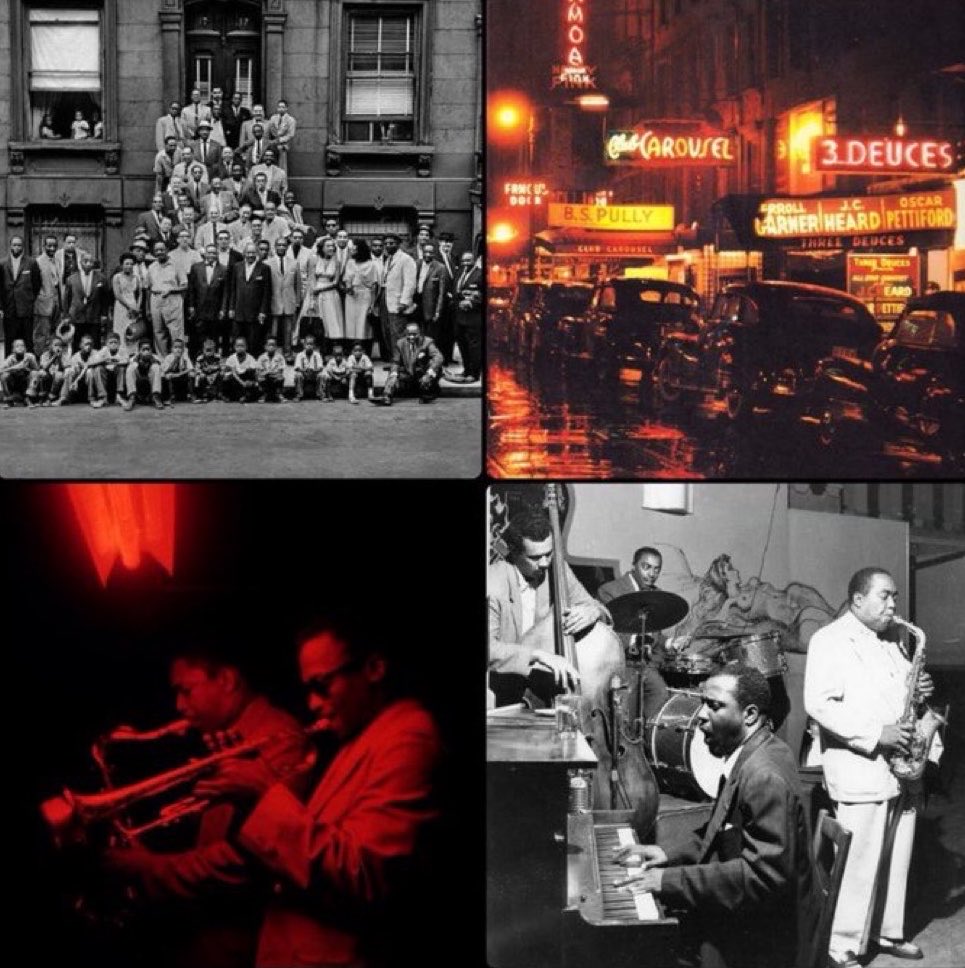
Donald Byrd performing "Black Byrd" at Montreux, 1973. Featuring Larry Mizell on synths and Fonce on trumpet. The sound that shaped generations of music to come.
Monday 4 May 1663
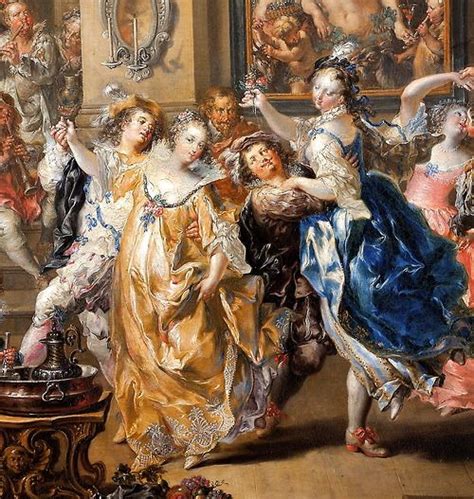
Up betimes … Whither by and by the dancing-mastercame, whom standing by, seeing him instructing my wife, when he had done with her, he would needs have me try the steps of a coranto, and what with his desire and my wife’s importunity, I did begin, and then was obliged to give him entry-money 10s., and am become his scholler. The truth is, I think it a thing very useful for a gentleman, and sometimes I may have occasion of using it, and though it cost me what I am heartily sorry it should, besides that I must by my oath give half as much more to the poor,* yet I am resolved to get it up some other way, and then it will not be above a month or two in a year. So though it be against my stomach yet I will try it a little while; if I see it comes to any great inconvenience or charge I will fling it off.
After I had begun with the steps of half a coranto, which I think I shall learn well enough, he went away, and we to dinner.
The courante, corrente, coranto and corant are just some of the names given to a family of triple metre dances from the late Renaissance and the Baroque era.
10 shillings is a significant outlay (roughly a week’s wages for a skilled workman).
*When he indulges in something "vain" or expensive like this dancing lesson, the terms of his vow require him to give an additional amount. In this case, half as much again (another 5 shillings) to a charity for the poor. Why this oath? Sam frequently made such private religious-style vows (often invoking God) to impose financial discipline upon himself.
Johann Georg Platzer Osterriker
Friday 10 April 1663
Up very betimes and to my office, where most hard at business alone all the morning. At noon to the Exchange, where I hear that after great expectation from Ireland, and long stop of letters, there is good news come, that all is quiett …
Off the Exchange with Sir J. Cutler and Mr. Grant to the Royall Oak Tavern, in Lumbard Street, where Alexander Broome the poet was, a merry and witty man, I believe, if he be not a little conceited, and here drank a sort of French wine, called Ho Bryan, that hath a good and most particular taste that I never met with.
Home to dinner, and then by water abroad to Whitehall, my wife to see Mrs. Ferrers, I to Whitehall and the Park (St James's Park), doing no business. Then to my Lord’s lodgings, met my wife, and walked to the New Exchange. There laid out 10s. upon pendents and painted leather gloves, very pretty and all the mode. So by coach home and to my office till late, and so to supper and to bed.
Haut-Brion is a renowned claret and one of the first growths of Bordeaux’s red wines. This is one of the earliest English references to a specific Bordeaux estate wine by name. From the Graves region (now Pessac-Léognan), Château Haut-Brion gained prestige under the Pontac family, who pioneered the “New French Claret” style, richer, more structured reds better suited to aging than lighter everyday clarets. In 1666, Arnaud III de Pontac sent his son François-Auguste to London with a French chef. They opened the fashionable tavern Pontack’s Head (named after a portrait of Arnaud on the sign) near intellectual clubs. It became London’s most elegant spot: a tavern, restaurant, and delicatessen offering refined French cuisine. Haut-Brion sold there at a premium 7 shillings per bottle (versus the usual 2 shillings), attracting aristocrats, writers, and connoisseurs who praised its distinctive qualities.
Sir John Cutler (a wealthy merchant and later a noted miser, satirized by Alexander Pope). Royal Oak Tavern in Lombard Street. This was a popular City spot, named after the famous tree where Charles II hid after the Battle of Worcester.
Alexander Broome: Royalist poet, songwriter, and lawyer known for his witty, convivial verses and drinking songs.
New Exchange: Upscale shopping arcade in the Strand, popular for luxury goods among the fashionable set.
David Teniers the Younger's Tavern Scene (1658)