Some reasons why she might want an interior point on her possibility frontier:
- Better treated than by someone on the Pareto frontier, because his BATNA is worse, so you can capture your shapley value
- More robust to perturbations, which happen over the course of a relationship (and with age)
- being on the Pareto frontier often isn't transitive
- Noisy estimation of said frontier, particularly b/c of hedonic adaptation, risking ruin.
Este sitio tiene 16.000 personas conectadas a la vez haciéndose pasar por ChatGPT para no tener que usarlo.
Toda tecnología nueva tiene su resaca. La de la IA ya arrancó.
La web se llama, traducido, "tu basura de IA me aburre". La armó un programador y explotó a 50 millones de visitas en una semana. Escribís o dibujás lo que necesitás, pero adentro no hay ningún modelo: te contesta otra persona al azar que se hace pasar por la máquina. Tiene 75 segundos para responder pero, si querés una respuesta más trabajada, activás "modo pensamiento" y al humano del otro lado le dan el doble de tiempo.
Es un fenómeno muy particular porque, aprovechando el anonimato, mucha gente hace consultas personales y, del otro lado, un montón de desconocidos con ganas de ayudar gratis. Sin perfil, sin reputación, sin estrellitas, sin ganar nada más que el crédito para preguntar ellos. Por una vez en internet, nadie te está vendiendo nada.
Con la euforia de pedirle absolutamente todo a la IA, lo que falta a veces es tener a alguien del otro lado.
Ese internet viejo, el de los foros y los desconocidos ayudándose porque sí.
I’ve been ranting for years about how TVTropes and fandom wikis and youtube essayists did permanent damage to how people analyze stuff and discuss it online, only to find out that not only is there already a specific term for that phenomenon, but it predates all of those sites
We must, then, avoid the “Babel syndrome,” namely the idolatry of profit that sacrifices the weak, a uniformity that neutralizes differences, and the pretense that a single language — even a digital one — can translate everything, including the mystery of the person, into data and performance. This is the risk of dehumanization: building a future that excludes God and reduces the other to a means.
10 GITHUB REPOS THAT WILL CHANGE HOW YOU USE THE INTERNET.
Bookmark every single one. Most people have no idea these exist.
1. LocalSend / https://t.co/D5tOkR2Af5
AirDrop for every device. Share files between Windows, Mac, Linux, Android, and iOS with no account and no cloud.
2. FreeTube / https://t.co/KuZyMeqDHd
Desktop YouTube player with zero ads, zero tracking, and zero Google account required.
3. Vaultwarden / https://t.co/y6mAQLNyYq
Self-hosted Bitwarden server. Replaces 1Password, LastPass, and Dashlane for $0 forever.
4. Syncthing / https://t.co/n1Nh0Qmc2c
Replaces Dropbox, iCloud, and OneDrive. Syncs files directly between your devices with end-to-end encryption.
5. Ladder / https://t.co/svEmkUHPGm
Bypasses paywalls on NYT, WSJ, Bloomberg, Nature, and hundreds of other sites. Runs on your own server.
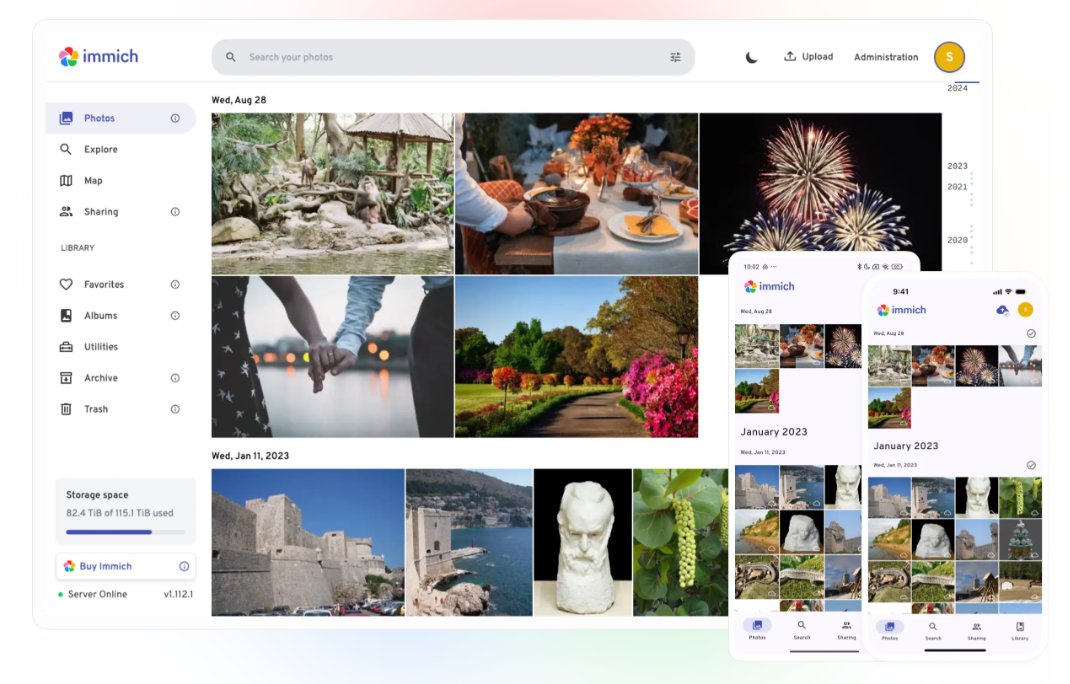
6. Immich / https://t.co/CG5ZANosXI
Self-hosted Google Photos replacement. Auto-backup, facial recognition, and AI search on your own machine.
7. AdGuard Home / https://t.co/E6jclc2i9y
Network-wide ad blocker. Blocks ads and trackers on every device in your home including smart TVs.
8. Jellyfin / https://t.co/UjBovhFh05
Self-hosted Netflix. Stream your own movies, shows, and music to any device with zero subscription.
9. LibreChat / https://t.co/Oywy9q2qOm
Run ChatGPT, Claude, Gemini, and DeepSeek in one interface. Pay only for API usage. No $20/month subscription.
10. Uptime Kuma / https://t.co/oxtyw6e9Hs
Beautiful self-hosted monitoring for every website, server, and service you own. Replaces $50/month tools.
Big tech built the internet you use every day. These repos built the one you actually want.
I heard an interview today about AI in creative spaces and the man being interviewed said “AI is data, and Data can only look backwards. Creativity looks forwards.” And I need to sit with that in the best possible way.
To settle a troublesome discourse, I have provided here the most faithful and poetic possible translation of the beginning of the Odyssey.
We male sex. We
complex. We
fake horse. We
off course. We
sail long. We
hear song. We
pig crew. We
home soon.
@heygurisingh i raise you, spotiflac. download all your songs and playlist from spotify (using different services since spotify doesnt offer flac) with no log ins required.
https://t.co/lYMl0FBAzJ
built an interactive guide to teach you the basics of mahjong ! 🀄
it includes rulesets from different regions (hk and taiwan for now) with a few interactive elements to illustrate mahjong concepts. more demos in thread, and a bit about the tools i used to build this.
the one thing this guide can’t really capture is how social mahjong is -- mahjong tables are never silent ! they’re full of overlapping conversations and the constant click-clack of acrylic tiles stacking and shuffling against each other. come to @modal's mahjong night tmrw to experience that part for yourself : )
Saw a post that says; 'The price of intimacy is conflict. When you avoid conflict, you avoid intimacy. Real closeness requires exposure. And letting someone into your inner world means they will sometimes step on tender ground.' I'll be thinking about this for the next several days
You can smell rain better than a shark can smell blood. 200,000 times better. Your nose picks up the compound behind petrichor (that smell after rain) at levels so tiny it's like finding one teaspoon spilled across 200 Olympic swimming pools.
That compound is called geosmin. It comes from soil bacteria. And the word "petrichor" itself didn't exist until 1964, when two Australian scientists, Isabel Joy Bear and Richard Thomas, published a paper in Nature trying to figure out why rocks smell after rain. They took the Greek words for stone and "the blood of the gods" and stuck them together. Blood of the stone.
When soil stays dry for weeks, certain plants leak an oil that the clay soaks up like a sponge. At the same time, soil bacteria called Streptomyces start making spores (tiny survival pods that can sprout into new bacteria later) and give off geosmin while they do it. The smell just sits there in the dirt, waiting.
Then rain hits. A 2015 MIT paper figured out the physics of what happens next. Raindrops land on dry soil and trap tiny air bubbles in the soil's pores. The bubbles rise up through the raindrop and pop out the top, flinging thousands of tiny droplets into the air. Each one carries a piece of the oil, some bacterial spores, and some geosmin. Wind does the rest. Light rain releases the most of these droplets. Heavy rain releases very few, which is why a drizzle smells more than a downpour. MIT estimated that rain across the planet throws between 10,000 and 800,000 trillion bacterial cells into the air every single year.
In 2020, scientists in Sweden and the UK published a paper in Nature Microbiology that explained why this smell exists at all. Streptomyces bacteria only release geosmin when they're about to die and make spores. The smell is a bacterial ad. It attracts tiny 1.5mm bugs called springtails, which eat the bacteria. Springtails have evolved enzymes that let them survive the antibiotics Streptomyces produce to kill everything else. In exchange, the bacterial spores pass through the springtail's gut alive and stick to its body, hitching a ride to new soil. This deal has been running for about 400 million years.
Same molecule, different stories. Geosmin is why raw beets taste like dirt. It's why catfish and tilapia taste muddy when raised in bad water. Acid breaks it down, which is why every recipe for muddy fish starts with vinegar or lemon juice.
Your nose catches all of this at parts-per-trillion. You're smelling a 400-million-year-old conversation between soil bacteria and the bugs that eat them.
@foodjars from one fellow insane person to another <3 my life was changed by the realization that you can change the labels of saved places w custom emojis so now i can tell my saved places at a glance if its food/bar/shop/bookstore/friends place etc
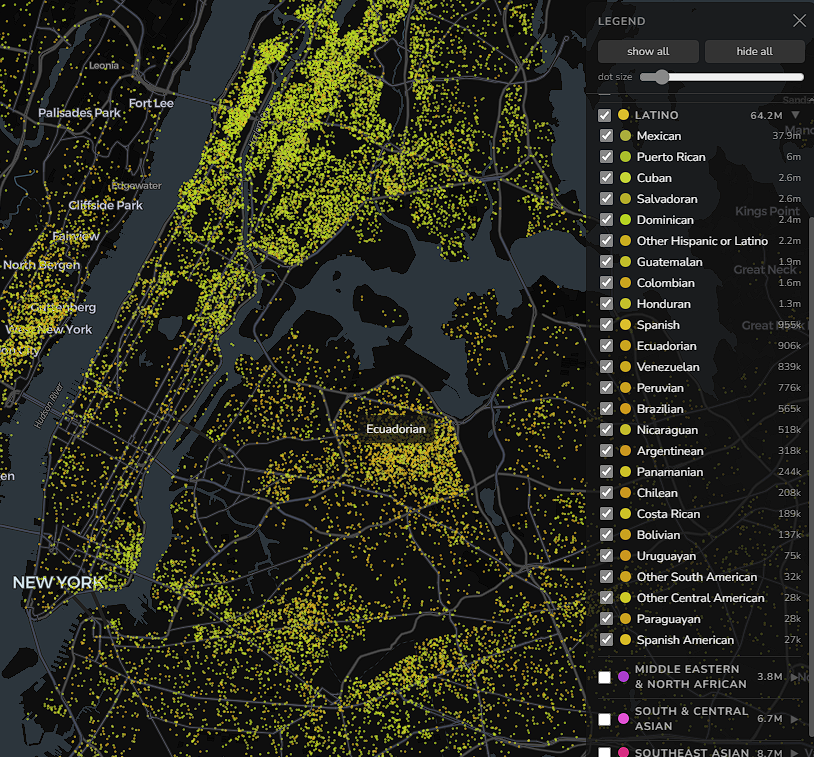
i mapped ancestries in the US! each dot is 100 people.
it's like censusdots, but with many more categories. you can also filter to just a few ancestries.
🚨 This is the most useful GitHub repo nobody talks about.
It is compiled with every free certification that actually matters in one GitHub repo.
AWS, Google Cloud, Kubernetes, Cybersecurity, AI, Marketing, Project Management, Databases.
52.4K stars and it's completely free.