A boundary cornerback is more than just the defender lined up to the short side of the field
From a scouting and coaching perspective, the position is built around leverage, discipline, communication and the ability to consistently handle outside coverage within the structure of the defense
The boundary naturally reduces space, but that does not make the assignment easy. The corner still has to defend vertical routes, back-shoulder throws, quick game, route combinations and contested catches while understanding where his help is and when the sideline can be used as an extra defender
When evaluating the position, I am looking closely at press technique, release control, foot quickness, transition ability, recovery speed, route recognition, eye discipline, ball skills and catch-point competitiveness
Physicality also matters, especially when dealing with bigger receivers, defeating blocks, supporting the run and finishing tackles in space
The exact responsibilities will always depend on the coverage, formation and defensive call. A boundary corner may be isolated on one snap and receive help on the next. That is why football intelligence and communication with safeties and underneath defenders are just as important as athletic ability
From a coaching standpoint, a dependable boundary corner gives the defense flexibility. When you trust that player to consistently execute his assignment, it can open up more options with safety rotations, pressure packages, matchup plans and coverage distribution
A field cornerback has to be much more than a player with enough speed to survive on the outside
In defenses that use field and boundary designations, the field corner is responsible for handling the wide side of the formation, which places a premium on athletic ability, spatial awareness, route recognition, leverage and tackling in space
From a scouting perspective, I’m looking at the complete movement profile: long speed, recovery speed, closing burst, hip fluidity, change of direction and the ability to transition efficiently without wasted steps. Just as important is how well the player processes what he sees. Receiver splits, releases, motion, bunches, stacks and route combinations all provide information, and a dependable field corner has to recognize those indicators without abandoning his technique or guessing
Coverage versatility matters. He may be asked to play press-man, off-man, zone or pattern-match concepts, so eye discipline and understanding where his help is coming from are critical. Ball skills are important, but so is the ability to stay in phase, recover when initially beaten and finish through the receiver’s hands without panicking or drawing a penalty
The position also has to be evaluated against the run. A field corner must tackle consistently in space, defeat stalk blocks, recognize screens, understand crack-replace responsibilities when called for and maintain proper leverage against perimeter runs. Missed tackles and poor run-fit discipline on the wide side can quickly become explosive plays
From a coaching perspective, a field corner you can trust creates flexibility throughout the defense. If he can consistently handle space, communicate, maintain leverage and survive difficult coverage situations, the coordinator has more freedom to disguise coverages, rotate safeties, pressure from different locations and allocate help elsewhere
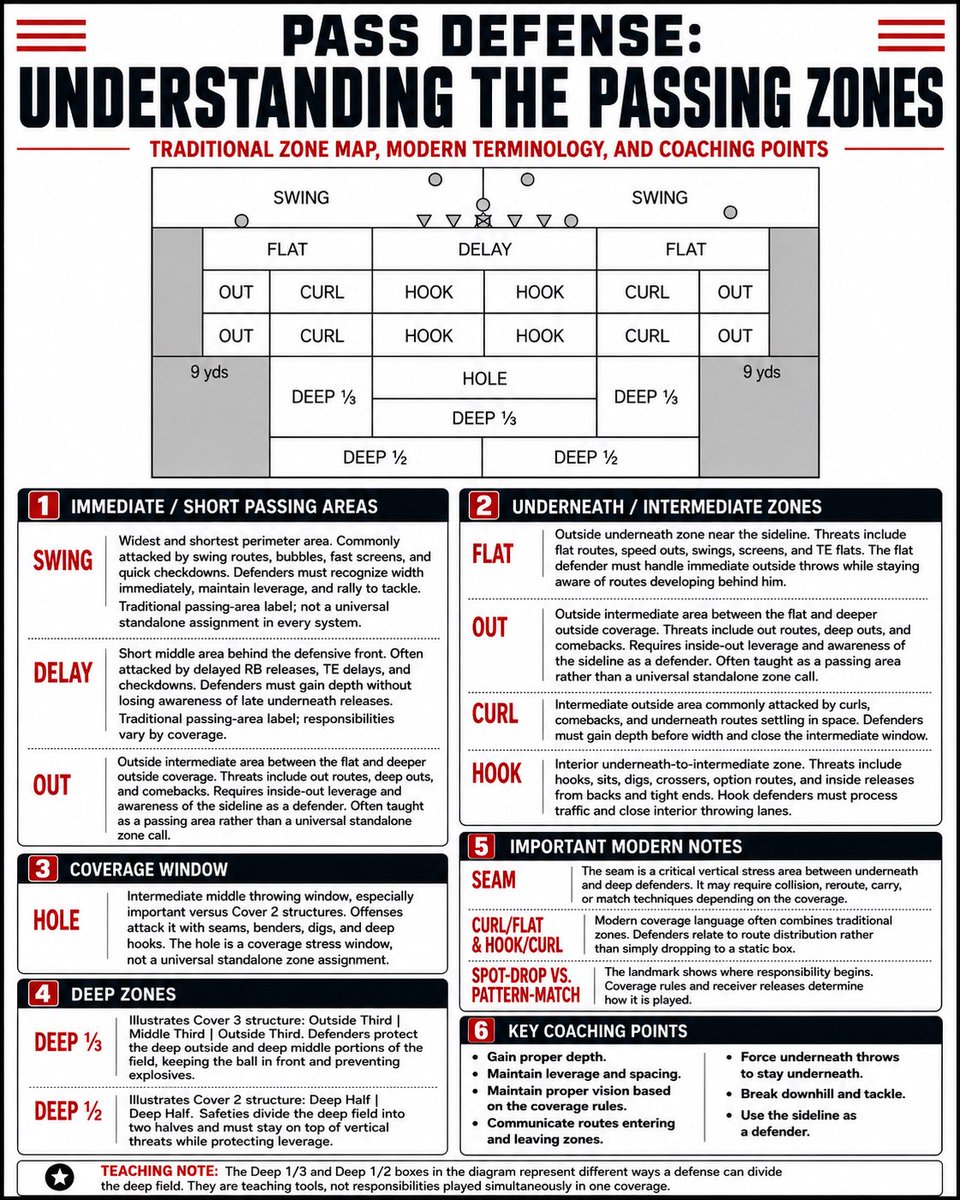
Understanding passing zones is more than memorizing boxes on a diagram. Each area of the field creates a different responsibility for the defense and a different opportunity for the offense.
Traditional passing-area terminology includes the Swing, Delay, Flat, Out, Curl, Hook, Hole, Deep ⅓ and Deep ½. These landmarks help explain where routes develop and where defenders can be stressed, but the exact responsibility will always depend on the coverage call and defensive system
Swing / Delay ➡️ Immediate underneath areas often attacked by backs, screens, checkdowns and late releases.
Flat ➡️ Outside underneath space where defenders must handle quick throws while remaining aware of routes developing behind them.
Out / Curl ➡️ Intermediate outside areas attacked by outs, comebacks, curls and other routes designed to create space between underneath and deep coverage.
Hook ➡️ Interior underneath-to-intermediate space where linebackers and other underneath defenders must process crossers, digs, hooks, option routes and inside releases.
Hole ➡️ A potential middle-of-field coverage window, especially against Cover 2, that offenses can attack behind underneath defenders and between the deep safeties.
Deep ⅓ ➡️ The deep-field structure associated with Cover 3: Outside Third | Middle Third | Outside Third.
Deep ½ ➡️ The deep-field structure associated with Cover 2, where two safeties divide the deep portion of the field.
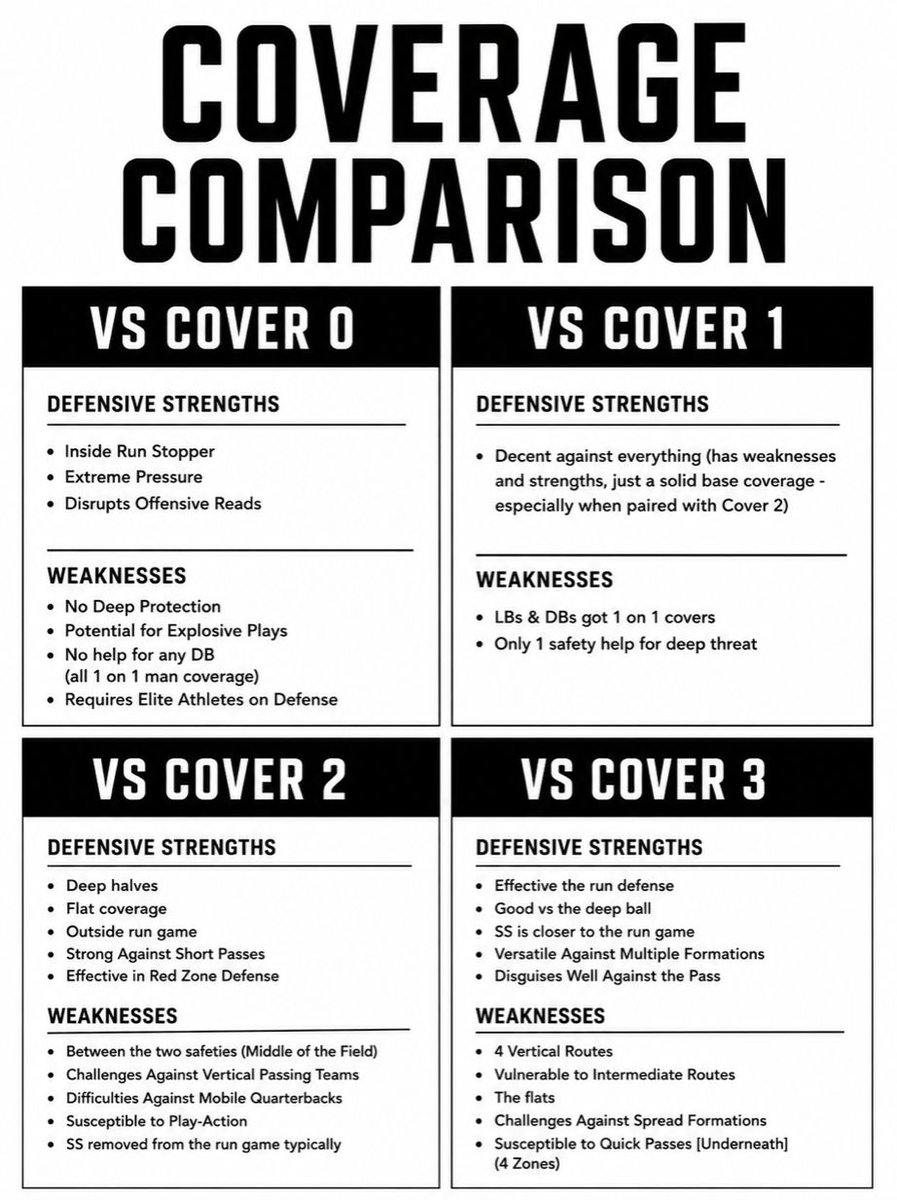
Modern coverage goes even further with Curl/Flat, Hook/Curl, seam responsibilities and pattern-match principles. Defenders are not simply dropping to a spot and covering grass. They must recognize route distribution, maintain leverage and spacing, communicate, understand where their help is located and react according to the rules of the coverage
🚨 TOP LB DRILL:
CONES vs PARTNER
🚩Linebackers—you DON'T need cones to master LB movement. Grab a partner and make it REAL.
-Train your eyes
-Track hips
-Master timing
-React to movement
Train situations, not patterns.
#LBDrills#fieldvizion#NFL
DETENIDO el INFELIZ!
Es Octavio Jorge Cortés Jiménez, el tipo q golpeó a una recepcionista del hotel Park Life Paradox en Santa Fe.
Así cayó en San Diego, California,
La @FiscaliaCDMX obtuvo orden de aprehensión en su Vs por Tentativa de Feminicidio… así su cara de susto hoy.