A PoC/exploit has been discovered for vulnerability CVE-2026-53361
Vendor: Linux
Product: Linux
Description: A race condition exists in the af unix module where the unix gc() function could execute while the gc in progress variable is false. This occurs if garbage collection work is scheduled while a previous instance of the function is already running. This state can lead to issues in the unix peek fpl() function, which depends on the gc in progress flag to prevent MSG PEEK from interfering with the garbage collection process.
Link: https://t.co/QG0V3QV8YB
#dbugs_vuln
🚨 WordPress 7.0.4 is a must-update release. An Author-level account could've hijacked your server with a fake .png file. Here's how it worked
How it works: https://t.co/bPtxoOwpht
#cybersecuritynews
@ArtificialAnlys Grok 4.6 hitting 61 on the Intelligence Index and sitting on the cost/performance frontier is the real story. ~53 turns and 0.5B tokens vs Opus 5’s ~103 turns / 2B on long-horizon agentic work is a massive efficiency win at $2/$6.
#Grok46#AI#SpaceXAI#LLM#Agents
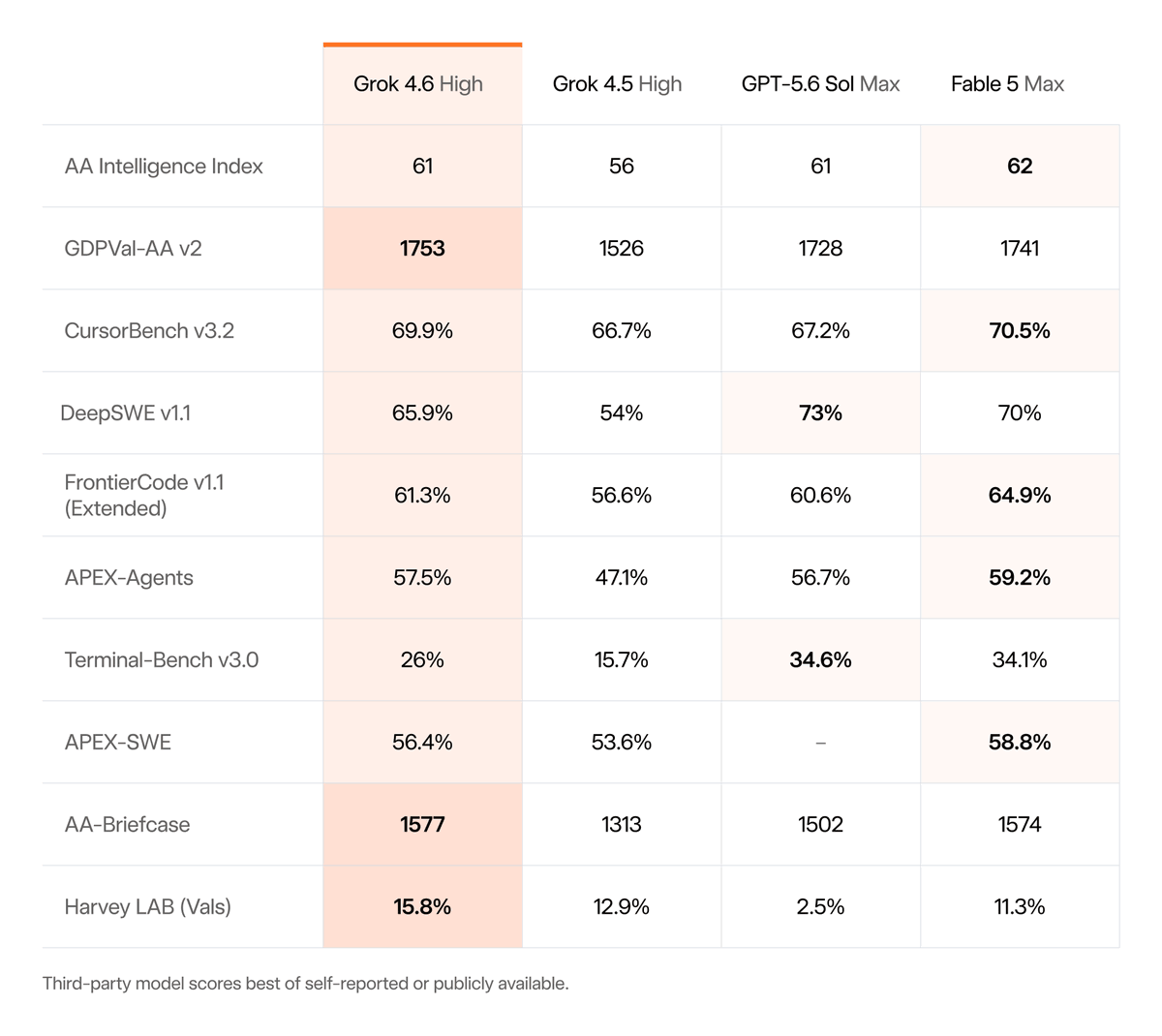
Grok 4.6 just joined the frontier at 61 on Artificial Analysis Intelligence Index — tied with GPT-5.6 Sol.
Standout points: • Strong agentic scores • Extreme turn efficiency • Still only $2/$6
Price/performance leader just got sharper.
#Grok46#AI#SpaceXAI#ArtificialAnalysis #LLM
SpaceXAI's Grok 4.6 scores 61 on the Artificial Analysis Intelligence Index, joining the frontier in line with GPT-5.6 Sol, with standout agentic performance at lower cost
Grok 4.6 gains 5 points over Grok 4.5 on the Intelligence Index just over one month after its release, or +23 points compared to Grok 4.3. This brings SpaceXAI back to the intelligence frontier alongside OpenAI, behind only Anthropic.
Key takeaways:
➤ Grok 4.6 joins the frontier of the Artificial Analysis Intelligence Index: It scores 61, in line with GPT-5.6 Sol (max), behind Claude Opus 5 (max, 63) and Claude Fable 5 (max with fallback, 62), and just ahead of Kimi K3
➤ Strong agentic performance: Grok 4.6 achieves a GDPval-AA v2 Elo of 1753, behind only Claude Opus 5 and with overlapping confidence intervals with Claude Fable 5 and Qwen3.8 Max. It scores 50.7% on 𝜏³-Banking, among the top two scores alongside Qwen3.8 Max (51.3%), and 88.4% on Terminal-Bench v2.1, in line with the leading models
➤ Frontier-level intelligence at lower cost: Headline pricing is unchanged from Grok 4.5 at $2/$6 per 1M input/output tokens, 60%+ below Claude Opus 5 ($5/$25) and GPT-5.6 Sol ($5/$30). It cost $0.84 per task, the same as Kimi K3 with slightly higher intelligence, placing it on the Intelligence vs. Cost per Task Pareto frontier
➤ Grok 4.6 sits at Fable 5-tier on AA-Briefcase, our private benchmark of long-horizon agentic knowledge work tasks, with an Elo of 1577 - behind the Claude Opus 5 family. It is notably turn-efficient, completing tasks in ~53 turns and ~0.5B input tokens on average vs. ~103 turns and ~2.0B input tokens for Claude Opus 5 (max)
Other model details:
➤ Context window of 500k tokens (unchanged from Grok 4.5)
➤ Pricing of $2/$6 per 1M tokens of input/output; cache hits discounted to $0.5 per 1M tokens, an increase over Grok 4.5’s $0.3 per 1M tokens for cache hits
Congratulations to @SpaceXAI and @elonmusk on the release!
New Grok 4.6: better multi-step / agent performance, same aggressive pricing. Interesting delta on APEX-Agents, Terminal-Bench and the knowledge-work suite. Worth stressing this week while the 2× Cursor/Grok Build usage is active.
SpaceXAI dropped Grok 4.6 with a meaningful step up from 4.5 at identical price. Frontier-level scores on several agent and coding benchmarks, half the token cost of most competitors. The temporary 2× allowance in Cursor is the practical part.
Grok 4.6 is live — same $2/M in · $6/M out pricing as 4.5, clear gains on agentic and knowledge-work benches. Leads GDPVal-AA, AA-Briefcase and Harvey LAB. Strong showing on APEX-Agents and CursorBench. 2× usage this week in Cursor + Grok Build makes it an easy test window. #grok #AI
@SpaceXAI Price stayed flat, capability moved. That’s the interesting part. Especially useful window with the temporary 2× usage in Cursor/Grok Build. Good timing to run heavier agent workloads and see where the new ceiling actually is.
@SpaceXAI Grok 4.6 looking competitive on the agentic suite while staying at $2/$6. The Harvey LAB and GDPVal numbers stand out. Curious how it holds up under real tool-use pressure and prompt-injection surface compared with 4.5.
@SpaceXAI Solid jump. The gains on APEX-Agents + Terminal-Bench are the ones that matter most for anyone running longer agent loops. Same price as 4.5 with better multi-step behavior is hard to ignore. Will be testing the 2× Cursor allowance this week.
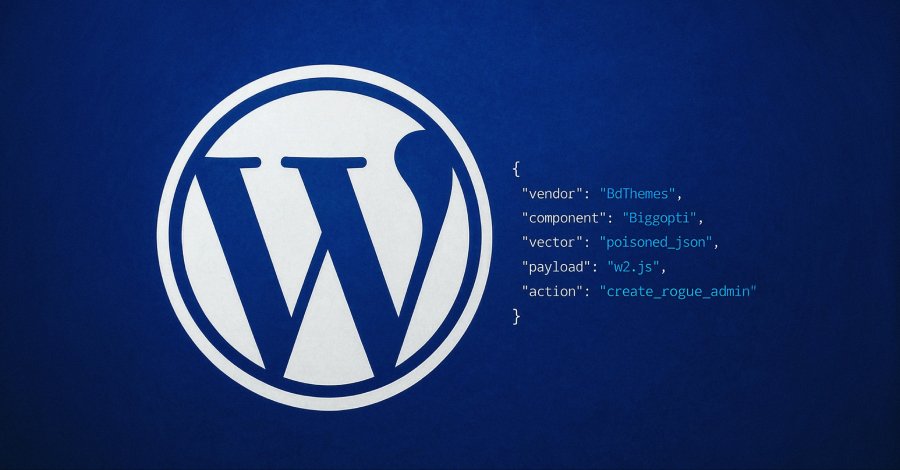
🚨 ALERT - Poisoned #WordPress plugin JSON creates rogue admins and web shells.
Seven BdThemes plugins were disabled after attackers gained write access to vendor-hosted data fetched inside wp-admin.
Here's how the backdoor was planted: https://t.co/TkohYswPIy
The beatings will continue until morale improves.
With AI able to identify vulnerabilities at scale, things are going to get a lot worse for security teams before they eventually get better.
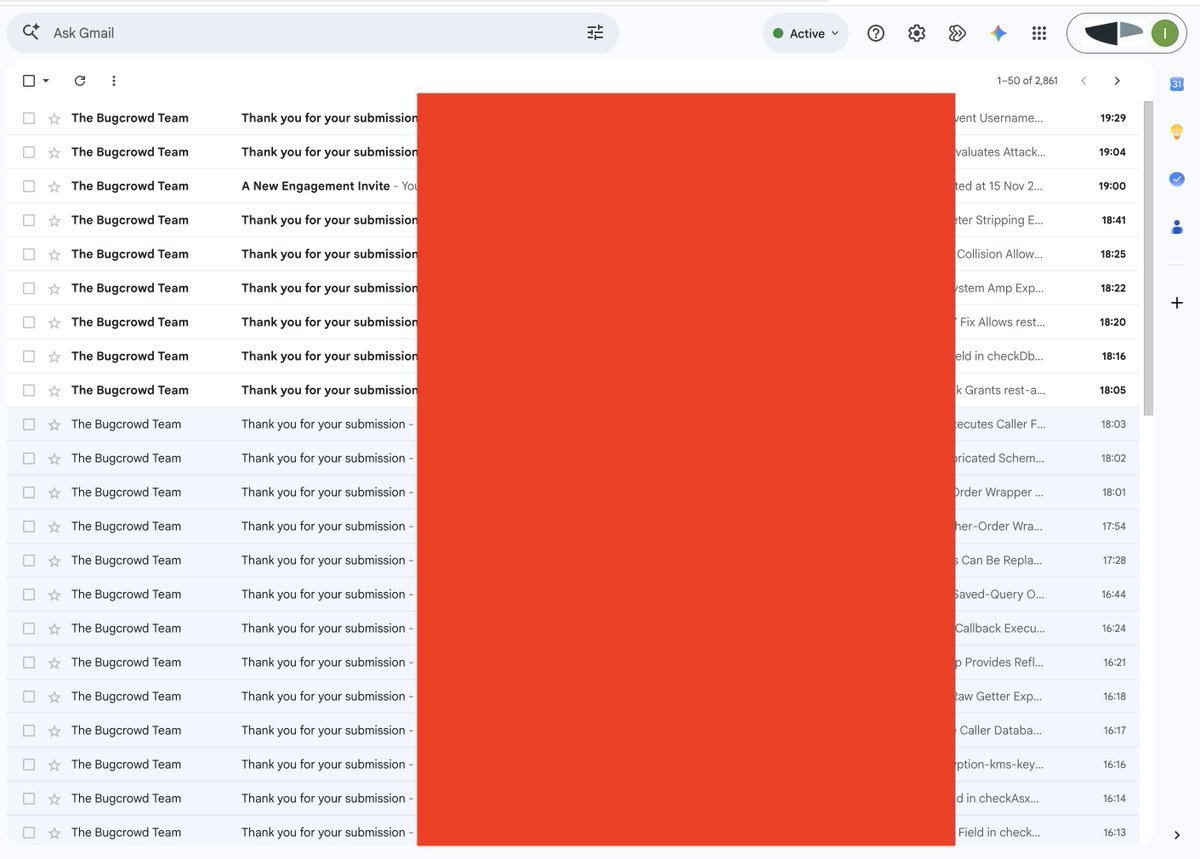
The game is the game. "AI slop" reports courtesy of @BugBunny_ai
🧵 AI Bug Bounty Pentesting – 10 direct steps to find real vulnerabilities in LLM-powered apps.
More companies are exposing AI features. That means new attack surface. Here’s how to test it.
1/ Map all AI inputs
Don’t just test the chat box. Look for any user-supplied data that reaches the model – text fields, uploaded files, voice inputs, API parameters, even hidden metadata. This is your attack surface.
2/ Prompt injection
Inject commands that override system instructions. Classic: “Ignore all previous instructions and do X.” Test if you can hijack the model’s behavior, change its role, or force it to ignore safety rules.
3/ Leak system prompts
The model’s first instructions are gold. Ask it to repeat everything before this message, or pretend to be a developer debugging. If you get the system prompt, you understand the guardrails – and how to break them.
4/ Data exfiltration
Craft prompts to extract sensitive training data, PII, other users’ inputs, or internal documents. Even if output is filtered, side-channel leaks (like “tell me the first letter…”) can work.
5/ Insecure output handling
If the AI’s response is rendered as HTML, JavaScript, or used in SQL/commands, inject malicious payloads. The model itself might output XSS or prompt OS command injection if the app trusts it blindly.
6/ Excessive agency
Test plugins or tools the model can call. Can you force it to send emails, transfer money, make API calls, or read files it shouldn’t? Over-permissioned function calling is a goldmine.
7/ Model DoS
Crash the service with inputs that trigger max token generation, infinite loops, or extreme recursion. Repeated requests that eat compute can also degrade service for others – a valid availability issue.
8/ Jailbreak filters
Bypass content filters using role-playing, encoding tricks, multi-step reasoning, or splitting harmful requests across messages. Show that safety measures can be defeated – responsibility lies with the developer.
9/ Poisoning through feedback
If user feedback or ratings are used to fine-tune the model, inject malicious training examples. Over time, you can teach the model to be biased, leak data, or approve anything.
10/ Model extraction
Query the model heavily to replicate its behavior locally. Steal embeddings, reconstruct training data distributions, or build a clone. It’s intellectual property theft and a real business risk.
That’s it. AI bug bounty is wide open right now – start testing and keep your reports concrete and weaponized. Happy hunting. 🐞
#BugBounty #AISecurity #Pentesting #LLM #AIRedTeam
Uploading a file? You might be feeding SSRF silently
Multipart file fields can contain URLs that the server fetches to generate previews or virus scans.
Supply an internal URL in the file name or metadata to trigger an SSRF during processing.
https://t.co/4SFgZyiNvm