Writing this piece has been quite fulfilling (and scary).
I spent half of last year putting in order some of my thoughts regarding how to study multicellular coordination with single-cell and spatial data. If you are interested please read the manuscript below. 😊
How to link single-cell diversity and the emergence and maintenance of robust multicellular processes in developed tissues? 🤔
What can we learn about multicellular coordination in tissues from single-cell omics data?
Read about our view: https://t.co/z5msHv5EgB
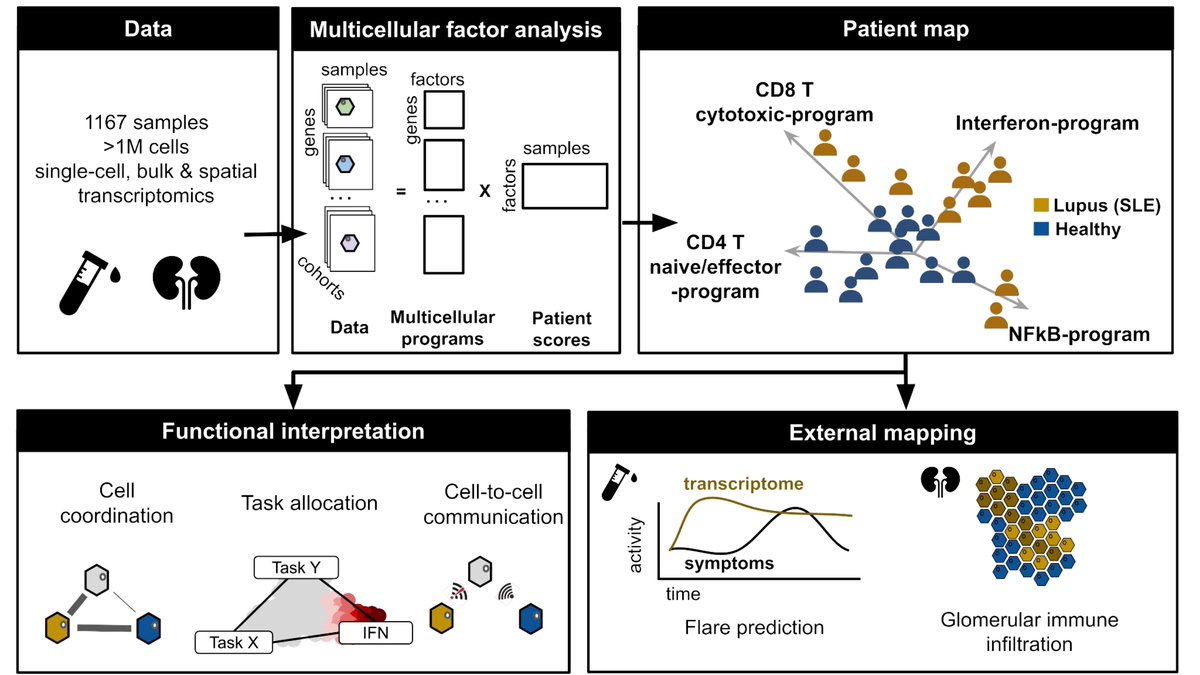
1/🧵New preprint! We built a patient-level map of systemic lupus erythematosus using single-cell blood transcriptomics, linking multicellular immune coordination to patient heterogeneity, future disease activity, and potential tissue pathology.
➡️ https://t.co/UoZulIzuz0
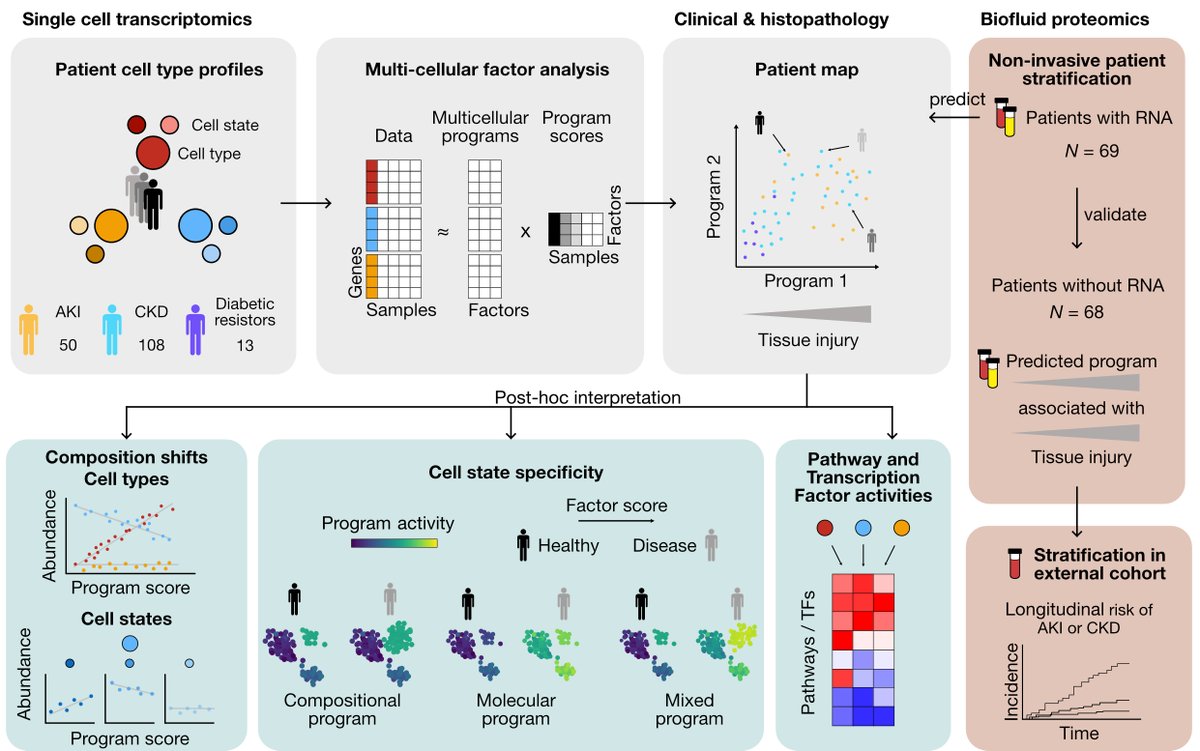
What does single-cell transcriptomics reveal about individual patients with acute (AKI) and chronic (CKD) kidney 🫘 disease? Can we use it to find new biomarkers? In our new preprint, we asked this using biopsies from 150+ participants from the Kidney Precision Medicine Project.
🧵 See 👇 our new preprint on shared and organ-specific gene expression programs of fibrotic diseases 🧬
📄 Paper: https://t.co/DK0KRmWXHf
📊 Explore the data: https://t.co/47SXGfj5l5
I'm thrilled to share with you that #visiumStitched led by Nick Eagles has now been published
Our #RStats / @Bioconductor 📦provides a framework for stitching together multiple #Visium@10xgenomics capture areas together
https://t.co/T5SIJjrKY2
@jan_lanzer and I have been preparing this work for a while, and happy that we can finally share with you all. Please don't hesitate to provide feedback on the pre-print ☺️
As the philosopher Celine Dion once said: My heart will go on🫀🔬
We've expanded our multi-study heart failure reference and proposed new multicellular analyses to get the best from scell and bulk data, all of this while learning how cells cooperate and divide labor in tissues!
What are the key disrupted multicellular processes in heart failure? In our new work we combine 23 years of molecular data with recent single-cell atlases to draw a cross-study patient map. How did we navigate the heart failure space? 🧵⬇️
https://t.co/aRDqdQxC5j
Our work with @schirmerlab in multiple sclerosis (MS) is out today in @NatureNeuro. We investigated lesion progression and cell-cell communication events in MS using snRNA-seq and spatial transcriptomics 🧠 See below ⬇️
https://t.co/j6LIwv4IgU
📢 Introducing CORNETO: a unified, knowledge-driven framework for multi-sample network learning & modeling via constrained optimization, supporting a wide variety of network methods and prior knowledge
💻Code: https://t.co/OuM9Acrs9U
📜Paper: https://t.co/XFjEbKMAAL
🧵👇
Starting today as a Staff Scientist at @emblebi!
I will continue my work @saezlab on multicellular processes with multi-scale omics. Excited to join the Genome Campus community and see where the science takes us! ☺️
Happy to catch up with friends and colleagues in Cambridge.
How good is our understanding of signaling pathways? In this study together w/ @savitski_lab@EMBL, we combine multiple state-of-the-art resources to evaluate signaling pathway inference using phosphoproteomics and kinase-substrate networks https://t.co/T2iIKGYuiZ
Kidney fibrosis as a molecular process is poorly understood. In this new study together w/ Pepperkok lab @EMBL, we present a time-resolved #multiomics + computational network modeling approach in combination w/ phenotypic assays to study #kidneyfibrosis https://t.co/9I1axrjUYl
"Several members of my faculty [told] me, 'You can't get a job at Berkeley without a Cell, Science or Nature paper'. These [same] people had gotten jobs at Berkeley without a [CNS] paper...We believe this to be true to an extent that's irrational" @mbeisen https://t.co/FOMa87xDYV
And they cost ~1% of journal articles (~0.01% of research). So whatever you think of peer review (we need more vs less vs different vs none), supporting a mechanism that provides rapid and universal free access to knowledge should be a no-brainer https://t.co/Ag3lzsl3gB
🚀 Excited to share our new publication in @NatureBiotech! We explore scalable strategies for phenotypic screening using innovative methods with to address the challenges when the number of candidates is simply too large. Check out the details https://t.co/C0oan6L18a! (1/10)
"When I suggested the data were uninterpretable given the sample size and methods, she responded that the journal had an Impact factor in the high 30s (suggesting that regardless of my opinion, it was worth attention)" https://t.co/nqnYPWQKyx
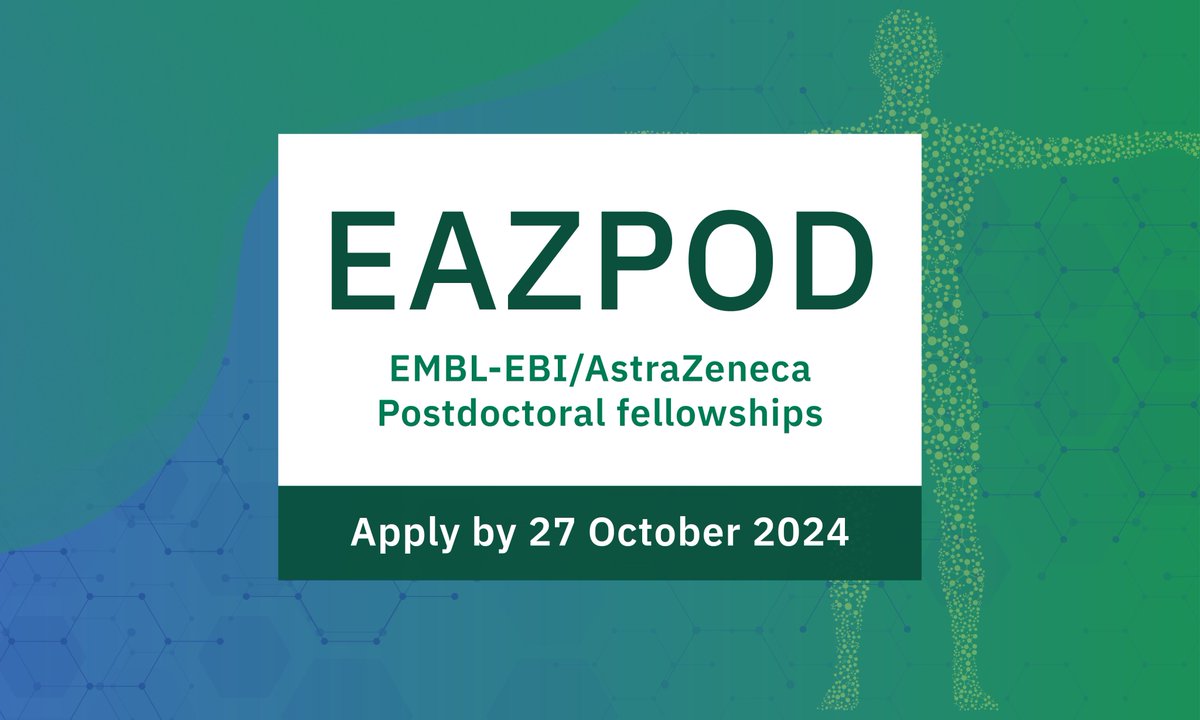
🚀 Exciting postdoc opportunity in collaboration with @AstraZeneca.
Our EAZPOD fellowships push the boundaries of cutting-edge computational biology in oncology. Combine method development & modelling with preclinical multiomics data.
Find out more 👇
https://t.co/BhJHh2Mv8i
STAMP is OUT!
Sequencing-free #singlecell RNA and Protein profiling.
Game-changing approach for scalable and cost-efficient analysis of single cells.
The future starts today!
Amazing @LGMartelotto @DrJasPlummer
https://t.co/tgsIvTtpBo
👉Consider joining us for a post-doc at @emblebi & @ASTRAZENECAUK as part of the EAZPOD program to study multicellular mechanisms associated with #cancer treatment resistance! #postdoc
https://t.co/Pfyp0P1fEf