A question that has long obsessed us: are the "seeds" of metastasis built into the primary tumor? In our new paper ,@shruthy_suresh tackled this question by combining human transcriptomics with the #Zebrafish TEAZ method to come up with the answer: https://t.co/iK6YcmB9mn
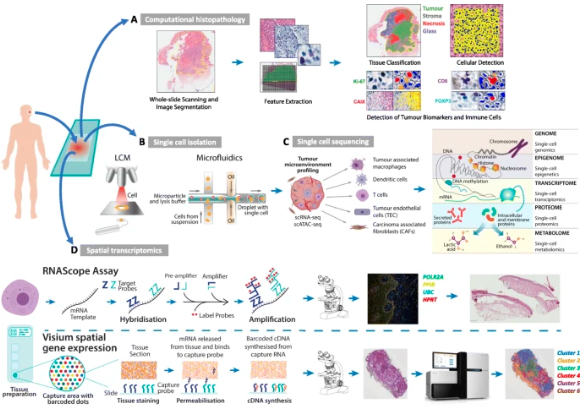
Editorial from @RoyRabbie, @David_J_Adams and co, discussing how genomics techniques can help us work out how tumors interact with their microenvironment, and in particular how single-cell techniques have revolutionized the field https://t.co/qP3V8Rjr1k
Come and join us! Happy to Zoom with any bioinformatician interested in coming to work in my group at Sanger - you could also ask former bioinformaticians including @IauraRiVA@daniela_oaks@Mamun__Rashid@RoyRabbie @stefan_seq
https://t.co/saV1cfA9zj
really interesting approach to genetic redundancy in cancer: combinatorial screens of gene "pairs". bet this general idea applies to lots of situations. congrats to @David_J_Adams lab for this great new paper: https://t.co/w19GG8ABUz
Our work is now published! 🎉Many thanks to everyone involved, especially @RoyRabbie@ABrazma, @David_J_Adams, Dr. Dominique-Laurent Courturier @CRUK_CI and the @NatureComms editorial and peer-review team for helping us strengthen our results. (1/3) https://t.co/YEfXjSfRb1
With generous support from the @The_MRC we launch the Dermatlas Project. Happy to work with groups who have interesting/novel collections of skin tumours.
https://t.co/9NYl18cvZm
Really pleased to share our study exploring the mutational landscape of melanoma brain metastases @BrJCancer! A fantastic collaboration with Peter Ferguson, @ProfRScolyerMIA & @ProfGLongMIA@MelanomaAus and Iman Osman @nyulangone! Led by @David_J_Adams!
https://t.co/LQeds7I0sK
@TurajlicLab @BrJCancer @ProfRScolyerMIA @ProfGLongMIA@MelanomaAus@nyulangone@David_J_Adams Thank you! Absolutely, as previously reported these early-brain metastases were represented by thin primaries (median BT 1.5mm) and a very long disease-free interval (median 3.3yrs from primary -> brain metastasis)!
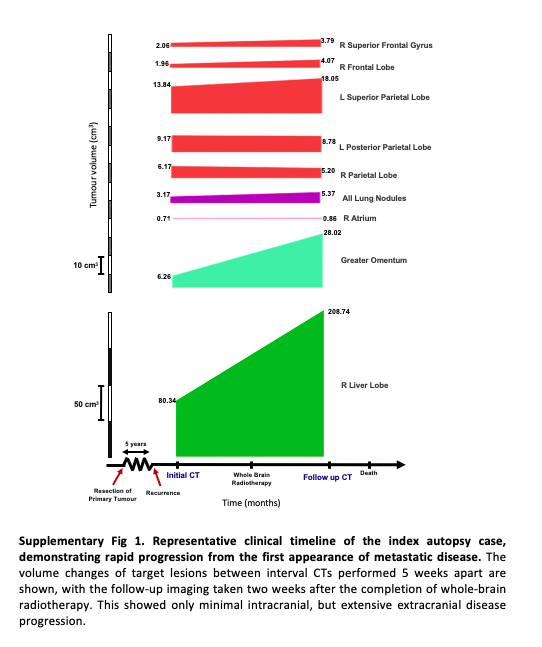
@fairfaxlab @NatureComms A repeat scan 2 weeks later (due to progressive symptoms) showed widespread extracranial PD and although targeted panel seq subsequently revealed a BRAFV600R mutation, patient was no longer clinically suitable for systemic therapy and chose to be manage with best supportive care
Our work on clonal evolution in melanoma is out @NatureComms! Genome-wide analyses of multiple metastases sampled at autopsy followed by multisite analyses from a patient series allowed us to take a deeper look into heterogeneity.[1/8] https://t.co/3DRF0Nx9IP
@fairfaxlab @NatureComms Thank you. The patient presented some time ago with symptomatic intracranial recurrence and BRAFV600E IHC was negative and we did-not have data on the effectiveness of BRAF/MEKi in intracranial disease at the time and so proceeded with WBRT.