Cheers, chills, and a standing ovation when RASolute 302 showed unprecedented survival on daraxonrasib for patients with progressive pancreatic cancer
Seldom do you sense you’re witnessing a historic moment in cancer care but this feels like ras targeting has arrived
#ASCO26
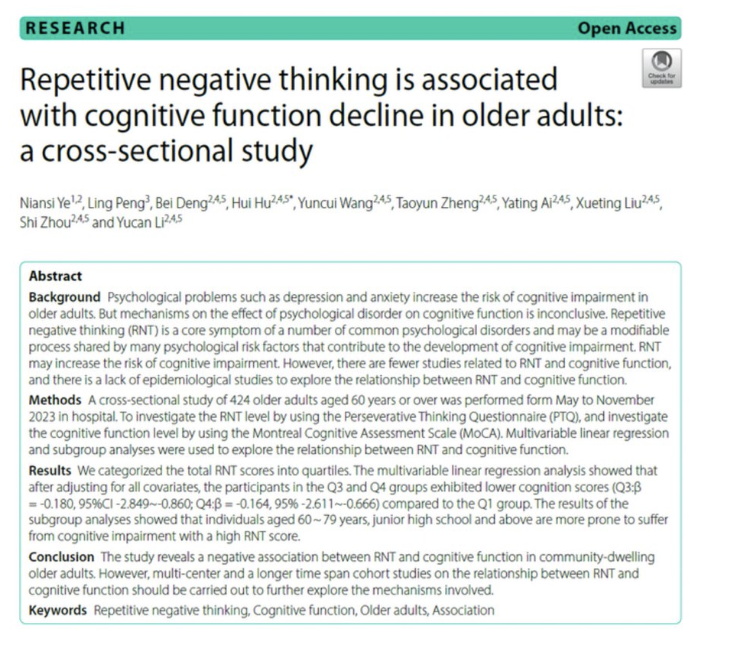
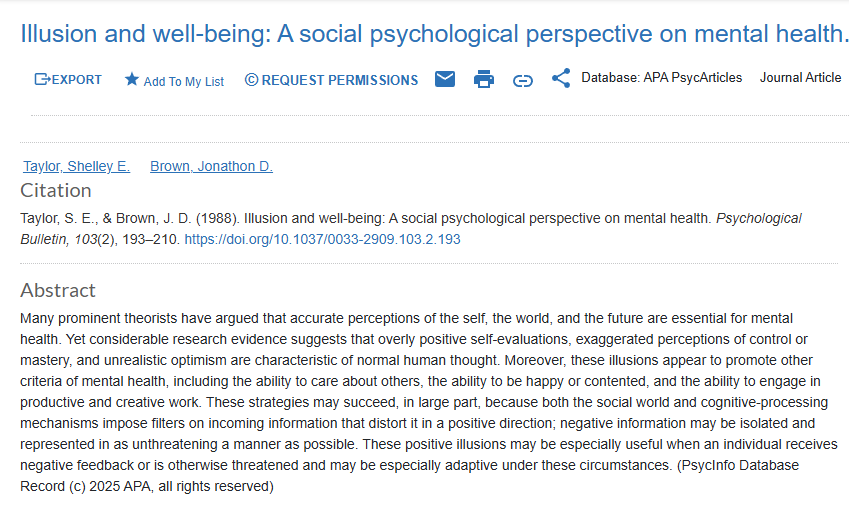
you need to be delusionally optimistic
negative thinking poisons your brain and leads to congitive decline
whereas positive thinking, and gaslighting yourself into thinking everything is amazing, ACTUALLY makes your life amazing too.
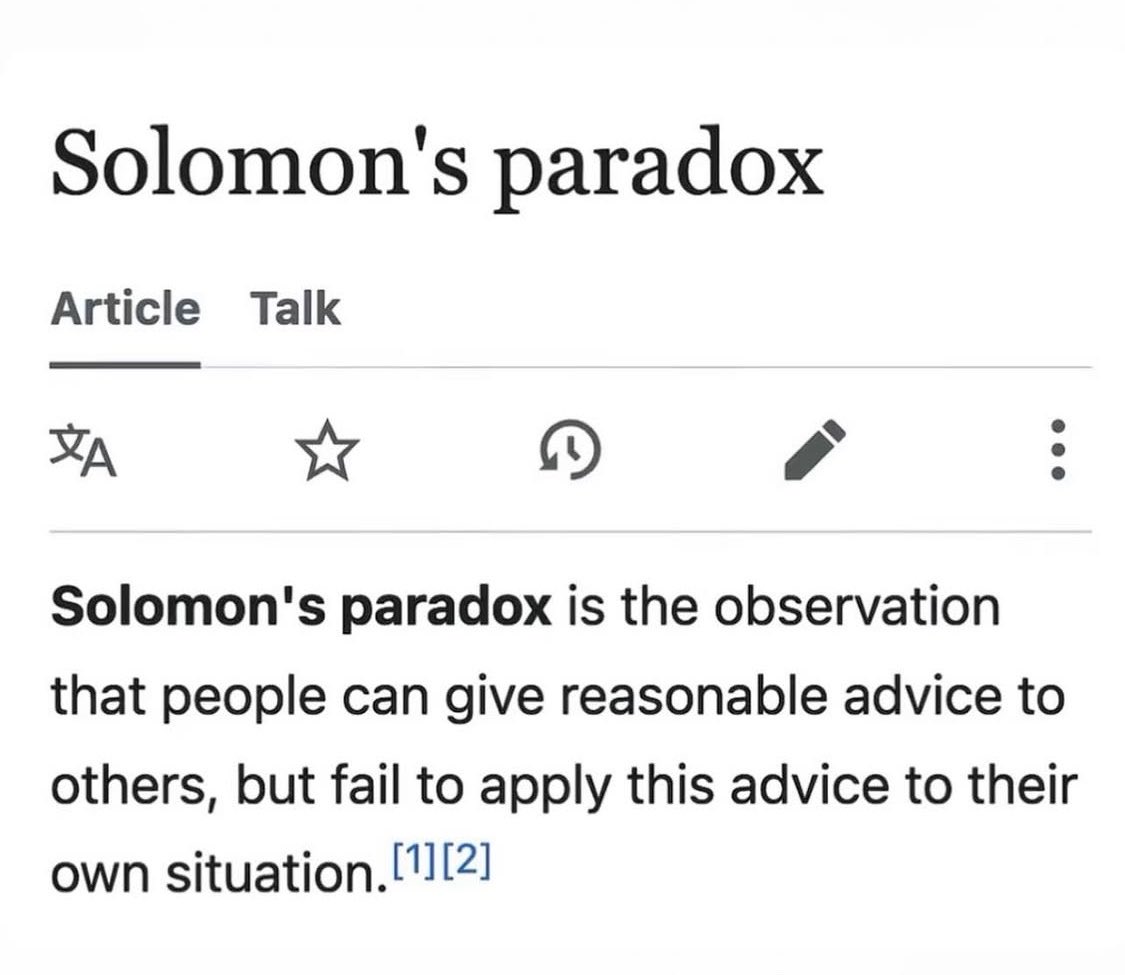
you must be a silly goose
Two Anthropic engineers spent 24 minutes exposing every Claude Code feature you didn't know existed.
Most people will scroll past this. Don't be most people.
Worth a read! 😍
My mom wanted to send me homemade pickles. But I said ‘no’.
I was 27, living in New York, working on Wall Street. I didn't need pickles shipped across the world. The shipping would cost more than buying them here.
Three years later, I read the psychologist take on what I'd actually done. When you reject someone's offer to help, you're not just declining assistance. You're declining their need to matter to you!
Benjamin Franklin figured this out in 1736. He had a rival in the Pennsylvania legislature who hated him. Instead of trying to win him over with favors, Franklin asked the rival to lend him a rare book.
The rival agreed. They became lifelong friends. It's called the Ben Franklin effect.When people do something for you, they convince themselves they must like you. Otherwise, why would they help?
My mom didn't want to send pickles because I needed them.
She wanted to send them because SHE needed to feel useful to me. To feel like despite the ocean between us, she still had a role in my life.
Every time I said "I'll manage," I was taking that away from her. Here's what I learned after a decade of living away from home:
→ Accepting small favors isn't about you needing help.
It's about letting people you love feel needed.
Your dad wants to transfer ₹5000 even though you earn well?
Let him.
Your friend wants to pick you up from the airport even though Uber exists?
Say yes.
Your partner wants to make you tea even though you can make it yourself?
Accept it.
The people who love you don't want to solve your big problems. They want to matter in your small moments.
Let them. #lifelesson
This paragraph by Richard Feynman hits so hard:
“Fall in love with some activity, and do it! Nobody ever figures out what life is all about, and it doesn’t matter. Explore the world. Nearly everything is really interesting if you go into it deeply enough. Work as hard and as much as you want to on the things you like to do the best. Don’t think about what you want to be, but what you want to do. Keep up some kind of a minimum with other things so that society doesn’t stop you from doing anything at all.”
Your brain doesn't age because of time. It ages because of repetition. The more predictable your days become, the faster your neurons quiet down. Your brain builds neural pathways based on experience. New experiences create new connections. Repetition strengthens old ones. But when you repeat the same patterns for years, your brain stops building. That's why time feels faster as you age. Your brain stops encoding new memories. It just references old ones. A year at 40 feels shorter than a year at 10, because at 10, everything was new. At 40, everything is familiar. But neuroplasticity doesn't stop. You can still grow new neurons. You can still learn. You can still change. You just have to break the loop. Your brain will wake up. And time will slow down again.
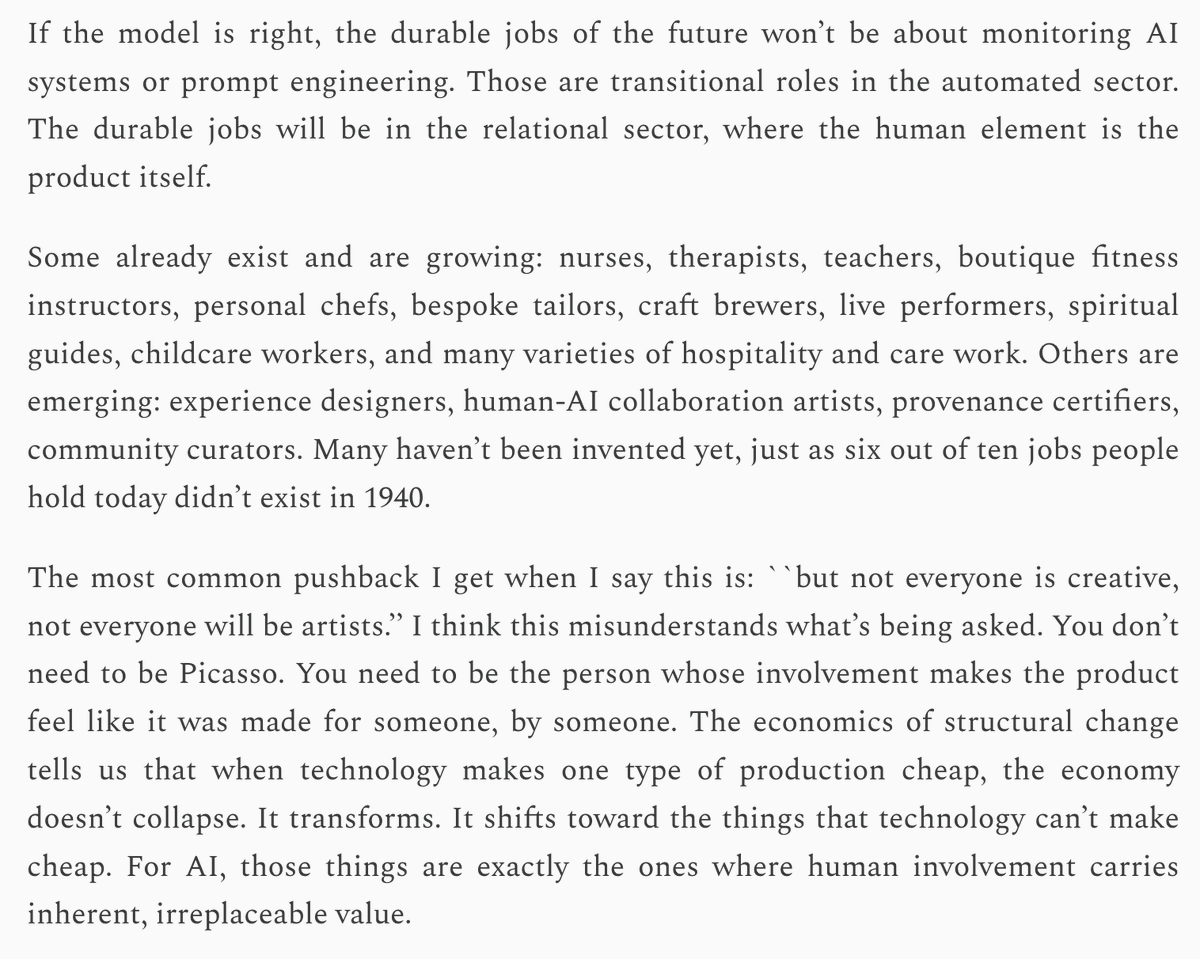
This essay by @alexolegimas is the best thing I've ever read on why AGI won't lead to mass unemployment. A compelling argument backed up by substantial empirical data.
This 2-hour Andrej Karpathy lecture will teach you how to build a Neural Network from scratch better than most engineers at top AI companies will ever bother to learn
No frameworks. No libraries. Just pure code and math
The same guy who built Tesla's Autopilot AI and co-founded OpenAI recorded this for FREE on YouTube
Bookmark & give 2 hours, no matter what. It'll be the most productive thing you do this week
This 30-minute speech by the Head of Anthropic "Coding Agents" researcher will teach you more about vibe coding than 100 paid courses.
Bookmark it & give it 30 minutes today. This video will change the way you use AI forever,
every time you replace “this is hard” with “what’s the first step?” you shift brain activity from your amygdala (fear) to your prefrontal cortex (problem-solving).
that’s neuroplasticity in real time.
On day 1 of my high school history class, our professor got up and said
You are 15 or 16 years old. 200 years ago people your age were married, planted crops, had children, and built a cabin by winter. You can do your homework. The bar set for you historically is embarrassingly low. You are not dealing with regional famine or plague. You do not have to save your family from marauders or go into battle to destroy your enemies. You have to sit down and learn from someone who cares about you in a safe, air-conditioned room. You have no excuses.
🚨BREAKING: 8 weeks of gratitude practice physically rebuilds the neural pathways between your memory and reward centers.
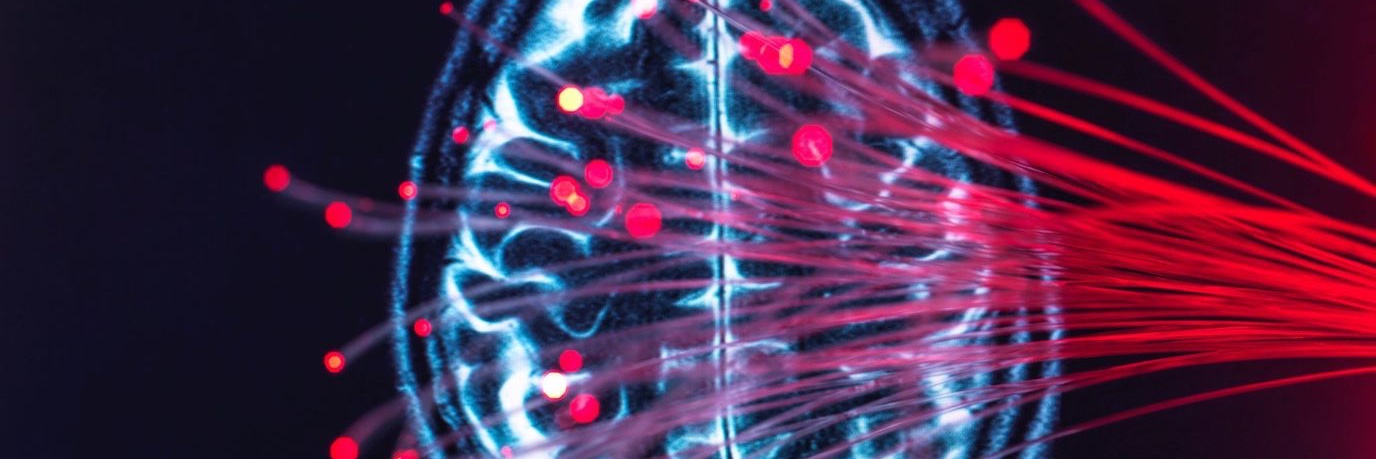
Your brain physically rewires itself every time you feel grateful.
Eight weeks of intentional gratitude practice creates measurable structural changes in the neural pathways connecting your hippocampus to your ventral tegmental area. The memory center starts talking to the reward center in a fundamentally different way. New synaptic connections form. Existing ones strengthen. The physical architecture of how you process positive experiences rebuilds itself.
Most people approach gratitude like a mood they can choose to feel. A psychological vitamin they remember to take when life gets difficult. The neuroscience reveals something far more profound.
Gratitude is a biological intervention that sculpts brain tissue.
Researchers tracked participants practicing gratitude exercises for two months using brain scans. They watched new neural highways construct themselves in real time. The anterior cingulate cortex developed stronger connections to the medial prefrontal cortex. The brain learned to route positive emotional experiences through higher order thinking centers instead of storing them as fleeting feelings.
Every positive experience you’ve ever had exists as a neural trace in your memory network. Most sit dormant, accessible only when something external triggers the specific sensory combination that originally encoded them. You smell coffee, suddenly remember a conversation from years ago. Random. Unreliable. Outside your control.
Gratitude practice systematically rewires that retrieval system.
After two months, participants could voluntarily access positive memories with increasing ease. Their brains had built stronger pathways between memory storage areas and emotional processing centers. They experienced deeper emotional resonance during memory retrieval. The quality of remembering itself had improved.
The participants also started noticing positive details in their present environment they had previously filtered out. Their attention systems recalibrated. The same neural pathways pulling positive memories forward were scanning current experiences more thoroughly for elements worth encoding as positive memories.
Their brains became biased toward collecting evidence that life contains meaningful moments.
Most cognitive interventions try to change how you interpret negative experiences. Gratitude practice changes how thoroughly you notice positive ones. It teaches your visual and emotional processing systems to detect opportunities and pleasures that were always present but neurologically invisible.
The timeline reveals something crucial about neural plasticity.
Weeks one through three showed minimal structural changes.
Participants felt slightly more positive, but brain scans looked identical to baseline. Weeks four through six showed the first measurable increases in gray matter density. Weeks seven and eight revealed entirely new neural network formation.
Two months. Your nervous system can physically restructure itself with consistent practice.
The method was almost embarrassingly simple. Participants wrote down three specific things they felt grateful for every evening, explaining why each mattered. No meditation apps. No guided visualizations. Just pen, paper, and the requirement to identify gratitude targets with enough detail that their brains had to actively search for positive elements.
Specificity drives the neural development.
General statements like “I’m grateful for my family” generate different brain activity than precise observations like “I’m grateful my daughter laughed at my terrible joke during dinner because it showed me she still finds me funny despite growing more independent.”
The brain needs detailed targets to practice connecting memory specifics to emotional rewards.
After eight weeks, participants developed a fundamentally different relationship with their attention and memory systems. Someone whose brain automatically scans for and emotionally amplifies aspects of experience that make existence feel worthwhile.
The neural pathways remain permanent after practice ends.
Gratitude carves lasting roads through consciousness.
To think that we aren't just going "to the Moon," but rather traveling to meet it at an exact point in space... changes everything.
It all comes down to orbital mechanics: arriving at the precise location, at the precise moment.
One tiny error... and it simply doesn't happen