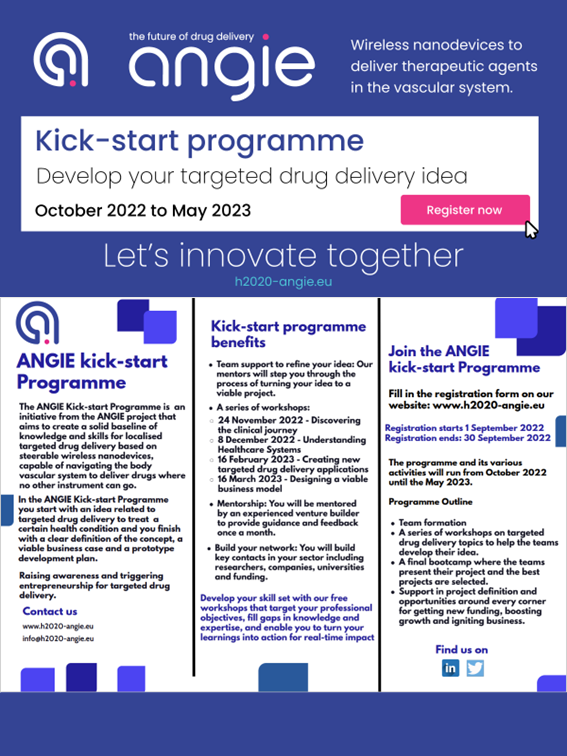
Wondering how the small-scale world can help us in health care? The EU-funded ANGIE project will forge ahead with small-scale robotics, magnetic navigation systems, and localized targeted drug delivery. Register now for our kick-start program at https://t.co/lizUUKSE47! 30/9/22
#A laser-modified cork sensor enables rapid, sensitive detection of sodium nitrite in beverages, offering a sustainable approach to monitor food safety and prevent exposure to carcinogenic compounds. https://t.co/isDemlB2GQ https://t.co/heiuRyChQ6
🗺️ 🤖 “Technology Roadmap of Micro/Nanorobots” review has been published in @acsnano. This MEGA Review—authored by 103 researchers 🧑🔬 , spanning 161 📃 A4 pages, and citing 1,765 references—brings together leading groups from around the world. See https://t.co/LM9TEtk1TR
Discretised microfluidics for noninvasive health monitoring using sweat sensing
#OpenAccess from Jaap den Toonder et al
https://t.co/X1YMRfByj0
@Tueindhoven
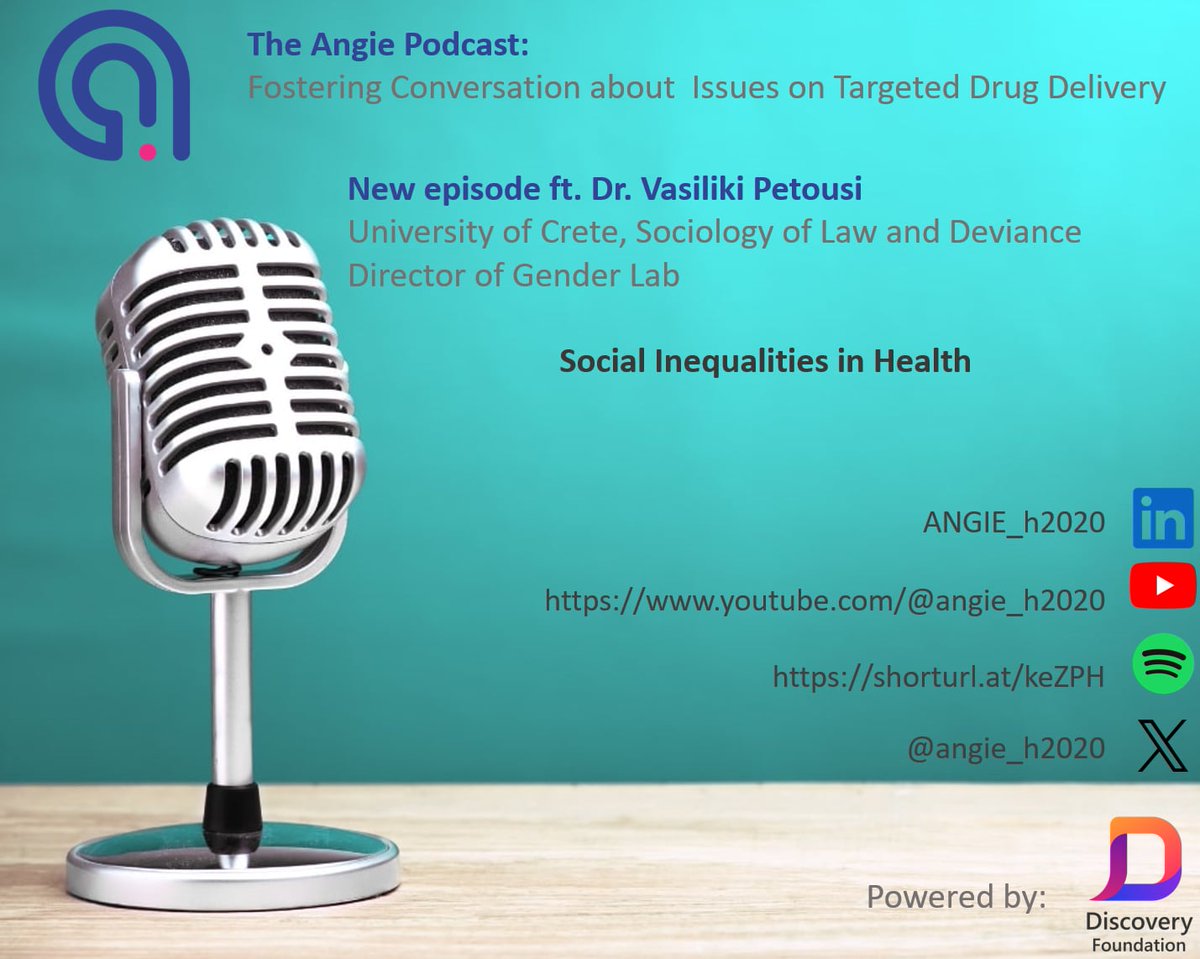
In the new episode of the ANGIE podcast we discuss Social Inequalities in Health with Professor Vasiliki Petousi from University of Crete, Director of the Gender Lab. Listen to the full Episode in the following link: https://t.co/Zi8TsWZ2hQ
ANGIE: The Future of Targeted Drug Delivery Using Magnetic Microrobots
https://t.co/ofvZ0X6sOz
Prof. Dr. Bradley Nelson and Prof. Dr. Salvador Pané introduce the ANGIE project, a significant advancement in targeted drug delivery. #StrokeResearch#StrokeInnovation#nanomedicine
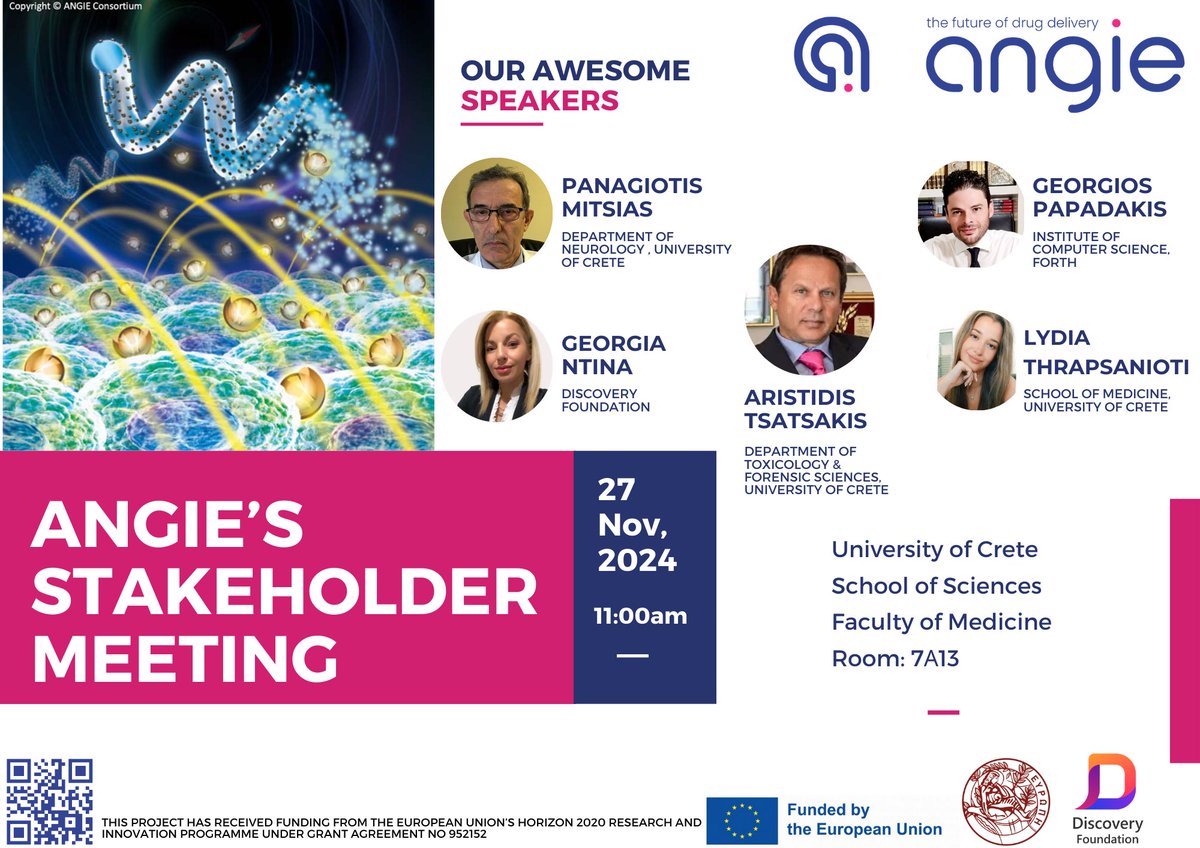
ANGIE hosted its final Stakeholder meeting today,in Crete. After 4 years of successful collaboration and established partnerships with experts and organizations across Targeted Drug delivery field, the ANGIE consortium and stakeholders showcased the major outcomes of the project
An innovative device uses liquid crystals in head-mounted displays to seamlessly switch between virtual and augmented reality, unlocking new possibilities for extended reality!
@UofGEngineering@UofGChem@UofGPhysAstro
Find out more: https://t.co/EfmRD0oWsY
Microrobots and targeted drug delivery for stroke treatment! ANGIE's breakthrough technology holds up the promise of making a big impact on the field of minimally-invasive vascular procedures. #StrokeTreatment#MedTech#Innovation#microrobots
https://t.co/T2KJxcWMZV
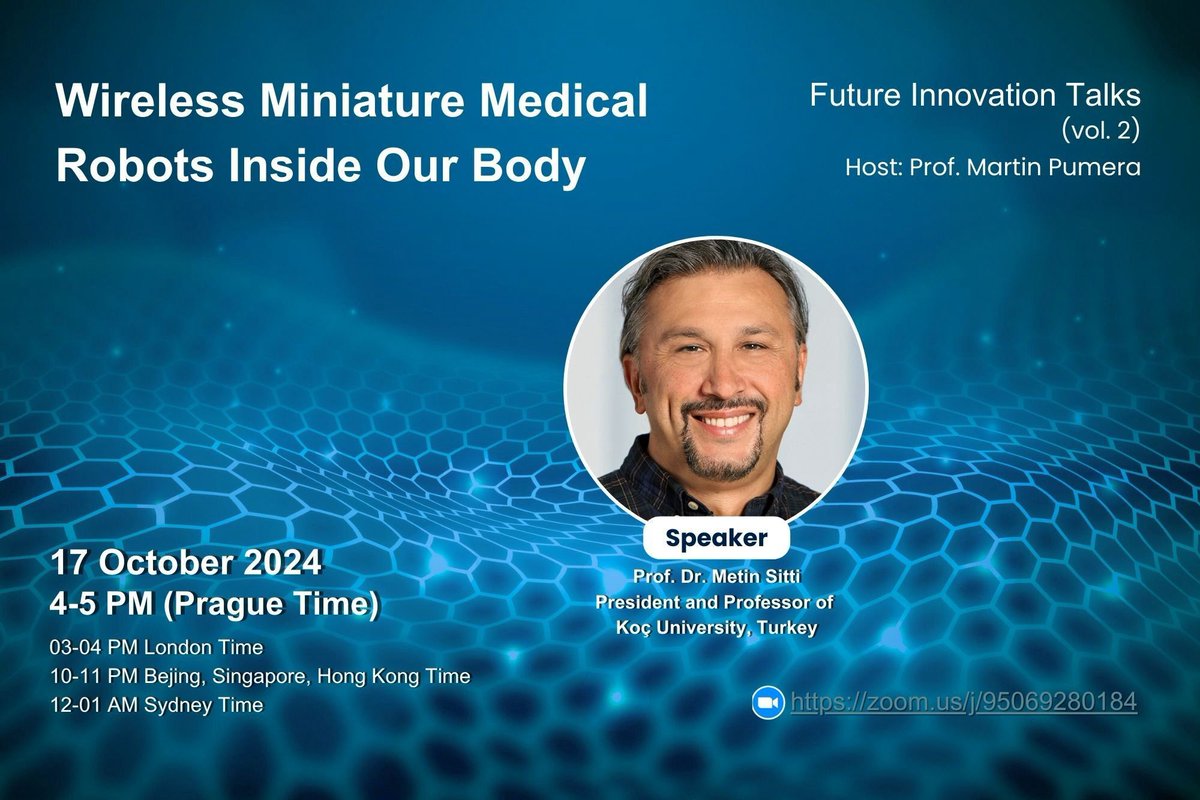
📢 Join us for the next Future Innovation Talk "Wireless Miniature Medical Robots Inside Our Body." by @metin_sitti ! 🌟
🗓️ 17 Oct 2024, 4-5 PM (Prague Time) 🔗 Zoom: https://t.co/bWn45nk3A3
Don’t miss out on this inspiring talk! Please share w/ colleagues. 🤖
#MedicalRobotics
When proteins meet LCNs! Collaboration between us & @UWaterloo with @abdon_pf @UMich
Swimmer from Chemical Protein Motors & LCNs with active and passive directionality
Congratulations to Chuqi , Natalie, Chia-Heng Lin, Irving Tejedor, Matthew. More👇
https://t.co/5qtbLZ9DEp
Our new paper is now out!!
Find the full article,"Magnetically Guided Microcatheter for Targeted Injection of Magnetic Particle Swarms", in the following link:https://t.co/USvlwrqiyh
If you are interested in #blood_flow simulation, check out our recent #OpenAccess article in “Computers in Biology and Medicine”
https://t.co/Il8P5Yq39C
We proposed an upscaling strategy to make cell-level blood simulations applicable to larger scale bio-#microfluidics.
A phenomenon similar to an economic principle known as the Great Gatsby Curve—which describes how generational wealth predisposes one’s children to higher incomes—also plays out among scientists, argues a new study. https://t.co/K8OiXAwCWw @ScienceCareers
Our zwitterionic programmable hydrogels for small-scale robotics came out in Small Methods!
Work by SMART-LAb @uwaterloo_che, lead by @NeginBouzari & Rasool Nasseri & collaboration @TangLab_NanoBio & Tiz Mekonnen's team @UWaterloo & @Amir_UStuttgart
https://t.co/LwSdp5uo6T