@thesamuelnam Finally good enough to switch from the iPhone? I got the fold 7 after watching your video, then went to the air as needed the Apple ecosystem.
@thesamuelnam Hahah @thesamuelnam as I asked before, which do you prefer in the end. I have sung both but need to keep one. It’s really hard every time you open up the fold and think of all the extra stuff the screen allows you to do
@9to5mac Dumb. Pro users would not trade pro features for a slimmer phone although there are lots like me who really want a slimmer and lighter phone. Also foldable phones pls!
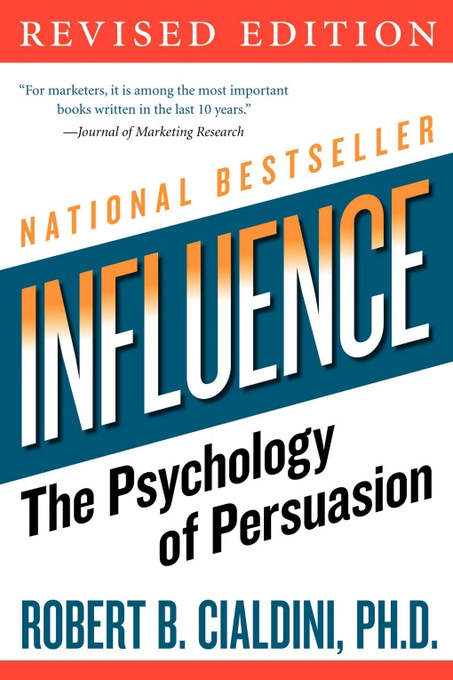
Charlie Munger's favorite book on Human Behavior is Influence by Robert Cialdini.
Here are my 14 most important Takeaways:
1. Automatic Behavior Patterns - We use stereotypes as shortcuts, and by and large, they help us.
But they can also work against us: Expensive = Good
2. Reasoning Fallacy - Phrases like "because" even work when no sensible reason follows.
3. The Contrast Principle - A flaw in human perception that affects how we see differences between two things presented one after another.
If the second item is fairly different from the first, we overestimate the difference: Hot Water / Cold Water
4. The Rule of Reciprocation - We feel obliged to repay, in kind, what another person has provided us. Learning: It pays to be kind!
5. Commitment and Consistency - We feel pressure to behave consistently with our commitments.
After buying a stock, you feel more confident in its outlook.
6. The Power of Writing - Writing something down has an extremely committing power.
Learning: Write down things that matter to you!
7. The Power of Public Statements - Due to our commitment bias, we strongly hold on to publicly made statements.
Use this for the good and make things public that you really want to commit to.
8. The Principle of Authority - Another shortcut is to follow the lead of credible, knowledgeable experts.
This is totally reasonable 90% of the time. But pay attention to the other 10%.
Looking for incentives is the best way to avoid the
10%.
9. Foolish Consistencies - One last thing about consistency and commitment:
"A foolish consistency is the hobgoblin of little minds." - Ralph Waldo Emerson
10. Social Proof - We tend to look to the actions and behaviors of others to determine our own.
11. The Risk of Social Proof - The greater the number of people who find any idea correct, the more the idea will be correct.
Without any consideration of reason.
12. Automatic Pilot - Automatic Pilot Devices, like social proof, should never be trusted fully.
13. Scarcity - Opportunities seem more valuable to us when their availability is limited.
14. Shortcuts - Most of the above-mentioned biases and tendencies are based on our need for shortcuts.
Shortcuts are helpful and needed in today's world. But sometimes, we should pause and question them.
Follow me @MnkeDaniel for more daily content on Investing and Psychology!
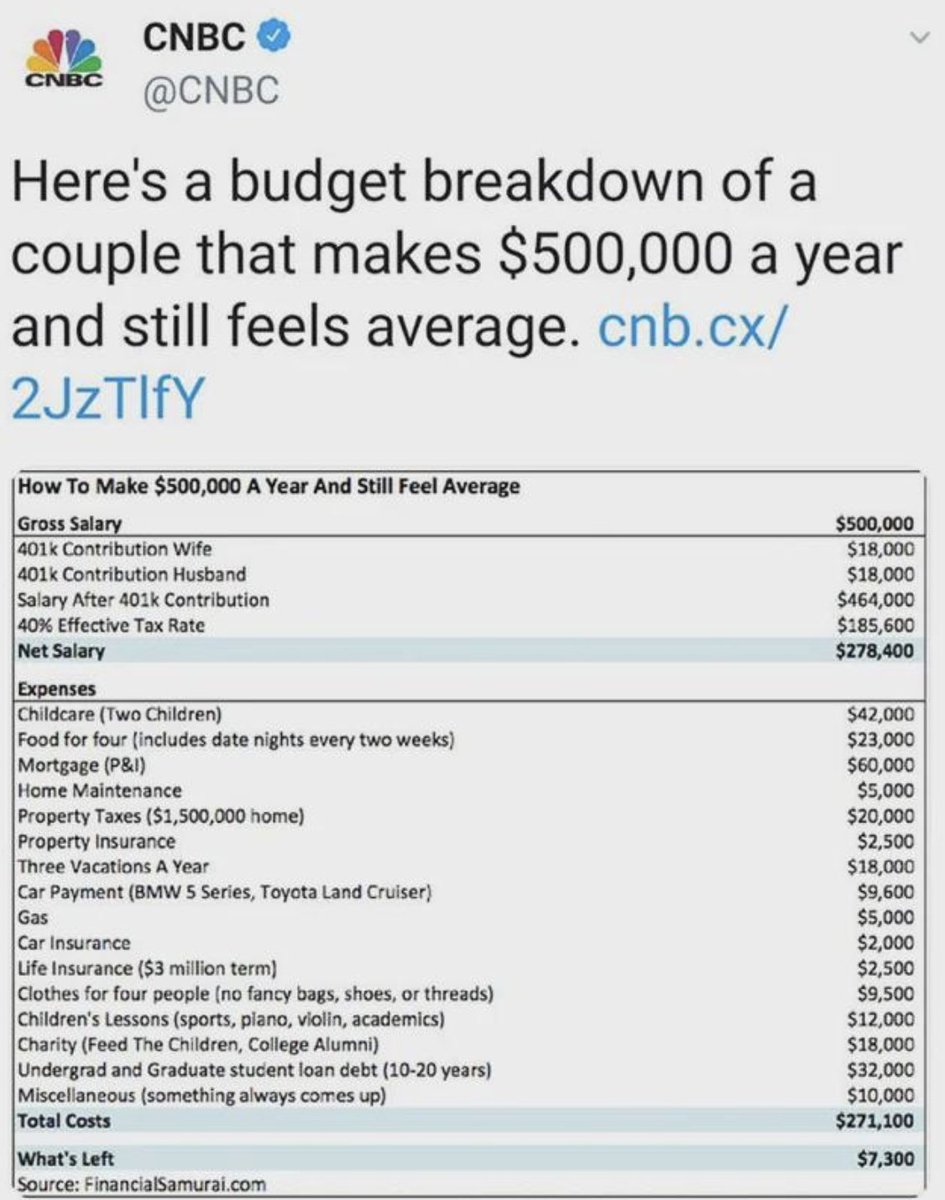
This is nothing. I remember being on trading floor in 08, at the absolute worst of the crisis, and hearing people making 2 mill a year saying, "It's all over. I'm toast." and realizing even though they'd been making that for a few years, they'd leveraged up into fixed costs that consumed almost all of it.
When pushed a little more, the fixed costs were things like a $45K Hampton summer rental ("you gotta do that").
My small advice is, don't stop living like a grad student, or monk, or struggling artist. Both financially, and mentally. Because then, everything else beyond the necessities is gravy, and after awhile, you stop wanting gravy (except for a few special moments) because you realize it's empty.
35 super uncomfortable facts about life that'll make you indestructible.
1: The vast majority of millionaires are self-made.
2: Money is attracted to people who work.
3: Marrying the right person is the greatest life hack.
7 Movies to watch over Christmas break that don't waste your time.
They carry lessons on Money, Human Nature, Motivation, and much more.
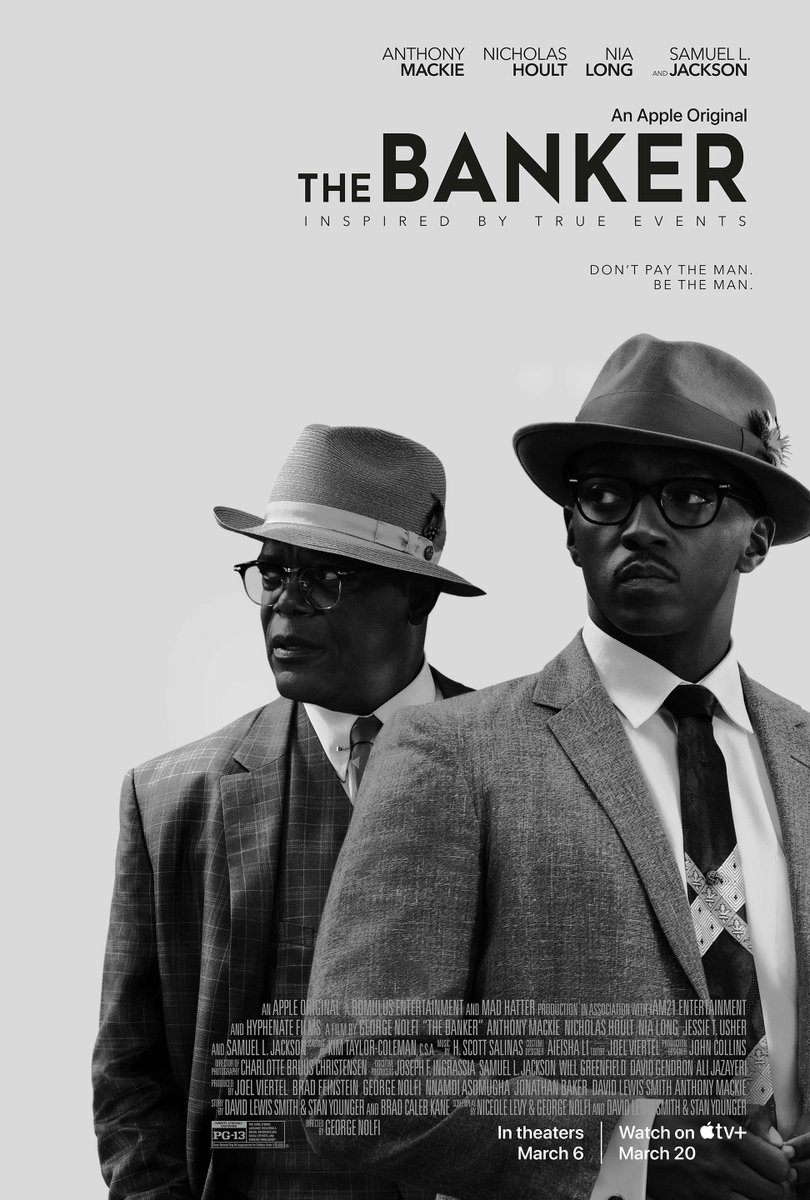
1. The Banker
An inspiring story about two of the first African-American bankers.
Based on a true story. A Masterclass on business.
Three lessons from a CEO of a PE fund which has $13bn AUM.
He shared on how he started out:
- Left investment banking in his early 30s and became an independent sponsor
- Simultaneously started consulting / advisor to support his family and pay dead deal fees
- Didn’t find his first deal for over 18 months.
His biggest takeaway was had he not had some money coming in for the dead deal fees and his overall expenses he’d have rushed to do a bad deal.
His first 3 deals averaged close to a 10x multiple on his capital.
Today he runs a massive organization and owns a pro sports team.
“Don’t put yourself in a position to be forced to do a bad deal – have reserves to support yourself and dead deal fees and do some advisory to help keep you in the game.”
Michael Seibel on how to get and test startup ideas
As the former CEO of Y Combinator puts it in the clip below:
“There’s a common misconception that your idea has to be great to start a company, and the first thing I want to do is destroy that misconception.”
Michael was one of the cofounders of JustinTV, which later become Twitch and sold to Amazon for almost $1B. Their original idea was to create an online reality TV show—very different from where Twitch eventually ended up.
Rather than falling for the trap of thinking that your initial startup idea has to be great, Michael advises founders to start with a problem:
“Starting with ideas is tricky because people immediately want to grade your idea. It’s a lot easier to start with a problem and think about how you grade a problem.”
Ideally the problem you set out to solve is one you've experienced personally or have some sort of connection to. You should ask yourself: “why am I uniquely qualified to work on this problem?”
Is there some unique angle or approach you're taking to the problem that you understand but you don't believe others understand?
Peter Thiel argues that “great companies have secrets: specific reasons for success that other people don’t see."
After identifying a problem, you’ll want to start thinking about your MVP. What's the first solution you're going to build and release to see if you can help your initial users solve this problem?
But don’t fall in love with your MVP. As Michael puts it:
“A lot of people fall in love with their product and are not in love with their problem or their customer. I advise the opposite. Be in love with your problem. Be in love with your customer. And treat your product in a way that can change, develop, and improve.”
And once you have an MVP, you should have a strong opinion about who your initial customer is and handpick all of your initial users. The goal with an MVP is not to see how many people want to use your product. It's to see if your solution actually solves the problem for your initial target customers.
“The best startups very heavily filter the people who are able to use the initial product and make sure that they’re the right type of initial customer.”
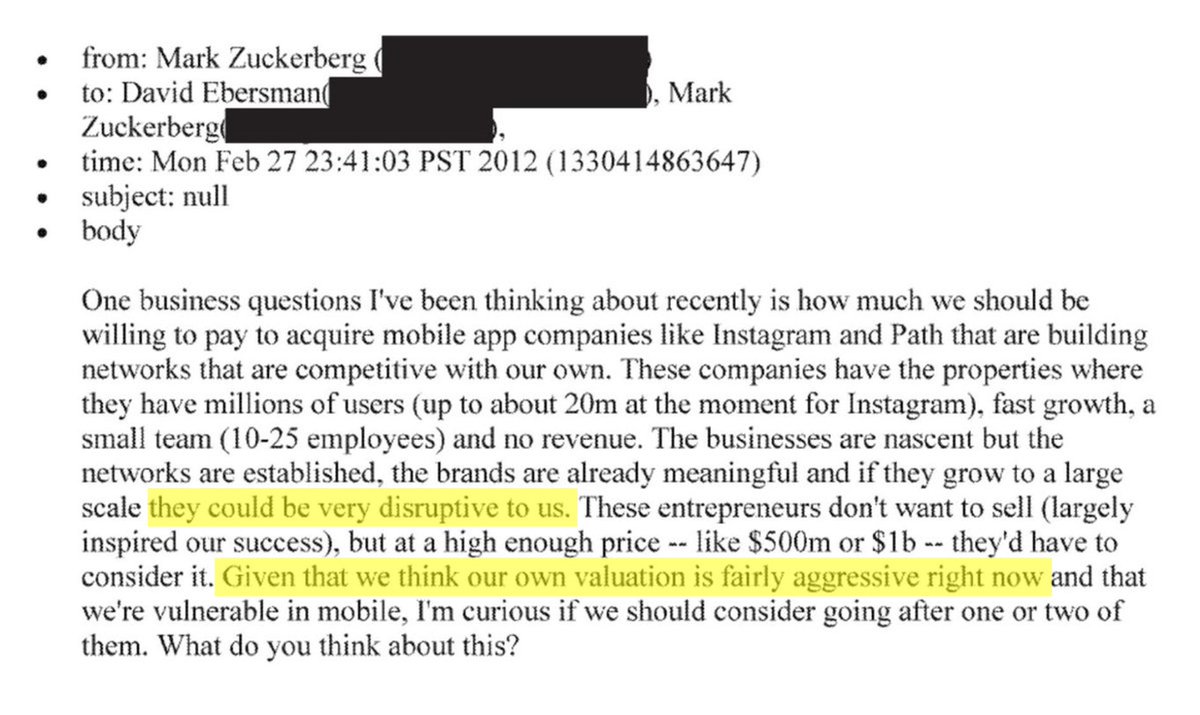
Mark Zuckerberg’s advice to 19 year olds that want to have an impact
Even though Zuckerberg was 19 when he started Facebook, he advises not turning your idea into a company until it’s working:
“I always think the most important thing entrepreneurs should do is pick something they care about and work on it, but don’t actually commit to turning it into a company until it’s working. If you look at the data of the very best companies, I think a tremendous percentage of them have been built that way and not from people who decided upfront that they wanted to start a company because you just get locked into a local maxima a lot of the time.”
Sam Altman agrees.
Facebook didn’t become a formal company until 6 months in when Peter Thiel invested. In fact, Mark and Dustin Moskovitz even told Peter that they were still planning on going back to school for their Fall semester.
Paul Graham gives similar advice in his essay “Want to start a startup?”:
“So if you want to start a startup one day, what should you do in college? There are only two things you need initially: an idea and cofounders… [and] the way to get startup ideas is not to try to think of startup ideas… if you make a conscious effort to think of startup ideas, the ideas you come up with will not merely be bad, but bad and plausible-sounding, meaning you'll waste a lot of time on them before realizing they're bad.
The way to come up with good startup ideas is to take a step back. Instead of making a conscious effort to think of startup ideas, turn your mind into the type that startup ideas form in without any conscious effort. In fact, so unconsciously that you don't even realize at first that they're startup ideas.
This is not only possible, it's how Apple, Yahoo, Google, and Facebook all got started. None of these companies were even meant to be companies at first. They were all just side projects. The best startups almost have to start as side projects, because great ideas tend to be such outliers that your conscious mind would reject them as ideas for companies.”
Really excited to share with customers Amazon Q—a new type of generative AI-powered assistant that is specifically for work and can be tailored to your business.
Amazon Q can help you get fast, relevant answers to pressing questions, solve problems, generate content, and take actions using the data and expertise found in your company’s information repositories, code, and enterprise systems. When you chat with Amazon Q, it provides immediate, relevant information and advice to help streamline tasks, speed up decision-making, and help spark creativity and innovation at work. Amazon Q is both your expert for building on AWS, and for analyzing your business.
We’ve built it to be secure and private, and it can understand and respect your existing identities, roles, and permissions and use this information to personalize its interactions. If a user doesn’t have permission to access certain data without Amazon Q, they can’t access it using Amazon Q either. And, from day one, we’ve designed Amazon Q to meet stringent enterprise customers’ requirements—none of their content is used to improve the underlying models. https://t.co/k99DMRIrQ8