One of the easiest things you can do to reduce symptoms of anxiety (overthinking, rapid heartbeat and feeling DOOMED 99% of the time etc) is to regularly practice vagus nerve stimulation.
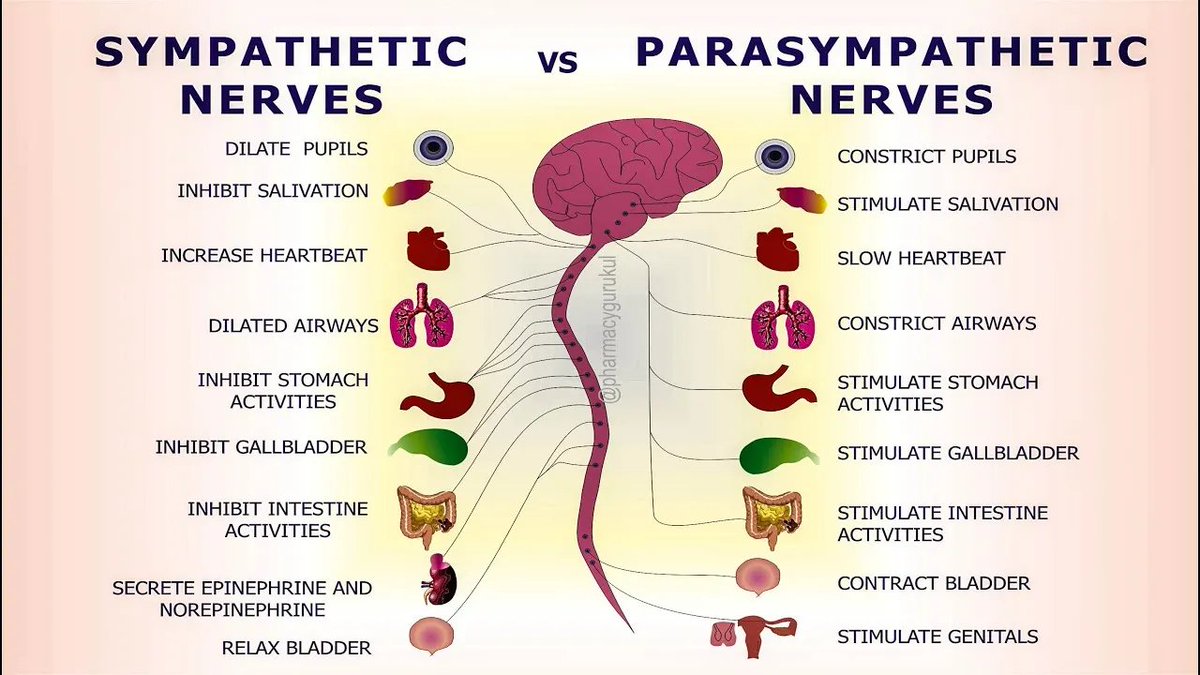
The vagus nerve is the 10th cranial nerve and it functions as the main activator of the parasympathetic (rest and digest side of the nervous system.)
When this nerve is working incorrectly, you will experience symptoms of anxiety, panic and elevated stress (due to overactivation of the sympathetic nervous system)
When the vagus nerve (specifically the ventral vagul branch) is activated however, the parasympathetic nervous system is activated:
- Cortisol levels reduce
- Blood flow to the extremities increase (hands, feet, hair, scalp, teeth, face) etc
- Blood flow to the gut and penis/vagina increase leading to improved digestion, stomach acid and enzyme production and secretion, gut lining repair and improved fertility
- Saliva production increases leading to improved oral health and better teeth quality- you will have better teeth when stress levels are low
This nerve is VERY important for overall health and keeping the autonomic nervous system balanced. It’s called the soul nerve for a reason - this nerve seems to be dysfunctional in “mental” illnesses and illnesses like epilepsy, digestive issues etc so it’s important to stimulate it regularly with things like:
- Nape massages (specifically where the brainstem is)
- Deep breathing with long exhales
- Inner ear massage
- Outer ear massage (The vagus nerve has a small but significant branch - the auricular branch, or Arnold's nerve - that innervates the external ear, specifically the cymba conchae and tragus.)
- Carotid sinus massage - gentle circular pressure on the side of the neck where the carotid artery pulses, just below the angle of the jaw - activates baroreceptors that send signals through the vagus to the brainstem, producing a reflexive decrease in heart rate.
- Massage your chest and gut - Abdominal massage stimulates vagal afferents throughout the digestive tract. Research in patients with postoperative ileus (gut paralysis after surgery) has shown that abdominal massage can restore gut motility through vagal activation (Clockwise circular massage over the abdomen stimulates vagal afferents in the gut wall.)
- Humming, gargling or chanting
- Eye movements
- Laughter - LAUGH - Genuine laughter is a powerful vagal stimulant that works through several simultaneous mechanisms. It produces vigorous diaphragmatic contractions that directly stimulate vagal fibers passing through the diaphragm. It triggers extended exhalation (you cannot laugh while inhaling), activating the respiratory-vagal pathway. It releases endorphins and oxytocin, both of which enhance parasympathetic activity. And when laughter occurs in a social context, it activates the ventral vagal social engagement system.
- Posture and relaxation poses (like legs up on the wall)
- Body movements, stretching and rotations
- Wash your face with cold water
- Massage your feet
- Spinal extension, chest opening
- Correct spinal allignment
- Specific postures that involve thoracic extension (backbends, cobra, bridge) physically decompress the vagal pathway through the chest, while inversions temporarily increase blood pressure at the baroreceptors, triggering a vagal reflex.
- Move the muscles of the face
- Avoid social isolation
- Listening to nature
- Hugging, handshakes, massage
- Keep gut healthy (vagus nerve innervates the gut)
- Walk in nature
You will feel better as a result!
Non Anaemic Iron Deficiency
🔵 Not all Iron deficiency results in Anaemia.
🔵 Iron deficiency develops gradually. Anaemia is often the last stage of Iron deficiency, not the first.
🔵 Non-Anaemic Iron Deficiency (NAID) occurs when the body’s Iron stores are low enough to impair normal function, but Hemoglobin levels are still within the normal range.
🔵 This means you may have symptoms of Iron deficiency even though your blood count appears “normal”
Common Symptoms
- Fatigue & low energy
- Reduced exercise tolerance
- Breathlessness on exertion
- Brain fog & poor concentration
- Headaches
- Restless legs
- Hair loss (in some individuals)
- Feeling cold more easily
▶️ Blood Markers to Diagnose
✅ Serum Ferritin <30 ng/mL
(Most useful marker in the absence of inflammation)
⚠️ Ferritin is an acute phase reactant & can be falsely elevated during inflammation or infection.
✅ Transferrin Saturation <20%
✅ Total Iron Binding Capacity (TIBC) >400 µg/dL (often elevated)
✅ Hemoglobin, MCV & MCH are usually within the normal range in Non-Anaemic Iron Deficiency.
👉 Serum Iron alone is not a reliable marker for diagnosing Iron deficiency, as it fluctuates throughout the day.
Common Causes
- Low dietary Iron intake
- Heavy menstrual bleeding
- Gastrointestinal blood loss
- Pregnancy
- Reduced stomach acid
- Celiac disease & other malabsorption disorders
Solution
🔵 Increase Iron rich foods in the diet.
🔵 Avoid tea, coffee & calcium supplements around Iron rich meals if Iron deficiency is present.
🔵 Iron supplements can be beneficial when indicated, but should ideally be taken under the guidance.
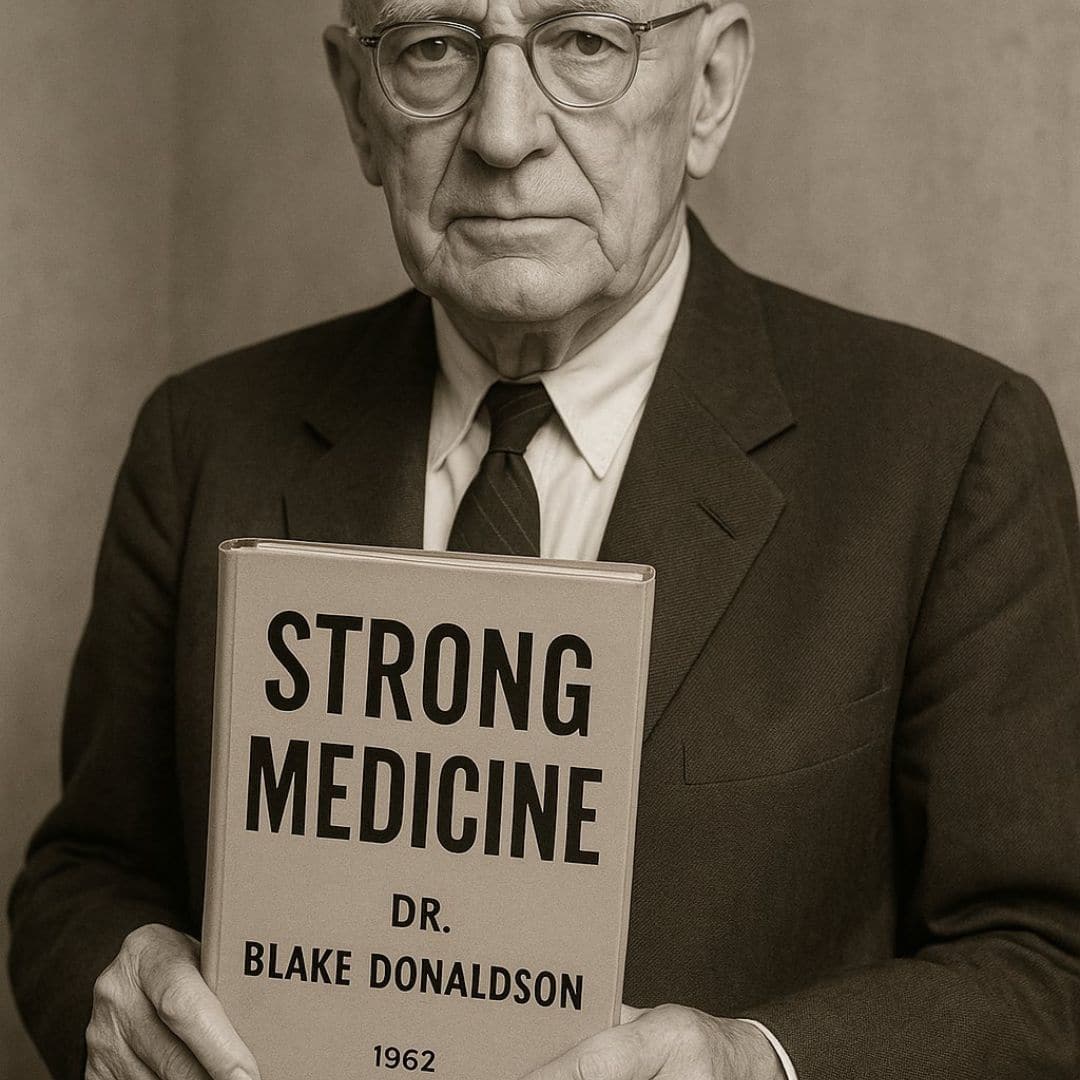
Blake Donaldson treated obesity with fatty meat and water for four decades, and he got the prescription by walking into a museum and asking the anthropologists a question.
He was not a fringe operator. He worked out of a New York hospital, saw ordinary patients, and kept at it for forty years.
Donaldson started seeing overweight patients in the years after the First World War and got nowhere with the standard advice, which was then, as now, to eat less of everything and try harder. So by his own account he went to the American Museum of Natural History and asked the men who studied ancient populations a straightforward question: which peoples had stayed healthy longest on what they had to hand, and what were they eating?
The answer came back fat meat.
That became the prescription. Half a pound of fatty meat three times a day, water, very little else, and no lecture about willpower. He reported treating thousands of patients on it across those four decades, for obesity and for the arthritis, hypertension and heart trouble that travel with it, and he wrote the whole thing up in 1962 in a book called Strong Medicine, now out of print and worth hunting down.
The remarkable thing is how unremarkable his reasoning was. He did not run a trial or model a mechanism. He asked what the animal in question had been eating for the length of its existence, and then fed it that.
Genus Homo has been at this roughly 2.5 million years. Agriculture is about twelve thousand of them. That is 0.04 per cent of the run, and the industrial food supply that actually produces the patients in his waiting room is less than a rounding error on top of it. Fatty ruminant meat is not a fad diet. It is the default setting, and everything else is the experiment.
What stands out reading him now is the absence of moralising. Donaldson did not think his patients were greedy or weak. He thought they had been handed food that made them hungry, and he changed the food instead of the patient.
Every commercial weight-loss system built since has done the opposite. Keep the food, add a scoring system, and locate the fault in the person paying.
He asked a museum and got a better answer than the profession managed in the following half century.
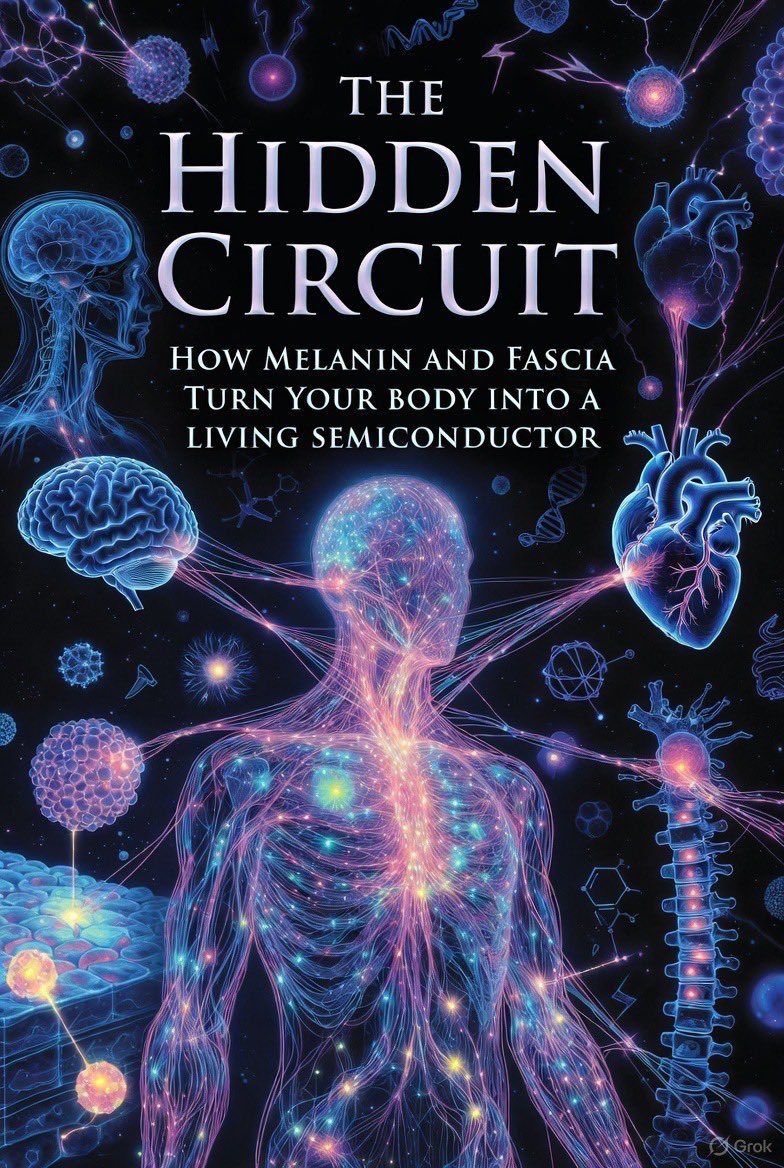
The Hidden Circuit: How Melanin and Fascia Turn Your Body into a Living Semiconductor
Beneath the skin and around every muscle, a shimmering, collagen-rich tissue called fascia wraps the body in a continuous tensional network. For centuries, anatomists dismissed it as mere packing material. Meanwhile, melanin—the pigment that colors skin, hair, and eyes—was studied mostly for its role in sun protection and camouflage.
Now biophysicists are discovering that these two systems, long considered biological footnotes, are in fact partners in one of the strangest electrical circuits in nature.
“Fascia is not a passive scaffold,” says Marco Bordoni, a physicist-turned-fascia researcher at the University of Padua. “It’s a liquid-crystalline semiconductor that spans from your fingertips to your spine. And melanin appears to be its co-conductor.”
The Collagen Antenna
Collagen, the main protein in fascia, arranges itself into triple-helical cables that behave like optical fibers and piezoelectric crystals at the same time. When you stretch or compress fascial tissue—every time you run, jump, or simply stand up—the collagen lattice generates tiny electric fields. These fields are not random noise. They are coherent enough to drive proton currents along nanoscopic layers of highly ordered water that coat every collagen fiber.
This “fourth phase” water, first described by Gerald Pollack at the University of Washington, absorbs ultraviolet light at 270 nanometers and re-emits it as infrared photons—a built-in energy transduction system running quietly under your skin.
Enter Melanin, the Black Semiconductor
Melanin has baffled physicists for decades. Unlike typical organic molecules, it absorbs light across almost the entire spectrum, from ultraviolet to near-infrared, then dissipates the energy with almost no fluorescence. Where does the energy go?
In a series of papers beginning in 2012, a team led by A. Bernard Mostert at Swansea University showed that hydrated melanin conducts both electrons and protons, switching from insulator to near-metal depending on water content. In 2021, Carlos Solís and colleagues at the National Autonomous University of Mexico demonstrated that melanin can photocatalytically split water into protons, electrons, and oxygen—the same reaction that powers photosynthesis—using nothing more than ultraviolet light.
“Melanin is basically an amorphous, biodegradable solar cell,” says Paul Meredith, a physicist at the University of Queensland and co-author of many of the seminal melanin-conduction studies.
A Body-Wide Optoelectronic Network
The surprise came when researchers started looking deeper than the epidermis. In 2020, Carla Fede and her group in Padua published micrographs showing melanosomes—tiny melanin granules—inside myofibroblasts of the deep fascia, especially in individuals with darker skin. In some mammals (whales, certain bats, and horses), entire sheets of deep fascia are visibly black with melanin.
When these melanized fascial cells are mechanically deformed, their electrical conductivity changes far more dramatically than in non-melanized tissue. The reason, Bordoni’s lab found, is that mechanical strain alters the hydration shell around melanin particles, flipping their conductivity like a transistor.
The result is a distributed circuit: sunlight hits skin melanin → energy is converted to heat, protons, and electrons → some of that charge migrates along structured water highways in the fascia → mechanical movement of the fascia generates additional piezoelectric currents → melanin modulates the signal.
“It’s as if evolution wired us with a photovoltaic-piezoelectric skin that extends all the way to the tendons,” Bordoni says.
Sarcopenia is one of the most common conditions in the elderly you've never heard of.
It is the slow loss of muscle as we age, and accelerates from underuse. Up to 22% of them have it, and they have no idea.
Here are the 3 warning signs of it (and how to prevent it):🧵
@MattZirwas Dermatologists push chemical sunscreens. Those chemicals may be “safe” but when there is an exothermic reaction with sun, sweat, chlorine and salt water aldehydes are created and absorbed. Let’s make zinc and sun protective clothing popular again.
@MattZirwas is one of the unicorns in modern dermatology. Your average derm doesn't know anything about:
> The circadian system
> The history of heliotherapy
> Flawed study designs that bastardize sunlight
> The synergistic relationship between wavelengths
> The glue of circadian timing with sunbathing
> Progressive overload applied to sunbathing
> Melanin's photoprotective function
> Circadian clocks controlling UV integration
> The importance of nighttime darkness
> Endogenous melatonin via both forms
> The circadian problems tanning beds pose
> All skin cell types being under circadian control
> Hormesis applied to UV exposure
> Circadian arch spectral integration
> DNA lesions vs DNA mutations
> Circadian control of collagen & MMP-1
Dermatology, as a field, has a bastardized understanding of what responsible sun exposure means
They work almost exclusively with end stage pathology and are fundamentally circadian blind
They spend their careers treating the end stage consequences of disease, not studying the environmental conditions that prevent disease from developing in the first place
Idiopathic guttate hypomelanosis, melanin, actinic keratosis, hypo/hyperpigmentation, skin cancers, there are HUNDREDS of epistemological flaws with how the mainstream dermatology thinks about these subjects
It's a tragic comedy that an autodidact like me, someone who graduated high school, skipped college to pursue competitive soccer, and had virtually no interest in science beforehand, can sit down with the primary literature, learn a field from first principles, and end up challenging the way many dermatologists think about skin and sunlight through the lens of circadian biology
This explains how deeply specialized modern medicine has become. Expertise within a discipline doesn't automatically mean exposure to the broader biological frameworks that influence it
Sometimes an outsider, approaching the evidence from a different first principles perspective, notices patterns that the established paradigm overlooks
Long-wavelength red and near-infrared light penetrates deep into your body, supporting cellular energy production.
Sunlight delivers these wavelengths in a way no red light panel can replicate.
Triglyceride-HDL Ratio
🔵 Triglyceride - HDL ratio is one of the most important markers on the lipid profile.
(When calculated using log(TG/HDL) (with both values in mmol/L), it is called the Atherogenic Index of Plasma)
🔵 Very few actually pay attention to the Triglyceride -HDL ratio.
🔵 It predicts Coronary Artery Disease (PMID: 32923106), future cardiovascular events (PMID: 34953633) & several cardiometabolic conditions (PMID: 34389285)
Why is this ratio important?
🔵 High triglycerides & Low HDL rarely occurs alone.
🔵 Together they usually indicate a characteristic pattern called atherogenic dyslipidemia, commonly seen in
- Insulin resistance
- Prediabetes
- Type 2 Diabetes
- Obesity
- NAFLD
Or in other words Metabolic Syndrome
🔵 Higher Triglyceride-HDL ratio correlates with Insulin Resistance because as insulin resistance develops
- Liver produces more VLDL.
- Triglycerides rise.
- HDL falls.
& the ratio increases.
🔵 It also correlates with Small Dense LDL.
🔵 Small dense LDL particles remain longer in circulation, oxidize more easily & penetrate arteries more readily.
🔵 Because direct measurement is expensive, AIP has been often used as an inexpensive proxy marker (PMID: 34977202)
Does this mean LDL doesn’t matter if this number is good?
🔵 A high Triglyceride-HDL ratio tells you a lot about metabolic health.
🔵 It does NOT tell you how many ApoB-containing particles are circulating.
A 2012 analysis from the Heart Protection Study (PMID: 22539783) followed around 20000 high-risk individuals for 5.3 years.
They found that LDL-C, ApoB, LDL Particle Number all predicted major coronary events to a very similar extent.
But LDL particle size did not improve prediction once particle number was known.
A Mendelian randomization study (PMID: 33899735) also supported the concept that the concentration (number) of ApoB-containing lipoproteins is more important than their size or cholesterol content in determining cardiovascular risk.
So where does TG/HDL fit?
🔵 Think of cardiovascular risk as having two overlapping components.
1. Atherogenic Particle Burden
This answers “How many cholesterol-carrying particles are circulating?”
This is reflected by ApoB, LDL-P
If these are high, cardiovascular risk is elevated regardless of whether LDL particles are small or large.
2. Metabolic Health
This answers “Why does this person have this lipid pattern?”
The TG/HDL ratio reflects the metabolic environment in which those lipoproteins exist.
A higher ratio commonly indicates Insulin resistance, Increased VLDL production, Atherogenic dyslipidemia.
🔵 In other words, the TG/HDL ratio provides information about metabolic dysfunction, whereas ApoB & LDL-P quantify the atherogenic particle burden itself.
🔵 Both are important, but they answer different clinical questions.
Ranges (In mg/dL units)
< 2 - Ideal
2 - 4 - Moderate risk
> 4 - High risk
(In mmol/L units)
< 0.87 - Ideal
0.87 – 1.74 - Moderate risk
> 1.74 - High risk
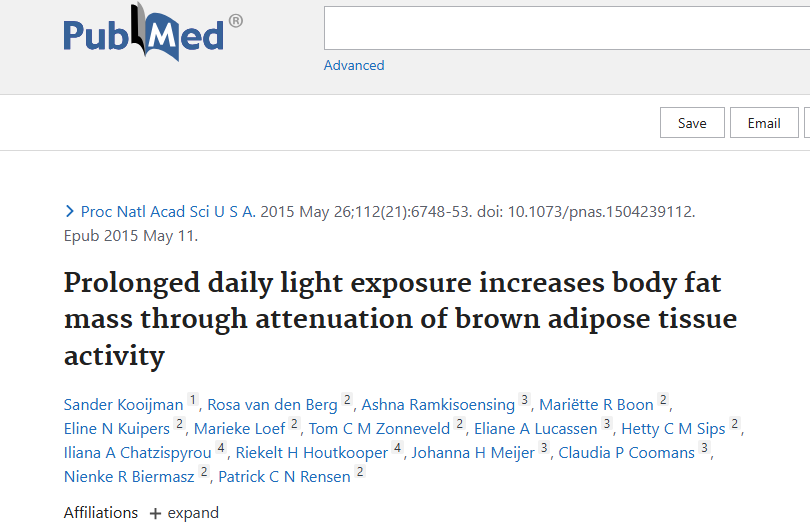
When you artificially extend the day, you artificially extend your waistline.
"Disruption of circadian rhythmicity is associated with obesity and related disorders, including type 2 diabetes and cardiovascular disease. Specifically, prolonged artificial light exposure associates with obesity in humans"
Dr. Daniel Pompa says AirPods send so much electromagnetic frequency into your brain that it's altering your DNA.
He measured the AirPods himself with his own EMF device.
it produced over a thousand times more EMF going directly into your brain compared to wired headphones.
He tested it multiple ways. Rounded down. Still over a thousand.
"Wired headphones. Always. That way you're getting rid of all of it."
Most people wear AirPods for hours every day—commuting, working, exercising—with that radiation inches from their brain without thinking twice.
But Pompa says the real danger depends on who you are.
People who are already stressed, toxic, or dealing with chronic health issues can handle far less before it starts causing damage.
"It's causing enough heat at their DNA that they're not adapting and you're altering your DNA."
He compares it to cold plunging and fasting. If your body can adapt to the stress, you get stronger. If it can't, the opposite happens.
He tested a shielding product expecting it to fail. It cut the EMF by roughly half. But wired eliminates it entirely.
That's why he chose wired. No exceptions.
"I don't risk that."
— Dr. Daniel Pompa on the Alex Clark Podcast
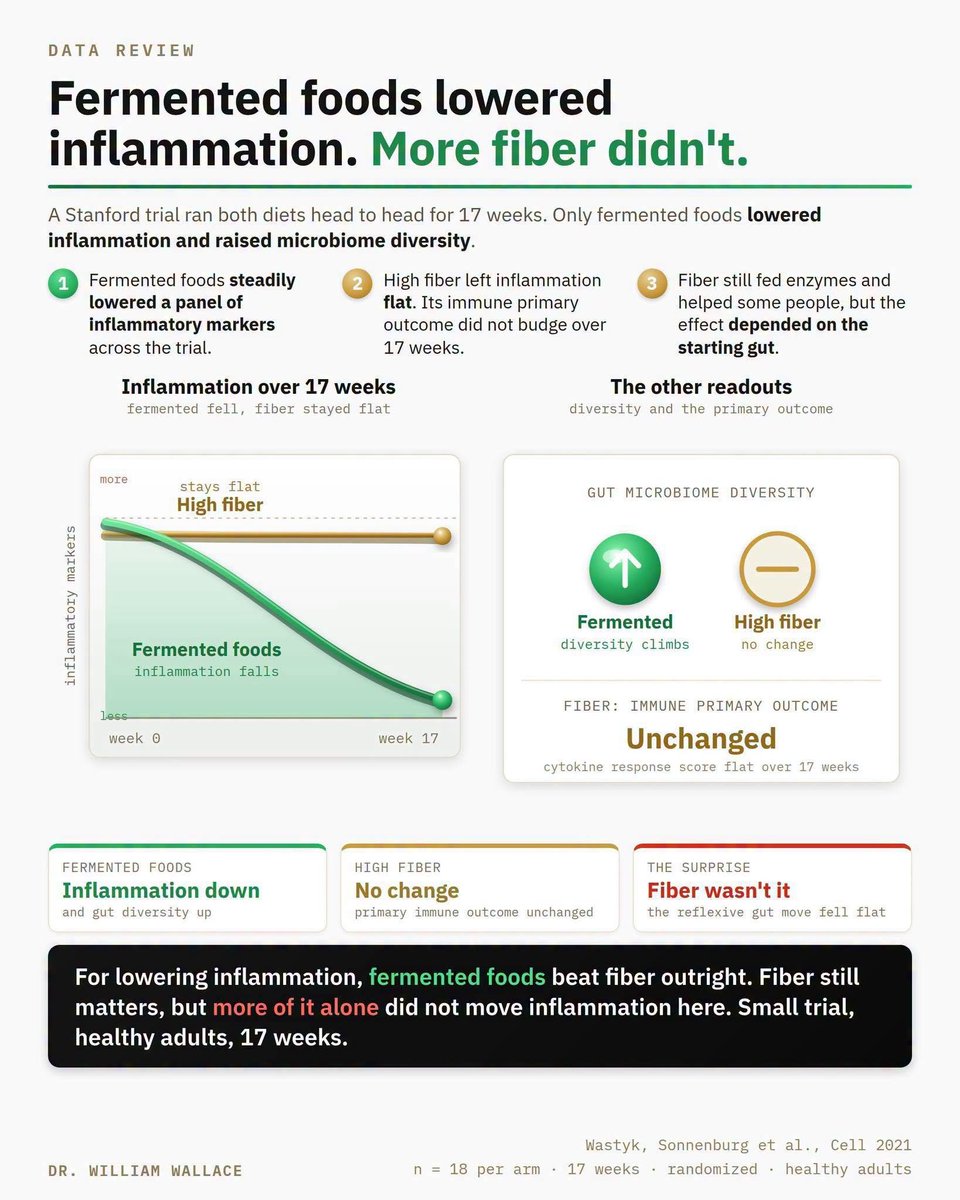
Fermented foods lowered inflammation over 17 weeks. Adding more fiber did neither.
That's the finding from a Stanford randomized trial, and it should reframe how we think about feeding the gut.
Researchers assigned healthy adults to one of two microbiome-targeted diets, high-fiber or high-fermented-food, and ran deep immune and microbiome profiling across 17 weeks. The expectation going in was intuitive: fiber feeds your bacteria, so more of it should mean a healthier microbiome and lower inflammation.
That's not what happened.
The high-fiber group's inflammatory markers stayed flat. Its primary immune outcome, a composite cytokine response score, was unchanged from start to finish. And microbial diversity, one of the more reliable markers of gut resilience, held steady rather than rising.
The fermented-food group moved both. Inflammation declined steadily across the trial. Diversity climbed.
Fiber feeds bacteria the substrate they can digest. The study captured a signature of exactly this - i.e., the microbiome's glycan-degrading enzyme capacity rose while overall diversity stayed flat, consistent with the existing community upregulating rather than broadening
Fermented foods appear to do something structurally different. Live microbes plus the metabolic byproducts of fermentation seem to expand diversity directly, rather than by feeding what's already there. Greater diversity tracks with lower inflammatory load, and the fermented arm moved that lever while the fiber arm did not.
One detail worth sitting with: fiber wasn't inert for everyone. High-fiber consumers split into three distinct immune trajectories, and which one you landed in tracked your baseline microbiome diversity. Fiber's effect was contingent on the gut that received it. People starting with more diverse microbiomes likely respond differently than this average suggests.
Limitations:
Eighteen people per arm, healthy adults, 17 weeks. Inflammatory markers are intermediate biology, not clinical endpoints. Fiber's metabolic and cardiovascular benefits are established on separate, far larger evidence, and this trial doesn't touch them.
But for the specific job of moving the microbiome and inflammation, piling on more fiber wasn't the lever. The fermented foods, however, moved the needle.
Wastyk, Sonnenburg et al., Cell 2021.
This finding that progesterone promotes a degree of insulin resistance helps understand the physiological insulin resistance that not only occurs during pregnancy, but also the luteal phase of the menstrual cycle.
(Incidentally, this is one of the very few instances where "physiological insulin resistance" is invoked correctly. So many erroneously imagine this describes the temporarily blunted first phase that accompanies a low-carb diet.)
Most people still don't truly understand the impact of thyroid dysfunction.
The thyroid gland directly communicates with the brain, the pituitary, the parathyroid, the pancreas, the liver, the adrenal glands, the intestinal system and much more.
You already know this to be true if you are suffering from any type of thyroid dysfunction but here's an example i always try to mention.
Let's suppose that you want to lose weight, well in order to put in perspective how much the thyroid gland affects our metabolism, resistance training which is promoted as one of the best tools to increase BMR, can only lead to a 10% increase (which is still great).
Now here's what's fascinating: untreated hypothyroidism can lead to a BMR that's even 40% below normal and even 50mcg of T3 per day can increase BMR by even 30% in some cases.
You can also look into for example how T3 influences the tight junctions, how it upregulates the LDL-receptor, how it helps with the release of bile or even how it facilitates the production of lactase in the intestinal tract so thyroid dysfunction could even make you react badly to dairy.
In some studies, up to 90.5% of depressed people have subnormal T3 levels.
So thyroid dysfunction could lead to things such as:
-A variety of gut issues
-Severe fatigue
-Hair thinning
-Depression
-High LDL
-Insulin resistance/metabolic dysfunctions
-Low libido
-Low testosterone
and more.
Here's how you can support its function.
Thread🧵
At 71 years old, RFK Jr. shrunk his visceral fat by 40% in a 30 days.
Most men his age are on blood pressure meds and statins.
Dr. Sean O'Mara helped him reverse atrial fibrillation with food alone.
Here's the protocol he followed (and how to copy it):🧵
I posted a list of the 20 best foods on earth for metabolic health. Nobody argued about the meat.
They argued about the vegetables.
Spinach was the lightning rod. Broccoli drew fire. The replies were smart, passionate, and split right down the middle.
Half the audience said plants are essential. The other half said plants are poison.
They are both wrong. And they are both right. Here is why. 🧵