I don’t have a take on whether Jesus was a socialist, but I will say that “feed the poor” is not the same thing as “forcibly collectivize private property.”
Estimado presidente @petrogustavo, lo correcto es mirar la deuda total, cosa que sospecho que usted elude para ocultar que la deuda interna en TES (títulos de Tesorería) ha subido exorbitantemente durante su mandato. En cualquier caso, acá le dejo los gráficos donde cualquier persona puede entender como el presidente @JMilei ha bajado la deuda total y en moneda extranjera. Saludos
Ethiopia was never colonized.
For much of its history, it was one of the poorest countries on the continent.
Meanwhile, Vietnam was colonized by the French, devastated by decades of war, and is now on its way to serious economic prosperity.
If colonialism were the answer to why Africa is poor, Ethiopia should be rich and Vietnam should be broke. Neither is true.
Can we please retire this excuse?
Capitalism is actually based on the ridiculous notion that production and exchange should be consensual and voluntary.
In philosophy, such behavior is called ‘morality’.
Lee Kuan Yew cuenta como el cambio cultural en Singapur tuvo que hacerse a la fuerza:
"fue difícil cambiar a una población que estaba acostumbrada a portarse como el tercer mundo...no podes mear y escupir en todos lados como hacías en la villa..."
> Assassine milhões de brancos
> Legalize o aborto na Polônia
> Se oponha ao colonialismo britânico
> Seu líder era vegetariano e admirava o islã
> Ambientalista
> Prendeu padres e pastores
> Socialista
> Seu líder matou Adolf Hitler
Foi o primeiro império woke da história
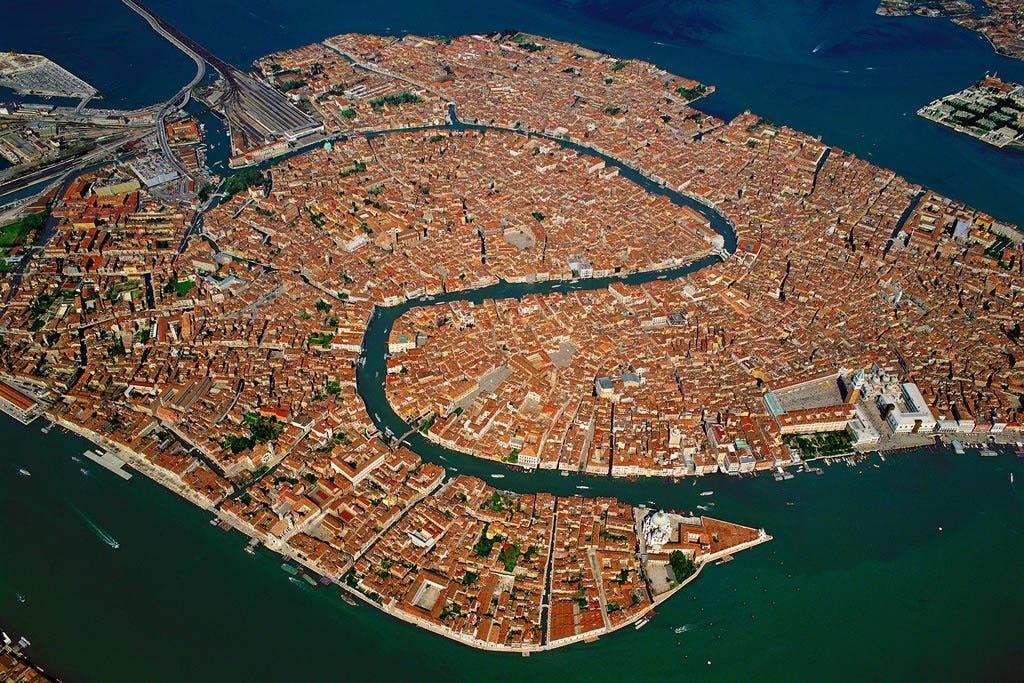
Venice built the greatest commercial empire in European history without a central bank, without industrial policy, and without a single economic development agency. While Byzantine bureaucrats strangled Constantinople with regulations and Frankish kings debased their currencies, Venetian merchants created wealth through voluntary exchange and sound money.
The lagoon dwellers who fled Attila's hordes in 452 AD had nothing but salt marshes and fish. No natural resources. No agricultural surplus. No inherited infrastructure. What they possessed was something far more valuable: distance from the coercive apparatus of mainland states. This geographic accident forced them to survive through trade rather than taxation, commerce rather than conquest.
Venice's constitution deliberately fragmented power to prevent any single authority from controlling trade. The Doge held ceremonial functions while competing merchant families checked each other's ambitions. No guild could monopolize an industry without rivals organizing alternative trading networks. When the state tried to restrict private commerce in 1297 with the Serrata del Maggior Consiglio, it marked the beginning of Venice's decline, not its peak.
The Venetian ducat maintained its gold content for over 500 years while every other European currency suffered debasement. Merchants could calculate profits across decades, plan investments across generations, and accumulate capital without worrying about monetary manipulation. Compare this to England, where Henry VIII cut silver content by 83% in just 20 years.
Voluntary association and sound money create abundance. Coercion creates poverty. Venice proved this. The same economic laws that enriched Venetian merchants still operate today, waiting for governments brave enough to get out of the way.
Setting aside that capitalism has, in fact, fought climate change and provided vaccines, it’s a good sign that socialists have now conceded that it has reduced poverty.
People keep telling me that Africa can't develop because of foreign meddling.
The West interferes, they say. The colonizers won't let us rise.
Let me tell you about Vietnam.
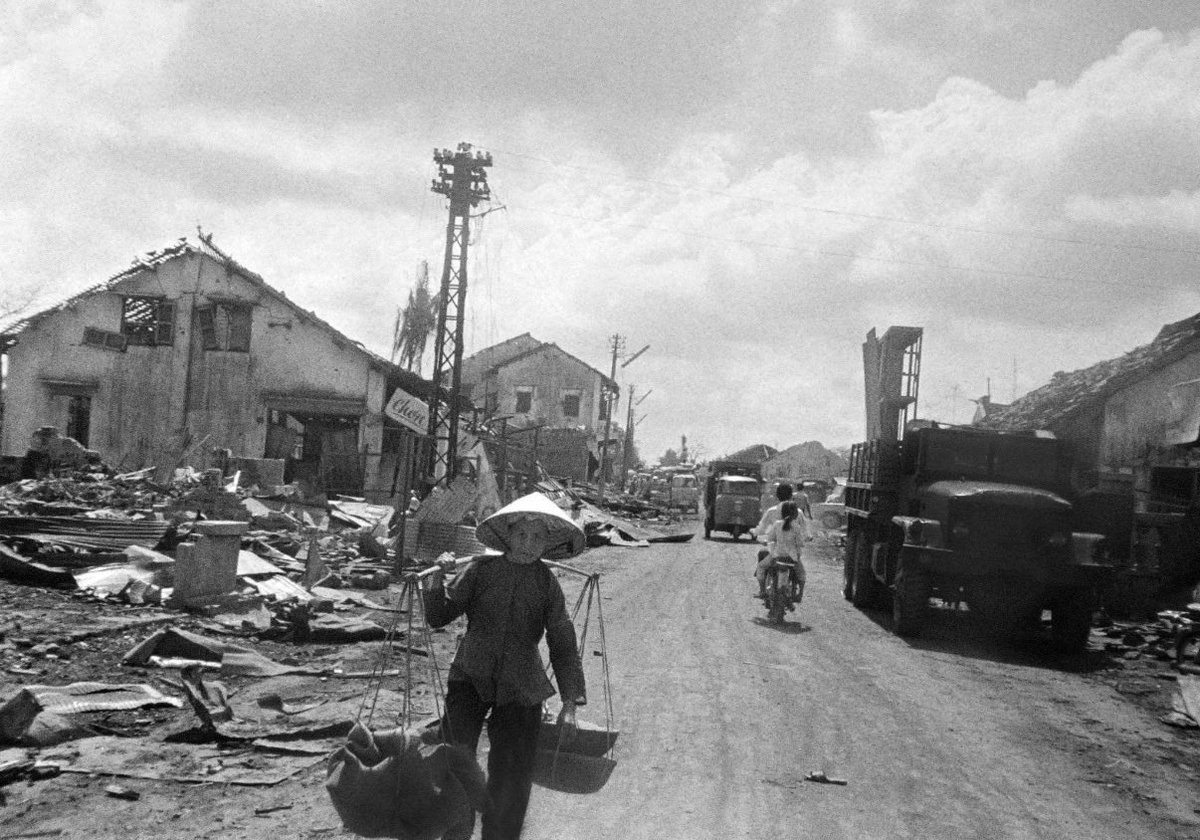
The United States bombed Vietnam for nearly a decade.
They dropped 7.5 million tons of bombs, which is more than three times what was dropped during all of World War II. Entire provinces were flattened.
They sprayed millions of gallons of Agent Orange that poisoned the land and the people for generations.
After the war, America broke its promise to provide reconstruction aid and pressured international institutions to deny Vietnam any loans or assistance.
The country was left isolated, embargoed, and devastated. In 1986, Vietnam was on the brink of collapse.
Inflation had hit 700 percent and farmers were starving.
If any nation had the right to blame foreign powers for its misery and give up, it was Vietnam.
Instead, they changed their policies.
They launched reforms called Doi Moi that legalized private enterprise, welcomed foreign investment, gave farmers land rights, and opened up to global trade.
Within a decade, the economy was growing at 7 percent per year and poverty was cut in half.
Today, Vietnam's GDP per capita has grown from under $100 in 1990 to over $4,000. Poverty dropped from 60 percent to under 5 percent. Major companies are now moving their factories from China to Vietnam.
This is a country that was literally bombed flat by a superpower, poisoned, and abandoned.
And they still found a way to prosper because they were willing to change their economic system.
So when I hear Africans say we can't develop because of meddling, I want to ask: what meddling post-colonialism compares to what Vietnam went through? We weren't bombed like that. We weren't poisoned like that. We weren't embargoed like that.
What we have for the most part are governments that refuse to create the conditions for entrepreneurs to thrive, and leaders who benefit from keeping us poor and dependent.
Foreign meddling is real, and it happens to every poor country on earth.
It's not unique to Africa.
It's what the powerful do to the weak, and every major power plays that game.
The only escape is to become prosperous enough that you can stand on your own feet, and that requires economic freedom.
Wake up Africa!
Fun fact of the day:
If you don't think inflation has been the biggest problem in the world over the last century, you have been miseducated by people who get paid by inflation.
I’m coming back to this clip from a while ago to raise how one of the dumbest notions that is very common amongst the broad Western world is the idea that capitalism is somehow an “individualist” ideology and progressive socialism somehow a “collectivist” one.
Capitalism is the belief that you can put a tangible value on the products and outputs of a human being and that that value is decided by a ‘market’ a system for determine the demand of the broad collective human society for that output. Capitalism is the most collectivist ideology on the planet (good thing).
Progressive leftism, on the other hand, is the ideology that the collective of human society should be made completely subservient to the needs of the individual.
I was at an event a few nights ago and some chick asked some half baked question along the lines of “when you encounter a person our society deems mentally ill on the subway, why do *you* expect them to change their behavior to make you comfortable, and not *you* to change your baseline standards to be more accepting of them?” This is the ideology of Mamdani and people like him. Is this a “collectivist” ideology? Of course not.
Leftists do not actually believe in a “collective.” They believe that society should be made slaves to individuals, and that the lowest common denominator of society should determine the collective standards and functionality for *all* of society.
*Only* capitalism/market mechanisms offer a (non rw authoritarian) mechanism for enabling collective organization and alignment at scale. Only capitalism can enable actual collectivism.
Fin.
Walter Rodney was wrong.
Africans are poor because too many African countries make it hard to start businesses, get permits, access reliable electricity, trade freely, protect property, enforce contracts, attract investment, and keep the rewards of hard work.
Singapore is richer than Britain, its former colonizer.
Switzerland, which never built a colonial empire, is richer than Spain and Portugal, two of the greatest imperial powers in history.
I spoke with @LaulPatricia about Marxism:
One is: What’s remarkable is that Marxism has been tried. Now, of course, defenders of Marxism say it hasn’t really been tried anywhere, but certainly the people who implemented it claimed they were implementing Marxism.
And this is a massive experiment—a global experiment—with a very clear outcome. Namely, the Soviet Union was a disaster. The imposition of communism on Eastern Europe was a disaster. The imposition of communism in Venezuela was a disaster. The imposition of communism in Maoist China was a disaster. Disaster in terms of both poverty and oppression and genocide and stupid wars. So the world has told us what happens under communism, and it’s a sign of how out of touch intellectuals can be that there are still people who defend it despite the entire world giving a very clear-cut answer.
One more is: would you rather live in North Korea or South Korea? Would you rather live in the old East Germany or West Germany? We have an experimental group and a matched control group in terms of culture, language, and geography, and the answer is crystal clear. So this is a sign of, I think, the pathology of intellectual life—that Marxism can persist.
The other is, you did call attention to one of the appeals of Marxism, though, and more generally of heavy, strong influence of government guided by intellectuals, which is that there are certain kinds of reforms that you can state as principles. You can articulate them verbally as propositions—like equality, human rights, democracy—but there’s other kinds of progress that take place in massive distributed networks of millions of people, none of whom implements some policy. But collectively, there is an order, an organization that’s beneficial.
So that can happen organically through, for example, the development of a language. No one designed the English language. It’s just hundreds of millions of English speakers. They coin new words. They forget old words. They try to make themselves clear. And we get the English language and the other 5,000 languages spoken on earth.
Likewise, a market economy is something where knowledge is distributed. You don’t have a central planner deciding how many shoes of size 8 will be needed in a particular city, but rather information is conveyed by prices, which are adjusted according to supply and demand. And you’ve got a distributed network of exchange of information that can result in an emergent benefit.
Now, intellectuals tend to hate that. They like rules of language—of correct grammar. They like top-down economic planning. They like cultural change that satisfies particular ideals described by intellectuals. And so rival sources of organization, like commerce, like culture—traditional culture—tend to be downplayed by intellectuals.
And this can be magnified by the fact that many dictatorships give a privileged role to intellectuals, which may be why, over the course of the 20th century, and probably continuing to the present, there has not been a dictator that has not had fans among intellectuals—including the mullahs and ayatollahs of Iran, but also the communist dictators: Mao and Castro, even Stalin in his day. And every other dictator has had, actually, often fawning praise from Western intellectuals.
Es sumamente descriptivo lo que dice una parte importante de la izquierda cada vez que pierde elecciones. Descriptivo porque deja en evidencia que, en el fondo, no le importan ni la democracia, ni la libertad, ni la “voz del pueblo”, y mucho menos la alternancia en el poder. Para ellos, la ciudadanía es esencialmente incapaz: por eso debe ser gobernada sí o sí (por ellos, solo por ellos). Y cuando el resultado electoral no les es favorable, la explicación nunca es política, sino moral: el pueblo se volvió fascista, ignorante o salvaje.
Es la misma lógica que aplican cuando evitan condenar los crímenes de lesa humanidad cometidos por dictaduras y tiranías de izquierda. Las torturas y asesinatos del pasado son condenables porque los perpetró “la derecha”, como Jorge Rafael Videla o Augusto Pinochet; los del presente, en cambio, son relativizados o justificados porque los cometen Nicolás Maduro, Daniel Ortega o Miguel Díaz-Canel. El criterio no es ético ni jurídico, sino ideológico.
Por eso hoy afirman abiertamente que está mal lo que hizo Gabriel Boric —es decir, respetar las instituciones y el resultado electoral— y sostienen que la “solución” es lo que hizo la narcotiranía chavista: robarse las elecciones. Lo primero es calificado de “tibio”; lo segundo, de “revolución”. Ese es el marco mental desde el cual piensan.
Se trata de sujetos peligrosos y profundamente antidemocráticos, que se perciben a sí mismos como faros morales cuando, en realidad, son bárbaros contemporáneos: disfrazan su ignorancia, su autoritarismo y sus complejos con retórica sofisticada y prosa cuidada.
Hay que enfrentarlos. Sin medias tintas. Y hay que impedir que logren su aspiración última: un estalinismo normalizado y generalizado, presentado como virtud moral.
It’s fine if you want to call this a “socialist business,” but it’s important to recognize that capitalism permits “socialist businesses,” whereas socialism prohibits capitalist businesses
I stepped into one of the most hostile rooms I’ve faced to debate a motion built on a false premise. The outcome was decided long before I spoke. A crowd of European keffiyeh-wearing students made it clear that facts were irrelevant.
Showing up still mattered.