Something that requires forcing other people to provide it cannot be a human right.
Why? Because it conflicts with itself under any examination. It is a self-defeating assertion of morality.
You have a right to yourself, and to that which you can acquire without violating the same right of others.
You have a right to your body, to your speech and your thoughts, to sunshine in the day and darkness at night, to your own ideas and that which you teach yourself, and to the air you breathe. If you grow your own food, of course you have a right to it. If something is given or taught to you freely, you have a right to that as well. So far, no violation of the same right in others. Consistent moral harmony.
But you do not have a right to food that isn't voluntarily given to you, just because you're hungry. Nor to healthcare or education, when it must be provided by another person involuntarily.
Why? Because if you did, it would violate the very right you're presuming of yourself: namely, the right to your body and the product of it. To demand another provide for you is to violate the principle of your own self-ownership. A contradiction in claim.
If I can grow my own food and it is mine, then my neighbor cannot claim any right to take it from me. He may ask, and if he's starving I should provide help as a good human, but there is no moral claim which should forcefully compel me. Again, if there was, then the fundamental right is now in conflict with itself. And if my neighbor has no right to seize my bread by force, he certainly doesn't have the right to enlist politicians to do so on his behalf, regardless of how many friends he can find to "vote" for the same.
Needless to say, those who claim we have a right to food taken by force from others never define the limits of a such a right because it's based on absurdity from the start. *Which* food do you have a right to? How much of it? Must it be organic? You have a right to healthcare? Okay, how much of that, and from which Doctor? Do you have a right to band-aids and vitamins? To MRI machines? To the best MRI machine or only last year's model? Such claims of right become preposterous upon any examination.
Good ethics should not be contradictory on topics so fundamental to civilization. You cannot have a right to the product of others.
You may ask, but not demand, and you may suggest, but not enslave.
I got rejected by 144 investors before raising $150M for my $200M+ rev/year startup.
After 144 rejections, I started questioning our approach.
Were we solving the right problem?
What were we doing wrong?
Why weren’t investors seeing what we were seeing?
Were we the right team to build this?
We tried everything: different pitch angles, new deck structures, and reframing the problem.
Then came the 145th meeting, where we closed our first growth round.
That yes made everything worth it. But getting there took years of mistakes and hard work.
We went through a lot of trial and error just to figure out what resonates with investors.
We tried dozens of approaches to figure out what made investors engage.
Some landed, most didn't. But each iteration taught us something about what builds conviction versus what just sounds good on paper.
And once we cracked that code, our Series C closed faster than expected.
And today, I see so many founders in the exact same position I was in 10 years ago: grinding through rejections, questioning everything, and trying to figure out what works.
So today I want to give you the resource I wish I had back then:
Something that shows you exactly how to structure these conversations and navigate the entire process
(because the fundraising cycle can be a big distraction and take a toll on you as a founder).
So I've partnered with Notion's Startups Team to create the essential fundraising resource that helps you avoid the mistakes that cost me years.
Here's what you are getting:
• The actual decks I used to raise $150M for Super[.]com (Series B, C)
• 50 real examples from funded startups like Eleven Labs and Artisan AI
• A searchable database of 10,000+ investors - angels, VCs, and accelerators you can reach out to immediately (this alone would take months to build manually)
• An AI-powered fundraising agent built into Notion with step-by-step prompts (no separate ChatGPT needed)
Want access?
• Like and share this post
• Comment "FUNDRAISE"
• Follow me so I can DM you the link
I'll send it over ASAP.
P.S.: If you are serious about fundraising (now or in the future), you should grab it right away.
Holy shit...
Stanford just published research that destroys every prompt engineering guru.
Turns out most "advanced techniques" are just survivorship bias and confirmation bias.
Here's what the data actually shows:
@wadefoster@zapier Great initiative. That kind of specialists are rare to find (yet), and limiting geography in the era of global remote when people can ensure timezone overlap doesn’t sound efficient.
When the hype of vibe coding is gone, all that will remain is a graveyard of thousands of garbage repos of products neither finished nor scaled, and problems that Engineers will be solving for years ahead.
Use of AI doesn’t cancel out learning.
@DiscussingFilm Not only this doesn’t make any sense, but it portrays James and his friends as racists for what they’ve done to Snape. Horrible casting decision. The actor is great, though.
I’m concerned that centralized compute makes these gigantic data centers vulnerable military targets that can disrupt the entire industry if targeted.
Seems those are becoming bigger and more centralized for latency, but they should be decentralized for the security reasons.
@beffjezos@EerensLuka Hopefully fixing it retroactively as well for those who obtained a Masters degree at a top uni (NYU in my case) but had to leave due to visa issues.
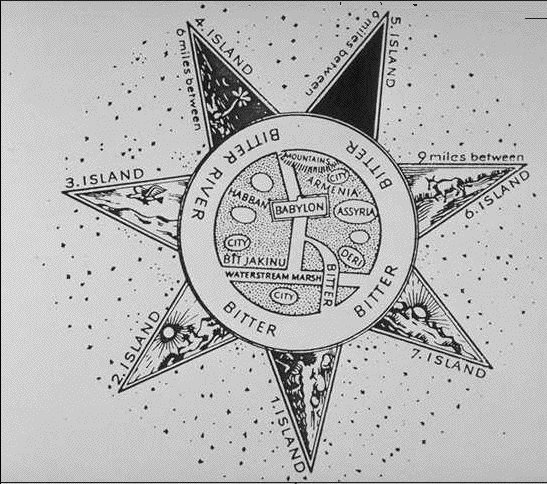
On the other side lie 7 triangular regions — and this is where the mythological is introduced.
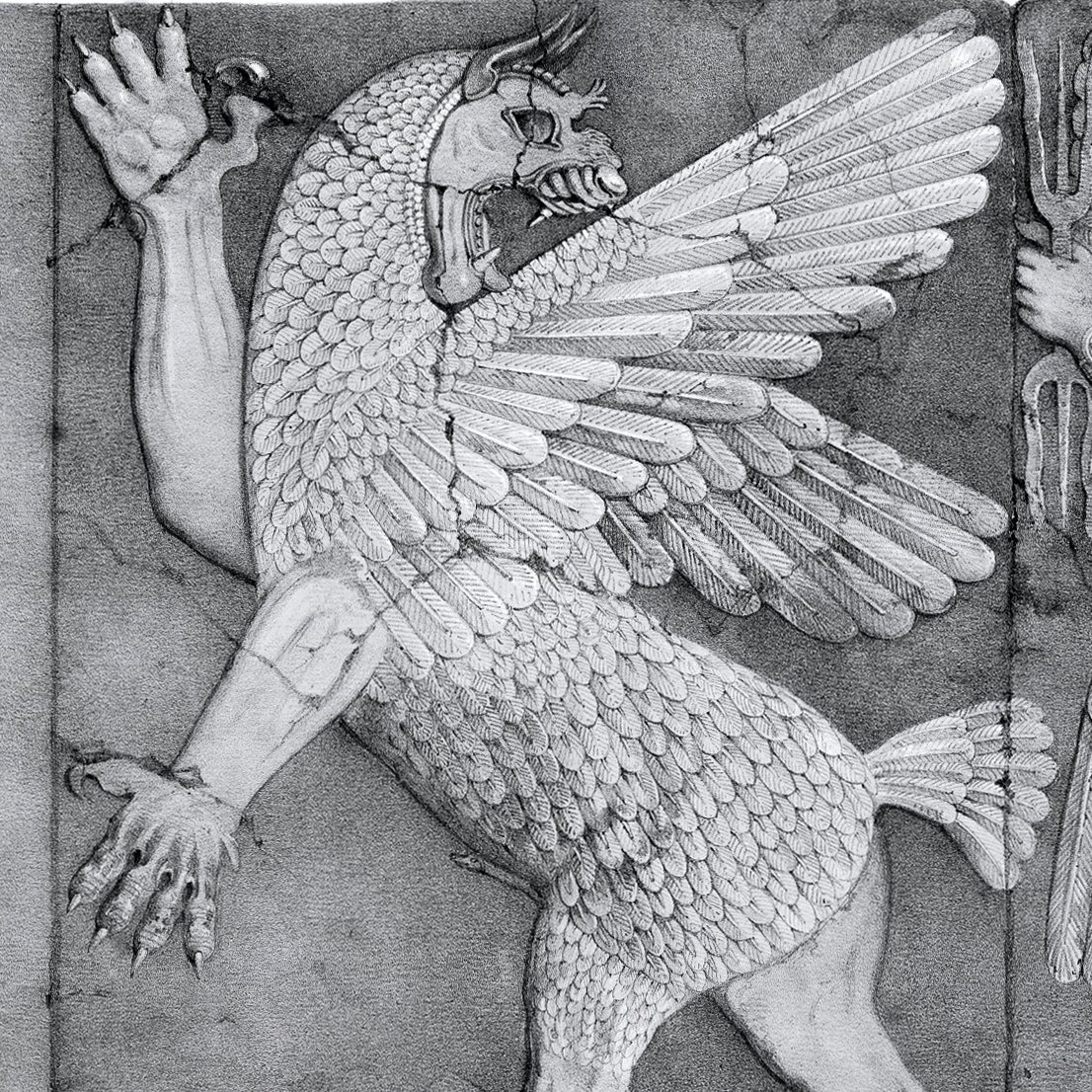
These regions are where legendary beasts are said to roam, and the text on the back of the tablet tells us what we can find at each one...