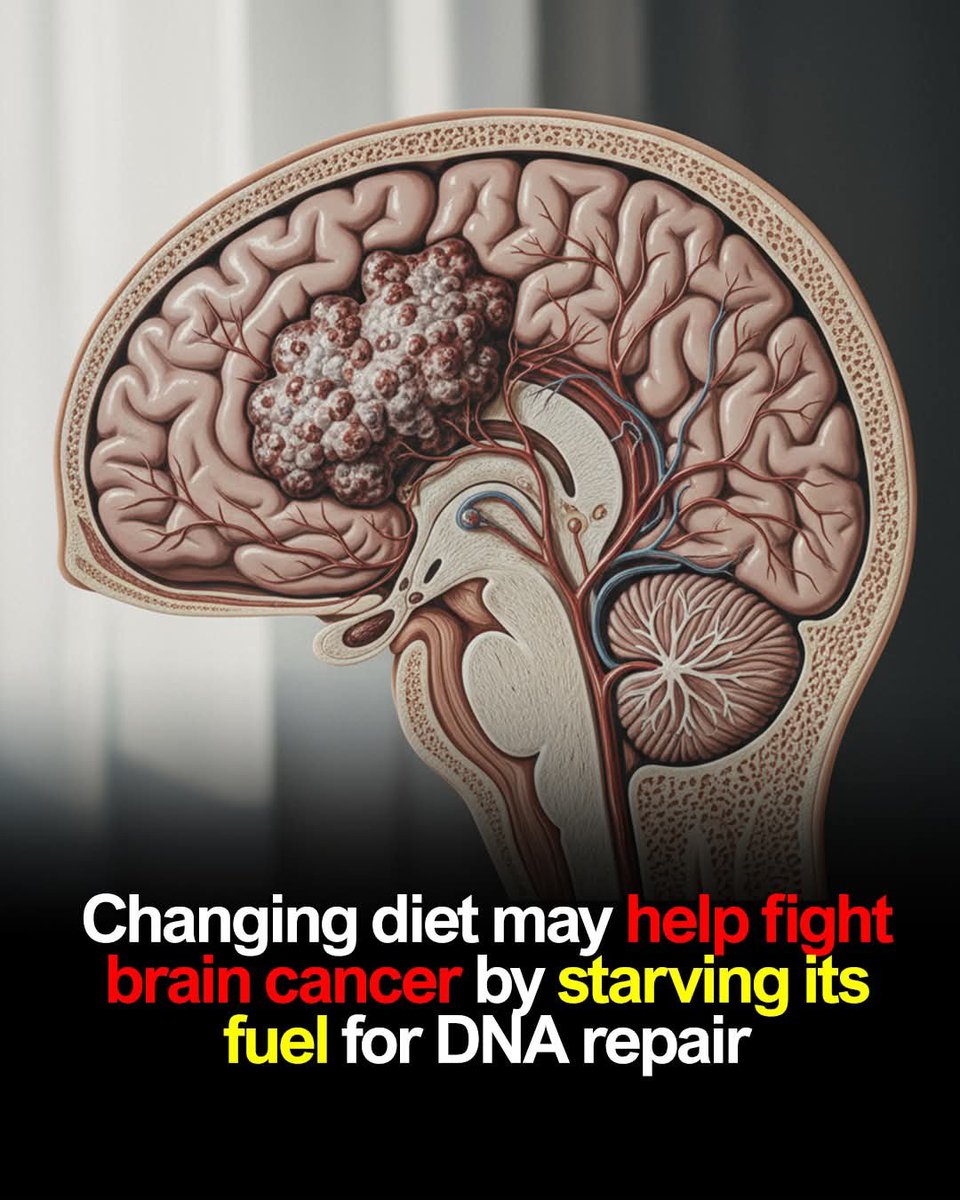
Glioblastoma, the most aggressive form of brain cancer, is notoriously hard to treat because its cells adapt quickly and repair the DNA damage caused by chemoradiation. But a new study shows that changing diet may expose a hidden weakness in the tumor. Scientists discovered that while healthy brain cells use glucose for vital functions like nerve signaling, glioblastoma cells hijack it to churn out nucleotides, the raw materials needed to copy DNA and keep dividing. This constant supply helps the tumor bounce back from therapy.
The twist came when researchers noticed that glioblastoma cells also rely on an amino acid called serine, which they steal from nearby tissues. By putting mice with human tumor cells on a special diet very low in serine, scientists forced the cancer cells to redirect glucose into making serine instead of nucleotides. That shift left the tumors with fewer building blocks for DNA repair, making chemoradiation far more effective. Mice that followed this regimen survived longer compared to those given standard treatment alone.
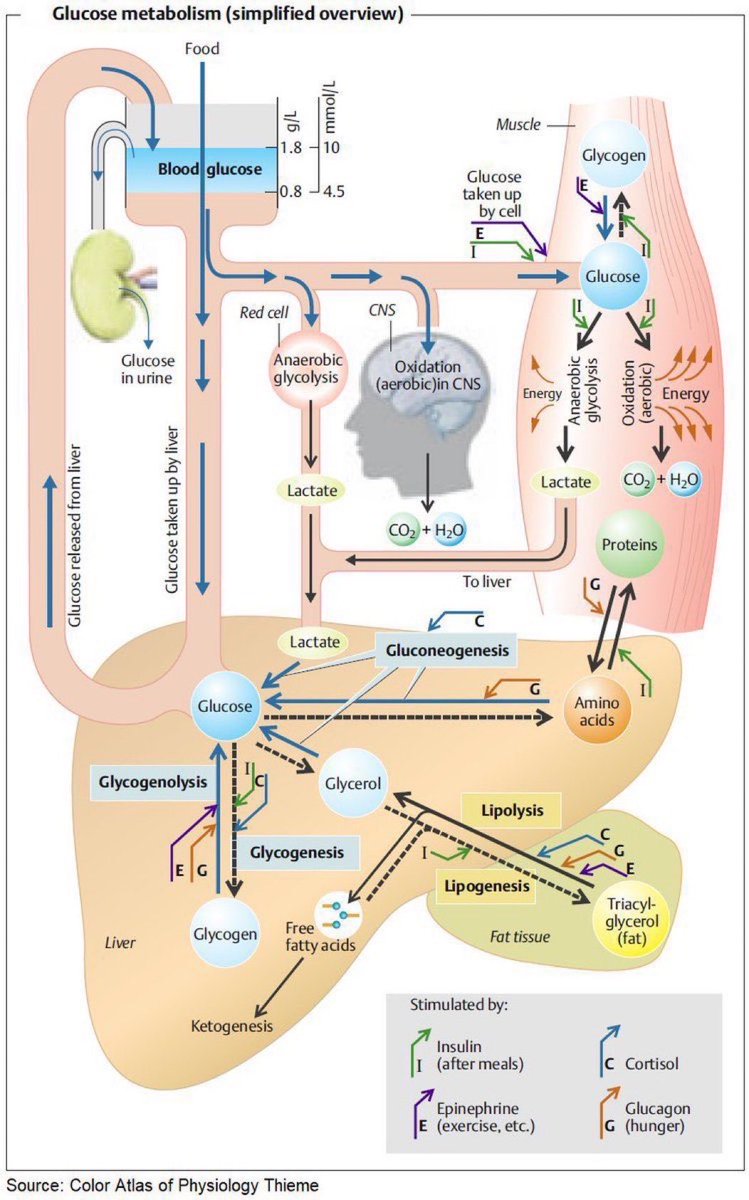
Understanding glucose. How your body manages energy.
Glucose metabolism is how your body turns food into energy, storing and releasing it as needed. Different organs and processes work together, influenced by hormones, to keep blood sugar steady and fuel your cells.
1️⃣ Blood Glucose Glucose from food enters the bloodstream, with levels kept between 0.8–10 mmol/L. The kidneys filter excess into urine if levels get too high.
🟢 Example: After a meal, blood glucose rises, prompting cells to take it up.
🟢 Example: Low levels trigger the liver to release stored glucose.
2️⃣ Liver The liver stores glucose as glycogen or makes new glucose (gluconeogenesis) from lactate, amino acids, or glycerol, releasing it when needed.
🟢 Example: During fasting, the liver breaks down glycogen (glycogenolysis) to maintain blood sugar.
🟢 Example: After exercise, it uses lactate to rebuild glucose.
3️⃣ Muscle Muscles take up glucose for energy or store it as glycogen, especially during exercise, and release lactate when oxygen is low. 🟢 Example: During a workout, muscles use glucose for quick energy via glycolysis.
🟢 Example: Resting muscles store glycogen for later use.
4️⃣ Central Nervous System (CNS) The brain relies on glucose for energy, using aerobic oxidation when oxygen is available, or switching to lactate if needed.
🟢 Example: A steady glucose supply keeps you alert and focused.
🟢 Example: In low oxygen, the brain uses lactate as a backup fuel.
5️⃣ Fat Tissue Fat cells store glucose as fat (lipogenesis) or break down fat (lipolysis) to release glycerol and fatty acids for energy during fasting.
🟢 Example: After a big meal, excess glucose turns into fat for long-term storage.
🟢 Example: During hunger, fat breakdown provides energy via ketogenesis.
Glucose metabolism involves the liver, muscles, brain, and fat tissue, balancing energy use and storage. Hormones like insulin (after meals) and glucagon (during hunger) control these processes, ensuring your body adapts to eating, exercise, or fasting.
The 3rd edition of Comprehensive Review in Clinical Neurology is finally here!!! Thank you to @Neuralgroover@AMoosaMD and Suraj Rajan and to all our contributing authors.
Hope it will be useful to many residents and students of neurology in all stages of their career.