Wow a very interesting product from some of my old friends. The bottleneck might not be the model, but the tools around it. Pine AI's redesign of computer is a cool attempt to change that 😎
AI is already smart enough.
Real-world tasks are still slow, expensive and unreliable, because we hand AI a computer built for humans, then wrap it in a heavy harness.
AI doesn’t need to get smarter. It needs a computer built for it.
Today we’re releasing Pine Computer
Random thoughts: @NotionHQ will be the best at executing the whole multiplayer humans + agents thing
- most people struggle with “personal” agents because most consumers don’t care about *doing* things, most things for people *to do* are at work
- the best use case for agents by far is knowledge work, exponentially true for multiplayer and interacting with coworkers, customers, etc
- Notion is useful both singleplayer and multiplayer which is important
- all of the things that matter for multiplayer, Notion already has built out: permissions, security, cloud, sharing, etc. It natively has network effects
- Notion is neutral: you can use any model, any agent harness (Claude code etc) or even bring your OAI subscription
- most people dont want to interact with another person’s “agent”, they want to interact with the *output* (docs, apps, etc) and use their agent to consume it — all intrinsically native to Notion
- there is no more important layer for multiplayer to own than context and memory, that is quite literally company docs/workspaces
- I think the grok bots interface makes the most sense for knowledge work and that’s already custom agents. Notion has all of the primitives for agents to do the work and has all the abstractions (agents) for teams/people to consume and interact with the work at whatever level they choose
I think the most important thing for them to nail down in the near/medium term is the overlap between personal systems and work systems (auth, enterprise procurement, integrations, etc) but that is largely a product/UX challenge which I feel that Notion is S-tier at. In other words the bridge between consumer <> prosumer <> work/teams
The current product gaps with its agents that instinct/muse have (computer/browser use, persistent state, isolated VMs/sandboxes, proactive, etc) are deterministic and the Notion AI team will either ship them in like a week or it’s already in beta
I also feel like if Notion can somehow nail team comms or build a layer on top of existing comms platforms (email, slack, teams, etc) it’s game over
*not affiliated btw, they are just currently the furthest ahead IMO and my usage is somehow increasing every day
I made a promise when I joined Notion:
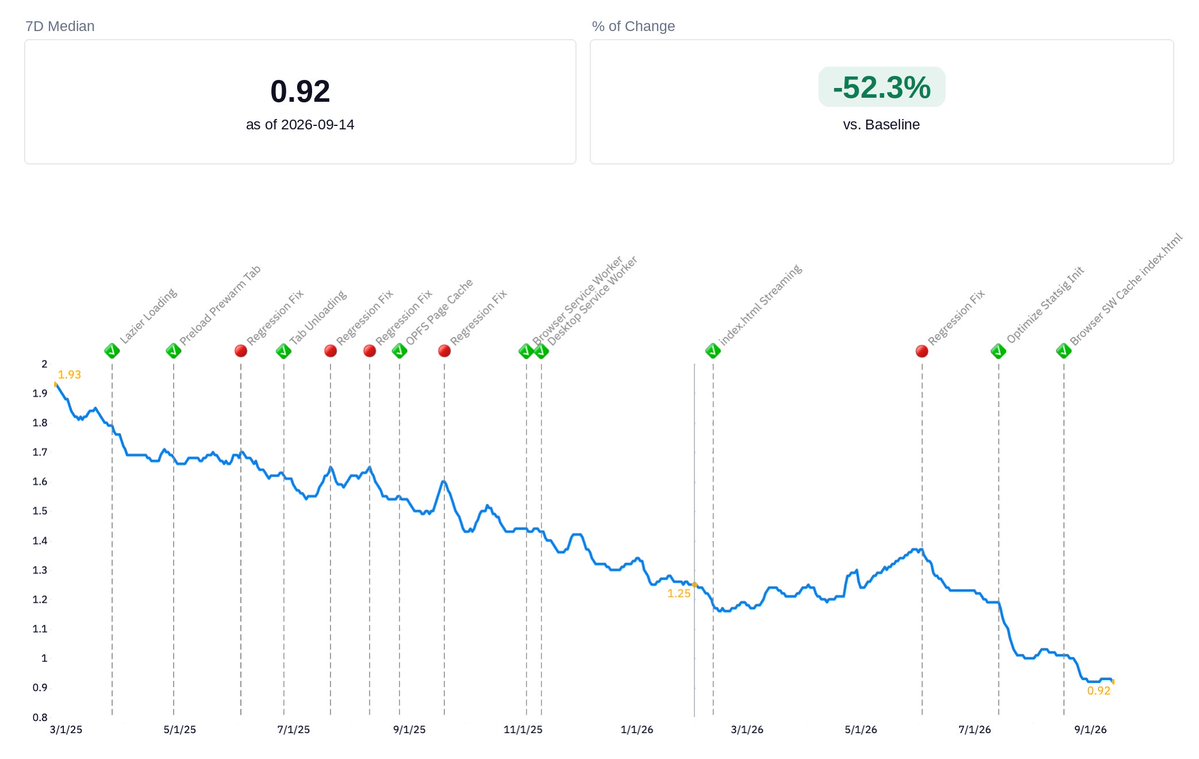
Get our median desktop cold-start under 1s. We did it this week after 9 major optimizations and fixing 5 major regressions.
Next, I want to focus on improving all interaction latency and make the desktop app feels light. More to come.
The loudest story about AI is a lonely one. One person with an army of chatbots. Other humans are friction.
That gets the future wrong. The best things aren’t built alone.
In a moment of change, we want to remind the world (and ourselves) what Notion stands for:
— Think Together
1) Is the product well-positioned? Is it just a thin interface for a narrow workflow—or a real platform that can support infinite use cases for humans and agents?
2) Is the team ready? Do they resist change—or embrace rapid progress with speed and thoughtfulness?
There’s truth and overreaction in the recent SaaS bloodbath. We’re entering a storm—and the companies that emerge on the other side will largely be decided by two questions:
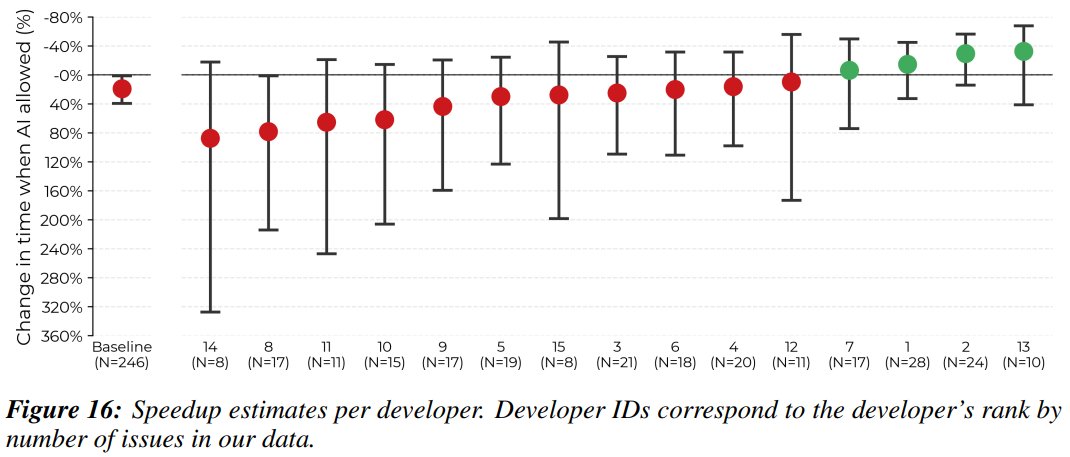
I was one of the 16 devs in this study. I wanted to speak on my opinions about the causes and mitigation strategies for dev slowdown.
I'll say as a "why listen to you?" hook that I experienced a -38% AI-speedup on my assigned issues. I think transparency helps the community.
Agency > Intelligence
I had this intuitively wrong for decades, I think due to a pervasive cultural veneration of intelligence, various entertainment/media, obsession with IQ etc. Agency is significantly more powerful and significantly more scarce. Are you hiring for agency? Are we educating for agency? Are you acting as if you had 10X agency?
Grok explanation is ~close:
“Agency, as a personality trait, refers to an individual's capacity to take initiative, make decisions, and exert control over their actions and environment. It’s about being proactive rather than reactive—someone with high agency doesn’t just let life happen to them; they shape it. Think of it as a blend of self-efficacy, determination, and a sense of ownership over one’s path.
People with strong agency tend to set goals and pursue them with confidence, even in the face of obstacles. They’re the type to say, “I’ll figure it out,” and then actually do it. On the flip side, someone low in agency might feel more like a passenger in their own life, waiting for external forces—like luck, other people, or circumstances—to dictate what happens next.
It’s not quite the same as assertiveness or ambition, though it can overlap. Agency is quieter, more internal—it’s the belief that you *can* act, paired with the will to follow through. Psychologists often tie it to concepts like locus of control: high-agency folks lean toward an internal locus, feeling they steer their fate, while low-agency folks might lean external, seeing life as something that happens *to* them.”
I have a weird thought: cheaper and open source models like DeepSeek might actually save humanity, because they take a lot of revenue away from aggressive players like OpenAI, and slowdown the race towards the cliff. This gives us more time to protect human from an evil AGI.
🔐 Happy Data Privacy Day! To celebrate, Notion now supports passkeys 🔑
Forget wrangling passwords. Now you can securely sign in using Face ID, Touch ID, or PIN.