If you wake up after 4-5 hours of sleep & find it hard to go back to sleep, it’s likely you offset your primary sleep drive (due to adenosine buildup etc). The next 2-3hrs of would-be sleep is when learning associated brain changes occur. 3 things help in this scenario. (Thread)
This is Dr. Rangan Chatterjee.
He spent 20+ years studying how modern lifestyle affects health.
His discovery? Most chronic diseases are caused by daily actions––not genetics.
7 habits you need to fix before they lead to long-term damage:
I’m amazed that such a goldmine of a strategy is freely available.
https://t.co/fObx3NClSQ
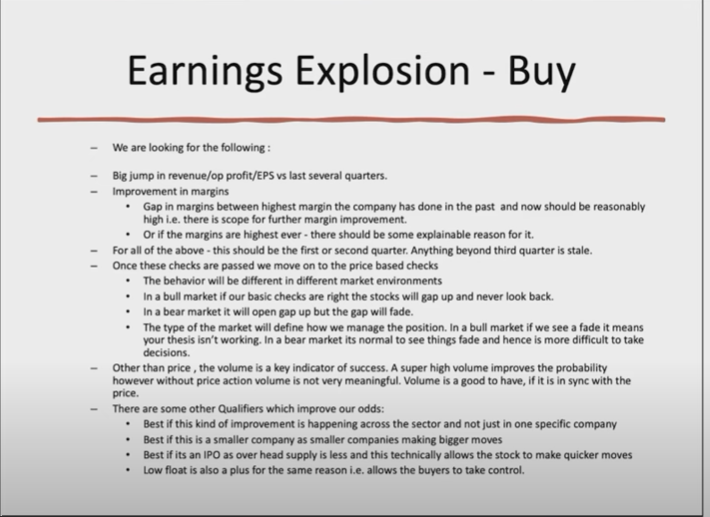
I found @prabhakarkudva in July 2021 Indian Investing Conclave (check the tweet below) & since then, PEAD strategy has become a core part of my trading. I’ve talked about it multiple times & even conducted a session on it.
https://t.co/Y55fwhex6a
This strategy has been a game-changer, delivering results with stocks like Saregama, Shilchar, Waaree, MCLOUD, BSE, Integra, XPRO etc. on a Weekly timeframe.
Adapted it to suit my style: (Earnings + Future Growth) + Range Contraction/Base Pattern + 52-week High) as entry criteria, with exits based on a technical breakdown of the 11WEMA (since I don’t deeply understand every aspect of these businesses).
Why overcomplicate things when a simple, proven method works? Earnings Breakouts driven by catalysts alone can deliver incredible returns.
Of course, no strategy offers a 100% strike rate, but this one delivers an exceptional R:R. With the right setup, some luck, and favorable market conditions, it’s even possible to achieve 100:1 with a 10% stop-loss (e.g., Shilchar & Waaree, personal achievement).
Anyways, Christmas holidays are coming—take this time to watch all 9-12 of his YouTube videos & pair it with book- How to Make Money in Stocks by William O’Neil.
By January, you’ll be ready to kick off the new year with a solid, objective technofunda strategy!
What to do in Banaras - AN ITINERARY
Banaras is known to be dusty, people having an eccentric way of talking, being surreally beautifully - ALL Of THIS IS TRUE
1/n
Start with Chachi ki Kachori, early morning 8am sitting with aloo kachori placed on a tin along with 100 other folks hits different. Super yum, ate 24 puris between 4 of us followed by Jalebi - spent only 320 rs!
If buying AC, budget isn’t a major concern. Just go for Mitsubishi Electric ACs. Have installed their 5 Star ACs and performance is way way better than other brands. Highly recommend it. (You get these ACs only through distributors)
Disappointed with @amazonIN service! Ordered a Samsung Z Flip 5 with next day delivery, promised, but it's MIA! Customer care offers no help after calling for 4 days, just a 'lost in transit' message. #CustomerService
🚨Health Insurance Analyser Series
From,
Niva Bupa Aspire to,
HDFC Ergo Optima Secure to,
Acko Health insurance to,
Star Comprehensive to,
Care Supreme
We have analyzed 20 policies uptil now.
The analysis is unbiased to help retail investors decipher health insurance
A thread🧵of threads of the policies we have reviewed
Lets go👇
👧Tax-Smart Savings: Sukanya Samriddhi Yojana Demystified💰:
The Sukanya Samriddhi Scheme is a government-supported savings plan designed for parents with daughters, aimed at securing their future education and marriage. 🌟 This scheme assures savings and also offers tax benefits under Section 80C. 🏦 Just like our previous analysis of PPF, this scheme serves as another secure option under 80C, ensuring both tax advantages and a safe way to build a corpus for the future.
The SSY comes in the EEE category Which is Exempt Exempt Exempt -
1. 👩👦 E - Investing in a SSY account offers tax benefits under Section 80C of the Income Tax Act. Your deposited amount qualifies for this deduction.
2. 😎 E - The interest that compounds annually in your SSY account is completely tax-exempt. Unlike many other investments, the accrued interest remains untaxed.
3. 👩🏫 E - Upon maturity, withdrawing the entire corpus from your SSY account, including both principal and accumulated interest, remains entirely tax-free. 🌟✨
Key takeaway from SSY Scheme👇👇👇 -
1. Potential Corpus Growth 🎁: Even an annual investment of ₹55,000, which equates to less than ₹5,000 per month, can amass a corpus exceeding ₹26 lakhs. This risk-free, government-backed option serves as an invaluable gift for parents, enabling them to secure their girl child's future with a safe investment plan. 💰👧
2. Compounding Magic💹: By the 9th year, the accrued interest surpasses the initial year's investment, showcasing the remarkable power of compounding. Remarkably, in the 14th year, the interest earned could exceed 100,000+, double of the first investment. 🌟💡 The excel sheet link - https://t.co/OzX36GYNn3
3. Tax-Free Benefit (EEE Category)🌈 : Categorized under EEE, this scheme allows you to take home the entire corpus at maturity without any tax liabilities. Unlike other equity options, this simple yet tax-savvy scheme enables the creation of a substantial corpus for your girl child's future. 🏦💡.
( Detailed post on PPF - https://t.co/zohOAcsYtL )
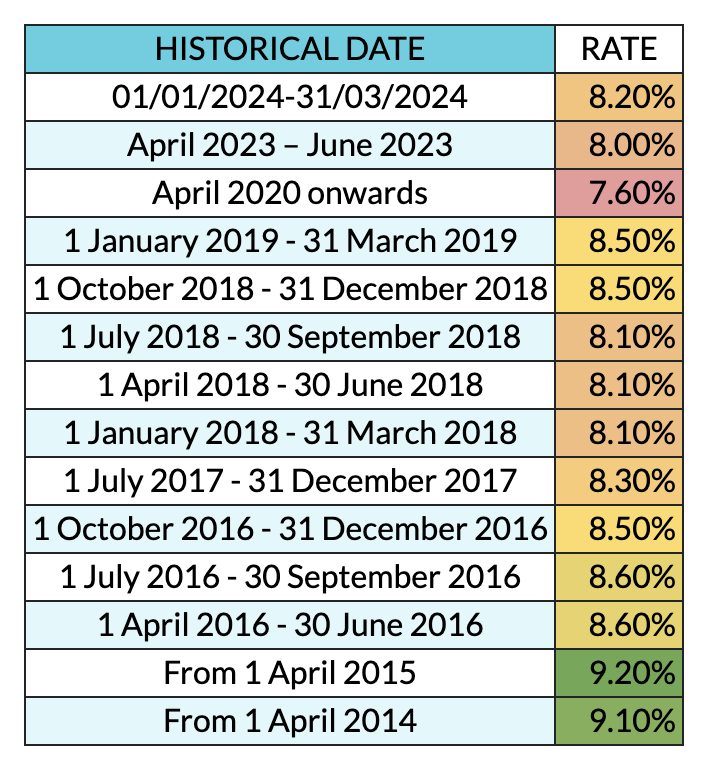
We've used the current rate of 8.2% (recently updated by RBI) for this calculation. Remember, these rates fluctuate over time, but our goal is to impart the concept. The image below illustrates the fluctuation of SSY rates.⬇️⬇️⬇️
Essential Points for SSY Investment Decision:🪙⭐📉
1. Account Opening Window: The scheme allows opening an account for a girl child from birth up to 10 years of age, ensuring a flexible timeframe for initiation.
2. Limit per Family: Families can open accounts for a maximum of two girl children, offering benefits for up to two daughters within one family.
3. Maturity Criteria: The account matures after 21 years from the opening date or upon the marriage of the girl child, whichever occurs earlier, aligning with life milestones.
4. Premature Withdrawal: Post the child's attainment of 18 years, a premature withdrawal of up to 50% of the investment is permissible, even if marriage isn’t imminent.
Thank you so much for reading! 📖📖
We teach Fundamental and Business analysis at SOIC :)
Over the past 3 years we have taught more than 10,000 students and spurred them on the journey of becoming a Complete Investor. #investing
Link to our SOIC Membership: https://t.co/H2p7Lxshos
Health Insurance Analyser Series-Episode 4
Acko General Insurance has got one of its kind policy that will cover all diseases from Day 1!
This is a superb feature that no other insurer offers!🤯🤯
A thread🧵 on features of Acko Platinum Health Insurance Policy
Lets go👇
The ten blunders to avoid when markets are touching all-time highs
The euphoria is unpalpable, The anchors at the top TV channels have already printed T-Shirts of “Nifty - 21000”. The Nasdaq is about to finally breach its life high (or at least it was just a few days ago) in a few days and there has never been a better time to believe that “This time it’s different”
I have been in markets since 1993 and like most 50 yr olds have seen a few booms, busts, scams and a few financial crisis. As a fund manager – when sometimes my clients ask me - markets are at all-time highs and making new highs everyday why are you not investing our money and simply holding on to cash.
I give all my clients 2 choices – Take Your money Back – Or be patient. But I ain’t changing my philosophy because of the pressure of capital deployment.
Even though I am always fully invested (personally), in markets (Levered to 120%) I am still almost always fearful, as Socrates keeps knocking within me subconsciously with his words – “Fools are always confident and the wise are always in doubt”
Perhaps I am a mad raging bull in a bear clothing. The bull in me keeps me hopeful and the bear allows me to be patient, cognizant of risks and to be non-greedy when everyone around me is convinced that this time its different. Perhaps that’s why our portfolios have been least volatile and have beaten markets with least amount of palpitations for our clients over a long term.
But the 10 lessons that I have learnt over the years and tried to imbibe in my investing style are as follows.
1. Be bullish, not foolish
If the world is progressing and must keep moving ahead (with inventions, technology, opportunities, AI et al) markets will always go up over a long period of time. That allows us and encourages us to be a perma-bull ala Rakesh Jhunjhunwala. Sensex at 60,000 seemed like an impossibility some 10 years ago. Today its 66000. So being a bull almost always helps in the long run.
But in the short run becoming a muppet in the hands of commentators is the worst punishment one can allow oneself to be inflicted with. The narratives that emerge at the seeming peak of the markets are always almost misleading and suicidal.
Lesson
When a stock, an idea, or a sector is being pushed feverishly – AVOID.
2. Breakout Stocks
Finfluencers are running paid courses on breakout stock strategy and thousands of gullible retail investors fall for this trap.
In the long run everything is driven by fundamentals without an exception (or else Yes Bank wouldn’t have become a No Bank and Suzlon would still be a blue chip) but in the short run, everything is driven by operators and insiders. How else do most shares start to perform or go down just before a major corporate announcement. Examples are galore not only in Indian markets but US as well.
Stocks break out not because the companies have become fundamentally adroit. They break out because too much money and fear is chasing too little items available. And that can make any s*** break out. Sub 1000 Crore companies that suddenly get new narratives built around them, coupled with incessant peddling of ‘the new promise in the lala land’ on social media and sometimes on business channels always prove to be a trap and wealth destroyers. Its surprising that almost all breakouts happen only when markets are peaking.
If Infy or ICICI or the likes of it break out, its great and merits attention but when stocks break out because of positive news (in most cases planted) while promoters are happily offloading their stake, not only should you be fearful, but you should also contemplate sitting out of the markets for a while. As Buffet famously quotes “Only when the tide goes out do you discover who is swimming naked”.
Lesson
If you are a superman and can get on a bullet train (thats running towards an abyss) and get off it - just in time, breakout investment strategy is ok. Else you will almost always get scorched.
3. Beating the estimates
When rivers start flowing above the danger mark, the powers that be, worry little about the river or the impending danger. They just raise the danger sign by a few feet so that the river remains below the danger mark. Such is the story of the estimates by analysts. All estimates are always beaten because estimates are not based on the FCF or Earnings Yield. But based on a collective intelligence of sub-optimal and mostly clueless analysts who are experts in guesswork.
And sometimes estimates get beaten because of a low base effect, one-off income etc etc. For this one needs to delve deep into the financial statements. But beating the estimates is one of the most specious narratives to misguide the DIY and the gullible investor.
Imagine Nykaa listed at a peak valuation of some 1,16,000 Cr (Nearly 15 Billion USD) and analysts hailed it as a profitable company going into IPO while the Nayars privatized their profits and socialized the losses. Its present EPS is some 7 ‘paise’ while its trading at 70% below its listing price and still discounted more than 2200 times.
Over the long term there are just 3 things that matter for a strong stock performance that has any likelihood of creating wealth for shareholders. Valuation, Free Cash and Management intent.
Lesson
Stick to the basic principles of investment that have been in existence for decades. Analysts and their estimates can be great entertainment not the bedrock of sound investment strategies.
4. Feeling good about bad data
Bad data is bad and good is good. However, markets have started interpreting this inversely. Can you imagine that if the US jobs and inflation data is good, markets react negatively and vice versa. Eventually, the reality will catch up and markets will realize that job losses aren’t good in the long run as data leads the reality by a few months and yet in the short run bad data almost always pleases the market till it doesn’t.
Lesson
If data is correct then trust the data and not the convenient interpretation of it. (eg. Bad data will lead to interest rate cuts and party of excesses will continue). Eventually, something that’s good for the economy will manifest itself into goodness and something that’s bad will manifest itself accordingly in not so distant future.
5. Discounting the distant future in the present valuations
Decision of a Capital Expenditure by a company, or establishment of a new factory or a newly acquired business contract spread over multiple years almost always takes the stock price to tizzy heights. And human mind is wired to feel bullish on news that has not produced a single cent yet and no one really knows when it will – These traps are best avoided as euphoria almost always fizzles out. Does anyone remember the infra theme of 2006-2008? Most of those companies aren’t even listed anymore. The present defense theme is no different. Be cautious when buying into future stories.
Lesson
If a company is good it will keep creating consistent shareholder wealth. And any prudent investor will make money in that company’s lifecycle. (Buffet invested so late in Apple’s lifecycle – And How - he didn’t miss any bus or opportunity). Don’t invest just on the promise of a rosy future. Wait for your time.
6 The FOMO factor
History is replete with examples – and I have experienced it personally. If one really is in love with a stock and wants to create a position, the irresistibility upon hearing TV commentators and news flow is intense. But almost always every single stock that you want to buy today will almost always be available a bit cheaper few weeks or months down the line - Even if it’s the HDFC’s or the Bajaj’s of the world. All one needs is a bit of patience to wait and build a stronger conviction while the target or lower price is achieved. If FOMO could be quantified, its directly proportional to the level of indices. Most bitcoin retail aficionados invested between 50000 – 68000 USD. If Bitcoin is really a store of value why aren’t they doubling down at 20000 USD?
Lesson
Investments made in a state of FOMO are never sound investments. Date your stock, understand it better, observe it for a few Qtrs and then say Yes. You will never go wrong.
7 Recency Bias
Anyone who has vivid memories of 2000 and 2009 and remembers Pentafour Software, DSQ, HFCL, Global Tele and JP Associates, would resonate well with the perils of recency bias. When most of these shares fell from (approx.) Rs. 3000 levels by 20%, people rushed to sell their family silver and real estate to capture the opportunity of owning these blue chips of those times. Well eventually all of these companies got delisted and JP is now at an unfathomable level of Rs 8.
The point to remember is that a stock at Rs 1000 can well become a penny stock and the adage “how much more can it fall” is stupidity.
Lesson
Not only should you never catch a falling knife, don’t invest in story stocks. Companies that peddle stories and not profits will always destroy their shareholders’ wealth.
8. Herd Mentality
Speciality chemicals was as crowded a trade, 18 months ago as Banking is now. Finfluencers were allowed to blatantly push narratives on TV Channels and the entire sector has destroyed a considerable wealth over the last 2 years. Indian Banks are trading at reasonably rich valuations while the CEO s of the same banks are subtly raising red flags on growth and margins yet the BAAP (Buy at any price) brigade is relentless – and while banking sector is the bedrock of economic growth of any country – valuations do matter.
Lesson
When everyone is chasing the same theme – it almost always spells trouble. DotCom in 2000’s, Housing in 2008’s had the same fate. AI is the new darling theme. Lets see what happens to AI and chip companies a few qtrs down the line.
9. Cutting the flowers and watering the weeds
Peter Lynch famously quipped the above adage. I know more than a dozen people who are in love with Yes Bank and Vodafone rather than ICICI Bank and Bharti. A large number of DIY investors feel that the chances of a penny stock doubling are far higher than a respectable and a fairly priced stock. The ‘averaging on the way down’ brigade of Yes Bank, Unitech and JP Associates will continue to sell their winners while collecting mountains of trash.
Eventually such investors get ejected out of the markets forever.
Lesson
The performance of a company gets reflected in numbers and numbers get reflected in the Balance Sheet and the BS gets reflected in the stock price. Stocks are where they are for a reason. A red black on a roulette table offers a better probability of winning than holding onto The Yes’s and Vodafone’s of the world in the hope of they springing a magic.
10. Falling in love with stocks or promoters
I recently heard a well known fund manager mention in a podcast how he was in awe of Mr. Gosh and Bandhan bank. This adulation towards a particular management clouded his ability to see the turning fortunes for the worse at the bank and eventually he had to exit the investment at a big loss to his investors.
It is easy to fall in love with stocks/sectors which have given good returns in the past. But this should not blind one’s rational thinking towards changing times. One key TV commentator keeps peddling the idea that the next HDFC bank is the HDFC bank itself, while the stock underperformed Nifty by a huge margin in the last 2.5 years and ICICI snatched the mantle of growth and consistency in the Indian Banking space.
Positive Management Commentary is another trap that most investors love to fall into. Bias clouds their judgements and the performance as well. And most investors get sated by just commentary. Which promoter will ever say that his future is bleak or give a negative commentary?
Lesson
Don’t cling onto stocks where data or price isn’t supporting or where the business model could itself face a headwind. If at all - cling onto relationships, great friendships and emotions – not stocks and commentary.
11. Checking the price and not value
We all aspire to upgrade our standard of living (Car, House, Holiday destinations, etc) and happily pay a premium for superior quality and size. But some of the most prudent investors and sometimes fund-managers as well, take refuge of substandard – low priced stocks (penny stocks) in the hope of dramatic turnaround or a story that’s likely to unfold in some distant future. The propensity to indulge in this investment strategy is directly proportional to the index levels.
Lesson
If there is 1% chance that your investment behavior is vaguely similar to gambling, you are most likely to get into trouble. The probability of landing a multibagger amidst an ocean of crappy stocks is like finding a unicorn in a herd of donkeys.
If one could just avoid stupidities in ones investment journey over decades, there is no force that can stop you from compounding your wealth at an appreciable rate. And compounding – the eighth wonder – is everything isn’t it?
https://t.co/Ghkh7WkmUP
#investing #Midcap #Nifty #sensex #banknifty