Hi everyone, please consider helping to support undergrad/grad student research at The UT Centre for Planetary Systems Habitability, in fields such as pre-biotic chemistry, the origin of life, planetary dynamics, biosignatures, habitable environments, etc.
https://t.co/KRFLCSBPBS
24.9% - that's the area of ocean floor on Earth that has now been mapped to "modern standards". The new figure was released this morning by Prince Albert of Monaco at the International Hydrographic Organization (IHO) Assembly.
An additional 5.4 million sq km of new data - equating to an area twice the size of Argentina - was added in the past year. A good part of this is previously proprietary data being released into @gebcobathymetry@seabed2030 database. Coloured in red is the additional area.
When the quest to assemble a comprehensive map of Earth's ocean floor was begun in 2017, the quoted number was just 6%.
So, rapid progress has been made, but to put the lack of knowledge about our own planet in context - when the new seamount catalogue was published last month it included over 19,000 newly discovered undersea volcanoes. Think about that - 19,000 mountains on Earth that we previously didn't know about.
News alert, *very cool, beautiful* product: Thanks to @ErroneousTholus', a new seamless mosaic of Mars at 5m/px. Thanks to @NASA's Research & Analysis PDART for funding Caltech to make this easy/free to the world! For your science or Mars-flying pleasure
https://t.co/qRElmk1VYF
Just one week left to apply for this 2 year Postdoc working in our group on Mars clay mineral-bearing strata!! 🎉🎉🚀🚀Details here: https://t.co/dksKVn18mP.
PhD student Emily Bamber (@Bambi_in_Space) has a new publication out in GRL "Paleolake inlet valley formation: Factors controlling which craters breached on early Mars". Full paper (open access) is available here: https://t.co/lFSyao22Ke. 😁😁 (1/4)
🚨Actively looking for *grad students* to join PLANETAS: https://t.co/NJ9kEXZ0KB Projects: 1) Antarctic Mars analog studies w/ sedimentology focus (*must have* geology field experience) & 2) Lab analog studies w/ Mars Sample Return focus (ideally w/ spectroscopy/lab experience)🚨
Hi everyone, if you’re attending #AGU2022 please consider stopping by my poster presentation on geomorphometric controls on minibasin morphology (EP22E-1386), happening right now from 9:00 am - 12:30 pm.
If you’re at #AGU2022, come see my poster EP22E-1393 between 9-12:30 tomorrow, 12/13! I will be talking about critical zone architecture and evolution in “non-ideal” hillslopes (e.g. evolving topography, layered lithologies, thick vadose zone)
PSA: As of Tuesday, I unexpectedly lost access to my Yonsei email, so I haven’t been receiving your emails. Please redirect your emails to my UT email, which is the same as my Yonsei email, just change the domain name from “https://t.co/TiE9IFNfE5” to “https://t.co/HpuRDUg9Bm”
Your contributions will help fund student projects such as those by my good friend Eric Hiatt, who designed and built an artificial Mars crater to study the fluid mechanics in Martian craters and their ability to possibly sustain life.
Hi everyone, please consider helping to support undergrad/grad student research at The UT Centre for Planetary Systems Habitability, in fields such as pre-biotic chemistry, the origin of life, planetary dynamics, biosignatures, habitable environments, etc.
https://t.co/KRFLCSBPBS
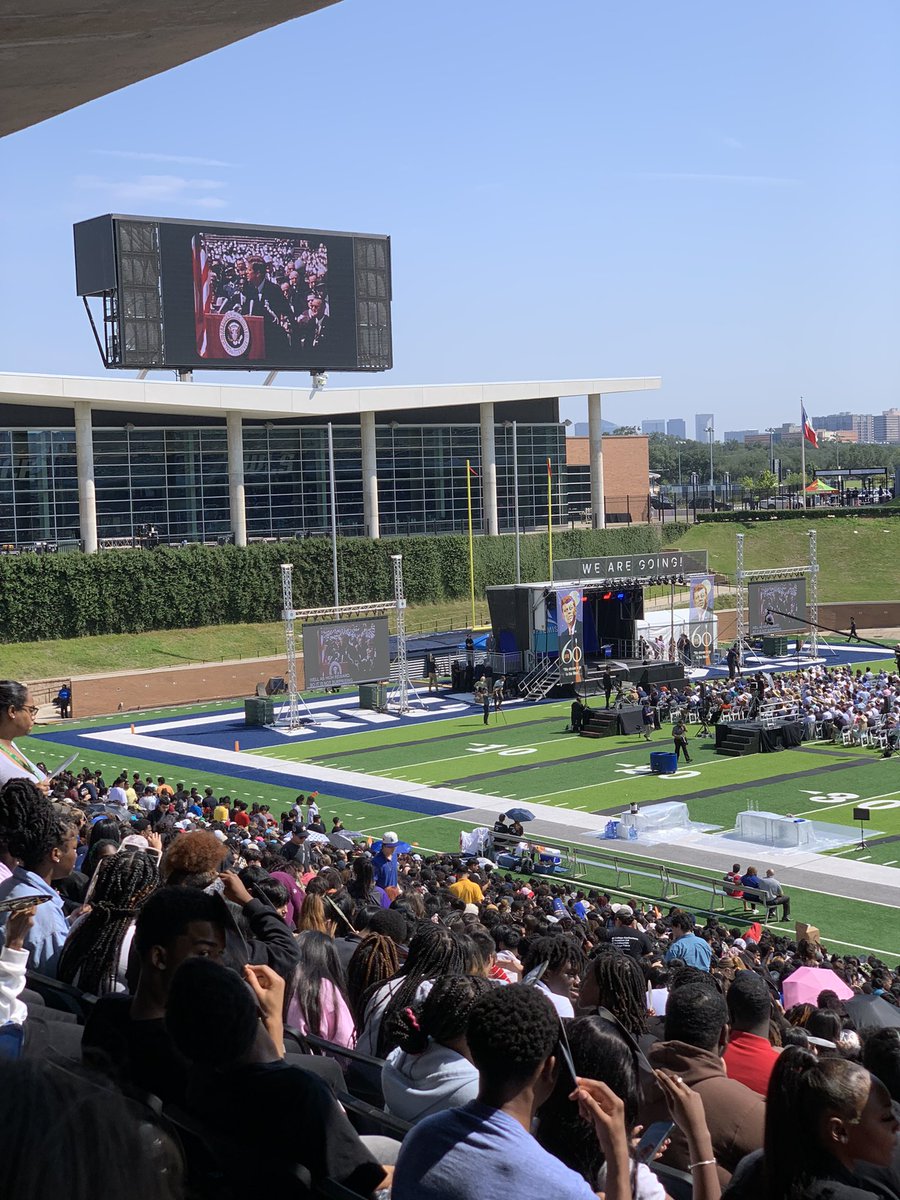
"We choose to go to the Moon in this decade and do the other things, not because they are easy, but because they are hard."
60 years ago today, President John F. Kennedy's speech at Rice University inspired the nation to take up an audacious goal. Watch: https://t.co/LEllJDG1Kk
The Department of Earth Sciences at Dartmouth seeks to hire a tenure-track Assistant Professor in environmental geochemistry, including but not limited to: mineralogy, low-temperature (bio)geochemistry, and isotope geochemistry! Applications open now at https://t.co/OJWjLZCs0b
Satellite data may help unravel mysteries of extant earthly rivers and traces of extraterrestrial ones.
New research from @TDgravel and @timgoudge@txgeosciences, input from @BenoftheSand @PSUEMS and @salesefra@ERC_Research, story by @joelgoldberg123.
https://t.co/yZbMjyhklM