Before the fight Muhammad Ali reportedly told Mike Tyson “Get him for me”
Years earlier a teenage Tyson had promised Ali he would avenge his loss to Larry Holmes.
Eight years later, with Ali sitting ringside, 21-year-old Tyson stepped in with Holmes and delivered a devastating fourth-round knockout.
A promise made. A promise kept. 🥊🔥
#Boxing #MikeTyson
Glasgow Green, 1880s.
A crowd gathers. A man stands on a crate, coat buttoned tight against the Clyde wind.
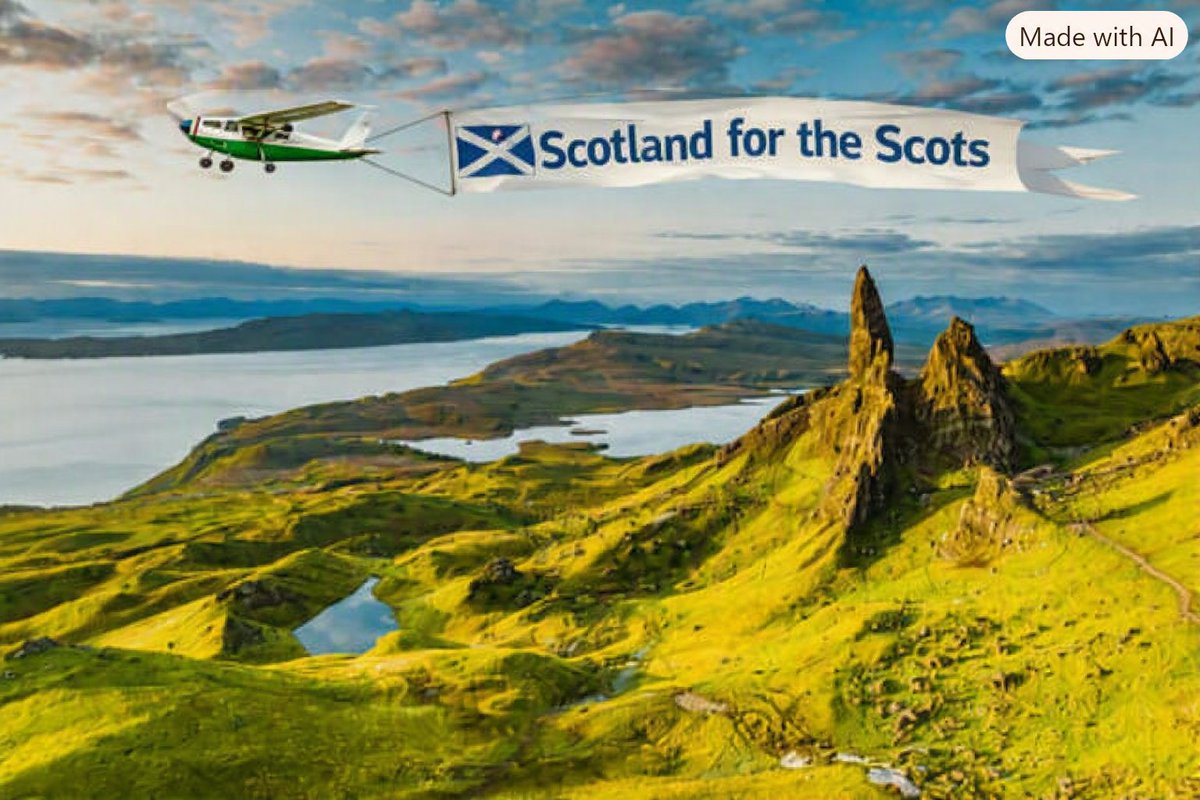
“Scotland for the Scots — aye, and I’ll tell ye what that means.
It means the wealth o’ this country — the coal, the iron, the ships, the mills — should feed our weans, no’ line the pockets o’ landlords in London who couldnae find Glesga oan a map.
It means the land o’ Scotland should belong tae the folk who work it — the crofters, the labourers, the men and women who break their backs every day — no’ tae some duke who visits his estate wance a year tae shoot a stag.
It means decisions aboot Scotland should be made in Scotland — no’ by a Parliament that kens nothing o’ our lives, our struggles, our hunger, our hopes.
It means we’re done being a province o’ somebody else’s empire. We’re done sending our wealth south. We’re done being ruled by men who dinnae speak for us.
‘Scotland for the Scots’ doesnae mean Scotland for some bloodline or some ancient clan. It means Scotland for the folk who live here, work here, suffer here, fight here.
It means Scotland for all Scots — rich or poor, Highland or Lowland, Catholic or Protestant.
That’s what it means. And if London disnae like it, they can come and argue wi’ us oan the Green.”
--------
It's never been racist.
The claim that “Scotland has made c£182 billion” from North Sea oil since 1980 is the classic starting point of this argument, and it is the part that doesn’t hold.
Scotland did not make that money. The UK Treasury did. Every pound of Petroleum Revenue Tax, ring-fence corporation tax, royalties and later levies was collected by HMRC and paid into the UK Consolidated Fund. The £182 billion figure is simply a notional geographical attribution used in GERS and ONS statistics. It is an accounting convention for modelling purposes, not evidence that the money was ever Scotland’s to control or spend.
Once you treat that notional total as if it were real Scottish revenue that was then “sent south,” the rest of the argument writes itself: “more than that came back, so the net balance is in favour of the rUK.” This is a straw-man version of the independence case. The actual argument is not that Scotland is owed a historical cash total under the current arrangements. It is that an independent Scotland would have controlled the resource and the decisions about how to use it.
That distinction matters. The UK chose to spend the revenues on current spending, tax cuts and managing the consequences of rapid deindustrialisation. It did not create a sovereign wealth fund. Norway did. The result is visible today. An independent Scotland in the 1970s and 1980s would have faced the same global pressures on shipbuilding, steel and coal, but it would have been making its own choices about the pace of transition, the level of support for industry, and whether to ring-fence oil revenues for long-term investment rather than current consumption. Those are political and economic decisions that were taken in London, not in Edinburgh.
Pointing to higher public spending per head in Scotland (the “money came back north”) simply describes how the Union pools and shares revenue. It does not prove that the original decisions about industrial policy or the use of the oil windfall were the ones Scotland itself would have made. Fiscal transfers under the Barnett formula are a feature of the current settlement. They are not an answer to the question of democratic control over a major natural resource or the long-term opportunity cost of how that resource was managed.
The forthcoming GERS figures will almost certainly show another large notional deficit for Scotland even after the geographical share of oil is included. That is what the accounting framework produces. It does not settle whether different decisions, under different constitutional arrangements, would have produced a different outcome for the Scottish population.
The premise that Scotland “made” the money and was then compensated is the part that needs to be rejected first. Everything else in the argument rests on it.
SCC Statement it is our understanding
Liberation Scotland has now broken through long standing barriers and secured direct engagement at the United Nations.
This development creates obvious difficulties for both Westminster and the Scottish Government, and under the circumstances their resistance is not unexpected.
Recent commentary has misrepresented Liberation Scotland’s aims and arguments without offering any right of reply. Liberation Scotland has formally denied these characterisations.
The public has been left with a version of the campaign that bears little resemblance to its actual purpose.
It should be clearly understood that Liberation Scotland does not propose an alternative to political campaigning or democratic events. Its work is focused on the international law mechanisms that allow Scotland to exercise self determination without external obstruction.
That distinction has not been reflected in domestic reporting.
The SCC notes that Liberation Scotland’s case is receiving serious attention from international legal and human rights experts.
This support cannot yet be published, but it is real and substantive.
Domestically, however, the campaign is being portrayed as fringe, while internationally it is treated as credible.
There are always two sides to any story, and the public will form its own view as events develop.
It is nevertheless clear that the SNP has put little meaningful effort into advancing independence for over a decade, much of its energy having been spent on internal disputes rather than constitutional progress.
The SCC will continue to monitor developments and provide clarity where misrepresentation occurs.
🤔⚖️🏴🌎☮️
It now appears that both the National and the SNP government (Options for a legal mechanism for triggering an independence referendum) are gathering forces to rubbish or oppose Liberation Scotland and a campaign that is absolutely reasonable as well as necessary.
In doing so they join the British state in its wish to belittle and actually harm a campaign that is winning support and respect from state representatives and legal authorities internationally.
But we cannot prove how impressive that support is nor explain that both Mcalpine and now Hassan have first misrepresented us - set up our aims, role and arguments as an aunt Sally - then knocked our imaginary position down. Because we have not been given any right of reply.
Thus we are not permitted to represent ourselves but must live with the misrepresentation which serves instead of an honest critique. Who would guess from the articles by these ‘luminaries’ that our campaign does *not* offer an alternative to a political campaign or a democratic event to secure independence but an international law based way of enabling these without Westminster interference. A right of self-determination.
And who would guess the kind and level of endorsement our case is getting from international legal and human rights experts whose careers and experience make these ‘big fish’ in such a little pond look like pygmies by comparison. Certainly no one who is going on the output of the National.
The British state works hard to represent a thoughtful, solidly and legally based campaign as ‘fringe’ domestically while doing all it can to undermine us within the UN (where we are regarded as anything but irrelevant). It appears it has a ready helper in the National.
English Tory jabbers on about 'Countries around the world envy the UK’s oil and gas', the resource 'Better Together' told Scots would be 'gone' by 2019.
Know what hen?
It's Scotland's Oil.
The UK government declared to the world that Scotland is a voluntary partner of England, as Sara Salyers points out below. Whatever the difficulties of that UK assertion, and there are several, deadly to the proposition, you have the extraordinary gall or the burgeoning ignorance to come on here and tell people it is something yet again.
The Brithish government believes it can define the Union in multiple ways according to the need of the moment – one way for the denial of dependency, 1954; another for the assertion of the rights of a continuator state, 2012. You seem to think you have permission to do likewise.
There is one truth and one truth only about the relationship between England and Scotland, and Professor Robert Black, with no little (unintended) back-up from the UK's expert constitutional jurists, James Crawford and Alan Boyle, has identified it – annexation.
Hey yoons, if someone approached you and said that if you give them all your financial assets they will look after them and give you back a third of their value annually, would you agree? It’s as simple as that, and you know it’s a ludicrous question, isn’t it?
The BBC Scotland phone in this morning was based on a lie. Stephen Jardine claimed the leader of Edinburgh council called a £5m funding package from the SNP Govt "shameful" and said the city should have received more following the Princes St fire. This is not true.
In the clip below you can hear Jardine trying to prompt Jane Meagher several times to attack the funding amount. She refuses repeatedly, making clear her criticism has nothing to do with the amount of funding but is about the response.
Meagher's "shameful" comment related to an alleged lack of attention from John Swinney and had nothing to do with the £5m funding.
Pretty clumsy propaganda by BBC Scotland. Jardine not revealing that Meagher is a Labour councillor when introducing her just makes it worse.
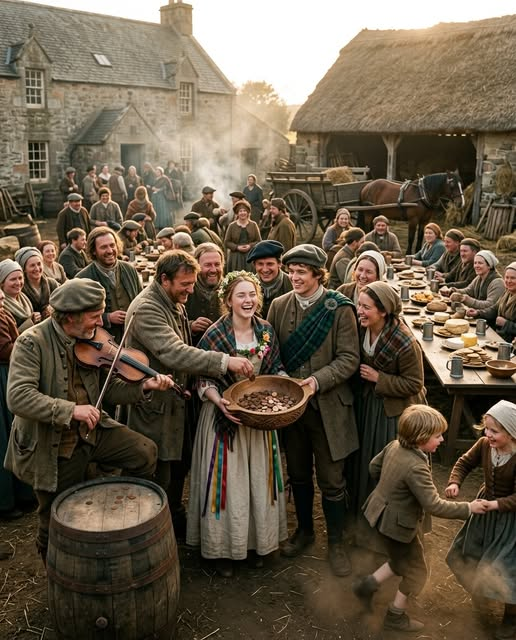
In the old days in Scotland, when two poor young people wanted to marry and had almost nothing, the whole community simply arrived and built them a wedding out of their own pockets.
It was called a penny wedding, and for centuries it was one of the warmest customs in Scottish country life. Instead of the couple, or their families, bearing the whole cost of the celebration, every guest brought a contribution. A few pennies dropped into a bowl, a sack of meal, a cheese, a jug of ale, a fowl for the pot. Everyone gave what they could, and together they made a feast that no single poor family could ever have afforded alone.
The money left over after the food and drink were paid for did not vanish either. It was handed to the newlyweds, a modest nest egg to help them set up home, buy a cow or stock a croft. In a hard land where survival was a shared business, this was how a community launched a young couple into married life, not with grand gifts but with the quiet generosity of many hands.
There was music, of course, a fiddler in the corner and dancing until the small hours, the barn or farm kitchen packed with laughing neighbours. The kirk sometimes frowned on the merriment and tried to rein it in, but the people loved their penny weddings too much to give them up easily.
What shines through it all is a truth the old Scots understood deeply. That a marriage was not only the joining of two people, but the business of a whole community that meant to see them thrive.
Nobody was left to start alone. Everyone gave a little, and a new home began.
It is a lovely reminder that in Scotland, celebration was always meant to be shared.🏴⚔️👑🧬🩸
You’re right about the voluntary union designating a past event and not a continuing constitutional identity. I have made the sane point repeatedly myself. But it’s not an event which actually led to a new, sovereign state. It’s a lie the British state came up with to head off international inquiry into the relationship between England and Scotland.
The sudden need in 1952 for a Royal Commission to declare (as published in 1954) that Scotland is not a dependency because it entered the union with England as a voluntary partner, had nothing to do with domestic politics. (Who on earth even thought about Scotland being a dependency in the ‘Britain’ of 1952?) It had everything to do with the roll out of the UN decolonisation programme. Thus was peddled the fake historical provenance parroted here.
The ancient and sovereign state of Scotland was dismantled in 1707 by the English state under the pretext of a treaty for a new joint state. (A perfidious treaty being a ploy it has used over 200 times since the 12th century.) The English state then continued without missing a beat and changed only by the adoption of a new official name, Great Britain.
https://t.co/0KWhXCPFGG…
You can call a slug a peacock if you wish but the thing that it is still remains the same thing that it is. The UK is a fiction, a covering for England with its colony - once referred to by English kings and politicians as North Britain so anxious were they to eradicate its separate identity.
It is that fact, the fiction of the U.K. state, and not the misguided clamour about an equally fictitious voluntary union, that will finally set Scotland free.
Burnham, testing the water, you can only think. has foolishly taken a can opener to the constitutional black box that is the UK. More of its hideous contents are here being tipped out.
Each time the the British state and its followers, props and apologists pipe up, they provide another length of rope for their own hanging.
Mahatma Gandhi might well have made the observation that we have entered the region somewhere between 'then they fight you' and 'then you win'.
"Dr Kirsty Hughes asked: 'Would Burnham's written constitution spell out what a voluntary union means? He seems to think it's about devolution.' "
There is only the slimmest chance of this coming about, and Kirsty Hughes's question hints at why. Even a reworking of the House of Lords is a danger zone, liable to expose the contradictions at the heart of the British pick-and-mix constitution, never mind a complete dismantling and rebuilding – and therefore public examination in minute detail – of the whole sorry lash-up. It would in short time confirm precisely what Sara Salyers has published, and would lead people in their millions straight to the fiction that is the edifice's keystone and gravestone. You wonder if Burnham's taken any advice from the hapless posse of civil servants who might be landed with the nightmarish job of devising a reconciliation of the reality and relationship of the two long-dodged kryptonite Crowns; Scotland’s lethal green to England’s mercurial red. Where could they possibly start but the source they claim for union: the Treaty? Or might they risk a rub of the red to pick up from late-19th century Dicey and no earlier, as the Scottish Parliament's recent legal routes paper outrageously attempted?
All we Scottish nationalists want and need is that Treaty examined in an international forum. Were Burnham foolish enough to go through with this, it would draw not only a hail of well-informed constitutional challenges from Scotland, but exposure by international legal opinion – now alerted to the UK's fictional beginnings – to that deadly green kryptonite.
In 2014 it was about devolution; a dangerous dabbling they got away with without drawing back the constitutional curtain (though the subordination of the Treaty to the Scotland Act is a howler yet to be subjected to the scrutiny of international law). But today it's become serious. Many lessons have been learnt since 2014 about British promises and British bad faith. It's now about external self-determination and decolonization. Burnham's UK constitutional reconfiguration is a potentially self-destructive gamble, a kind of UK hara-kiri. We'd say bring it on.
https://t.co/61GDdoZIyO
And if you examine the entire sequence a glaring contradiction comes into view:
The Claim of Right codified that the Scottish Crown was conditional and located the authority to determine succession within Scotland's constitutional order.
The 1704 Act of Security exercised that authority.
The 1705 Alien Act then punished Scotland for exercising it and was expressly designed to force acceptance of an incorporating union and the English succession settlement.
That incorporating union consequently removed the Scottish institutions capable of giving practical effect to the Claim of Rìgh while professing to preserve the constitutional settlement from which that authority derived as a condition precedent.
Harley's later admission makes it much harder to treat this as an accidental inconsistency or an unforeseen consequence. It suggests a conscious distinction between preserving politically useful parts of the settlement - particularly the Presbyterian establishment - and suppressing the sovereign principle embodied in it.
So the contradiction is that The Alien Act demonstrates that England wouldn't tolerate the Claim of Right when Scotland attempted to exercise it. The 'union' then neutralised that right permanently, while claiming to preserve the constitutional settlement it had just coerced Scotland into abandoning.
That turns Harley's admission into evidence not merely of subsequent breach, but of original purpose: incorporation required the Claim of Right to remain nominally intact while being rendered constitutionally inoperative.
"Foreigners say publicly, I mean our own allies, that we [England] are a perfidious nation; and since we have violated our treaty with Scotland, and laugh at the notion of fundamental and inviolable articles [of Union], there is no great wonder if we treat other nations as we do."
Robert Harley, 1709.
Harley says three distinct things:
First, he calls it "our treaty with Scotland." Even in 1709, he describes England and Scotland as the parties to a treaty, not merely as regions governed by a newly sovereign unitary state.
Second, he says England had "violated" that treaty. That's not a later nationalist interpretation imposed on the settlement; it's a contemporary acknowledgment of breach from the key English politician.
Third, he says England "laugh[ed] at the notion of fundamental and inviolable articles." That goes directly to the supposed constitutional safeguards. The problem wasn't simply that Westminster later interpreted an ambiguous clause differently. Harley was describing open contempt for the proposition that any part of the Union settlement could bind continuing English parliamentary power.
The sequence is therefore devastating:
The Claim of Right established a conditional Scottish monarchy.
The Act of Security exercised Scotland's resulting constitutional authority to determine its own succession.
The Alien Act then coerced Scotland for exercising that authority. The 'union' purported to preserve fundamental and inviolable constitutional conditions.
Within two years, Harley admitted that England had violated the treaty and laughed at the idea that those conditions were binding.
That's the primary evidentiary record, from England itself, that's the record the International community are now examining thanks to Liberation Scotland, and in particular Sara Salyers.
"... by your words you will be justified, and by your words you will be condemned"
What a stupid comparison.
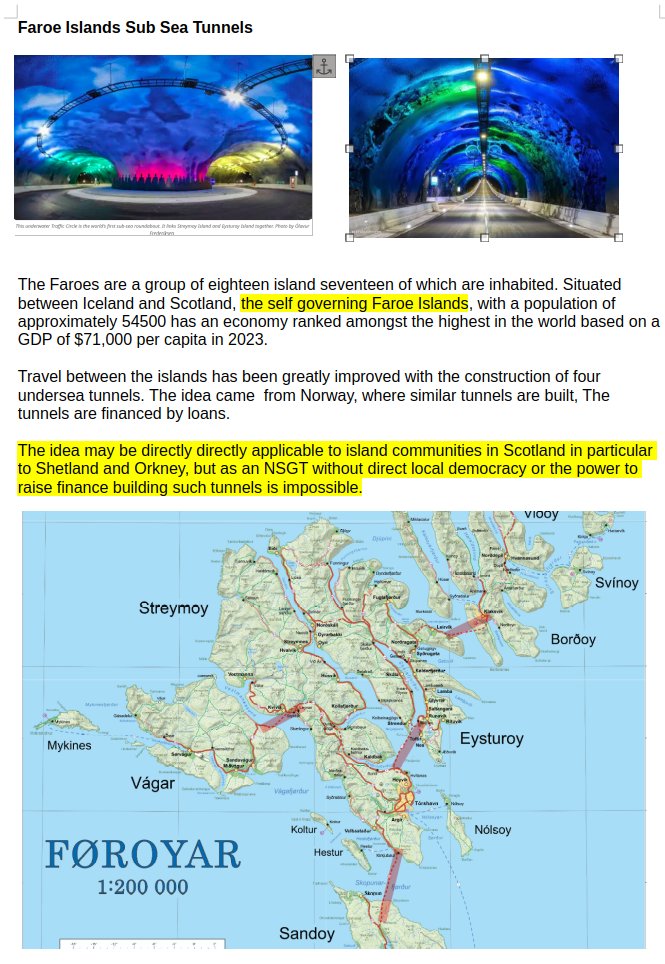
Faroe Islands have - Full fiscal autonomy, trade, treaties, tax, customs….. & can pass any legislation without 🇩🇰 say so.
Scotland - Colonial Scotland act. No control over trade, customs, VAT, treaties, ports…..legislation can be vetoed by 🏴.
You CAN'T write a constitution for a 'voluntary union' without the consent of the parties to that union.
But aren't those parties long gone, the proposition made in 2012 of the UK's lawyers James Crawford and Alan Boyle? No. Those gentlemen wrongfully identified the parties to the Treaty of Union as the parliaments of Scotland and England. At least one of those, in their view, is long gone (Scots, of course). But, the parties to that Treaty were not those parliaments, but rather Queen Anne, acting, for the one part, as the Crown of England and its ultimately "continuator" parliament - very much in existence today, and for the other as the Crown of Scotland. The Crown of Scotland was and remains the Community of the Realm, otherwise said the Scots nation - also very much in existence today.
The question that then arises is this: does the British government intend to ask those parties to sanction the dissolution of the Treaty on which it claims the UK is founded, and formulate a radically new, true, British unitary state and constitution?
The Scots would evidently provide their consent via a fully informed referendum on whether they are willing to finally, legally and forever relinquish their sovereignty and constitutional rights under the Claim of Right. Is the British Government really going to do this, because the answer they will get is a clear 'no'?
We could ask too: is the British government ready to have the opinions of Lord Cooper, Professor David Walker and Professor Ian Campbell thrown in their face for them to answer the profound questions they raise on the multiple contradiction that the great British constitutional fudge has acquired to disguise the only thing that can resolves the constitutional 'conundrum' – acknowledgment of the fact of Scotland's annexation?
References:
– Lord Cooper, MacCormick v Lord Advocate, 1953 SC 396 at 411 (obiter dictum)
– Professors James Crawford and Alan Boyle, Annex A: Opinion: Referendum on the Independence of Scotland: International Law Aspects, UK Government, 2012
–Professor David Walker, “The Union and the law,” Law Society of Scotland Journal, Vol. 59, Issue 07, June 2007
–Ian Campbell, “'The Union and the law' revisited,” Law Society of Scotland Journal, Vol. 59, Issue 07, 2014
@ScotNational “Scotland was annexed into a continuing English state.”
Robert Black KC
Geneva Speech Part 1
🎥 https://t.co/6abKnEnZWl
Robert Black KC
Geneva Speech Part 2
🎥 https://t.co/27lwghSUrJ
Robert Black KC
Geneva Speech Part 3
🎥 https://t.co/ZjVribNyWs