James Clear on movement:
“Many situations in life are similar to going on a hike: the view changes once you start walking. You don't need all the answers right now. New paths will reveal themselves if you have the courage to get started.”
Fun fact:
The broadcast starts with an audio clip of Foster Hewitt saying "Hello Canada, and hockey fans in the United States and Newfoundland," because the show has been on so long that when it started, Newfoundland wasn't part of Canada yet.
This is the wildest World Cup story yet. If someone in Toronto sells a ticket above face value they get fined $25,000 yet the city of Toronto bought 3,500 World Cup tickets early and then sold them to taxpayers at a markup as a “revenue generation strategy.” What the hell man.
Neil deGrasse Tyson: “Whatever [the next outbreak] is, we ain’t ready for it. We still have anti-vaxxers running around.”
“I don’t trust scientists. I saw a YouTube video, so I’m not going to take it.” (mocking)
“I don’t want you to ever forget this story.”
“20,000 years ago, we’re in the cave. Do you know what the life expectancy was?”
Shannon Sharpe: “10 years? 15 years?”
Neil deGrasse Tyson: “30. Half of everyone born was dead before they were 30.”
Shannon Sharpe: “Wow!!!”
Neil deGrasse Tyson: “Fast forward to 1840… everyone born in the world was dead by the age of 35. We gained five years of life expectancy. And every one of them ate organic, breathed clean air… Science matters here.”
“We’ve doubled the life expectancy with antibiotics, vaccines, and sanitation. The three biggest forces operating on our longevity. So to come around and say I don’t need vaccines because I’m not getting sick, that’s like saying, why are you using dandruff shampoo? You don’t have dandruff.”
Shannon Sharpe: “Well, I don’t want to get it.”
Neil deGrasse Tyson: “That’s my point. If you’re successful, people think you don’t need it when that’s what’s creating the ongoing success in the first place.”
Michael Mann couldn't shoot Collateral on film. The cameras couldn't see Los Angeles at night the way he wanted. So he picked a digital camera no other major Hollywood movie had used. The crew was still building parts for it during the shoot.
Mann was chasing a specific look. Around 10 or 11pm in LA winters, a low cloud bank drifts in off the ocean and settles about 1,200 feet up. The orange sodium streetlamps below light up the bottom of those clouds and turn the whole sky into a soft, hazy glow. Mann said it looked like winter in England.
Movie film couldn't see that. To shoot a single downtown block clearly, the crew would have had to bring in massive lights and brighten up entire streets just to make the buildings visible. Even with the lens open as wide as it goes to pull in any available light, almost nothing outside the foreground would stay in focus.
The camera Mann picked was the Thomson Viper, brand new and not really ready for production. There was no memory card or storage inside the body. It had to be plugged into a separate hard drive with a cable.
About 80% of Collateral was shot digital. The other 20% on regular film was mostly the Korean nightclub shootout, where the bright club lighting gave the crew plenty to work with.
The coyote scene only exists because of the digital camera. Mann didn't plan it. A small pack of coyotes wandered across an empty street between takes, and because the camera could see in near-darkness, the crew just rolled. On film, that shot would have required lighting up the whole intersection first.
The helicopter shots over the city work the same way. Palm trees against the night sky, the downtown skyline lit only by the city's own light. On 35mm film, none of that would have shown up.
The movie cost $65 million to make and earned $220 million worldwide. It won Best Cinematography at the BAFTAs, the British version of the Oscars, and helped push Hollywood toward digital cameras for night shoots.
One catch. That orange light Mann chased is mostly gone now. Starting in 2009, LA began replacing its sodium vapor streetlamps with white LEDs. By 2013 the city had swapped out 141,000 of them. Today the lighting system is 98% LED. The Los Angeles you see in Collateral doesn't exist anymore.
Dominic Thiem on facing Rafa Nadal in the Roland-Garros final:
“He starts to introduce Rafa... 2005, 2006, 2007, 2008... The crowd is going mad, and you’ve already lost the match. It’s one of the worst things I’ve ever experienced.”
We run for different reasons.
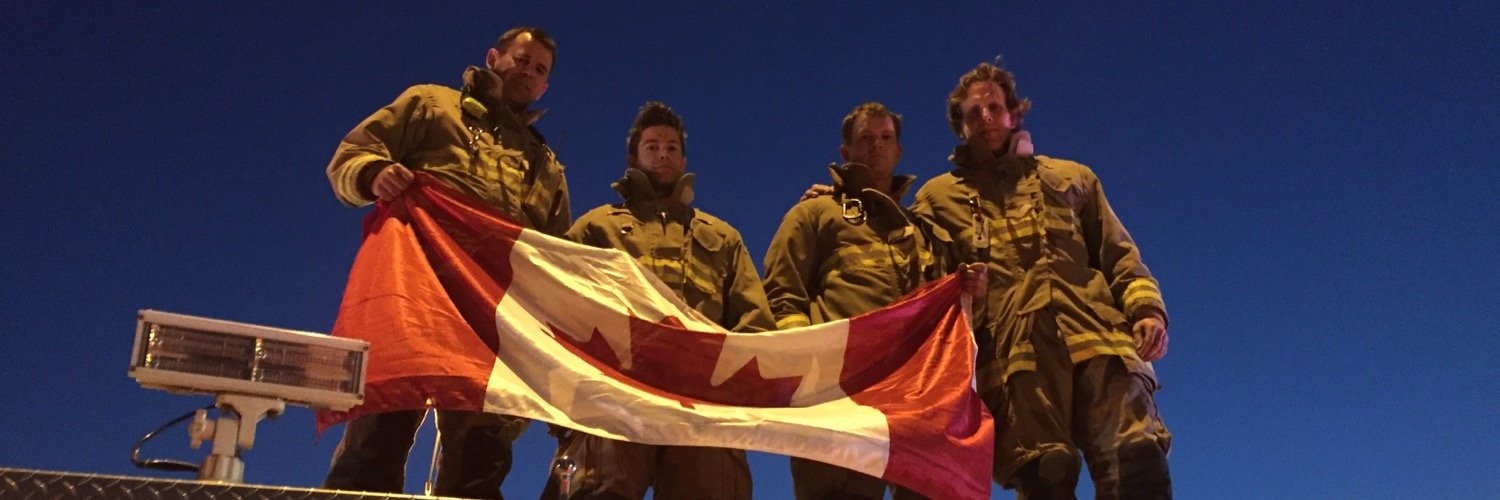
This man pushed through London’s 42km at a pace of 5:40 eeish with a fridge on his back to send out a message: “We all carry something. You don't have to carry it alone.”
What a sacrifice!
A little more for the marathon nerds: Yomif Kejelcha ran 1:59:41 to become the second man under two hours in a legal race and he was on Sabastian Sawe's shoulder until 41K. Took a bit different of a fueling approach.
The Santamadre team, an emerging Spanish company, shared his fueling plan with the targeted amounts at each station. A few things stood out to me, if I'm reading this correctly. Kejelcha planned to take roughly 60ml of fluid at most stations, which is estimated at less than half of Sawe's intake (though it's worth noting runners often toss bottles quickly and don't hit their targets exactly). He skipped 5K entirely and took nothing at 40K.
🗣️Santamadre co-founder Alfonso Beltrá López: “We took advantage of the pre-race window to reduce digestive load as much as possible. We knew exactly how much fluid the athlete loses and how much energy his body consumes, as we had monitored him 24/7 over the previous three months: body temperature, breathing rate, heart rate and oxygen saturation. We also controlled his caloric load in detail. The strategy was to provide 287.4 g of carbohydrates between the pre-race and in-race fueling, in addition to the 580 g of glycogen we had built up during the two-day carb-loading phase before the race.”
I didn't know as much about their products beforehand but the Unusual Fuel (taken by him at 15K, 25K, 35K) is a high-carb drink mix: 100g of carbs and 500mg of sodium per 500ml. Unusual Gel 45 is a 45g carb gel in a 1:1 glucose-to-fructose ratio, available with or without caffeine. He used the caffeinated version pre-race and at 20K.
Then there's Reset Gel (10K, 30K), which is an interesting one. It's billed as a CNS fatigue blocker with 300mg of tart cherry polyphenols. It also has 30g of carbs. It kicks in quick and his two doses overlapped to cover most of the second half.
🗣️ López: “We used RESET Gel at 10K and 20K, a gel designed to help control muscle damage and reset fatigue. It was one of the key parts of our strategy, exactly as we had seen in the specific training sessions.”
Finally, the Prototype he sipped for 75 minutes pre-race is a new product in the works. Santamadre says more is coming on that in the months ahead.
🗣️López: “It was a real shame he couldn’t grab the last bottle at 35K. We believe everything could have changed. At 41K, he ran empty; those extra three minutes could have been covered by the 12.4 g of carbohydrates planned for that point.”
Kenyan Sebastian Sawe won London Marathon with a 1:59:30 time (first official sub-2hr marathon).
The breakdown is insane:
▫️4:33 per mile pace (the record for one mile is 3:43 and he kept the pace 26x)
▫️2:49 per KM pace (he did it 42x)
▫️was faster in his second half (59:01) than first half (60:29)
▫️average speed was a ludicrous 13mp/h (21km/h)
▫️the average men’s marathon time for 5km is ~30 mins (Sawe’s 5km pace was 14:10 mins, which he did ~8x)
▫️the world record 10km track run is 26:11 (Sawe’s 10km pace was 28:19 which he did ~4x)
▫️His 100m pace was 17 seconds, which he did 422x
▫️The 21km per hour pace (or 13 miles per hour) isn’t even available on some treadmills
Sawe broke the previous world record by 65 seconds (Kelvin Kiptum ran 2:00:35 in 2023; RIP).
Eliud Kipchoge broke 2-hours in 2019 (1:59:40) but that was a controlled race.
Somewhat insanely, Ethiopian runner Yomif Kejelcha also broke 2 hours (1:59:41) and London Marathon was his first race!!!!
Incredible stuff.
***
More via Runner World’s: https://t.co/jeDrVwFX4m
Every training camp I had at Washington State University, Coach Leach would share the same story.
The story of two kids. The rich kid and the poor kid.
The rich kid has two choices. He can become spoiled, entitled, lazy, and expect everything to be handed to him because he has been given more. Or he can take every advantage of what he has been given—resources, coaching, opportunities—and use it to become even better.
The poor kid has two choices too. He can say, “I never had a chance. Nobody gave me anything. The world is against me.” He can feel sorry for himself and use it as an excuse. Or he can say, “I may not have what they have, but I am going to outwork everybody.” He can become tougher, more driven, and more relentless than everybody else.
It was a powerful message in a locker room full of people from different backgrounds, different families, and different life experiences. Some guys came from wealth. Some came from almost nothing. Some had every opportunity. Others had to fight for every inch.
But despite all of those differences, everybody still had the same choice.
You can take ownership and use what you have as fuel.
Or you can become victim-minded. You can look for excuses, blame your circumstances, become entitled, and convince yourself that because of what you have—or because of what you do not have—you cannot become what you want to be.
It is not about how you start. It is about what you choose to do with how you start.
The rich kid can waste what he has been given or use it to build something greater. The poor kid can use his circumstances as an excuse or as fuel.
In the end, greatness does not come from starting with more or less. It comes from which person inside of you that you choose to feed.
If you like these Mind Strength Messages, click below to join our free newsletter and get a new Mind Strength Message every Monday to start your week on the right foot.
https://t.co/g0MfutOHjG
#MindStrength
REBUTTAL
Allow me to pushback on the stupid assertion that “there is no level playing field in sports because some men (e.g. Michael Phelps) have a physical advantage over other men” and, therefore, men should be allowed to self-identify into women’s sports.
NO!
👉🏼The ENTIRE POINT of sports competition is to determine who manifests the most “advantage” on that day or event WITHIN the specific category.
Turns out Tadej Pogačar manifested the highest physical and strategic advantages by winning the 2025 @LeTour .
Leave it up to the “participation ribbon” folks to argue that everyone should be exactly equal.
Sadly, these ridiculous people have been in charge of policy for too long.
Real sports draws boundaries around categories and THEN celebrates “advantage.”
We WANT to find out who is the best in that moment.
When the boundary is clear and enforced (no cheating!) the outcome is thrilling and highly meaningful.
Those who argue that the #IOC “violates human rights” by policing the female boundary will probably claim that Pogačar violated the human rights of his fellow cyclists 🚴 by winning.
We all need to get past this insanity and THANKS to the @iocmedia we now stand a chance at doing so.
I don't think I had fully appreciated how this works, but it's obvious now. NASA is aiming for a point in space where they know the moon will be. Like throwing to a receiver, but on a somewhat larger and faster scale.
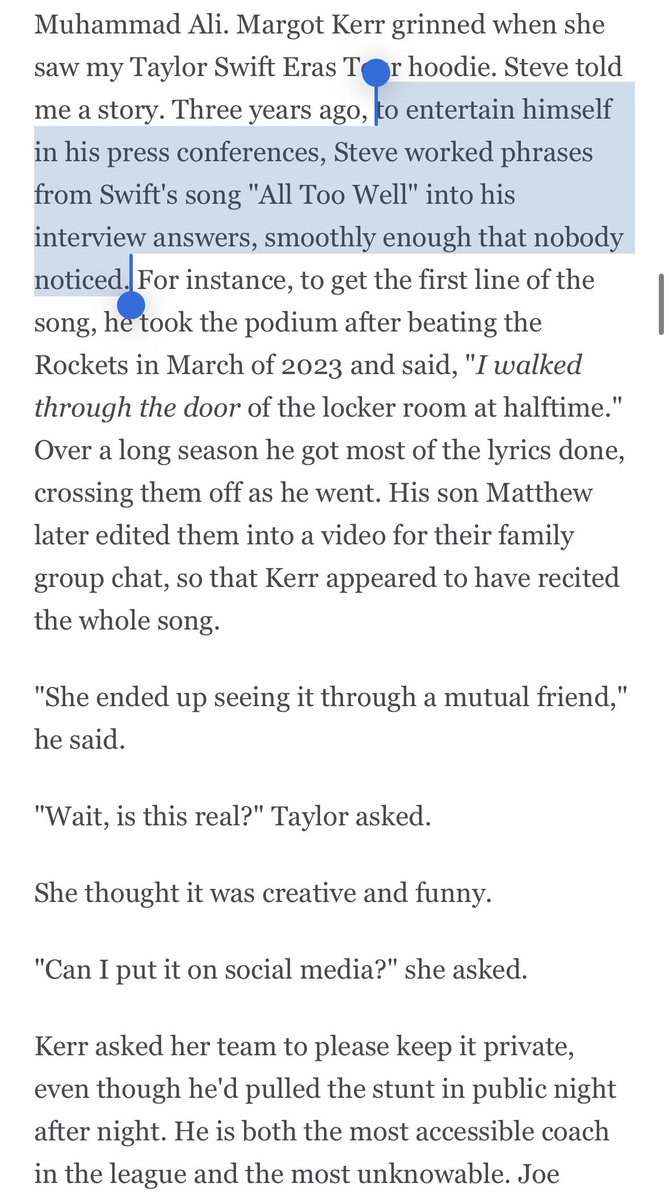
When John Schneider arrived back at his #BlueJays office last week, he found a letter sitting on his desk. It waited for him all winter.
It came from 9x NBA Champion Steve Kerr.
Unlocked & free to read, here's the story of that letter: https://t.co/ULsSfxtmEx
This sentence by Dostoyevsky hits so hard.
“You sensed that you should be following a different path, a more ambitious one, you felt that you were destined for other things but you had no idea how to achieve them and in your misery you began to hate everything around you.”
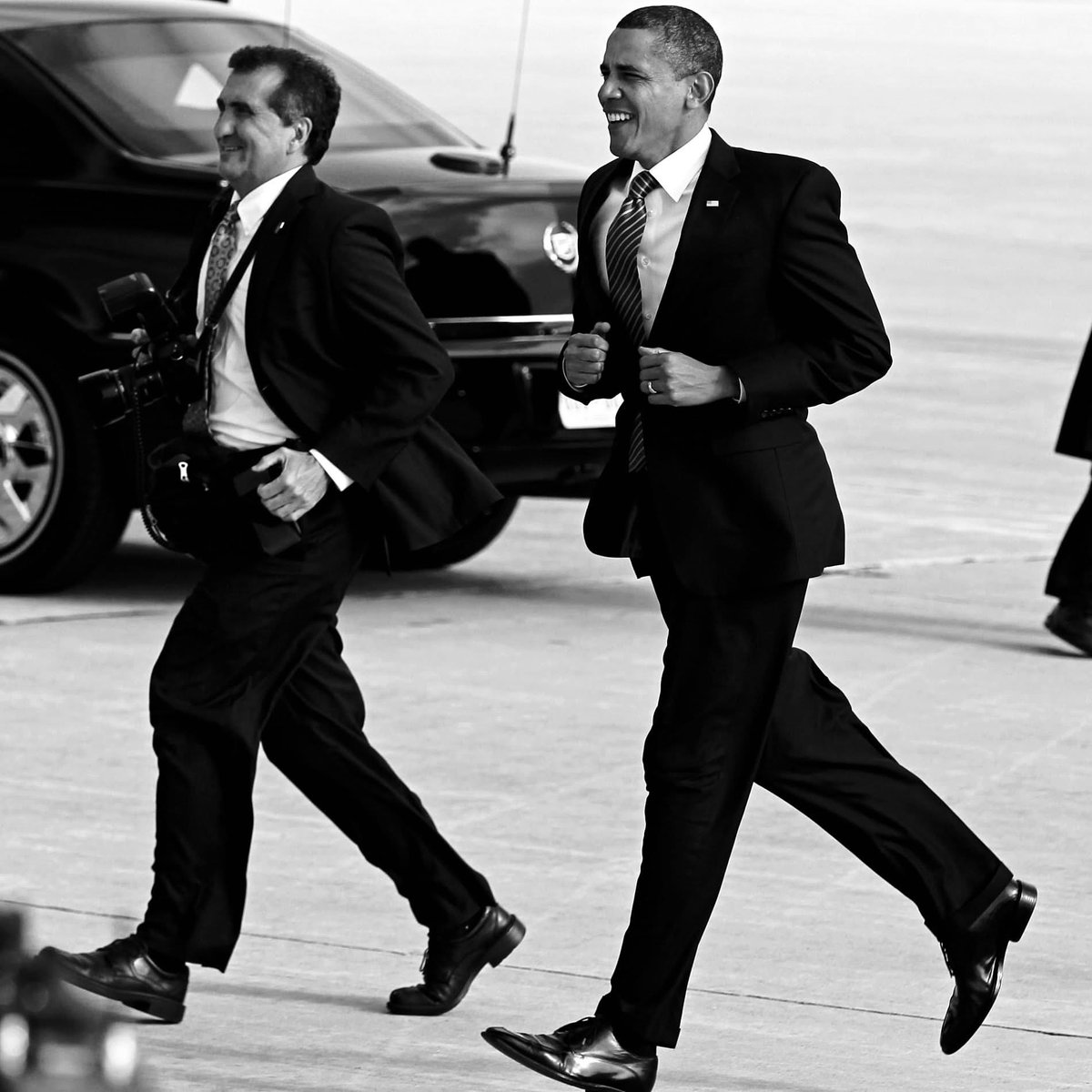
The history books quietly bypassed is that Barack Obama, during the most pressure-saturated nights of his presidency, would retreat alone to the Treaty Room on the second floor of the White House residence — not to strategize, not to take calls, but to handwrite personal letters to ten ordinary American citizens every single night, a practice he maintained with almost monastic devotion across all eight years, selecting the letters himself from the 40,000 that arrived daily at the White House, and his longtime correspondence director Fiona Reese confirmed that Obama would often weep privately while reading certain letters, folding them carefully before writing responses so personally detailed and emotionally present that recipients frequently described the experience of receiving them as the most significant moment of their lives, with one Ohio steelworker writing back to say that Obama's letter had physically stopped him from making a decision that would have permanently altered his family's future. What makes this practice almost unbearably moving is the detail that surfaced later — Obama never used a computer for these letters, always a black felt-tip pen, always legal yellow paper first as a draft, always rewritten onto White House stationery by hand a second time, because he believed, as he told historian Doris Kearns Goodwin in a rare private conversation later recounted in her 2018 work, that the physical act of pressing pen to paper forced a quality of attention that typing simply could not replicate, a philosophy rooted in his years as a constitutional law professor at the University of Chicago from 1992 to 2004 where he developed the conviction that democracy only functions when its leaders remain genuinely, uncomfortably close to the specific gravity of individual human suffering rather than processing it from behind the insulating distance of institutions and screens."