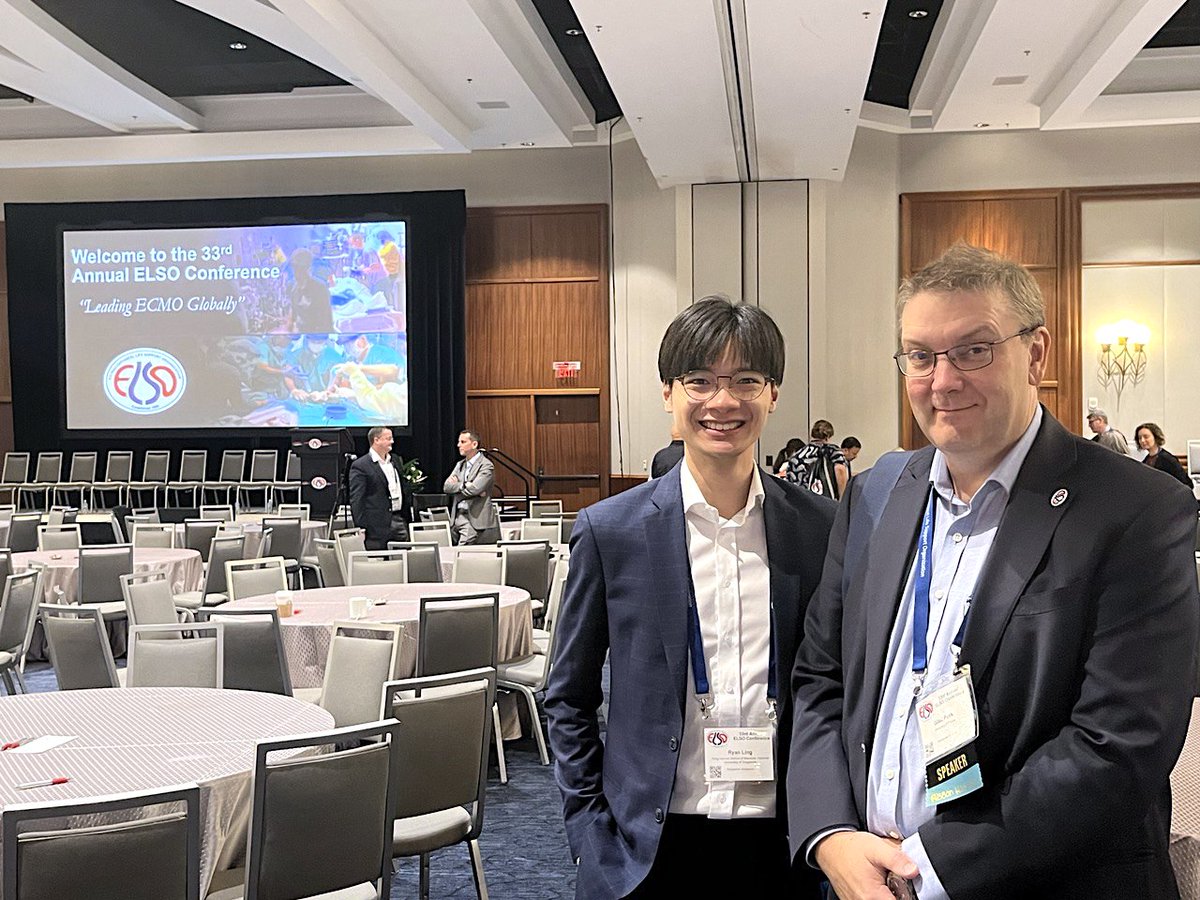
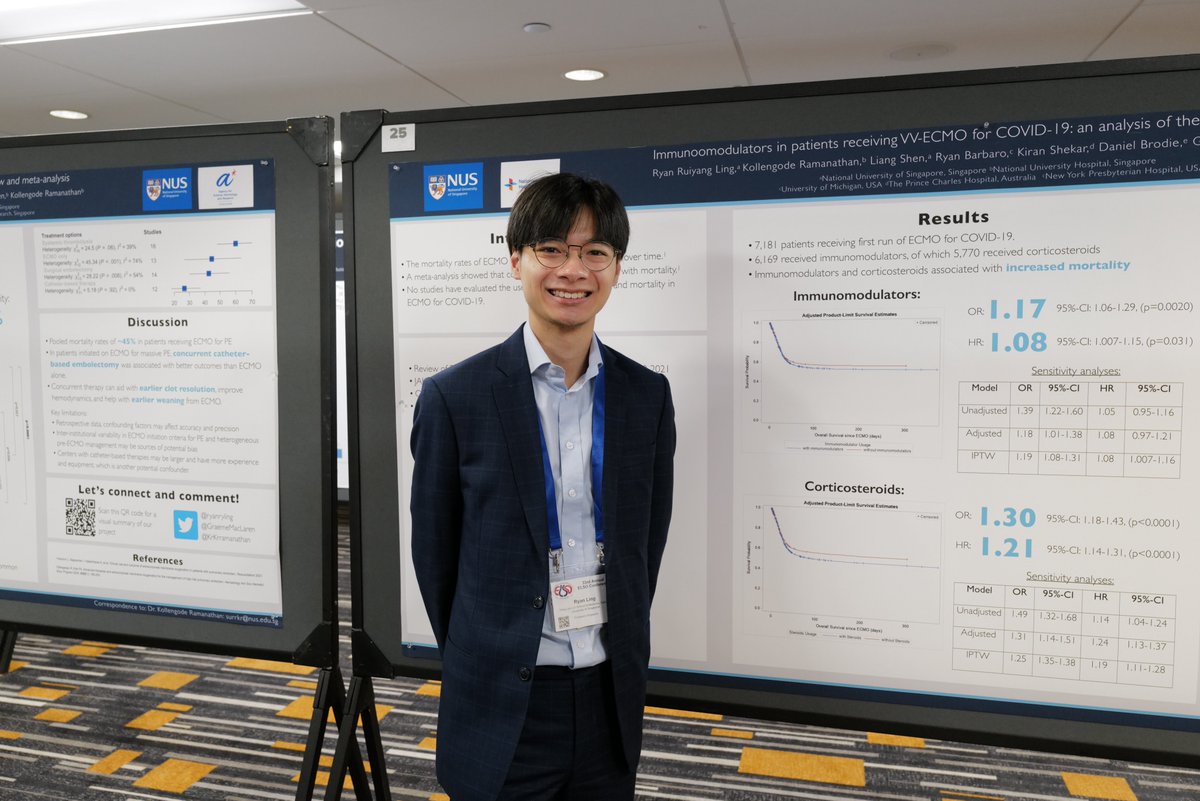
Had an amazing time at #ELSO2022 in Boston! It was great meeting collaborators (current and future!), mentors, and legends in person! Immensely excited for the next ELSO conference!
@ELSOOrg#ECMO
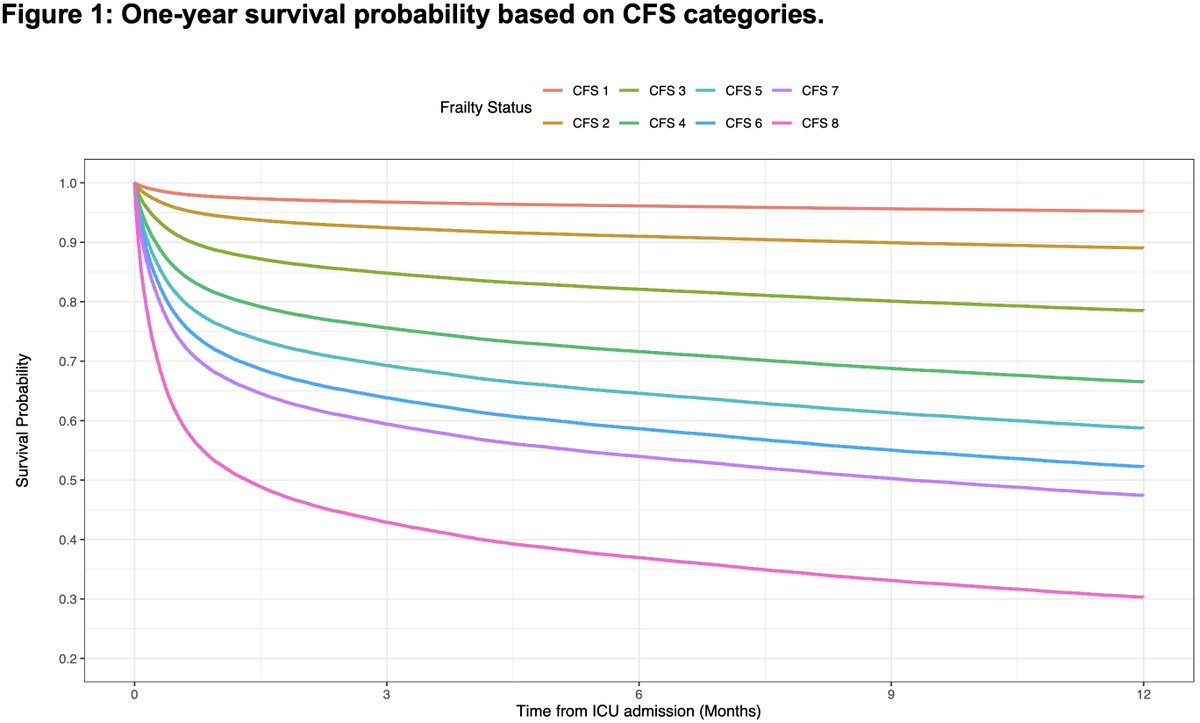
Increasing frailty was associated with increasing one-year mortality in ICU patients admitted from a MET review.
To read the full article in ‘Resuscitation’:
https://t.co/UIgyg7AYYG
DOI: 10.1016/j.resuscitation.2026.110995
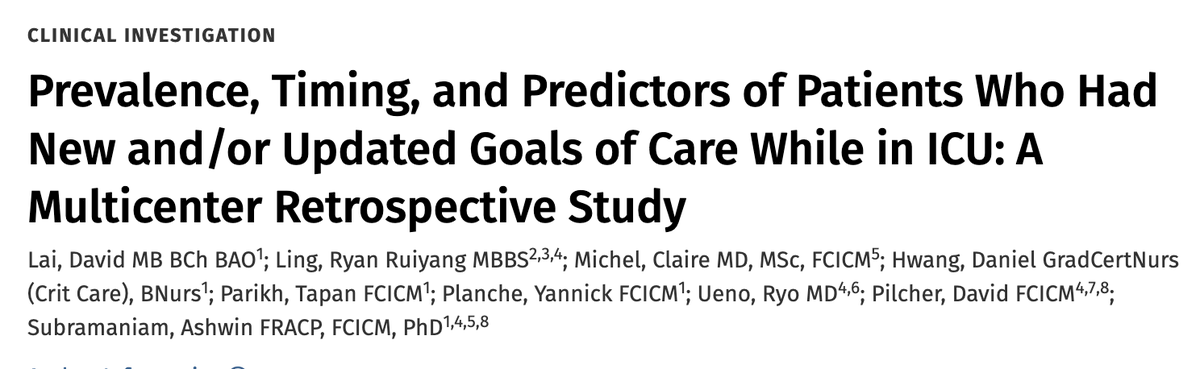
Frailty and one year survival in patients admitted to the intensive care unit following a medical emergency team review: a retrospective registry-based study.
#ANZICSCORE
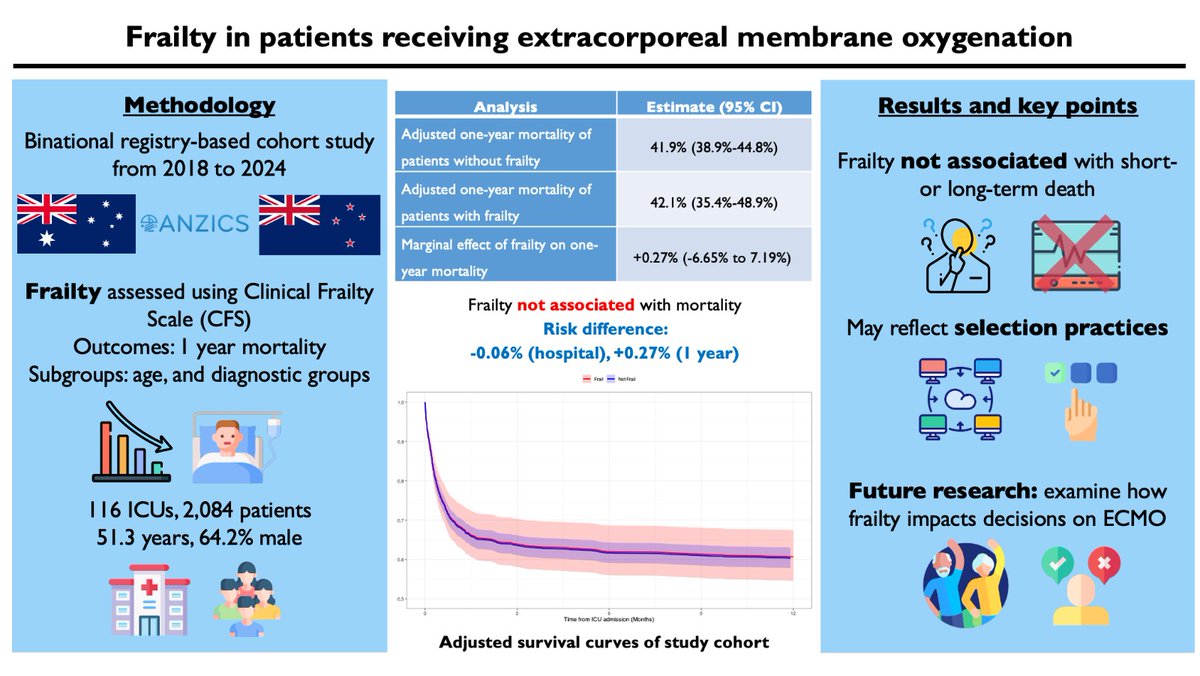
A study of >2,000 #ECMO patients in #ANZ found that #frailty was not associated with poorer outcomes in both long- and short-term follow up.
To learn more about the study follow the link: https://t.co/56dnQqmPTO
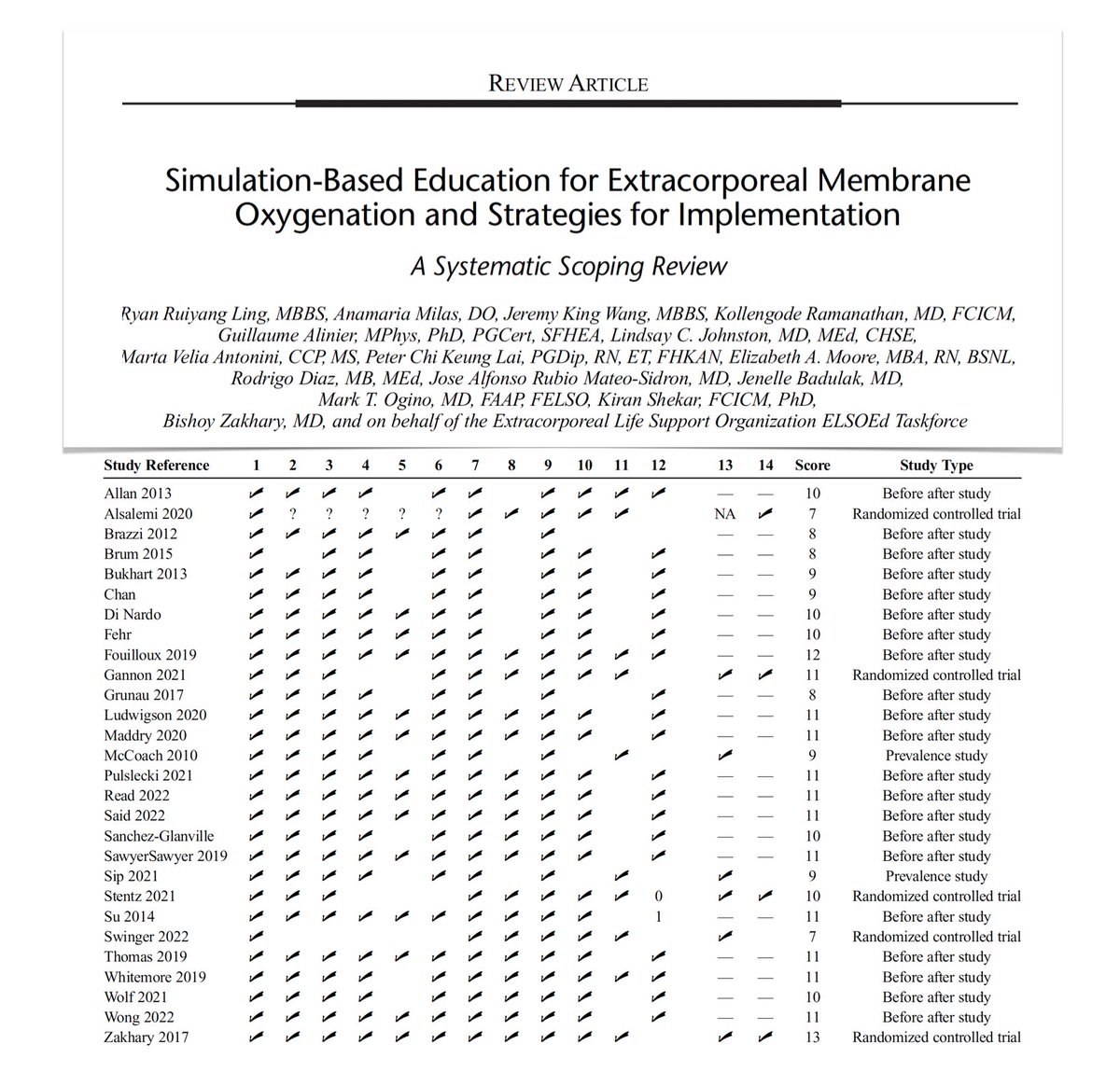
Had the privilege of working with Dr Bishoy Zakhary, @KrKrramanathan, @kshekar01 and @ELSOeducation team on #simulation-based education in its implementation in #ECMO. Excited to see what the future holds in this rapidly developing field!
Simulation-based education for #ECMO & strategies for implementation: a systematic scoping review
🎓 SBE beneficial, improving competency scores, confidence, teamwork, troubleshooting, outcomes as times to critical actions and cannulation
🎓 retention of knowledge and skills over time unclear; regular simulation training may be beneficial
🎓 establishing standardized ECMO curricula, of which SBE should be a core component, crucial
🔗 https://t.co/R8PHgwZdMl
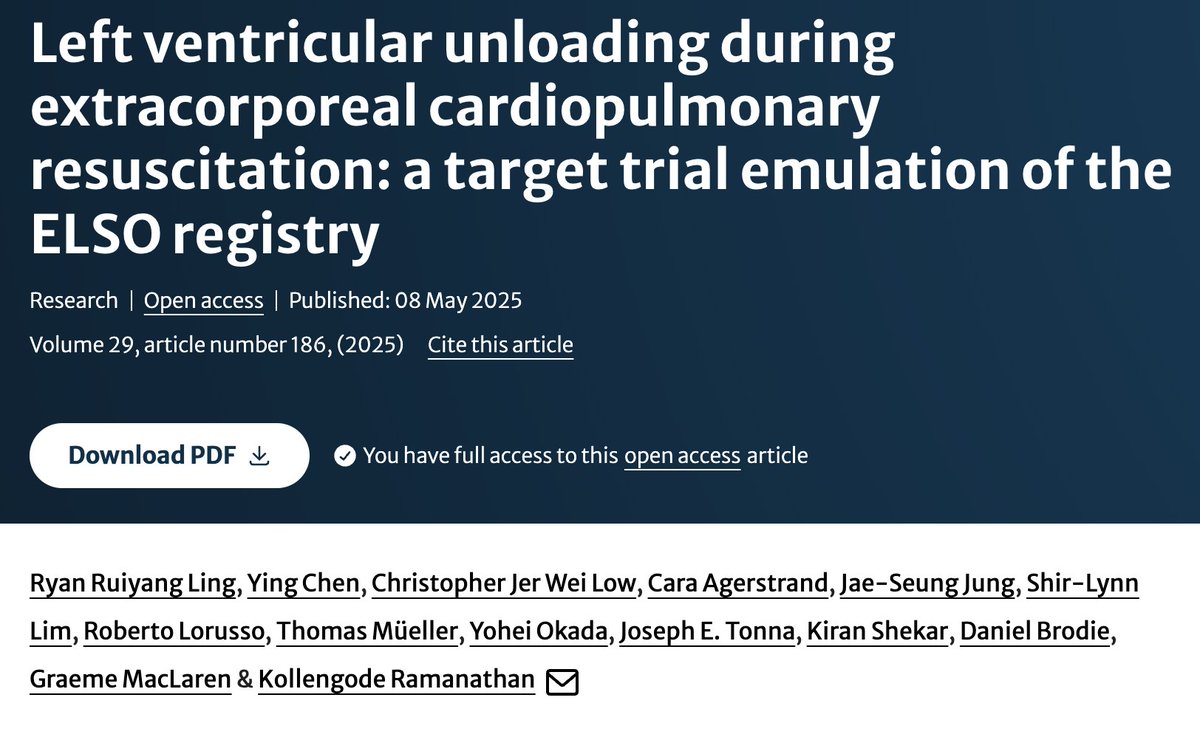
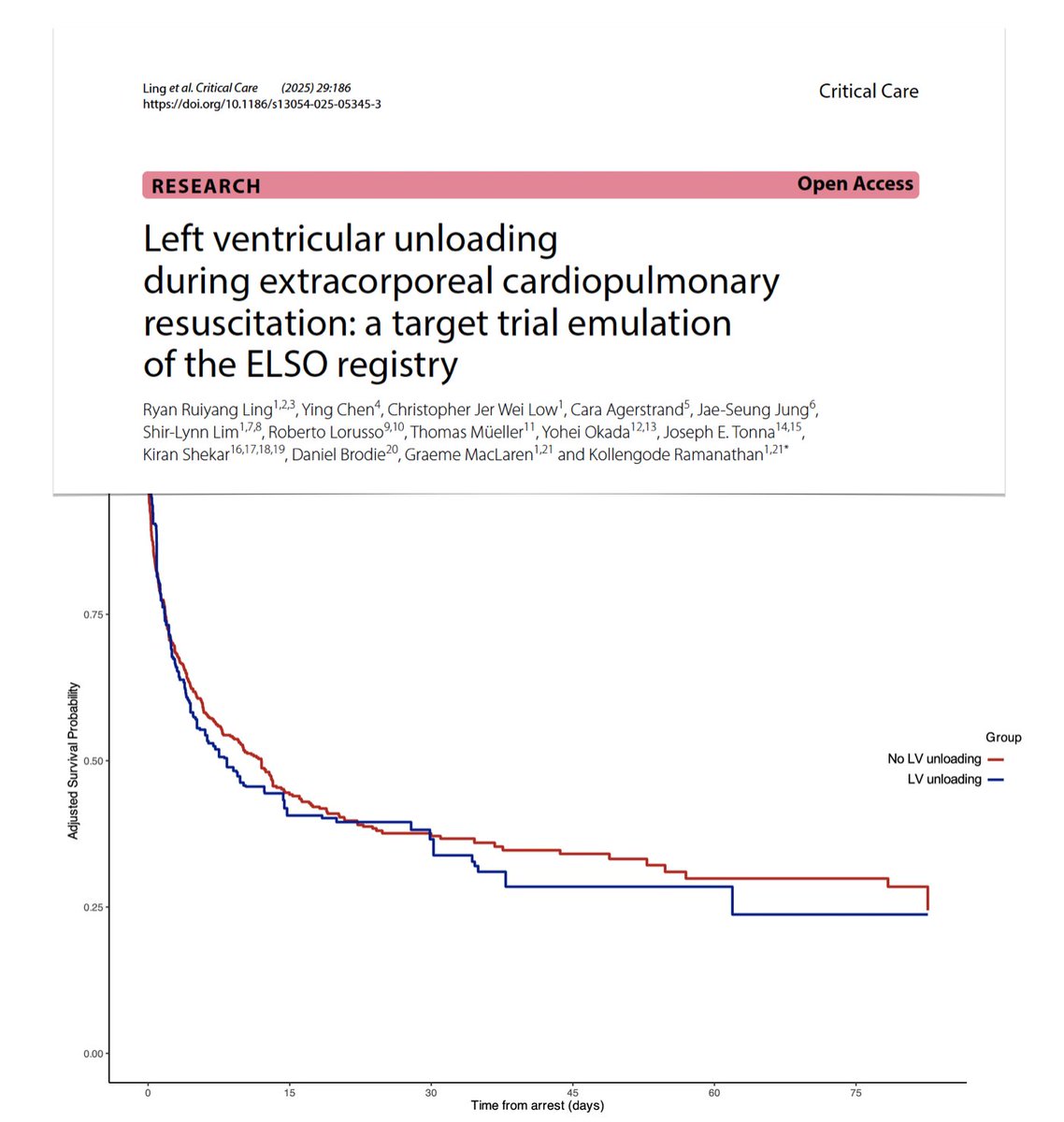
Left ventricular unloading in #ECPR
🔎 > 3.2K pts from ELSO Registry, 2020-2023
⚖️ 621 pairs (LV unloading +/-) matched
🚧 LV unloading associated with higher complications
🫀not associated with improved survival/functional outcomes in context of #ECMO assisted CPR regardless of unloading device, etiology of CA, presenting rhythm, demographic or centre characteristics
#FOAMcc @Crit_Care
🔓https://t.co/hWWRkV8Q6u
What is the impact of #LV#unloading during #ECPR? Target trial emulation using #ELSO registry:
🏥 300 centres, 621 matched pairs
❌ LV unloading NOT a/w survival benefits
💘 More CNS, CVS, and metabolic complications, and longer #ECMO durations!
https://t.co/xnmCqXayl3
Takeaways from #ACC2025. Late breaking trials - take home points
@ACCinTouch
1. WARRIOR Trial : Intensive medical therapy did not significantly impact the rate of serious cardiovascular events at five years in women with suspected ischemia with nonobstructive coronary arteries (INOCA).
This 🧵 is inspired by a conversation that @sundar__raghav and I recently had. This is for all of the trainees who will sign their first offer letter. As one that is almost 3 years to the date from the day I signed here are my tips 🧵1/6
Excited to share our tool Resub that automatically formats your manuscript for any journal.
We designed Resub for clinical researchers who:
1) Hate wasting time formatting papers
2) Want to save hours per manuscript
3) Are committed to productivity and impact
You can trial it for free at https://t.co/NQSrhBCHq2
Appreciate the repost and you sharing with any researchers you know 🙏
(1/x) High quality CPR, early defibrillation, and treating the underlying cause saves lives in cardiac arrest, but what else can we do?
Here are 7 advanced therapies for cardiac arrest👇
A🧵
Caution: Bleeding edge - evidence 'light' zone.
pEEG and ketamine
If youve spent any time around TIVA and EEG
You'll know that ketamine can increase the BIS number - Perhaps you never use ketamine because every time you do your processed EEG keeps telling you the patient's 'awake'
1/12
ICU Resuscitation Thoughts:
Every 2 y this time of the year I have to provide my hospital-employer w proof of ACLS recertification. I usually take an on-line course which I finish in a few hours. Sadly, this biennial ritual is also a reminder that we keep following the same #CPR
(1/x) Here are the top things I think of when a patient with sepsis is worsening despite 'appropriate therapy'.
(note: it rarely is that the bug developed resistance..)
A 🧵
#medtwitter#foamed
I struggle a lot conceptually with the fact that in some countries we give CAR-T, give 5th line expensive treatments, dialysis in 80 y, but find a bridge to decision LVAD in a 40 year old a too big investment if eg, egfr 30 ml/min or only 1.5 years after curative cancer treatment
My ARDS patient deteriorates and is now haemodynamically unstable, what do we do?
With Prof Luigi Camporota @Luigi_ICM @OliverHunsicker Jean-Louis Teboul and Lise Piquilloud
@ESICM#LIVES2024
Why are haemodynamics so complicated and why have critical care physicians made such a mess of haemodynamic management over the years (eg aiming for high CVP)? A circular system means that a change at 1 point affects all the other points...
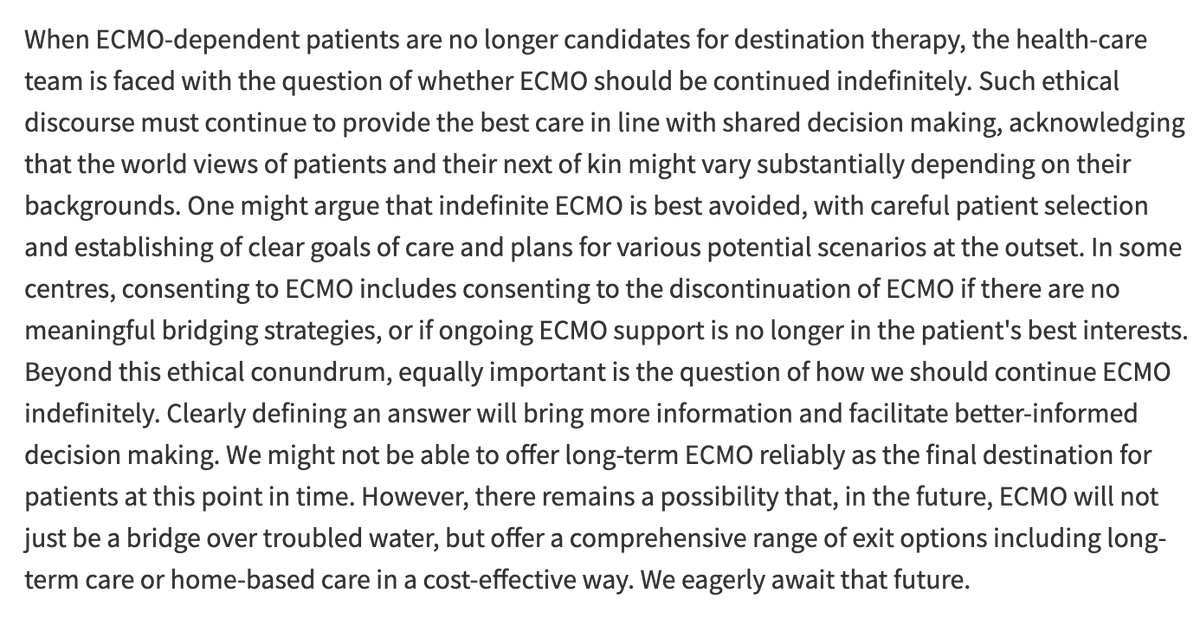
🌊 When #ECMO-dependent patients are no longer candidates for destination therapy, should #ECLS be continued indefinitely? It would eventually serve only as a bridge to fatal complication. Complications might prolong suffering and affect quality of life. Beyond ethical dilemma/moral distress, continuing ECMO indefinitely would siphon resources away from
others who might benefit more.
With current technology, it is unlikely that indefinite ECMO in #ICU is the solution. However, maybe, in the future, ECMO will offer a comprehensive range of exit options including long-term care or home-based care in a cost-effective way. We eagerly await that future.
@TheLancet
🔗 https://t.co/9h5EpUo7S6
🕯️ Refers to comment on justifiability (or not) of unilateral withdrawing of ECMO when recovery or transition to final therapy no longer feasible. Continuing support without prospect of transition can be legitimate preference-sensitive choice for some patients?
🔗 https://t.co/XmT6poF04o
I believe that #ECMO is a life-saving temporising intervention. Yet, there are ethical dilemmas when it appears "futile".
In @LancetRespirMed, @kshekar01@KrKrramanathan and I envision a future where ECMO can be reliably used as a long-term device.
https://t.co/YqY2YzkVfQ