Our classification of camera trap images paper is finally out in @MethodsEcolEvol . 98% accuracy across 27 species in North America. R package is provided. "Machine learning to classify animal species in camera trap images: Applications in ecology"
https://t.co/mwiDedLaoX
Has bovine TB ever been found in North American wild pigs? Yep.
We analyzed data from a little known California outbreak.
Characterizing risk factors for infection of Mycobacterium bovis between between wild pigs and domestic cattle... https://t.co/RDYpf2iw0a
How do you control a foreign animal disease in wildlife? We conducted a field experiment simulating an emergency response to a disease outbreak in wild pigs.
Operational lessons learned from simulating an elimination response to... https://t.co/FwPAB5j9ct
Which is the best method to control African Swine Fever in wild pigs? We compared efficiencies of four methods using a simulated ASF response in a Texas wild pig population.
Comparing efficiencies of population control methods for responding... https://t.co/aj5ee2eB1d
How do you value a invasive species control program?
We estimated $40.2 billion in prevented damage. Check it out!
Agricultural and Ecological Resources Safeguarded by the Prevention of Wild Pig Population Expansion https://t.co/OL2GFlF59n #mdpibiology via @Biology_MDPI
Disease Progression and Serological Assay Performance in Heritage Breed Pigs following Brucella suis Experimental Challenge as a Model for Naturally Infected Feral Swine https://t.co/p4rmNFvPvC #mdpipathogens via @Pathogens_MDPI
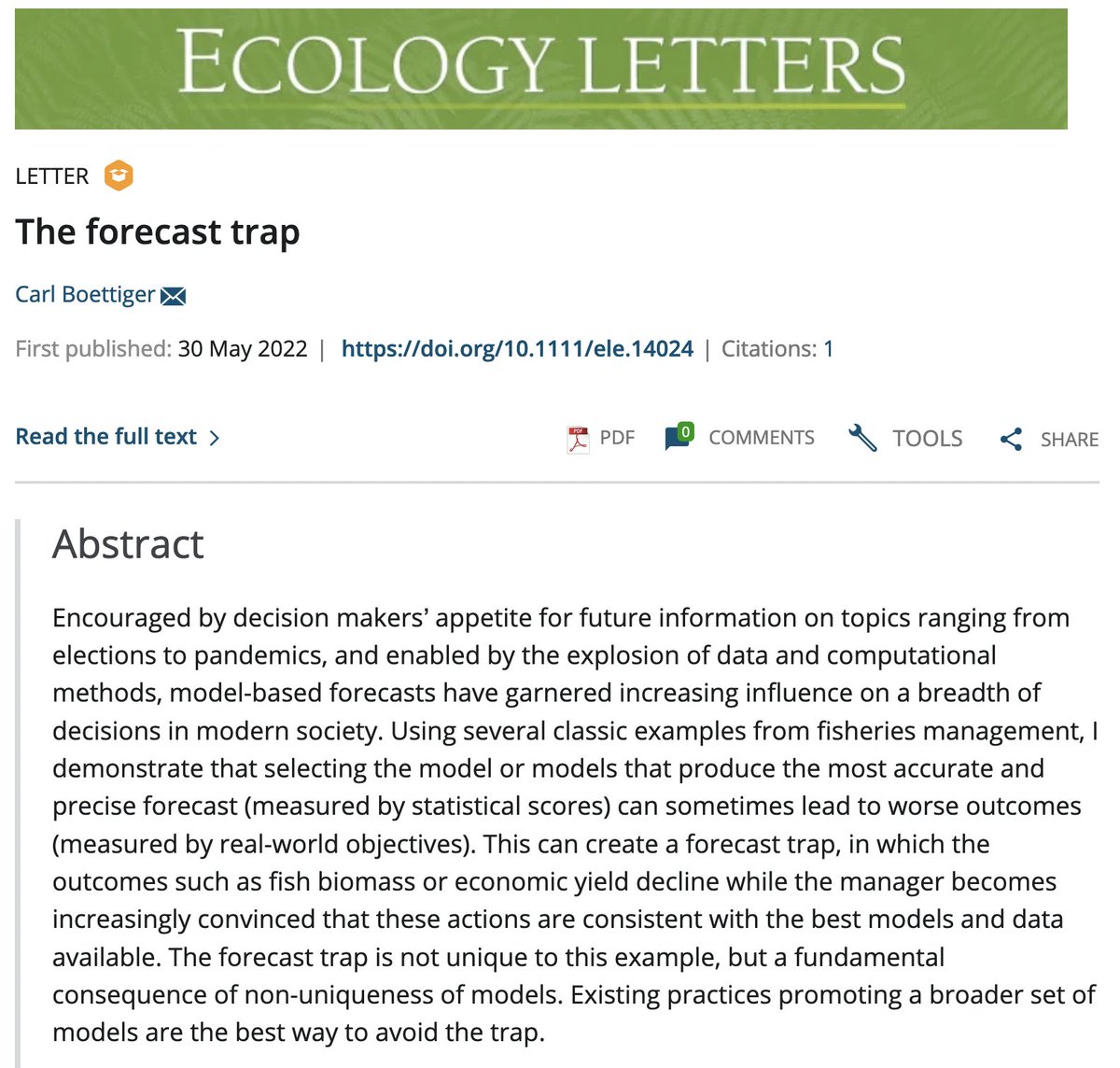
Great paper by @cboettig in @Ecology_Letters I demonstrating that selecting the models "that produce the most accurate & precise forecast (measured by statistical scores) can (...) lead to worse outcomes (measured by real-world objectives)."
https://t.co/aB6nUIjmMk
🗞️#269-2022
Dr. Webb is a full professor with a join appointment in the departments of Biology and Mathematics. She has served as associate dean of the graduate school since 2019, and before that, she was director of @CSU_Ecology.
Nice paper by Bonneau et al in @ESAEcosphere presenting a framework for studying the optimal allocation of control effort of an invasive species accomodating constraints, including different models and accounting for decision-maker behavior.
https://t.co/RTG4jq9kcO
🗞️#242-2022
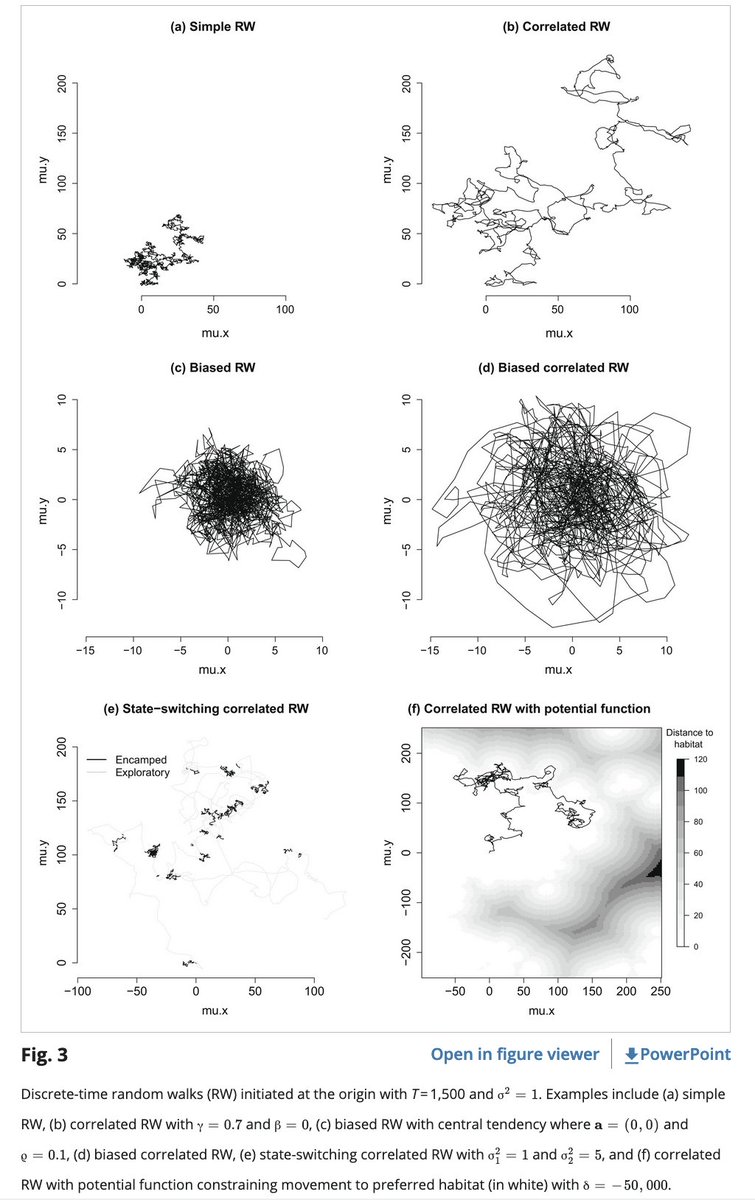
Discover a Research Methods Guide from Potts and @lucaborger, which takes you through recent tools for understanding space use as an emergent feature of animal movement, focusing on step selection models
https://t.co/tmPuuHxhgc
Second paper from my PhD has finally dropped on @ESAEcosphere! #OpenAccess
Hidden in plain sight: Integrated population models to resolve partially observable latent population structure
aka: the #alligator modeling paper 🐊 📈
https://t.co/Qqv7o9mtLv
1/n
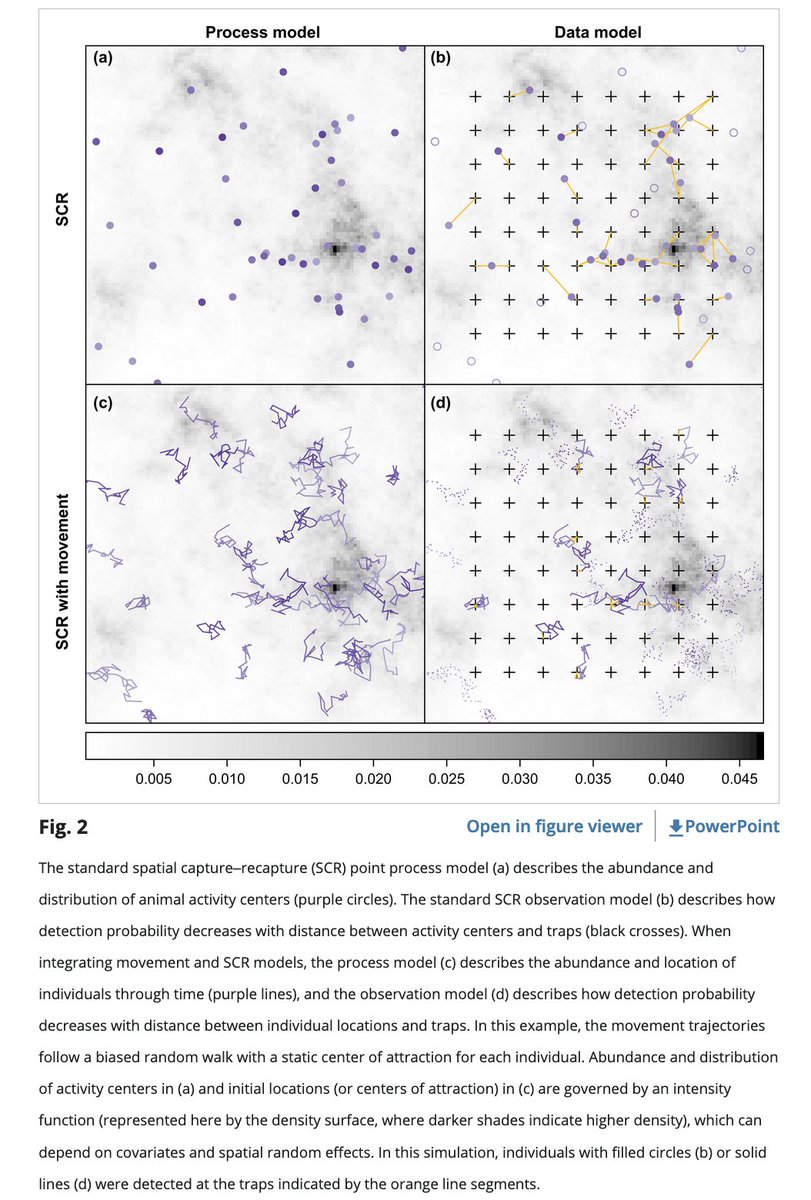
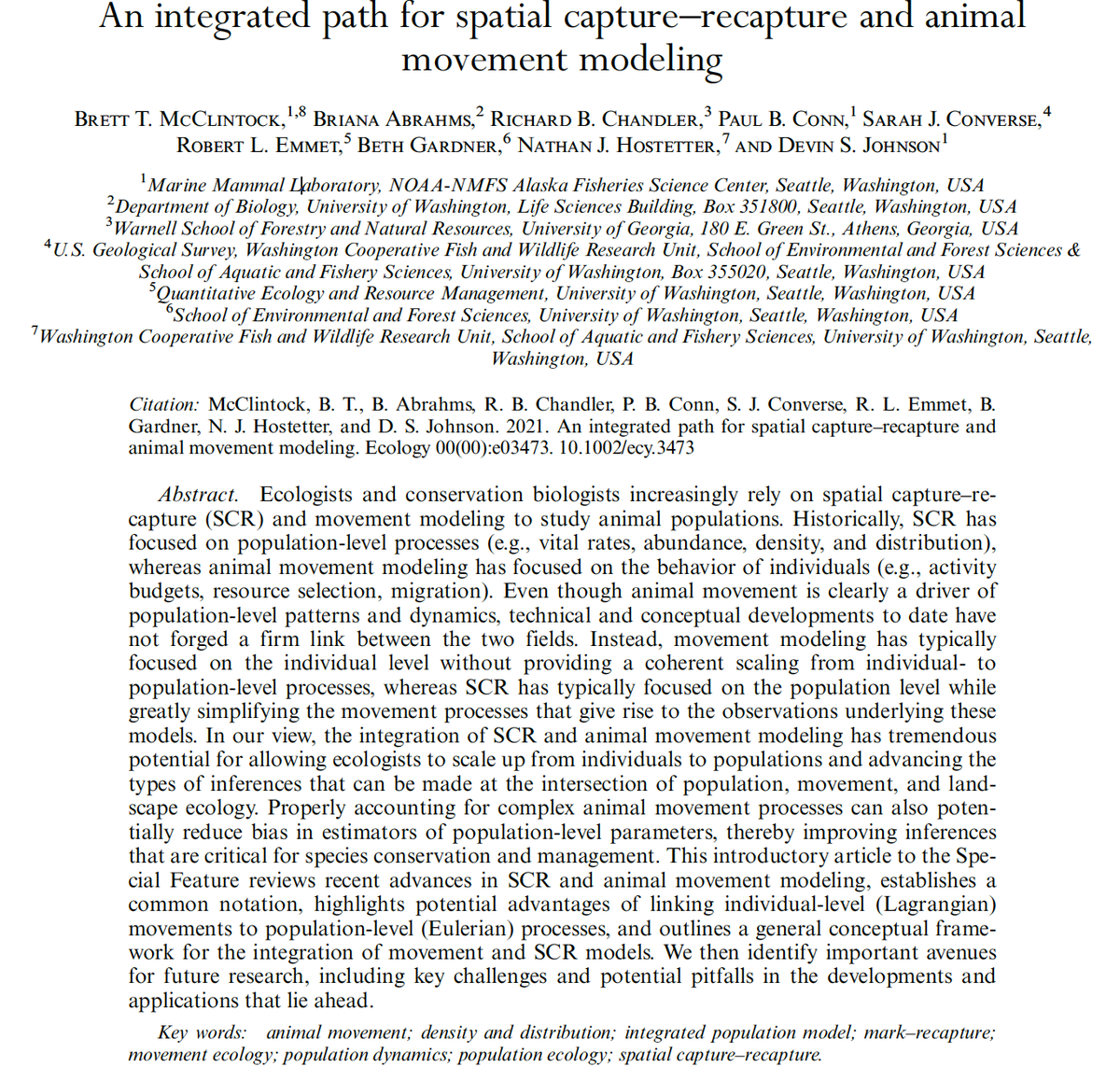
Landmark paper by @bt_mcclintock et al in @ESAEcology who outline a general conceptual framework for the integration of movement and spatial capture-recapture models w/ nice reviews of both fields 🤩
https://t.co/rLbGjox8AW
🗞️#230-2022
Interesting paper by Naqvi et al in @Ecol_Evol providing an experimental demonstration that cam traps can be used to study insect-plant interactions 📸🐝🐞🦋 Scheduled cameras work better than motion-activated cameras.
https://t.co/GGGQLAh59L
🗞️#232-2022
Excited to finally have our national domestic swine movement model published! Many years in the works.
Modeling nation-wide U.S. swine movement networks at the resolution of... https://t.co/ISHkqr0JH1
We are looking for a post doc interested in advancing our #computervision work to improve prediction of animals in camera trap images.
Apply here:
https://t.co/KrUawFQBYL
Neat paper by @sm_kachel et al who use multistate occupancy models to quantify depredation risk. States = unused, used, used w/ depredation, obs = species not detected, detected, detected via depredation w/ possibly false + in depredation 🤯
https://t.co/znzveUDlEQ
🗞️#153-2022
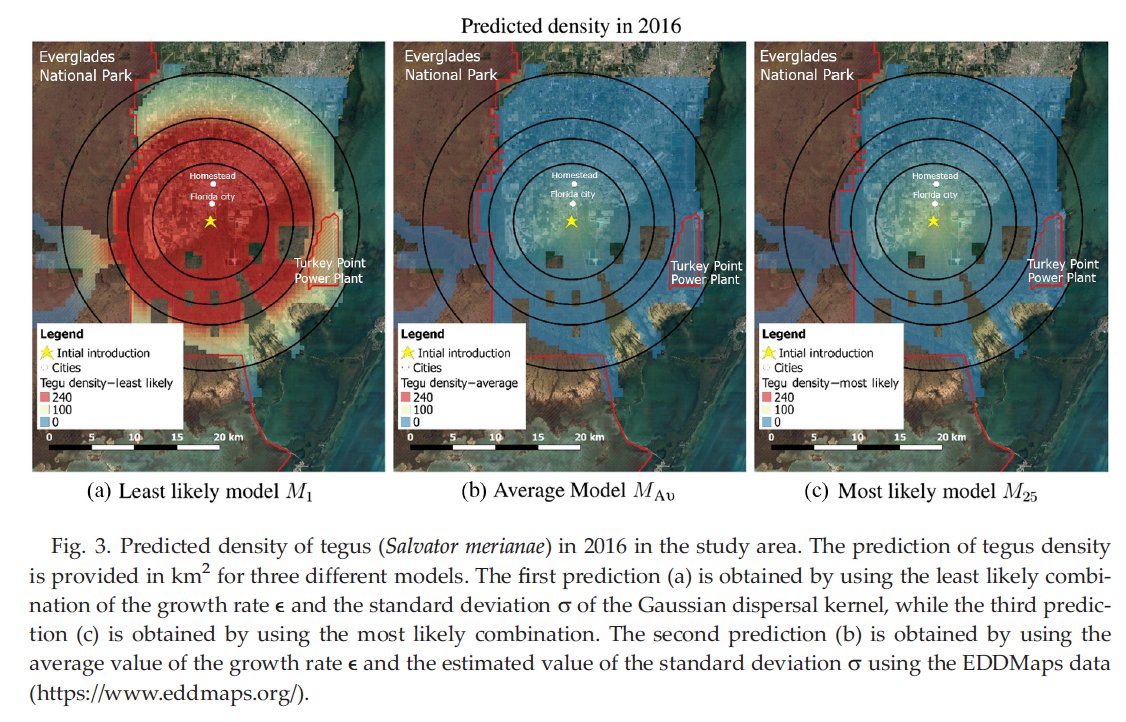
Interested in optimal control of wildlife disease? We investigated optimal control of African swine fever in wild pigs. Location matters… local ecology was a major factor in determining how long and how large the outbreak was. #asf https://t.co/tmgU8Ect9p
Excited to have this long in coming paper out...
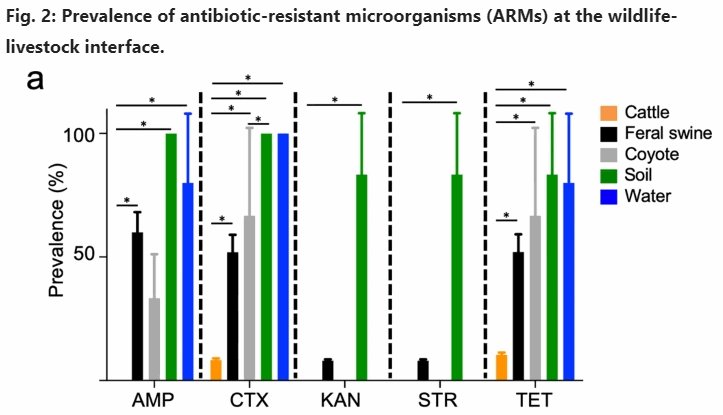
We found that feral swine and coyotes harbored more antibiotic-resistant microorganisms than sympatric cattle.
Transmission of antibiotic resistance at the wildlife-livestock interface
https://t.co/FQvTusymX5