Engineer and product designer. Daily bike commuter because climate change is real and cars kill. Filled w/ titanium and scar tissue due to reckless driver.
In Boulder, one of the most bike-commuting cities in the US, we struggle to have 1 in 10 commuters go by bike. We have a lot of catching up to do for the climate, for our air quality, and for our lives (particularly those of our kids).
https://t.co/MIlue0sKqd
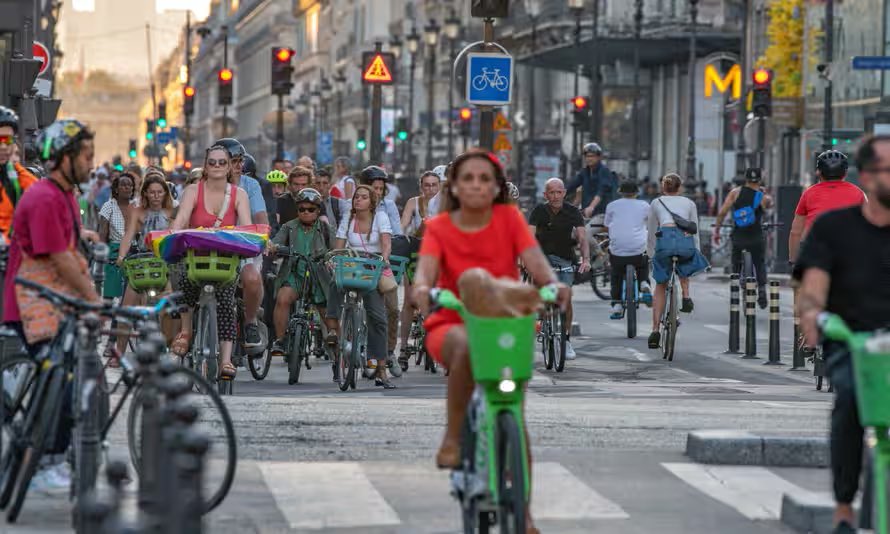
“A startling statistic emerged in Paris last month: during the morning and evening rush hours, on representative main thoroughfares crisscrossing the French capital, there are now more bicycles than cars – almost half as many again, in fact.”
https://t.co/iuR1CQ0PqD
We’ll help you with a simpler and more direct version of this. Driving is poisoning the air. If you choose to bike, walk, or take transit… you are helping everyone else out.
Allowing the people who *want* to live like this *to* live like this should be the goal of every elected official who cares about climate, traffic, and quality of life.
The time for civil disobedience has come.
Though ~75% of Manhattan residents don’t drive, they must endure unrelenting costs, arrogance of space and noise from suburban motorists. They are compelled to breath particles from their tires, brakes and tailpipes and bury their kids.
May our city officials quickly build the necessary infrastructure that relieves people who Mother of the role of taxi drivers. May they also spare us from losing our children to the #1 cause of preventable death among children & young adults: traffic deaths.
#MothersDay
"These roads are awful and this city should be liable for damage caused to my SUV by all these potholes!"
[Person yelling from the window of their multi-ton SUV helping make all these potholes]
READ: “3,337 Parisians were equipped with GPS trackers to record their journeys…for journeys from the outskirts of Paris to the center, the number of cyclists now far exceeds the number of motorists, a huge change from just 5 years ago.” Via @carltonreid https://t.co/Sj8TsafETP
Take Toronto, for example. A big dense city, right? Wrong. The vast majority of Toronto - over 80% of the residentially zoned land area - has been losing population over the past 15 years. The strange predicament is that if you could return low density residential areas back to 2001 density levels, you'd create about 80,000 homes straight-away.
These are neighborhoods that were built and designed for more population density than they currently accommodate. If we give a whit about climate change, we won’t tear up our farmers fields in the name of housing - we will add more housing in neighbourhoods that were designed for more people, anyway. Neighbourhoods that benefit from having more residents.
https://t.co/FAqaePnZh8
I just want to get around town, swing by the gym, go to work, & drop my daughter off at daycare without having to contend with or worry about getting killed by people cruising through #Boulder in multi-ton mobile living rooms.
Why is that so much to ask??
I don't understand how this isn't more of a national conversation. Many of us just want to live in walkable communities without spending 50% of our monthly income on housing.
@19th_c_Houston I'd call it outdated, stuff that was 'innovative' 30yrs ago. We have bike lanes throughout the city (not on every street). Most, except for a couple small segments, are of the unprotected, narrow/gutter, and/or car door bike lane variety.
If I had a dollar for every time I parked at an empty bike rack next to a parking lot full of SUVs...
Boulder might be a city of cyclists, but it is sadly not a city of bike commuters, despite only being 8 miles across.
@ElleryKlein Not that *I* am aware of, but a friend on the transportation advisory board says pedestrians have to worry about man eating tigers on our streets--she's usually referring to automobiles.
@Karlsburgh Boulder is eminently bikeable and I love that I have been able to live here car-free or car-light for 16 years. It's still frustrating how unsafe it feels to get most places the paths don't go and to contend with giant vehicles everywhere.
The most powerful transportation improvement intervention states and cities could have is for DOT employees to exclusively walk, bike and use transit for a year. They'd get it. The indifference, hostility and contempt for anyone outside of a car is comes through in so many ways.