It may partly come from how business is done in Japan.
Vendors like us are expected to tell clients up front what we’ll change, what difference it will make, and what risks come with it.
Routine work like dependency updates and vulnerability patches doesn’t need that. Clients already know what it involves, so we cover it in a monthly report: which vulnerability it was and what we updated.
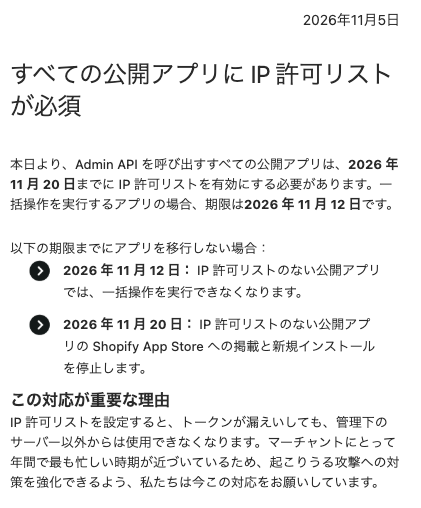
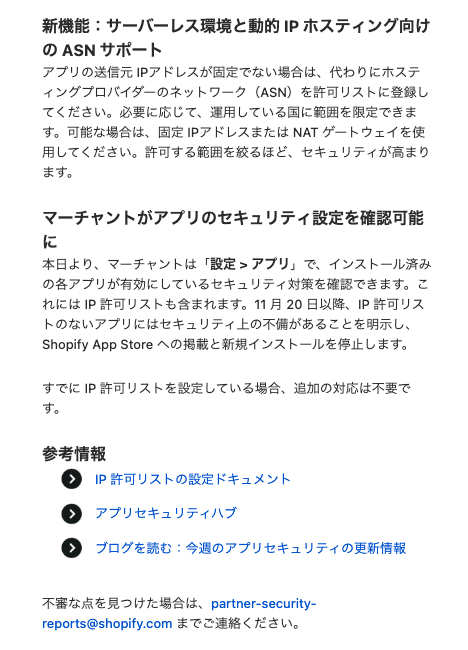
The full explanation only comes up when we’re asked to do something we haven’t done before, like this change. Every time that happens, we have to start the explanation process again with each client.
It’s not the technical setup. The real cost is the client-side process around it.
With custom apps, every change like this means explaining to each client why it’s needed and what the risks are, scheduling a work date with them, doing the work, and then submitting a report.
Custom apps are tied to a single store, so we can’t do this once. We repeat the whole cycle for every client.
For agencies like mine that serve dozens of merchants, that’s dozens of separate rounds of coordination, and that’s where the hours go.