History's first trillionaire is a guy who catches rockets out of the sky with chopsticks and beams internet to every dead zone on the planet.
Same guy ships cars that drive themselves, humanoid robots for the factory floor, brain chips that let paralyzed people move a cursor with pure thought, and an AI running on a supercomputer his team stood up in months instead of years.
And the people crashing out about his net worth are doing it on the app he owns. The same app governments spent years trying to censor.
You cannot legislate a rocket into orbit.
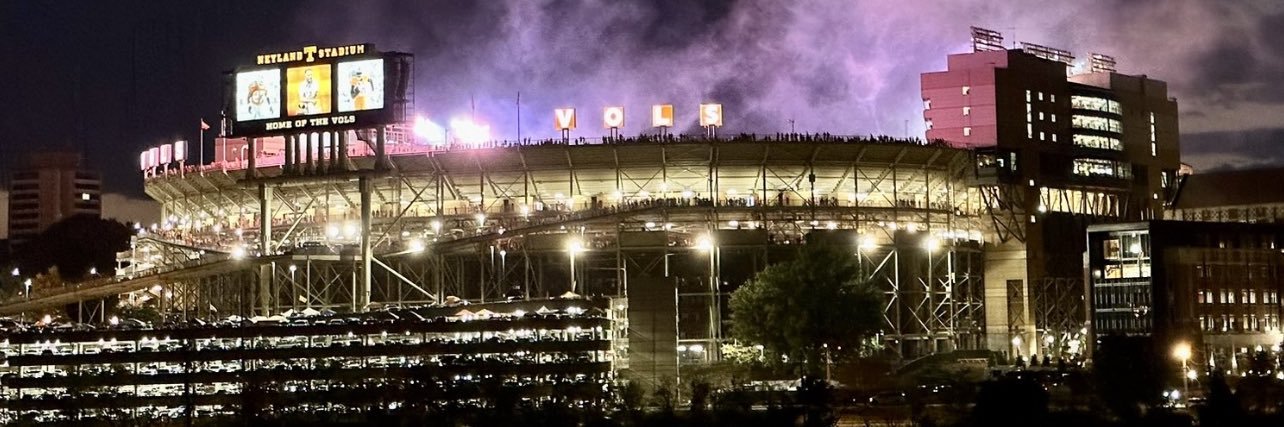
Between being "more than an athlete" and fulfilling a personal mission after getting another chance at college, returning to Knoxville to graduate from Tennessee after finishing his degree was a proud moment for Byron Young (@byron_97):
📝 » https://t.co/kd5fAl6eGy
BREAKING: VCU transfer guard Terrence Hill Jr. has committed Tennessee, @JoeTipton reports🍊
Hill scored 34 points in the Rams upset win against North Carolina.
https://t.co/kwx9T7Z1Ct
Cash for Clunkers destroyed 690,000 functional vehicles in 2009, creating an artificial scarcity that rippled through used car markets for over a decade. The Obama administration sold this $3 billion program as environmental salvation and economic stimulus, but any free market economist could predict the real outcome: massive wealth destruction disguised as progress.
The program forced dealers to pour sodium silicate into engines, permanently destroying cars that poor families could have afforded. Politicians eliminated the bottom tier of the used car market overnight. Suddenly, a reliable $3,000 Honda Civic became a $7,000 Honda Civic (if you could find one). The supposed beneficiaries — working-class Americans who needed affordable transportation — got priced out entirely.
Government intervention always creates unseen victims, and Cash for Clunkers delivered them by the millions. Single mothers, college students, and minimum-wage workers watched their mobility options vanish as used car prices soared 30% between 2009 and 2014. The environmental gains proved negligible too: most clunkers averaged 15-17 MPG while replacements hit 24-25 MPG. Destroying half a million cars to improve average fuel economy by 8 MPG represents the kind of central planning that would give Soviet bureaucrats a hard-on.
The wealth destruction extended beyond sticker prices. Higher transportation costs forced people into longer payment terms, creating a debt cycle that persists today. Cash for Clunkers normalized 84-month auto loans, turning cars from depreciating assets into multi-year financial anchors.
Bureaucrats congratulated themselves for moving inventory off dealer lots while condemning an entire generation to transportation poverty.
Wes Rucker covered Tennessee athletics for a long time. He leaves behind a young son and a pregnant wife after a car accident death yesterday. If you can help them out, please do: https://t.co/3Y58rFKaZN