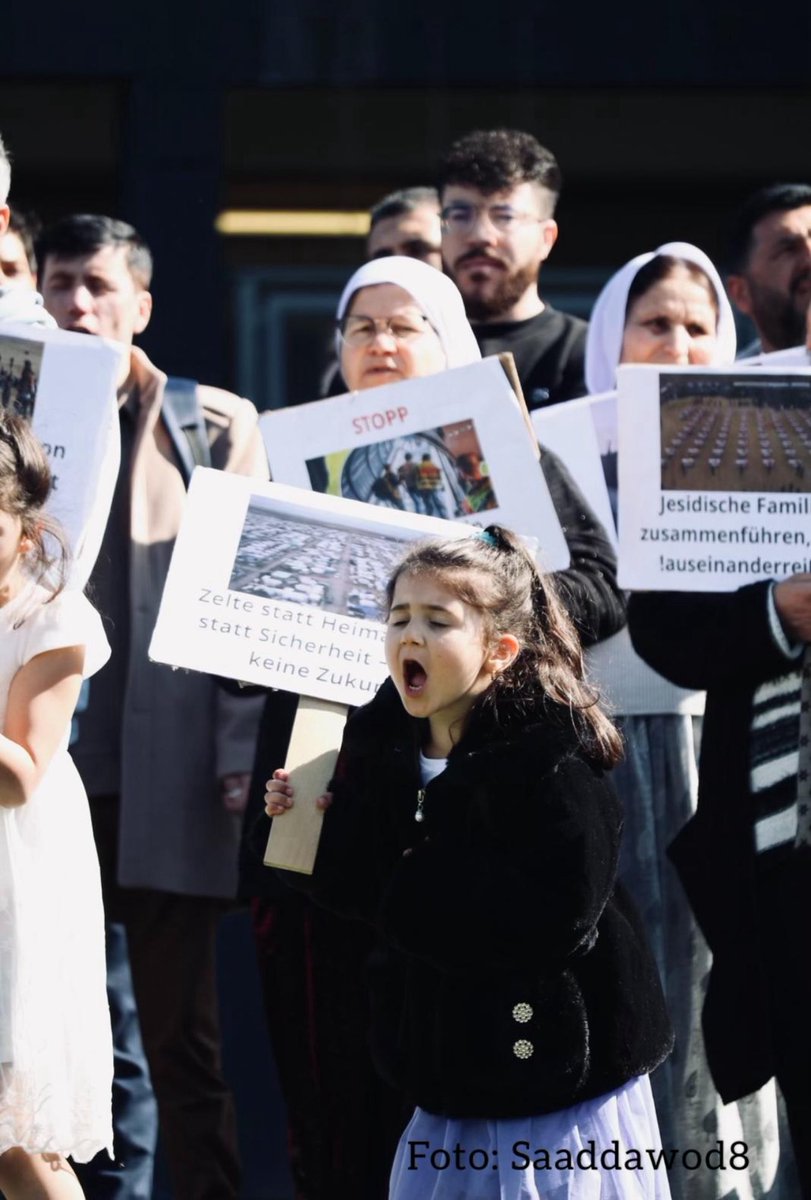
A historic day for Ezidis The Shingal Region has been officially declared in front of the United Nations office in Bonn, Germany.
This is not just a political step, but the realization of a dream — a move toward self-governance, protection, and dignity after years of suffering
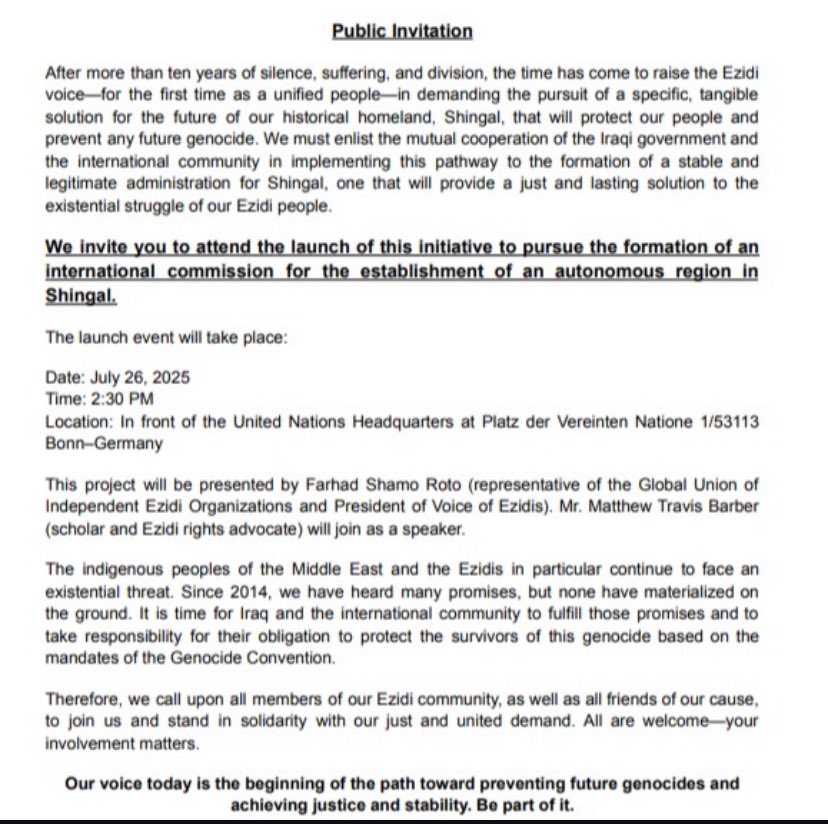
Public Invitation | Bonn – United Nations
Speakers include @Matthew__Barber renowned scholar and leading advocate for Ezidi rights, and @FarhadShamoRoto President of the Voice of Ezidis and Representative of the Global Union of Independent Ezidi Organization
This is not a competition in suffering.
Ezidi women, Alawite women, and all abducted women are victims of inhuman cruelty that must be condemned without discrimination
Justice must not be selective.
There is no difference between one form of enslavement and another
#NeverAgain
What Islamists did to Yazidis in Iraq was so much worse than what’s happening in Gaza.
Elderly women buried alive for being too old to be sex slaves.
Mothers forced to eat their own babies.
Young girls locked in iron cages and burned to death.
Yet not a single protest! Everyone who is now protesting for Gaza was completely silent. Why is that?
Unlike the people of Gaza, the Yazidis never started a war!
The next morning, Samira found her-self alone. She opened the door and started down the concrete stairs. Someone hit her
on the back on the head with a rifle-butt and she crumpled. She was dragged back to the
room with the mattress. This time, four men raped her. They called her ‘unveiled whore’
and ‘Nusayri pig’, a sectarian insult. Days passed with more rapes. In between, she was
left blindfolded, hands tied. She remembers two ropes, one green, one brown. She grew
very weak.
One day, the men ordered Samira and the older woman to go down the stairs and sit on
Caption here over 2 lines if
necessary the bare concrete floor. They told the older
woman, ‘No one paid for you’ and shot her in the chest, a single bullet from a Kalashnikov. Somehow, the woman remained sitting upright, her legs slightly splayed, blood gushing from her chest. The men told Samira: ‘Say your prayers.’ She threw herself to the ground, fingertips touching their boots, begging for her life. ‘I was shaking all over.’
But they didn’t kill her. They told her to lay down and they collected some of the other woman’s blood in a bucket. They
poured blood on the ground next to Samira’s head and they took pictures, apparently to fake her death. That evening, she understood why. An older man arrived, in his sixties, and
the others called him ‘emir’ or prince. She had to shower and dress and he made her turn around, inspecting her. Then he handed the men a suitcase full of cash. She had been sold.
The emir gave Samira a black niqab to wear and took her to sit in the back of a Range Rover.
Pointing to a pistol on his hip,
he said: ‘If you make a move on the road, I’ll shoot you.’ She begged him to say what was
going to happen to her. ‘I saved your life,’ he replied. ‘They were going to kill you like that other woman. I paid for you. You belong to me. It will be like I am your husband; you will do everything I say.’ She stayed with him in a house somewhere in the northern province of Idlib.
She did not want to speak about that period, just saying: ‘I wish I had died before I went there.’ He seemed to be someone impor-
tant: officials visited his home; he was never stopped at checkpoints. She managed to convince him that she had accepted her fate and he let her call her family. They had already
held a funeral for her.
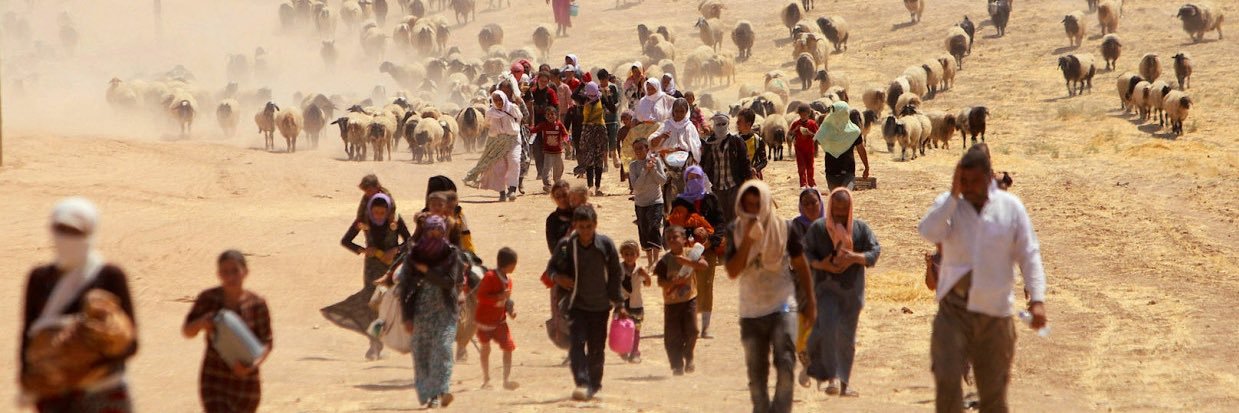
Intense and ongoing clashes between the Iraqi forces and the PKK, many of the people of Sinuni and Dogrie have been deserted, and most of the roads are closed, and the clashes are continuing so far at this moment.
#Save_Civilians_in_Sinjar#Save_Sinjar@UN@IraqiPMO