💥💥💥💥 Luc Dini, ingénieur de constructions aéronautiques et membre émérite de la 3AF, à propos de l'hypothèse extraterrestre des OVNIS
"Il est évident que du point de vue scientifique on ne peut écarter aucune hypothèse."
[...]
"Il y a un certain nombre de manifestations qui ne correspondent pas, soit à des technologies d'engins connues à l'époque des observations, donc qui, je dirais, limite le champ des possibles sur un engin d'origine humaine, secret, etc même si on ne peut pas tout à fait l'exclure, mais enfin bon des engins qui peuvent faire des vols stationnaires et accélérer à 2 000, 3 000 km/h ou changer de direction à 90°, on ne connait pas les lois de la physique qui permettent de les faire voler, en tout cas pas dans les écoles d'ingénieurs que je connais, ça ne se pratique pas.
Il y a des explorations sur des théories non standards, des réflexions sur le contrôle gravitationnel, ce genre de choses mais ça n'existe pas. Les fusées, c'est pareil, on fait des fusées à propulsion chimique. Il y a de la poudre, de la vraie. Il n'y a pas un moteur mystérieux qui permet de se propulser quelque part.
Alors que dans les observations qui sont faites, et bien il y a des caractéristiques qui sont totalement étonnantes.
Donc, on est bien obligé de prendre en considération, le fait qu'il puisse s'agir, dans certains cas, d'observations d'objets artificiels, alors venant d'où ?
Bon ben si c'est pas les chinois, si c'est pas les Russes, ca vient d'où ?
Certains scientifiques américains parlent d'une origine exogène."
La suite ici : 👇
https://t.co/dVIpk9jNaj
A partir de 40:46
https://t.co/hyZyhm8Fvd
Marik’s piece highlights a significant concern as it relates to our nuclear technology. Read carefully and you will note that some of the sources are in fact U.S Air Force and other local law enforcement authorities. How does the Air Force claim this isn’t a priority for them? If security of our own nukes isn’t, then what is?
En 1974, l’ancien ministre des armées Robert Galley réagissait sur France Inter aux très nombreuses observations rapportées d’objets volants au dessus de l’hexagone, affirmant ainsi publiquement la position de la défense et du gouvernement quant à la réalité du phénomène 🛸
Un #ovni lumineux se déplaçant rapidement et changeant de trajectoire filmé depuis un bateau dans le Golfe du Mexique, 28 Nov 2023 👽 La vidéo est spectaculaire... #ufo#ufosighting#uap#mexico#boat#ocean#foryou https://t.co/xcmT0uGicm
Aujourd'hui, le SCU a publié l'étude suivante évaluée par des pairs : UAP Activity Pattern Study 1945-1975 Military and Public Activities https://t.co/0etmOwwfYv
https://t.co/yAmvpkMDxi
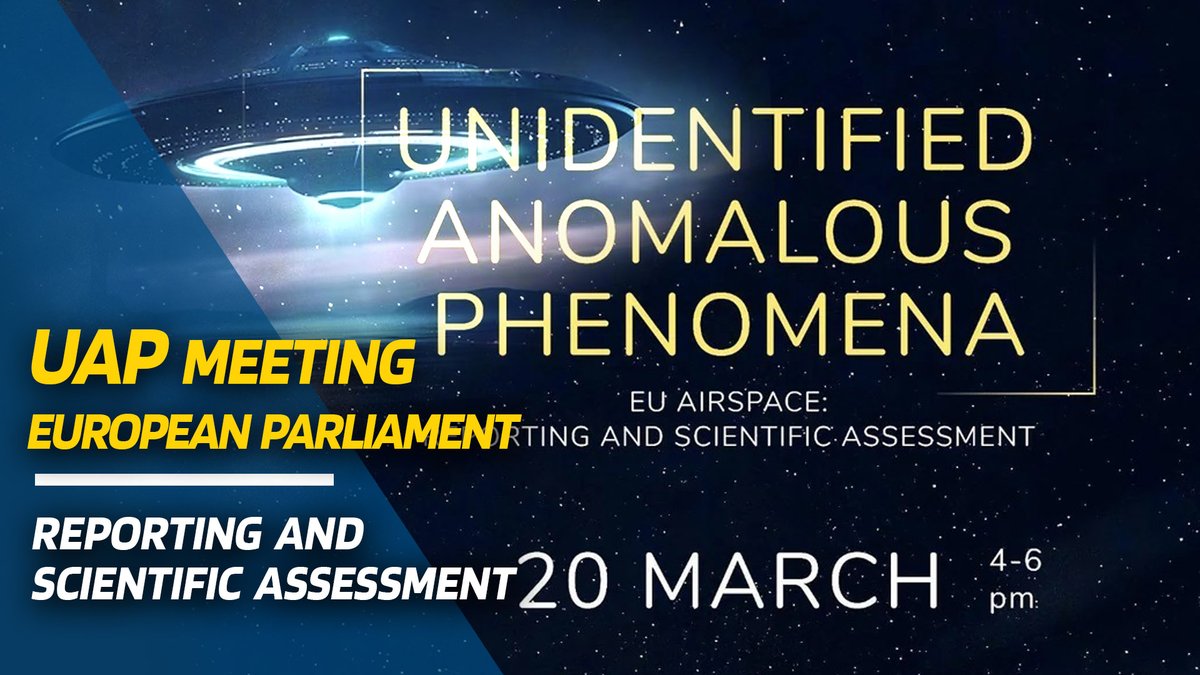
Retour sur la conférence dédiée à l'étude des #ovnis et #PAN qui avait lieu au Parlement européen à Bruxelles le 20 mars 2024 pour entamer une discussion et un état des lieux sur les observations enregistrées et les hypothèses scientifiques 👽 Un moment historique en Europe, les sous-titres en Français sont activés... #ufo #uap #ufosighting #meeting #europe #brussels #foryou #disclosure https://t.co/ow5POtVXHm
Les 2 heures sur la nécessité d'une évaluation scientifique & d'un rapport sur les PAN dans l'UE ce 20/04 ? Riche en infos et aussi ennuyeux qu'une session parlementaire classique. C'est donc bon signe. Fini le divertissement avec les ovnis. Bravo au député @FGuerreiroMEP #uap
🚨 Urgent Call to Action
Recent DoD IG & AARO reports on UAP investigations contain troubling contradictions.
A bipartisan UAP Select Subcommittee in House Oversight is now being demanded by members of Congress.
We have updated our #UAPSpeedDial to support the new calls for a UAP Select Subcommittee.
We have included scripts for Republican @SpeakerJohnson and Democratic Minority Leader @RepJeffries.
Your voice matters! Call now and demand transparency and accountability on UAP.
https://t.co/wqlRiwBXaj
Usbek & Rica, c’est un excellent média de sciences, de technologie mais avant tout de société. Ils prennent la température car ils aimeraient aborder le sujet des PAN et on ne peut que saluer l’initiative. Alors, encouragez-les !
https://t.co/HKSTA24WYA
L'Europe se réveille sur la question UAP ? Le 11/03, le député européen Francisco Guerreiro accuse les U.S.A de mentir au monde entier sur les ovnis après la publication d'un rapport controversé du Pentagone. Silence général des journalistes français. #stopuapstigma#uap
💥💥💥 Interview de Thibaut Canuti
"On ne peut prétendre maîtriser ce sujet sans s’intéresser à la littérature, de même qu’il est compliqué selon moi d’espérer comprendre ce qui se passe aujourd’hui, sans avoir de références relatives à l’Histoire du phénomène"
Thibaut Canuti
J'ai posé quelques questions à l'ufologue Thibaut Canuti, historien de formation et co-créateur de la chaîne Youtube The UAP Show
Willy Sam :
"Bonjour Thibaut, peux-tu te présenter pour celles et ceux qui ne te connaitraient pas encore et nous dire quelques mots sur ce qui t'a amené à t'intéresser aux OVNIs/PANs ?"
Thibaut Canuti :
"Bonjour Willy Sam, c’est le privilège de la vieillesse que d’être aujourd’hui –déjà !– un ancien en ufologie. Mon intérêt date approximativement de la fin des années 90. Qu’est-ce qui nous amène à nous intéresser à un sujet aux marges comme celui-ci ? Sans doute qu’il faut aller chercher dans l’enfance et la culture familiale, qui m’ont éveillé aux sujets relevant de la spiritualité et du paranormal. Ma curiosité pour les ovnis est venue plus prosaïquement de la vague d’ovni au Mexique de 1990-91. J’avais été alors frappé par le fait que cet événement extraordinaire et collectif, dont j’avais vérifié l’authenticité, ne suscite pas plus d’intérêt et de bruit médiatique. C’était ma première confrontation avec le mur du silence qui frappe le sujet et dont force est de constater qu’il s’est largement fissuré depuis quelques années. Ma formation de conservateur des bibliothèques et d’historien de formation m’a poussé tout d’abord à accumuler de la documentation et à lire frénétiquement Aimé Michel, Pierre Guérin, Jacques Vallée et les autres, puis à me procurer les revues ufologiques qui constituent un capital unique. J’ai donc commencé par accumuler une abondante documentation, puis j’ai écrit des articles dans des revues, Ufomania, Inforespace, puis des livres d’Histoire sur le phénomène que je ne trouvais pas en langue française."
Willy Sam :
"Ce sujet est-il une véritable préoccupation pour toi ou un simple hobby ? Si c'est une préoccupation, pourquoi ?"
Thibaut Canuti :
"J’ai différents violons d’Ingres mais le phénomène ovni a toujours été au centre de mon attention. Ma préoccupation d’aujourd’hui c’est d’instruire, à l’heure d’Internet et des réseaux, et de contribuer, modestement, à ce que la culture ufologique ne se perde pas. Je sais bien que les temps ne sont pas à la lecture et que nous sommes entrés dans une ère de post-vérité et de relativisme mais on ne peut prétendre maîtriser ce sujet sans s’intéresser à la littérature, de même qu’il est compliqué selon moi d’espérer comprendre ce qui se passe aujourd’hui, sans avoir de références relatives à l’Histoire du phénomène. Pour bien faire, il faut aussi élargir ses recherches à la parapsychologie scientifique, aux états modifiés de conscience, à l’histoire des sciences, c’est exigeant…"
Willy Sam :
"Penses-tu qu'il soit sain que sur le sujet des PANs, l'espace médiatique mainstream soit principalement occupé par l'actualité en provenance des États-Unis ?"
Thibaut Canuti :
"Je ne sais pas si c’est sain ou le contraire mais c’est ainsi car l’actualité politique et ufologique s’y trouve. Lorsque le Mexique, le Japon, le Canada ou le Brésil font des ovnis une question politique et citoyenne, le monde entier s’y intéresse et nous le relayons sur The UAP Show. L’intérêt de ce qui se passe aux Etats-Unis c’est qu’à la question des ovnis se superpose désormais une question démocratique. Jusqu’où l’Etat est-il fondé à aller pour assurer le secret ? Des instances supra-gouvernementales et des intérêts privés se sont-ils arrogés le droit d’agir sans aucun contrôle démocratique, les citoyens ont-ils le droit de savoir, quel qu’en soit le prix, sommes nous assez murs d’un point de vue civilisationnel pour savoir, le lobby militaro industriel dénoncé sans relâche aux Etats-Unis depuis Eisenhower est-il toujours en mesure de perdurer ?
Le congrès américain, aiguillonné par des lobbys ufologiques désormais visibles, audibles et légitimes, pose ces questions comme aucun autre pays et l’on assiste à une contamination mondiale. C’est de ce point de vue une période assez extraordinaire."
Willy Sam :
"Quels seraient les dangers d'une monopolisation de l'étude des PANs par les seuls États-Unis ?"
Thibaut Canuti :
"Le danger ce serait de se laisser bercer par ce récit américain sans imaginer le nôtre, sans le transposer aux spécificités de nos débats démocratiques respectifs nationaux. Quand je vois la question parlementaire du député européen Gueirerro, je me dis que tout espoir n’est pas perdu. La nature de ce débat a déjà changé, y compris en France. Nous sommes au bord d’un basculement de paradigme. Selon Thomas Kuhn, les paradigmes se succèdent et l'on passe de l'un à l'autre par une « révolution » scientifique, car ils sont inconciliables. À un moment de l'histoire d'une science, le paradigme qui modèle la science normale rencontre des difficultés. Des anomalies voient le jour. Il s'ensuit une crise qui dure un certain temps et peut provoquer un malaise et des dissensions dans une partie de la communauté scientifique. Des hypothèses nouvelles émergent, un nouveau paradigme se forme et l'on abandonne le précédent. C’est ce qui est sans doute en train de se passer avec les ovnis et peut-être même au-delà avec un certain rationalisme matérialiste qui a façonné la pensée occidentale depuis l’époque moderne. Nous vivons cet entre-deux, c’est ce qu’incarne à merveille l’anomalie scientifique posée par l’ovni. Les sceptiques dogmatiques sont les tenants de l’ancien monde, ils résistent car la perte du paradigme dont ils étaient les garants les placent dans une position inconfortable et insupportable. Mais ont perdu d’avance, c’est le sens de l’histoire des sciences."
Willy Sam :
"Pourquoi si peu, voire plus du tout de livres en langue étrangère, traduits en France, selon toi ?"
Thibaut Canuti :
"La réponse est un peu déprimante. Tout simplement parce que les gens ne lisent plus. Ils semblent croire que la juxtaposition indigeste d’une sous culture du web va leur en apprendre autant que de patientes années d’étude. Les tirages des livres français d’ufologie sont la plupart du temps assez anecdotiques sauf lorsqu’ils sont écrits par des personnalités déjà très médiatiques. Donc tant que l’on vendra si peu de livres français d’ufologie, il ne faut pas espérer que les éditeurs se lancent dans ce type d’aventure éditoriale. De ce point de vue-là, les modèles existants devraient évoluer. A mesure que les IA de traduction deviennent toujours plus efficaces, il sera demain beaucoup plus simple d’obtenir des versions françaises à peu près décentes des ouvrages américains notamment, mais pas que, il y a des ufologies, en Italie, en Espagne, au Royaume Uni, dans les pays du Nord qui mériteraient d’être connues et nos auteurs français gagneraient à être lus ailleurs."
Willy Sam :
"Quels livres souhaiterais-tu voir traduits en Français ?"
Thibaut Canuti :
"Il y en a tellement. Je suis en train de lire l’ouvrage de Ralph Blumenthal, « The Believer », sur John Mack. Ce serait passionnant d’avoir une traduction française de ce bouquin. Auparavant j’ai lu « In plain sight » de Ross Coulthart et « Inside the US Government Covert UFO Program » de Kelleher et Knapp pour ne citer que ces exemples récents. Tous ces ouvrages mériteraient d’être traduits. Flying Disc France le fait mais dans des versions françaises assez indigestes, il faut bien le dire tout en saluant cette initiative. La traduction littéraire est un métier, qui se perd d’ailleurs pour des raisons de coût."
Willy Sam :
"Peux tu nous présenter la chaîne Youtube UAP Show et l'équipe ?"
Thibaut Canuti :
"The UAP Show est un web-media d’information indépendant, non lucratif et un « talk show » français, on aime bien dire que c’est même le seul « talk show » qui investigue tous les aspects du phénomène OVNI/UAP, en offrant une fenêtre de dialogue et d’échanges aux chercheurs internationaux et en s’efforçant de décrypter l’actualité en la matière dans une perspective ouverte et agnostique.
Comme l’ufologie est rongée par les égos et investie par des gens qui deviennent autoritaires pour compenser une faille narcissique béante, (on voit ça tout le temps), on s’est dit que ce serait bien d’avoir une chaine qui ne soit surtout pas la propriété d’un seul. On retrouve donc en cofondateurs, créateurs et rédacteurs en chef : Paul PLUMAT (cinéaste), qui est notre « présentateur vedette », Bernard THOUANEL (journaliste aéronautique et ancien de l’ufologie), Joëlle BLOSSE (témoin, ufologue, responsable presse medias), et votre serviteur auteur, spécialisé dans l’histoire de l’ufologie.
Nous ne prétendons pas détenir une quelconque vérité sur l’anomalie scientifique et l’énigme passionnante des UAP. L’équipe de The UAP Show n’a pour seule ambition que de mettre à disposition l’expertise de ses chroniqueurs et invités (journalisme, science de l’information, documentation, expérience ufologique, etc. pour informer le grand public avec modestie et ouverture d’esprit.
Nous n’avons que 9 mois d’existence mais notre audience croît en permanence et nous avons surtout un public qualifié qui nous suit. Les autres formats ce sont des traductions ou des tribunes de type conférence offertes à des auteurs, il y avait donc une place à prendre sur un talkshow hebdomadaire même si notre formule devra évoluer ne serait-ce que parce que les invités potentiels viendront à manquer à raison de 52 émissions par an."
Willy Sam :
"Quel est la (les) personne(es) que vous souhaiteriez inviter sur UAP show ?"
Thibaut Canuti :
"Je ne veux pas mourir sans recevoir Jacques Vallée qui est pour moi le penseur le plus important et prolifique de l’ufologie.
En vrai, nous sommes ouverts pour recevoir tous ceux qui, d’une manière ou d’une autre, investiguent cette matière. Il ne faut d’ailleurs pas hésiter à nous contacter pour être invité ou être chroniqueur sur The UAP Show, nous souhaitons être une plate-forme ouverte !"
Willy Sam :
"Si tu avais tout ton temps libre et des moyens financiers illimités, quels actions, projets aimerais-tu entreprendre, en lien avec les OVNIS " Peux-tu développer s'il te plaît ?"
Thibaut Canuti :
"Je me suis consacré des années durant à l’étude des ovnis et de l’ufologie en France. La France a longtemps été la fille ainée de l’ufologie, nous sommes la patrie d’Aimé Michel, de Jacques Vallée, de Pierre Guérin, du GEPAN, de « Phénomènes spatiaux », LDLN et du rapport Cométa, etc.
Il y aurait selon moi matière magnifique à créer un film documentaire en plusieurs parties sur toute cette histoire. J’ai été contacté il y a peu pour un projet similaire mais tout semble indiquer que celui-ci n’ait pas enthousiasmé les financeurs… Je suis persuadé non seulement que ça marcherait mais que ça se vendrait dans le monde entier. Si un gars quelque part chez @NetflixFR est en train de nous lire, on le fait quand vous voulez !"
Willy Sam :
"Dernière question. A quoi ou à qui penses-tu que nous ayons affaire ? Tes deux hypothèses favorites à propos du phénomène OVNI ?"
Thibaut Canuti :
"Pour ma part et ce n’est pas une posture intellectuelle, je n’ai pas d’opinions chevillées au corps sur le phénomène, si ce n’est qu’il existe, matériellement, vraisemblablement depuis très longtemps et qu’il ne saurait être entièrement réduit à des causes conventionnelles. Beaucoup de chercheurs convergent vers l’idée que le phénomène est pluriel, de nature supra-physique, qu’il est indubitablement lié à l’humain (trop humain), qu’il est sans doute de nature spirituelle et agit sur la conscience à l’échelle individuelle et collective, qu’il manipule manifestement l’espace et le temps et constitue un système de contrôle. L’hypothèse extra-terrestre dite au 1er degré, des voyageurs intergalactiques venant des confins de l’univers, ne me semble pas valoir pour l’ensemble du phénomène. L’ovni nous parle non seulement d’une autre physique, mais aussi et surtout d’une autre réalité qui pourrait bien se jouer des frontières triviales de l’espace et du temps telles que nous les concevons. L’idée d’une civilisation artificielle, robotique ayant peut-être acquis rang de créateur et ayant peut-être survécu à ceux qui les ont fait naître m’a toujours séduit. Idem pour l’hypothèse de voyageurs temporels. Il n’y a sans doute pas une cause à ce mystère, le phénomène est beaucoup trop dense."
Willy Sam :
"Thibaut, je te remercie d'avoir répondu à ces quelques questions. J'invite celles et ceux qui s'intéressent au sujet, à s'abonner à The UAP Show. Si tu veux rajouter quelque chose ?"
Thibaut Canuti :
"The UAP Show est une initiative bénévole, nous n’en tirons aucun profit, si ce n’est les maigres revenus YouTube qui couvrent les frais d’abonnement à notre logiciel de retransmission en direct. Le seul moyen de nous soutenir et ainsi de soutenir la diversité des formes d’expression en ufologie, c’est de vous abonner et de partager sur vos réseaux notre travail. Ne laissons pas l’ufologie aux mains des galactiques, c’est un sujet sérieux qui requiert œcuménisme et rigueur. Nous essayons de contribuer à la diffusion de cette culture et à sa déstigmatisation."
Fin de l'interview
Lien vers la chaîne youtube de The UAP Show
https://t.co/exqafI14nO
💥💥💥💥 Lettre du député Eric Burlison au Président de la Chambre des représentants, Mike Johnson, demandant la création d'une sous-commission OVNI
Chers président Johnson et leader démocrate Jeffries,
À la lumière des récents témoignages de lanceurs d'alertes et des nouvelles preuves de l'existence de phénomènes anormaux non identifiés (UAP), nous demandons à la Chambre des représentants des États-Unis de créer une sous-commission spéciale sous l'égide de la commission de surveillance et de responsabilité de la Chambre des représentants (commission de surveillance) afin d'enquêter sur la réponse du gouvernement fédéral au sujet OVNI. Compte tenu du rôle de la commission de surveillance en tant que principal organe d'enquête de la Chambre des représentants des États-Unis et de son pouvoir étendu d'enquêter sur "toute question" à "tout moment" en vertu de l'article X du règlement de la Chambre, nous pensons qu'il est approprié que la commission enquête et évalue le degré de transparence et de responsabilité du gouvernement fédéral en ce qui concerne les OVNIS.
Le 26 juillet 2023, la commission de surveillance a organisé une audition publique avec le major à la retraite David Grusch, Ryan Graves, directeur exécutif d'Americans for Safe Aerospace, et le commandant de la marine à la retraite David Fravor, au cours de laquelle ils ont témoigné de leur expérience concernant les OVNIS, des risques pour la sécurité nationale posés par les OVNIS et de l'existence de technologies OVNI actuellement détenues par le gouvernement fédéral.
En particulier, M. Grusch a révélé l'existence d'un programme de récupération de crashs et de rétro-ingénierie d'OVNI qui a été illégalement caché au Congrès. En juillet 2022, l'inspecteur général de la communauté du renseignement (ICIG) a jugé la plainte de M. Grusch "crédible et urgente".
Si le témoignage de M. Grusch a apporté quelques réponses, de nombreuses autres questions restent sans réponse, et nous pensons qu'une enquête plus approfondie est justifiée.
Le gouvernement fédéral continue de déclassifier certaines vidéos et études sur divers incidents liés aux OVNIS sans que l'origine des sujets ne soit clairement établie. Un autre obstacle majeur a été le manque de coopération et l'évitement du contrôle du Congrès de la part du Département de la Défense (DoD) et de la Communauté du Renseignement (IC), ce qui n'a fait qu'accroître la méfiance du public. En outre, on ne sait pas exactement combien d'argent du contribuable américain est consacré à l'analyse et à l'enquête sur les OVNIS. Dans la mesure où nous croyons en un véritable gouvernement représentatif, il est essentiel d'assurer la transparence sur ces questions si nous voulons que les citoyens soient responsables et informés.
Compte tenu de la longue histoire du manque de coopération et de transparence du DoD et de la communauté du renseignement, il est dans le meilleur intérêt des contribuables américains que le Congrès enquête sur les OVNIS sur une base bipartisane et fournisse en fin de compte au public la transparence dont il a tant besoin. Par conséquent, nous pensons que la création d'une nouvelle sous-commission restreinte donnerait au Congrès l'occasion d'apporter des réponses qui n'ont que trop tardé.
Nous demandons respectueusement que la sous-commission restreinte soit dotée d'un personnel complet et qu'elle ait accès à tous les documents et à toutes les informations, classifiés ou non, fournis ou obtenus par le gouvernement fédéral concernant les OVNIS et qui étaient ou sont actuellement protégés par une forme quelconque d'accès spécial ou d'accès restreint. En outre, le sous-comité restreint devrait avoir accès à tout le matériel et à toutes les informations, classifiés ou non, détenus par le gouvernement fédéral en ce qui concerne tout le matériel d'origine non terrestre ou exotique des OVNIS
1/2
Suite Tweet Suivant
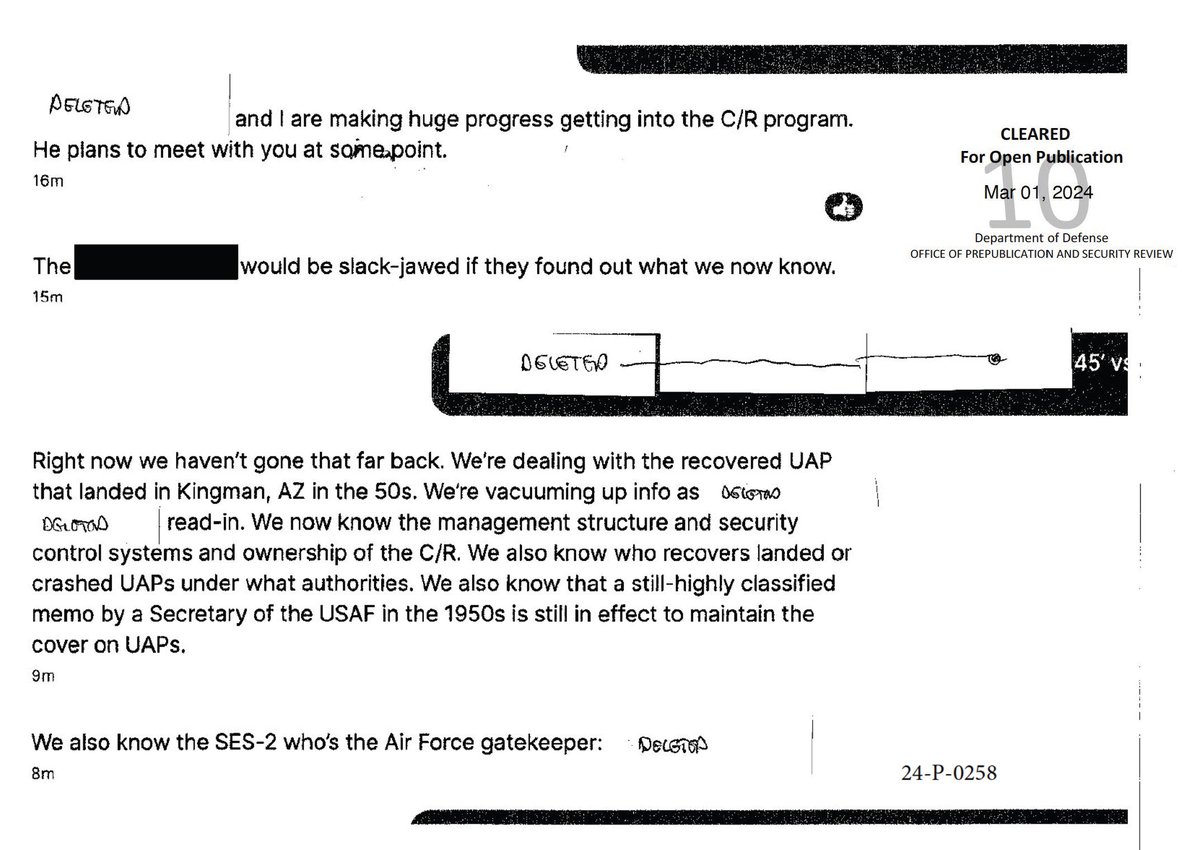
This new report is not going to satisfy anyone. To begin with, it is a case of the DoD and the IC investigating themselves without even the independence that Inspectors General enjoy. Obviously, there is a huge potential conflict of interest. Imagine a small office at the DoD trying to investigate the Iran-Contra affair. Congress did a great job with that inquiry, something that would have likely been a whitewash if the Executive had tried to investigate itself. Further, many witnesses did not trust AARO and would not meet with them. For example, one former senior USG official years ago not only told me the rumors are real, he also provided details including the name of the USAF “gatekeeper.” But he refused to speak to AARO about this because he claimed he did not trust the process. Some of the witnesses who refused to meet with AARO did meet behind closed doors with members of Congress, however. That is why some in Congress take the issue so seriously.
🇨🇦 La scientifique en chef du Canada a annoncé aux députés fédéraux qu’elle entend toujours dévoiler son premier rapport sur les observations d’ovnis au pays cet automne.
https://t.co/bjFMOUDyKl
Senator Hawley’s instincts, at least on this topic, are correct: There is much about US Government UAP knowledge that has not yet come to light. https://t.co/XQ9FQP8Mey