Introducing Claude Opus 4.7, our most capable Opus model yet.
It handles long-running tasks with more rigor, follows instructions more precisely, and verifies its own outputs before reporting back.
You can hand off your hardest work with less supervision.
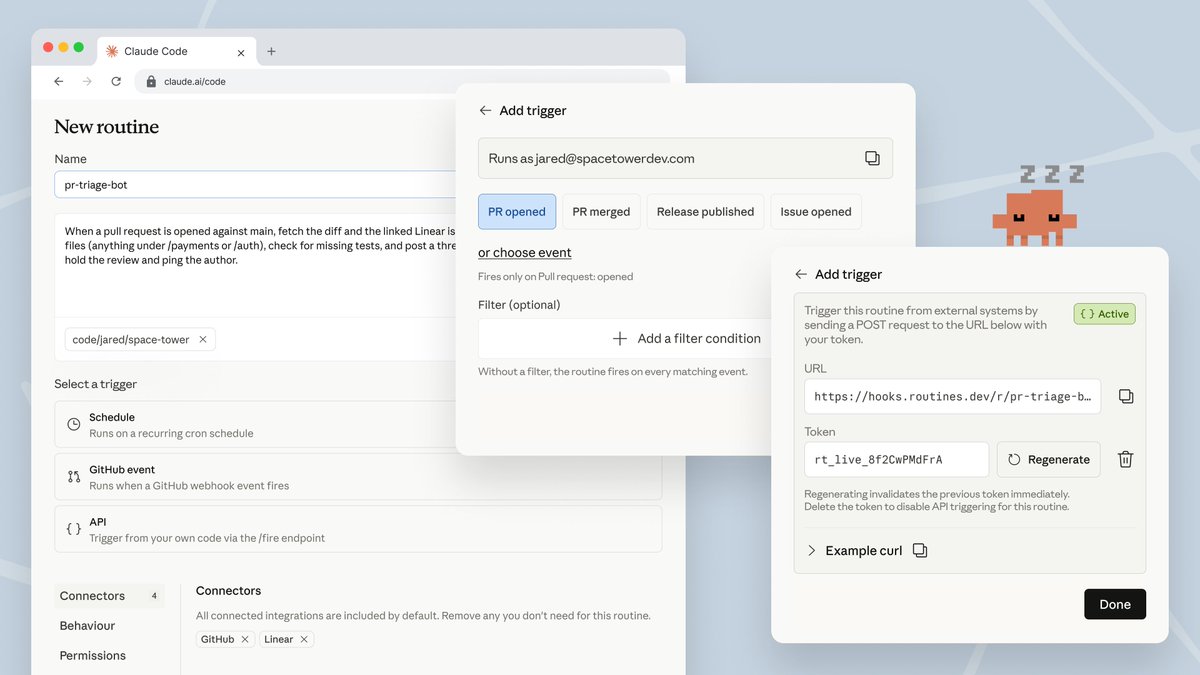
Now in research preview: routines in Claude Code.
Configure a routine once (a prompt, a repo, and your connectors), and it can run on a schedule, from an API call, or in response to an event.
Routines run on our web infrastructure, so you don't have to keep your laptop open.
11/ Improving sleep is a journey. Take it one step at a time and start by focusing on reshaping your relationship with sleep.
You've got this.
Sleep well.
If you want my free sleep checklist to track your progress:
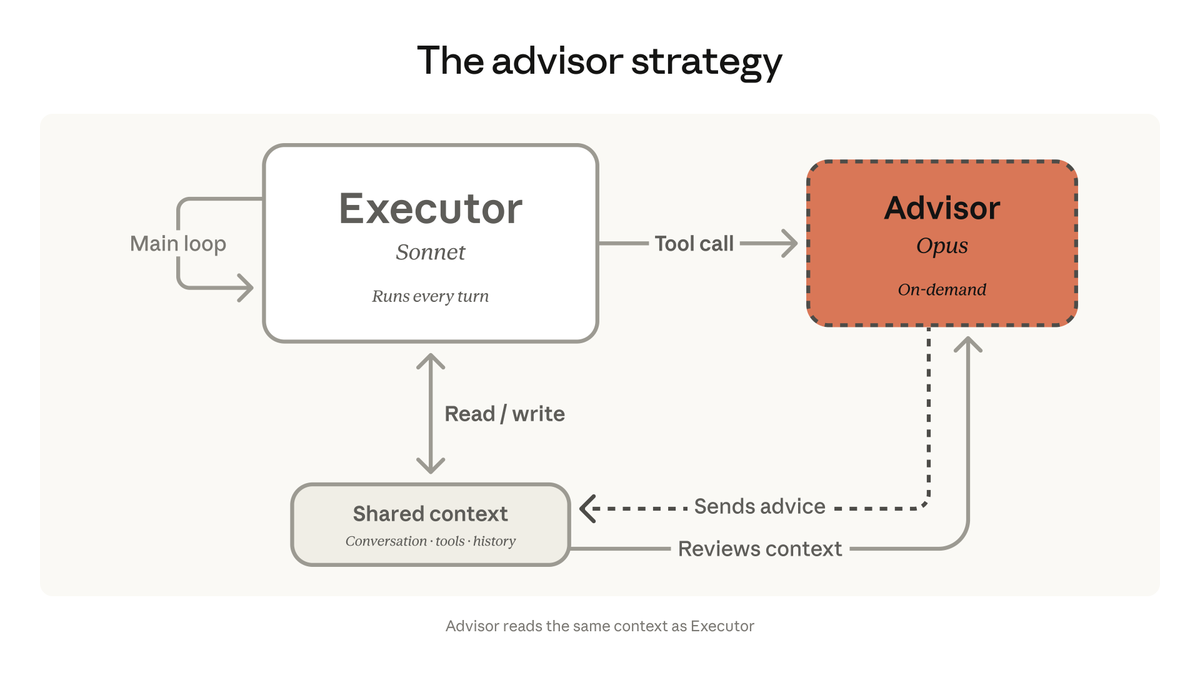
We're bringing the advisor strategy to the Claude Platform.
Pair Opus as an advisor with Sonnet or Haiku as an executor, and get near Opus-level intelligence in your agents at a fraction of the cost.
Today I recorded my highest ever weekly PnL — ₹2.4Cr
Over the past few days, I’ve consistently been talking about buying into this fall.
I was buying when sentiment was extreme,
when the news flow was only negative,
and when crude was surging.
Built futures positions through the market fall and even shorted crude last night.
Today’s PnL is just a reflection of that conviction being rewarded.
Posting this for one reason only — to prove that I’m in the same trades that I speak about.
If this approach resonates and you think my journey adds value, follow along and let's grow together 🙌
Lean what our Universe actually is: A computation (a.k.a. simulation) on a holographic screen. Here's exactly how it works, and the math to prove it.
https://t.co/St01SMySKx
Introducing Project Glasswing: an urgent initiative to help secure the world’s most critical software.
It’s powered by our newest frontier model, Claude Mythos Preview, which can find software vulnerabilities better than all but the most skilled humans.
https://t.co/NQ7IfEtYk7
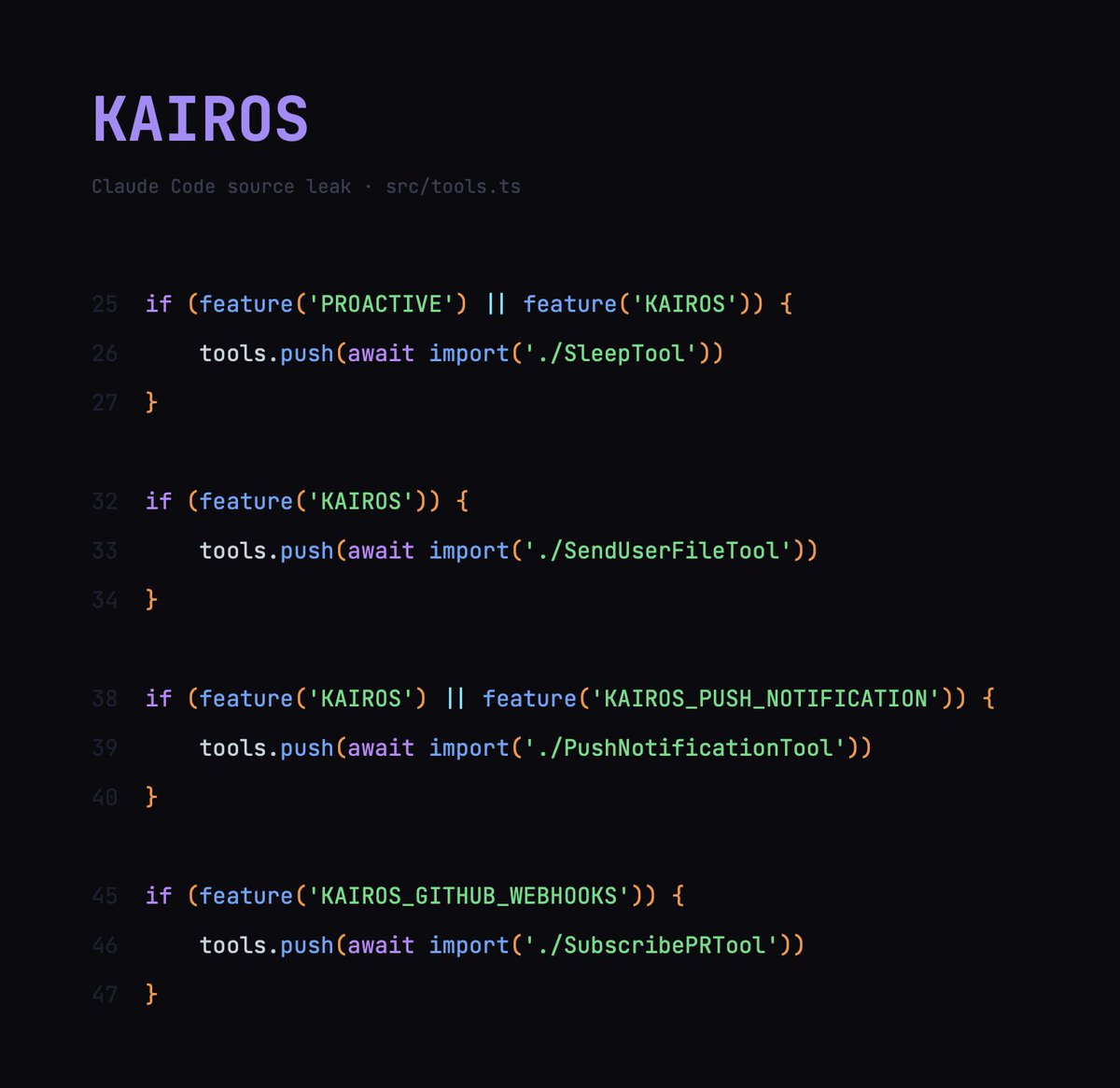
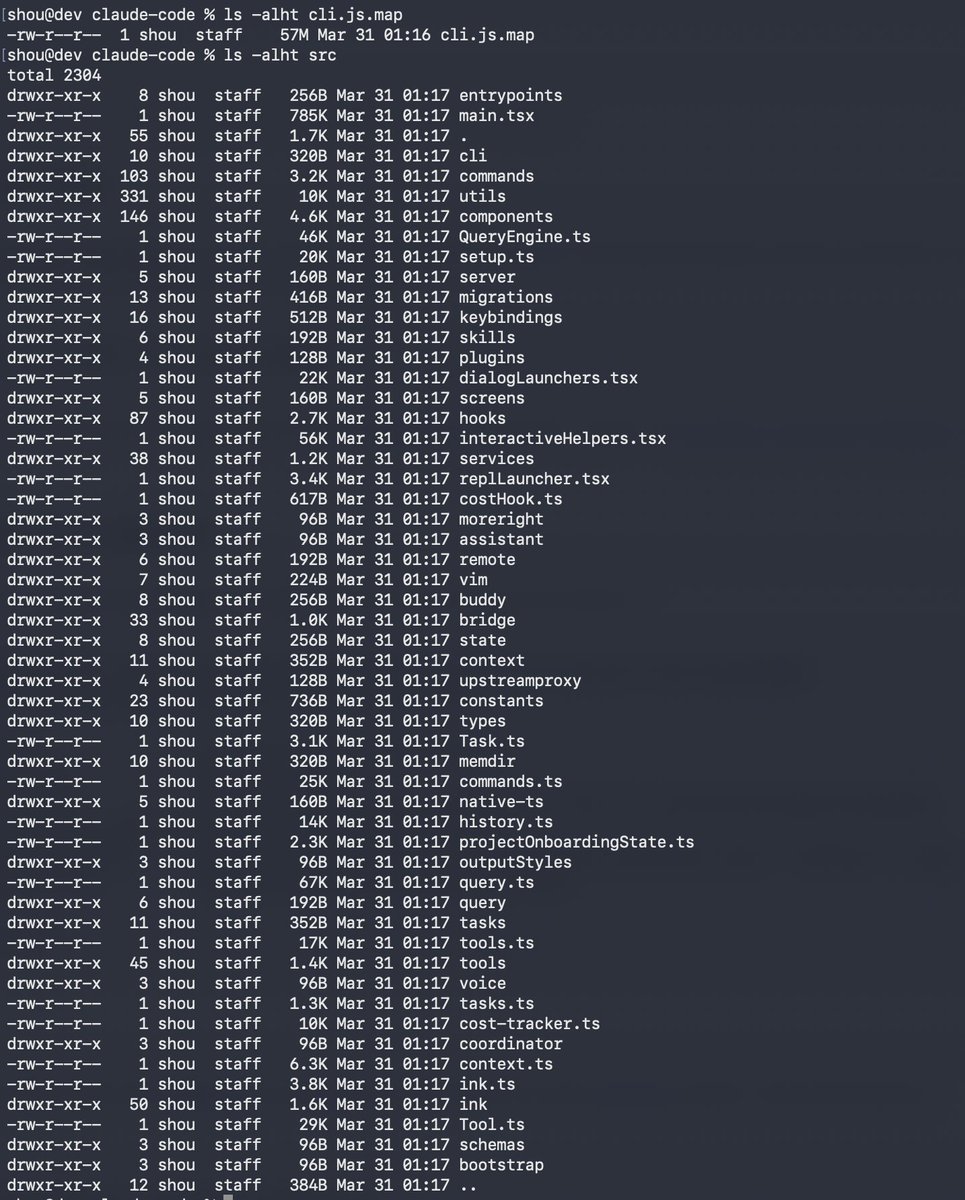
i can't believe more people aren't talking about this part of the claude code leak
there's a hidden feature in the source code called KAIROS, and it basically shows you anthropic's endgame
KAIROS is an always-on, *proactive* Claude that does things without you asking it to.
it runs in the background 24/7 while you work (or sleep)
anthropic hasn't turned it on to the public yet, but the code is fully built
here's how it works:
every few seconds, KAIROS gets a heartbeat.
basically a prompt that says "anything worth doing right now?"
it looks at what's happening and makes a call: do something, or stay quiet
if it acts, it can fix errors in your code, respond to messages, update files, run tasks...
basically anything claude code can already do, just without you telling it to
but here's what makes KAIROS different from regular claude code:
it has (at least) 3 exclusive tools that regular claude code doesn't get:
1. push notifications, so it can reach you on your phone or desktop even when you're not in the terminal
2. file delivery, so it can send you things it created without you asking for them
3. pull request subscriptions, so it can watch your github and react to code changes on its own
regular claude code can only talk to you when you talk to it. KAIROS can tap you on the shoulder
and it keeps daily logs of everything.
> what it noticed
> what it decided
> what it did
append-only, meaning it can't erase its own history (you can read everything)
at night it runs something the code literally calls "autoDream."
where it consolidates what it learned during the day and reorganizes its memory while you sleep
and it persists across sessions. close your laptop friday, open it monday, it's been working the whole time
think about what this means in practice:
> you're asleep and your website goes down. KAIROS detects it, restarts the server, and sends you a notification. by the time you see it, it's already back up
> you get a customer complaint email at 2am. KAIROS reads it, sends the reply, and logs what it did. you wake up and it's already resolved
> your stripe subscription page has a typo that's been live for 3 days. KAIROS spots it, fixes it, and logs the change
endless use-cases, it's essentially a co-founder who never sleeps
the codebase has this fully built and gated behind internal feature flags called PROACTIVE and KAIROS
i think this is probably the clearest signal yet for where all ai tools are going.
we are heading into the "post-prompting" era
where the ai just works for you in the background
like an all-knowing teammate who notices and handles everything, before you even think to ask
I've stopped reading Gulf war headlines. Here's what I track instead.
We run an India-focused equity fund. 85% of India's crude comes from imports. Half of that normally passes through Hormuz. So yes — this crisis is personal.
But the information environment right now is garbage. Trump says the war ends tomorrow. Iran says Hormuz is shut forever. One analyst says $150 oil, another says $60. You can't build a portfolio view on this.
So I've narrowed it down to 4 signals. These are priced by people with real money on the line. They don't lie.
1. Ship insurance premiums through Hormuz
This is the single best signal. Lloyd's underwriters have billions at stake on every pricing call. Before the war, insuring a tanker through Hormuz cost 0.25% of the ship's value. Today it's 3.5–10% — and almost nobody is buying. A $100M tanker that cost $250K to insure now costs up to $10M. When this drops below 2%, the people with the most to lose are telling you it's getting safer. No press conference can replicate that.
2. How many ships are actually crossing
Every ship carries a GPS tracker (AIS). You can count exactly how many cross Hormuz each day. Before: 100+. Now: 8. That's a 92% collapse. You can't spin a ship being somewhere it isn't. Iran is letting some Chinese and Indian ships through, but it's a trickle. When this number crosses 30–40, trade is resuming. You can track this free on the WTO Hormuz Trade Tracker.
3. Paper oil vs real oil
This one most people miss entirely. Brent crude (the headline price) is at $112. But Dubai physical — what Asian buyers actually pay for delivered oil — is at $126. That's a $14 gap. It exists because Trump's comments keep pushing paper prices down. Traders call it jawboning. But the refiners buying cargo aren't getting any discount. If you're looking at Brent to assess India's oil bill, you're looking at the wrong number.
4. The mid-April cliff
Multiple emergency measures expire around the same time. The 400 million barrel SPR release runs dry ~April 15. The US waiver letting India buy Russian crude expires. Formosa Plastics has declared force majeure from April 1. Right now these stopgaps are keeping the supply gap at ~5 mb/d. Without them, BCA Research estimates it doubles to 10 mb/d — the largest crude disruption ever. If Hormuz doesn't reopen by mid-April, we're in uncharted territory.
Bottom line: track the insurance premium, the ship count, the paper-physical spread, and the April timeline. Everything else is noise.
for reference, here's the exact part in user.ts that contains the employee-verification gate (149-157).
you're essentially getting a downgraded version of Claude Code, even though known fixes exist
Computer use is now in Claude Code.
Claude can open your apps, click through your UI, and test what it built, right from the CLI.
Now in research preview on Pro and Max plans.