Mahmoud Darwish recites the poem titled "A small evening over a neglected village." This fragment belongs to the documentary series The Arabs: A Living History (1979-1983), specifically to episode 4, called "The Power of the Word," which is dedicated to poetry in the Arab world.
Anthropic accidentally leaked their entire source code yesterday. What happened next is one of the most insane stories in tech history.
> Anthropic pushed a software update for Claude Code at 4AM.
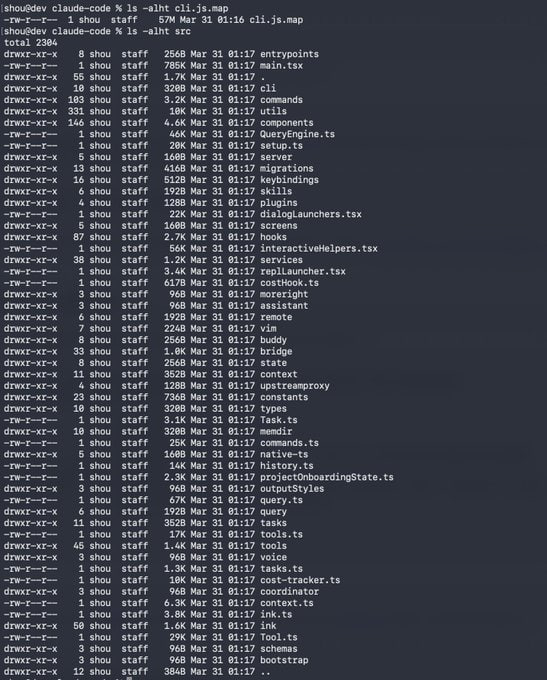
> A debugging file was accidentally bundled inside it.
> That file contained 512,000 lines of their proprietary source code.
> A researcher named Chaofan Shou spotted it within minutes and posted the download link on X.
> 21 million people have seen the thread.
> The entire codebase was downloaded, copied and mirrored across GitHub before Anthropic's team had even woken up.
> Anthropic pulled the package and started firing DMCA takedowns at every repo hosting it.
> That's when a Korean developer named Sigrid Jin woke up at 4AM to his phone blowing up.
> He is the most active Claude Code user in the world with the Wall Street Journal reporting he personally used 25 billion tokens last year.
> His girlfriend was worried he'd get sued just for having the code on his machine.
> So he did what any engineer would do.
> He rewrote the entire thing in Python from scratch before sunrise.
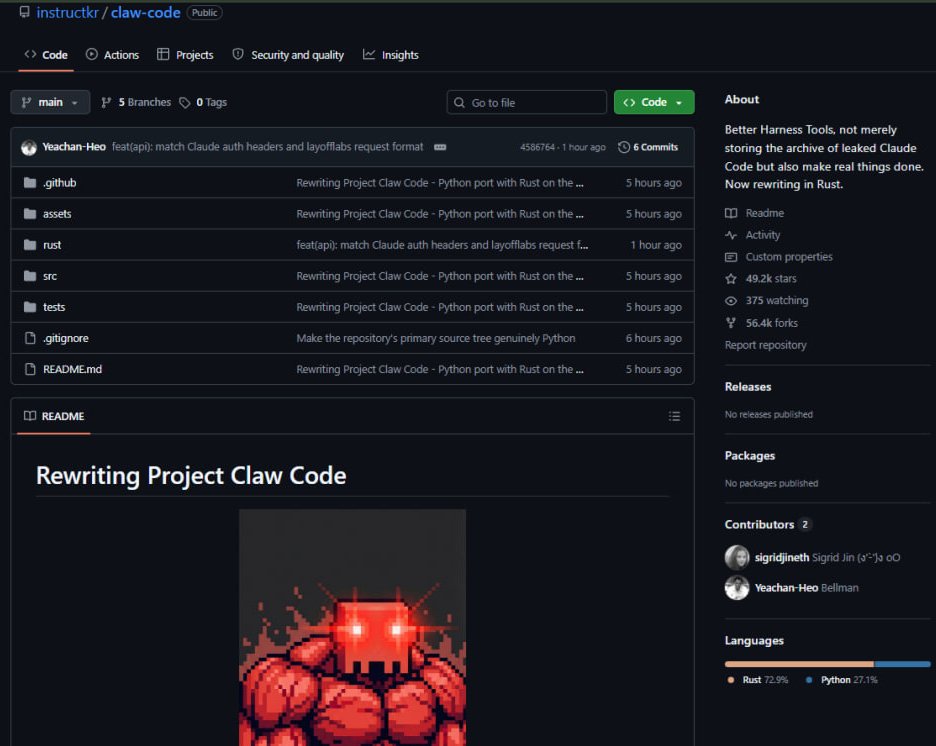
> Called it claw-code and Pushed it to GitHub.
> A Python rewrite is a new creative work. DMCA can't touch it.
> The repo hit 30,000 stars faster than any repository in GitHub history.
> He wasn't satisfied. He started rewriting it again in Rust.
> It now has 49,000 stars and 56,000 forks.
> Someone mirrored the original to a decentralised platform with one message, "will never be taken down."
> The code is now permanent. Anthropic cannot get it back.
Anthropic built a system called Undercover Mode specifically to stop Claude from leaking internal secrets. Then they leaked their own source code themselves. You cannot make this up.
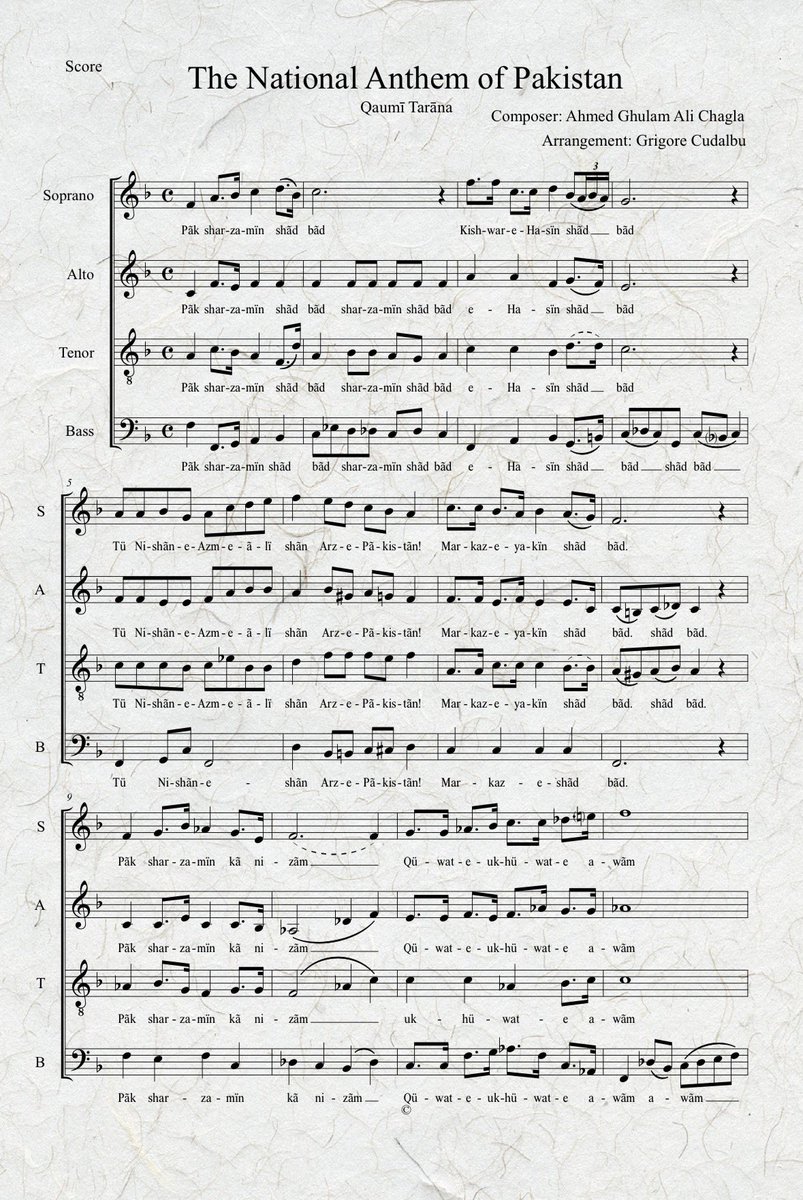
On the occasion of Pakistan Day (23 March), @ROinPakistan announces the historic launch of the first-ever choral arrangement and score of Pakistan’s national anthem, Qaumi Tarana 🇵🇰🇷🇴
Realized by the National Chamber Choir “Madrigal – Marin Constantin” with the support of the Embassy, this unique cultural project represents a true musical milestone 🎶✨ For the first time, a fully notated choral score has been created for an anthem originally conceived as an orchestral composition—requiring a complete rethinking of how its rich musical language could be expressed through human voices alone.
The process involved significant artistic and technical challenges 🎼 With its wide tonal range, complex harmonic structure, and continuously evolving musical phrasing, the anthem does not naturally lend itself to choral adaptation. The team carefully redistributed orchestral elements across soprano, alto, tenor, and bass voices, ensuring both musical balance and vocal feasibility. Special attention was also given to the precise articulation of the highly Persianized Urdu lyrics in a choral setting.
This first-ever choral score stands as a pioneering achievement 🌍🤝 opening a new chapter in the interpretation of Pakistan’s national anthem and celebrating the power of music to connect cultures.
@AAliZardari@CMShehbaz@MaryamNSharif@KhawajaMAsif@OfficialDGISPR@HamidMirPak@Iqrarulhassan@MubasherLucman@TalatHussain12@MoeedNj@asmashirazi@asmashirazi@nadeemmalik@WaseemBadami
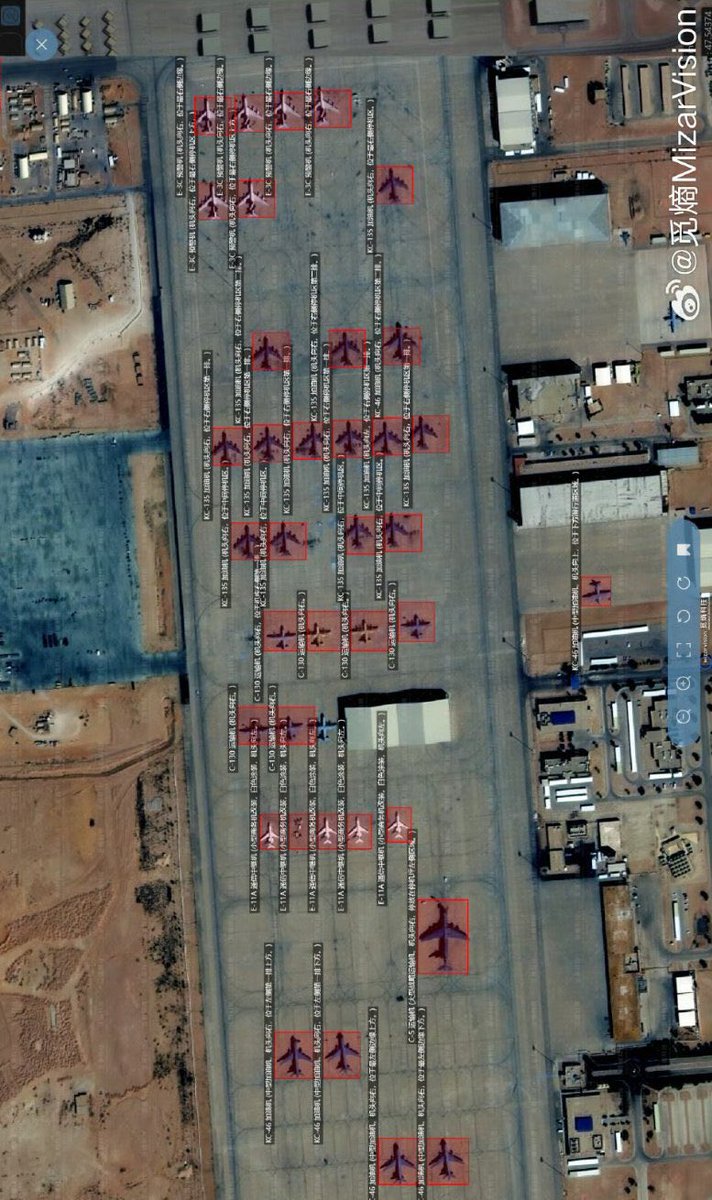
Look at this image carefully. You are looking at a Chinese commercial satellite photograph of Prince Sultan Air Base in Saudi Arabia. Every red box is an artificial intelligence model identifying a US military aircraft by type. Every label is in Mandarin. And the base you are looking at is the one Iran fired ballistic missiles at on Saturday night.
A company called MizarVision, founded five years ago in Hangzhou, published this. Not the Pentagon. Not the CIA. Not a classified intelligence briefing delivered to the Situation Room. A Chinese startup with access to sub-meter resolution Earth observation satellites and an AI object detection model that can distinguish a KC-135 Stratotanker from a KC-46 Pegasus from orbit.
Aviation Week confirmed what the image shows. Fifteen KC-135 aerial refueling tankers. Six KC-46 Pegasus tankers. Six E-3 Sentry airborne early warning aircraft, which is significant because only thirty one E-3s remain in the entire US Air Force inventory worldwide, meaning roughly a fifth of America’s operational AWACS fleet is parked on a single ramp in the Saudi desert. Two E-11A Battlefield Airborne Communications Nodes. C-130 Hercules transports. C-5 Galaxy heavy lifters. The backbone of Operation Epic Fury, catalogued from space and published on Weibo.
This is the base that Iran targeted. AFP journalists in Riyadh reported explosions in the eastern part of the capital with thick smoke rising. The Saudi Foreign Ministry condemned Iranian attacks targeting Riyadh and the Eastern Province. Saudi air defenses intercepted the projectiles. But the image you are looking at was published days before the strike. Which means Iran had exactly the same intelligence picture that MizarVision gave the entire world for free.
This is what the democratization of intelligence looks like. In 1991, only the United States could see individual aircraft on a ramp from space. In 2003, a handful of nations had that capability. In 2026, a Chinese startup publishes annotated satellite imagery of American force dispositions on social media, and Aviation Week runs the analysis before the first missile is fired.
Defence Security Asia captured what this means: sub-meter resolution imagery distinguishing individual aircraft types fundamentally alters the secrecy calculus of pre-strike deployments. You cannot mass two hundred aircraft across half a dozen bases and keep it secret when commercial satellites photograph every ramp twice a day and AI models label every airframe before an analyst finishes their coffee.
The age of hidden buildups is over. Every deployment is now observable, catalogued, and published in near real time by companies with no security clearance and no allegiance to anyone. The next war will not be planned in secret. It will be watched from orbit by everyone, in every language, simultaneously.
https://t.co/BrzGRrU3VW
Whatever your politics, this thread captures the playbook of 5th-gen warfare: confidence collapse via code. As someone running a coding school, it’s not chilling, it's clarifying. We’re not just teaching kids to code games. We’re teaching them to understand power.
Their analysts were warned of this years ago , GPS spoofing during Balakot, malware seeded via Southeast Asian shells, ISR gaps logged over Ladakh. They laughed. Today, they stutter.
Based on the scope and digital fingerprints in the report, this wasn’t a random breach, it was the live execution of a mature 5th-generation playbook. The ten SCADA systems in India’s energy sector were likely taken down through ICS-specific malware, akin to Industroyer or TRITON, exploiting unpatched PLCs and enabled by either OTP relay manipulation or poisoned vendor updates that embedded deep into grid logic. The 1,744 web servers were wiped using wiper malware staged through APT-linked backdoors disguised as patches, with initial access likely achieved via silent SIM swaps and reused credentials, deployed in rapid succession using tools similar to WhisperGate. Windmills and consumer electricity portals were likely shut down by spoofing API commands or manipulating smart grid edge controls through man-in-the-middle attacks and hijacked credentials. The destruction of railway and gas infrastructure hints at mapped fiber chokepoints and targeted microwave relay towers, cutting telecom uplinks and triggering cascading desync. Over 1,300 IP cameras and 120 routers were probably defaced using remote command injection and DNS rebinding, propagated like a botnet for mass visual hijack. The deletion of 507 ICT devices and databases likely followed credential scraping from breached inboxes, followed by destructive SQL and shell scripts launched via frameworks like Cobalt Strike. The 15 compromised mail servers point to ProxyShell-like exploits or SMTP relay abuse, possibly enabled by SIM jacking and spoofed government domains. Thirteen government portals taken offline may have suffered DNS hijacks, backend injection, or TLS expiration, deliberately timed to trigger outage optics. The theft and leak of 150 databases reflect classical exfiltration: SQL dumps, misconfigured NoSQL buckets, and open S3 or Firebase repos, dumped on Telegram or darknet boards. The BJP MP site was defaced through brute-forced admin panels or CMS flaws like RFI, while the simultaneous hijack of 110 corporate and 3 news websites suggests CDN poisoning or GitHub repo injection, modifying public-facing HTML at scale.
We said this was coming. We laid out the doctrine: deny, don’t declare. Exhaust the system, not the signal. And today? India became the case study in how to digitally assassinate a nation’s confidence without ever crossing a border.
Welcome to 5th-gen warfare. Where the grid’s still standing but no one trusts the lights.
Education and Skills Training Expert Sadaf Rehman stresses the need for long term & effective policies to improve education system in #Pakistan.
#TheSociety@fatimashaheen14@sadafR
"All work, coordination, and communication must completely shut down because a few power hungry maniacs are terrified they won't get elected for doing things like shutting down Pakistan's internet"
The ceasefire proposal has been approved by Israel, and early indications from Hamas suggest a positive response.Hamas has given “initial positive confirmation” to a proposal for the cessation of fighting in Gaza and the release of hostages, Qatar’s foreign ministry spokesman said on Thursday.
US, Egyptian and Qatari mediators met with Israeli intelligence officials in Pairs on Sunday where they proposed a six-week pause in the Gaza war and a hostage-prisoner exchange for Hamas to review.
“That proposal has been approved by the Israeli side and now we have an initial positive confirmation from the Hamas’ side,” Majed al-Ansari told an audience at a Washington-based graduate school.
“There is still a very tough road in front of us,” said Ansari.
“We are optimistic because both sides now agreed to the premise that would lead to a next pause.
“We’re hopeful that in the next couple of weeks, we’ll be able to share good news about that,” he added.
The Qatar-based leader of Hamas, Ismail Haniyeh, was expected in Cairo on Thursday or Friday for talks on a proposed truce.
Previously, Qatar mediated a one-week break in fighting that began in November and led to the release of scores of Israeli and foreign hostages, as well as aid entering the besieged Palestinian territory.
#bhnewsmiddleeast