What a wild kaleidoscope of colours! Two magnificent Great Hornbills amid the crimson young leaves of a Kusum tree (Ceylon oak) capture the splendour of an early morning in the Nilgiris
Incredible photo by @dileep_ambu#GreatHornbill#Hornbills#Wildlife#BirdsofIndia
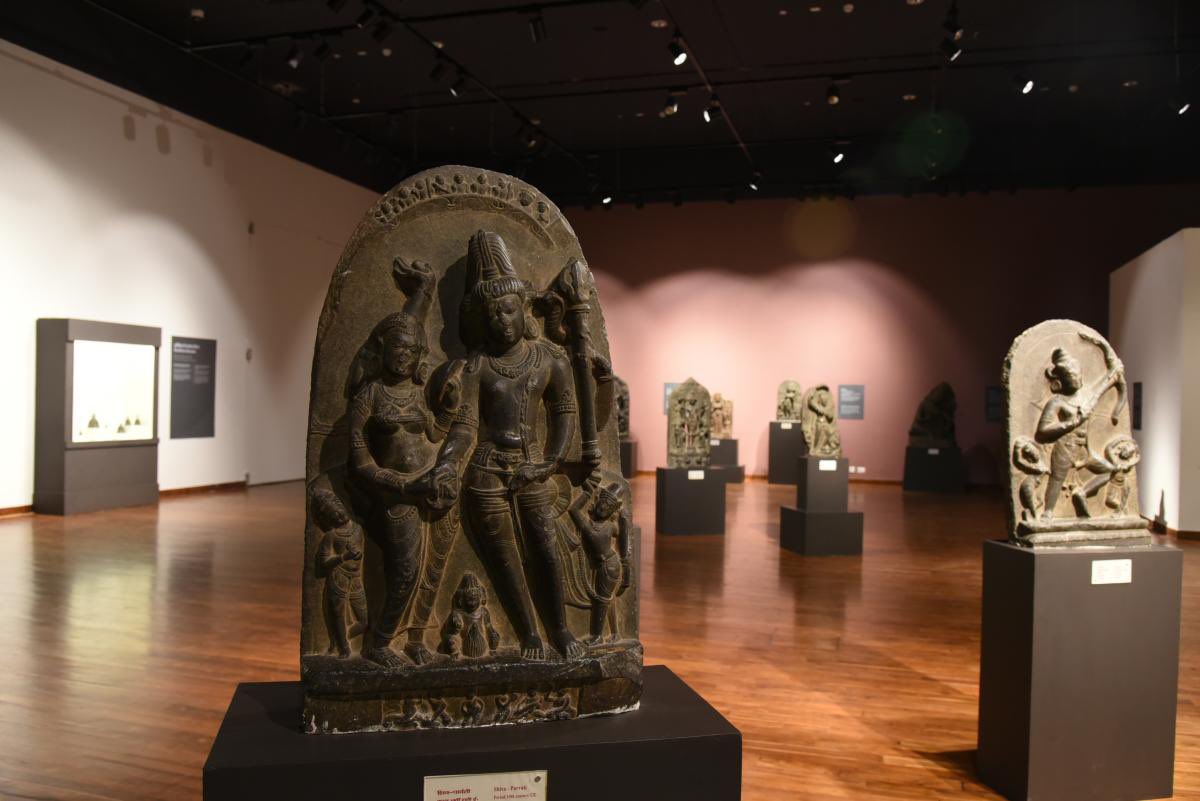
There is a reason people travel across continents, queue for hours and plan entire holidays around museums like the Louvre in Paris, the Metropolitan Museum of Art in New York, the Prado in Madrid and the Hermitage in St Petersburg. Great museums are not merely repositories of artefacts; they are windows into civilisations, custodians of collective memory and powerful expressions of a nation’s identity.
Now, imagine Bihar, a state often discussed through the prism of its developmental challenges, delivering a museum that has earned a place among the very best in the world.
The Bihar Museum in Patna has been ranked 9th in the World’s 100 Best Museums 2026, and No. 1 in Asia, by international travel publication Worth a Journey. It is the only Indian museum on the list.
A few remarkable comparisons:
• Bihar Museum ranks ahead of New York’s iconic Metropolitan Museum of Art (The Met), placed 10th.
• Paris’s world-famous Louvre, home to the Mona Lisa, is ranked 31st.
• It features alongside celebrated institutions such as Madrid’s Prado, St Petersburg’s Hermitage and Vienna’s Kunsthistorisches Museum.
This is no ordinary achievement. It is a statement about what India can accomplish when vision, institutional commitment, architectural excellence and cultural imagination come together.
Bihar’s civilisational inheritance is extraordinary. From the ancient universities of Nalanda and Vikramshila to the Mauryan and Gupta empires, from Buddhism and Jainism to its extraordinary folk traditions, art, literature and craftsmanship, this land has shaped India’s intellectual and cultural journey. The Bihar Museum brings this remarkable inheritance alive through its collections, architecture and curatorial vision.
But this achievement must also inspire a larger national ambition.
India must build a truly world-class National Museum, an institution that presents the extraordinary sweep of our civilisation with the scale, scholarship, architectural ambition and visitor experience it deserves. We must set ourselves the goal of creating a museum that becomes a global destination in its own right, drawing visitors from across the world to discover India’s civilisational journey.
Equally, every state must be encouraged to emulate Bihar’s example, creating institutions that tell their own stories, celebrate their distinct cultural identities and bring their heritage alive for future generations.
India does not suffer from a shortage of history, heritage or cultural wealth. What we need is the ambition to curate, preserve and showcase it at a world-class level.
Bihar has shown what is possible. It is time for India to embrace a museum renaissance, one that celebrates the extraordinary diversity, depth and continuity of our civilisation and takes its story to the world.
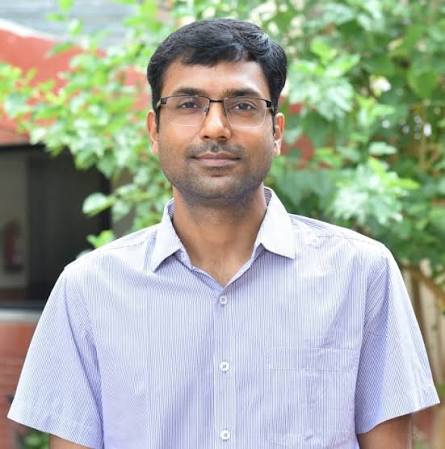
In 2000, he was All India Rank 1 in IIT-JEE. He took Computer Science at IIT Kanpur and finished the degree.
Then he left computing altogether and today he studies the brains of mosquitoes.
His name is Nitin Gupta. He graduated in 2004 with a BTech in computer science and an interest in biology that had been quietly growing through his undergraduate years.
He went to the University of California, San Diego for a PhD in bioinformatics and systems biology, finishing in 2009. Then he spent a few months in a cognitive neuroscience lab there, using magnetic stimulation to study how urges for food and money leak into the motor system before a person actually moves.
From 2010 to 2014 he was at the National Institutes of Health, in a laboratory studying sensory coding, learning electrophysiology. Recording the electrical conversation between neurons, one spike at a time.
In July 2014, he came back to IIT Kanpur as faculty in Biological Sciences and Bioengineering.
His lab asks a question that sounds simple and is not. How does a brain decide that something is worth moving towards, or running away from, without ever having learned it?
They use smell, and they use insects. Grasshoppers, flies and mosquitoes. A mosquito finds you largely by carbon dioxide, picked up by sensory neurons on its maxillary palps and carried into a region of its brain called the antennal lobe. Gupta's lab works on how those circuits weigh a human body against a repellent, and how that computation becomes a decision to approach or turn away.
His group also built TreadWill, a free, fully automated cognitive behavioural therapy programme for depression, designed for people in countries where therapists are scarce. In a randomised trial with 598 participants in India, users who completed at least half the modules showed significant reductions in depression and anxiety symptoms.
Of the twenty students who topped IIT-JEE between 2000 and 2019, twelve now work outside India.
He is not one of them.
"I always knew I had to return. Movies like Swades inspired me."
People crying about Astra burning through ChatGPT Pro $200/mo plan usage is funny.
99.9% of vibe coded AI slop will sit dormant. If someone is crying about that, wait until they find out what it costs to really build/scale a business. The vibe-coded graveyard will be massive.
As a 15 year old I had faced Ranji Trophy bowlers on a cemented wicket.
Most of the people watching IPL have no idea what a special and phenomenal talent is @VaibhavSV12
We are privileged to watch him play. BTW Being from Patna and couldn’t be more proud!! #ipl2026#rrvslsg
Do you know there are now just around 150 great Indian bustards remaining in the wild.
Meanwhile, against the odds, hope is taking shape in the deserts of Jaisalmer.
The conservation breeding programme for the critically endangered Great Indian Bustard has now crossed an important milestone, with the captive population reaching 86 birds.
Remarkably, recent chicks have been produced through artificial insemination: a major scientific breakthrough in India’s wildlife conservation efforts.
From protected breeding enclosures to preparations for future rewilding in the Thar, this is conservation science working against time.
And perhaps one of India’s most important species recovery stories unfolding right now.
#GreatIndianBustard #Conservation #Jaisalmer #Wildlife #TharDesert #EndangeredSpecies #ConservationSuccess
Elon Musk avait dit un truc qui m'avait marqué sur l'allocation de ressources. En substance : passé un certain niveau de richesse, l'argent n'est plus de la consommation, c'est de l'allocation de capital.
Cette phrase change tout.
L'économie, dans le fond, c'est juste un problème d'allocation. Tu as des ressources finies et des usages infinis. Qui décide où va quoi ?
Imagine une cour de récré. 100 enfants, des paquets de cartes Pokémon distribués au hasard. Tu laisses faire. Très vite, un ordre émerge. Les bons joueurs accumulent les cartes rares, les collectionneurs trient, les négociateurs trouvent des deals. Personne n'a planifié. Et pourtant chaque carte finit dans les mains de celui qui en tire le plus de valeur. Le système maximise le bonheur total de la cour. C'est ça, la main invisible.
Maintenant fais entrer la maîtresse. Elle trouve ça injuste. Léo a 50 cartes, Tom en a 3. Elle confisque, redistribue, impose l'égalité. Trois effets immédiats. Les bons joueurs arrêtent de jouer, à quoi bon. Les mauvais n'ont plus de raison de progresser, ils auront leur part. Les échanges s'effondrent. La cour est égale, et morte. Elle a maximisé l'égalité, elle a détruit le bonheur.
Le problème de la maîtresse, c'est qu'elle ne peut pas avoir l'information que la cour avait collectivement. C'est le problème du calcul économique de Mises, formulé en 1920. L'URSS a essayé de le résoudre pendant 70 ans avec le Gosplan. Résultat : pénuries, queues, effondrement. Pas parce que les Soviétiques étaient bêtes, parce que le problème est mathématiquement insoluble en mode centralisé.
Quand Musk a 200 milliards, il ne les consomme pas, il les alloue. SpaceX, Starlink, Neuralink, xAI. Chaque dollar est un pari sur le futur. Et lui a un track record. PayPal, Tesla, SpaceX. Il a démontré qu'il sait identifier des problèmes immenses et y allouer des ressources avec un rendement spectaculaire.
L'État aussi a un track record. Hôpitaux qui s'effondrent, éducation qui décline, dette qui explose, services publics qui se dégradent malgré des budgets en hausse constante. Le marché identifie les bons allocateurs, la politique identifie les bons communicants.
Le profit n'est pas une finalité, c'est un signal. Il dit : tu as alloué des ressources rares vers un usage que les gens valorisent suffisamment pour payer. Plus le profit est gros, plus la création de valeur est grande. Quand Starlink est rentable, ça veut dire que des millions de gens dans des zones rurales ont enfin internet. Quand un ministère est en déficit, ça veut dire qu'il consomme plus qu'il ne produit. L'un crée, l'autre détruit, et on appelle ça redistribution.
Dans nos sociétés il y a deux catégories d'acteurs. Les entrepreneurs et les bureaucrates. L'entrepreneur prend un risque personnel pour identifier un problème, mobiliser des ressources, créer une solution. S'il se trompe il perd. S'il a raison, ses clients gagnent, ses employés gagnent, ses fournisseurs gagnent, l'État collecte des impôts. Il est la cellule de base du progrès humain.
Le bureaucrate ne prend aucun risque personnel. Son salaire est garanti. Au mieux il maintient une rente existante. Au pire il la détruit par excès de réglementation, mauvaise allocation forcée, incitations perverses qui découragent ceux qui produisent. Mais dans aucun cas il ne crée.
Regarde les 50 dernières années. iPhone, internet civil, SpaceX, Tesla, Google, Amazon, Stripe, mRNA, ChatGPT. Toutes des inventions privées, portées par des entrepreneurs, financées par du capital risque. Pas un seul ministère n'a inventé quoi que ce soit qui ait changé ta vie au quotidien.
La France est devenue le laboratoire mondial de la dérive bureaucratique. 57% du PIB en dépenses publiques, record absolu. Une administration tentaculaire, une fiscalité qui pénalise la création de richesse. Résultat : décrochage face aux États-Unis, à l'Allemagne, à la Suisse. Fuite des cerveaux. Désindustrialisation. Dette qui explose.
Et le pire c'est que la mauvaise allocation s'auto-renforce. Plus l'État prélève, moins les entrepreneurs créent. Moins ils créent, moins il y a de base fiscale. Plus l'État s'endette et taxe. Boucle de rétroaction négative parfaite. La maîtresse pense qu'elle aide, et chaque année la cour produit moins.
Dans nos sociétés, ce sont les entrepreneurs, toujours, qui font avancer la civilisation. Les bureaucrates au mieux maintiennent une rente, au pire la détruisent. Aucune société n'a jamais progressé en taxant ses créateurs pour subventionner ses gestionnaires.
La question n'est jamais qui a combien. C'est qui alloue le mieux la prochaine unité de ressource pour maximiser le futur de l'humanité. La réponse depuis 200 ans n'a jamais changé. Ce ne sont pas les fonctionnaires.
Left behind in Kabul. Alone. He waited 47 days.
K-9 Chaos was not a dog who did his job. He was a dog who had DECIDED, completely, permanently, without reservation, that Lieutenant Marcus Webb was coming back for him. No matter how long it took.
At Hamid Karzai International Airport, Kabul, on the morning of August 30th, 2021, a three-year-old Belgian Malinois sat in an empty aircraft hangar. The last American plane had left six hours ago. The evacuation was over.
Chaos had been left behind.
Not intentionally. The chaos of the withdrawal. The panic. The rush. Webb had been separated from Chaos during the final evacuation. Put on a different plane. Told Chaos would be on the next flight.
There was no next flight.
Chaos survived the first day alone. Waiting at the hangar where Webb had left him.
Chaos survived the first week. Scavenging food from abandoned military supplies.
Chaos survived 47 days in Taliban-controlled Kabul. Alone. Hiding. Waiting.
Because Chaos survived on the belief that Webb wouldn't leave him forever.
Back in the United States, Webb was losing his mind. Filed reports. Called congressmen. Contacted rescue organizations. Went on the news.
"I left my dog in Afghanistan," he said on CNN, his voice breaking. "I left my brother. And I'm going to get him back."
The military said it was impossible. Kabul had fallen. Taliban controlled the airport. No way to extract a dog.
Webb didn't care about impossible.
He contacted Pineapple Express, a veteran-run extraction operation. Gave them Chaos's last known location. Sent photos. Videos. Anything that could help.
For 47 days, Webb didn't sleep. Didn't eat properly. Just waited for news.
On October 16th, 2021, his phone rang.
"We found him," the voice said. "We found Chaos."
A rescue team had infiltrated Kabul. Used Webb's intel. Found Chaos still at the hangar. Still waiting. Forty-seven days later.
Chaos was emaciated. Dehydrated. Traumatized.
But alive.
The extraction took three days. Smuggling Chaos out of Taliban-controlled territory. Through checkpoints. Through danger.
But they got him out.
On October 19th, 2021, Chaos landed at Dulles International Airport. Webb was waiting on the tarmac.
When they opened the crate, Chaos didn't move. Stared at Webb like he was seeing a ghost.
"It's me, brother," Webb said, kneeling down. "I came back. I promised I'd come back."
Chaos stepped out slowly. Walked to Webb. Collapsed into his arms.
The reunion video went viral. Seventeen million views in three days.
But what people didn't see was what happened after.
For six months, Chaos wouldn't sleep unless Webb was in the room. Wouldn't eat unless Webb fed him. Wouldn't go outside unless Webb went first.
"He's terrified I'll leave him again," Webb said in an interview. "And I don't blame him. I left him once. In the worst place. At the worst time. He waited 47 days for me. And I'll spend the rest of my life making sure he knows I'm never leaving again."
Three years later, Chaos still sleeps with his head on Webb's chest. Still follows him everywhere.
Still making sure Webb doesn't disappear.
K-9 Chaos. Survived 47 days alone in Kabul. Extracted by heroes. Reunited with his handler. Home.
https://t.co/t4eYGPJPrk
#LostAndFound
#doglover #seniordogs #animalwelfare #militarydog #k9hero #dogrescue #Kabul #47Days #LeftBehind #BroughtHome
Today, India takes a defining step in its civil nuclear journey, advancing the second stage of its nuclear programme.
The indigenously designed and built Prototype Fast Breeder Reactor at Kalpakkam has attained criticality.
This advanced reactor, capable of producing more fuel than it consumes, reflects the depth of our scientific capability and the strength of our engineering enterprise. It is a decisive step towards harnessing our vast thorium reserves in the third stage of the programme.
A proud moment for India. Congratulations to our scientists and engineers.
Seven dogs stolen from their owners have gone viral after escaping from an illegal transport truck and making their way home.
They traveled around 17 km together, led by a corgi across highways and fields, now safely back with their respective owners..🐶🐾🥺❤️
Hirkani the tigress was relocated from Pench Tiger Reserve to Sahyadri Tiger Reserve in Maharashtra, India
Her release is part of ongoing conservation efforts to strengthen tiger populations and support long term stability in protected habitats
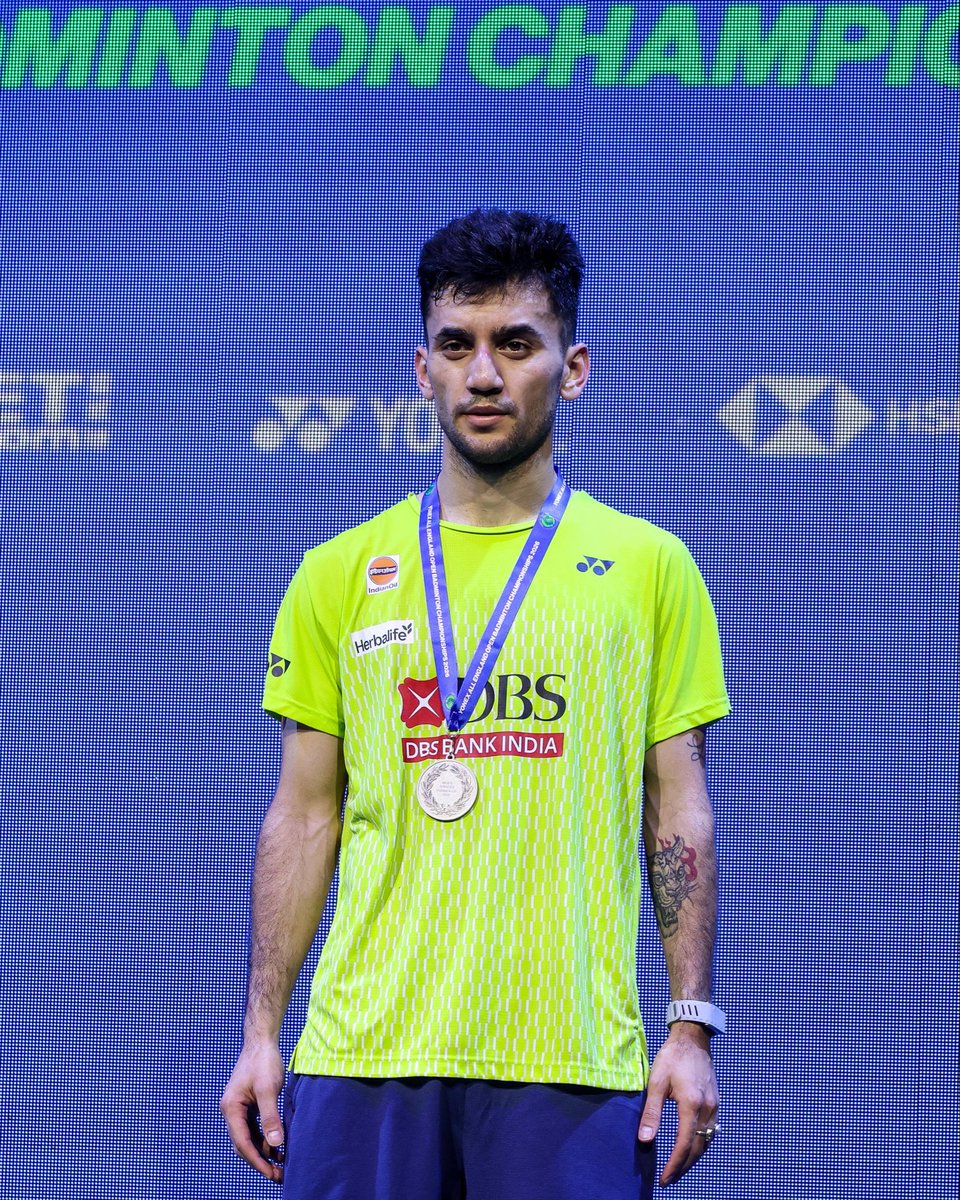
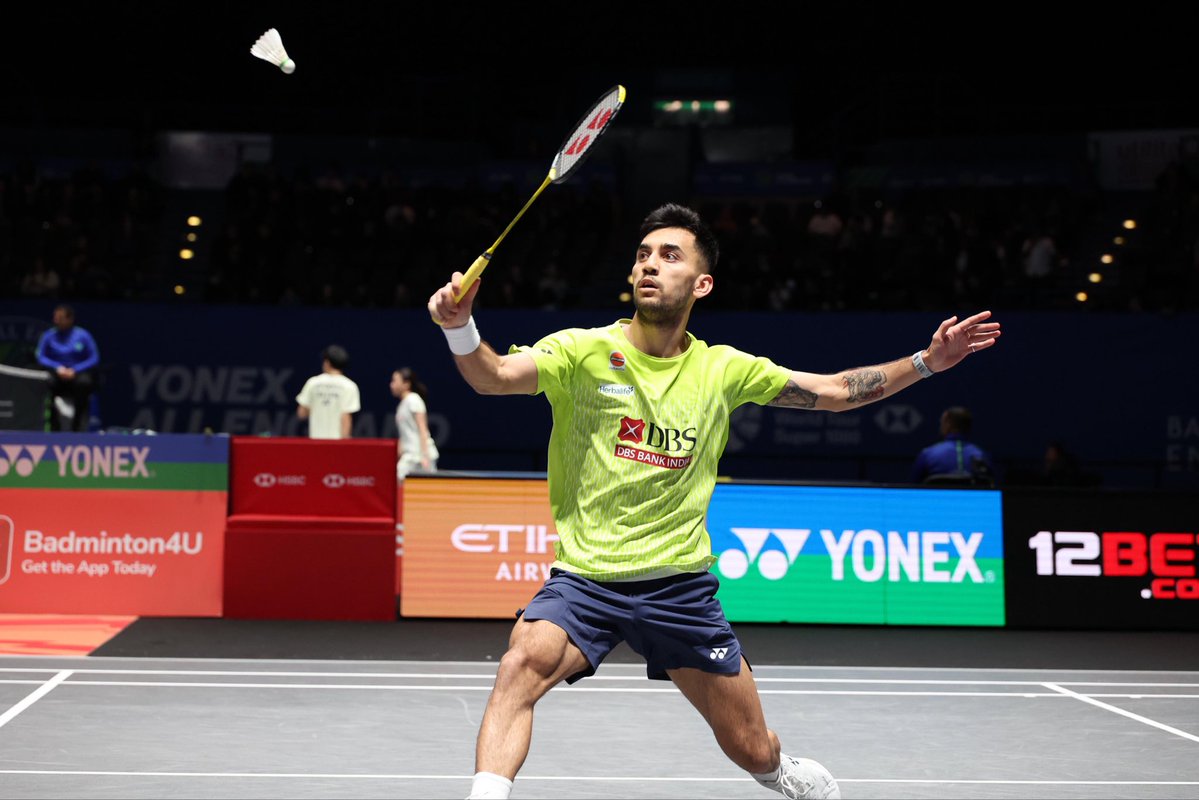
Overwhelmed with the support. The encouragement means a lot and inspires me to do better.
Missed the target this time but I absolutely gave my all.
Good things are coming I'm sure.
Thank you all! 🙌
Also feeling sorry for all those influencers who were paid to do content claiming that Ahmedabad Stadium is a panauti stadium!! #T20WC2026#T20WorldCup2026final
India will win #T20WorldCup from here on for sure! Whole country will celebrate. But my heart goes out for Laksya Sen. Went down fighting. Proud of you!!