I’m not a dev. Just someone who studies early projects with real potential and @PROJECTV1OLET instantly stood out. A deflationary @solana token - $VLT, an AI-driven ecosystem, transparent burns, and a roadmap that actually means something. This project feels built for longevity.
If you've ever wished healthcare worked differently, say it here.
Your voice counts.
Join me: https://t.co/P6PwWbajpk
Code: XHDM1BW
#LifeAITestnet#HealthcareAI
If health is priceless, why is healthcare so expensive? Debate to earn with @LifeNetwork_AI and share your perspective.
Jump in: https://t.co/P6PwWbajpk
Code: XHDM1BW
#LifeAITestnet#HealthcareAI
Shape the future of health. What should healthcare prioritize most?
Jump in and discuss with me: https://t.co/P6PwWbajpk
Code: XHDM1BW
#LifeAITestnet#HealthcareAI
🤖 Community Question:
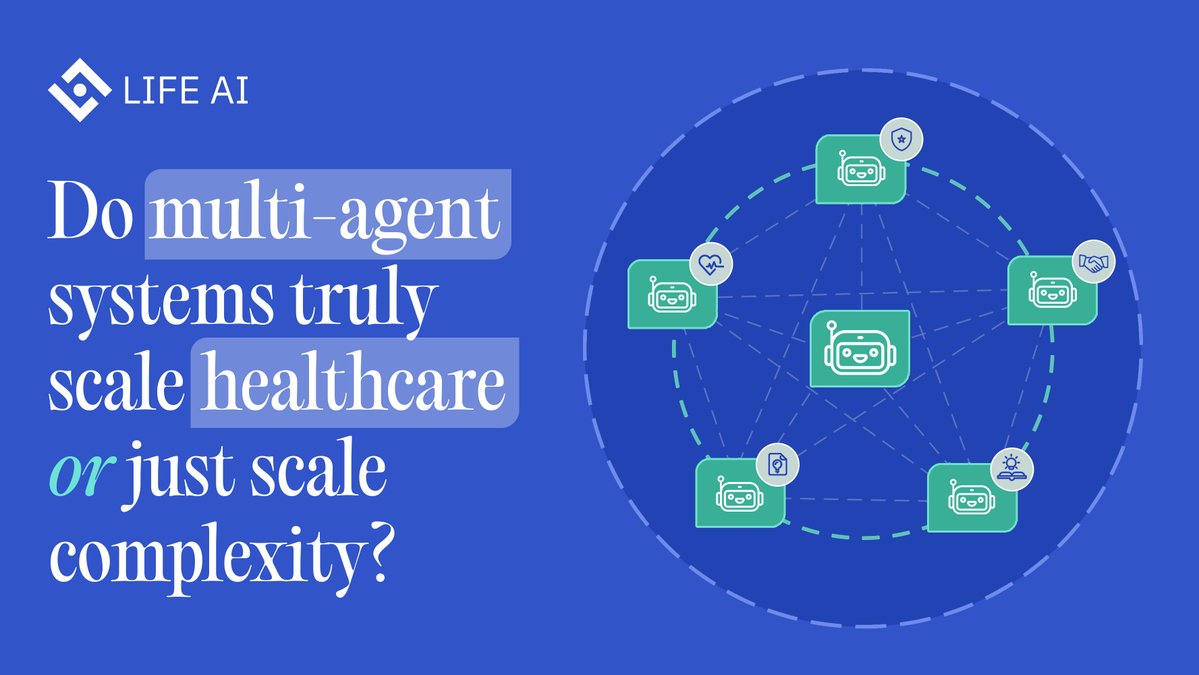
Do multi-agent systems truly scale healthcare or just scale complexity?
Viewpoint A: Scalable Coordination
Healthcare workflows are too complex for a single agent.
Multi-agent systems split tasks, cross-check outputs, and improve efficiency at scale, especially in areas like care coordination and prior authorization. With the right guardrails, they offer a practical path forward.
Viewpoint B: Compounding Risk
More agents also mean more risk.
Errors can cascade, decisions become harder to explain, and accountability gets blurred. As systems grow, governance becomes more difficult and scaling too early increases exposure.
👇 Drop A or B and share your perspective
🤖 Community Question:
Do multi-agent systems truly scale healthcare or just scale complexity?
Viewpoint A: Scalable Coordination
Healthcare workflows are too complex for a single agent.
Multi-agent systems split tasks, cross-check outputs, and improve efficiency at scale, especially in areas like care coordination and prior authorization. With the right guardrails, they offer a practical path forward.
Viewpoint B: Compounding Risk
More agents also mean more risk.
Errors can cascade, decisions become harder to explain, and accountability gets blurred. As systems grow, governance becomes more difficult and scaling too early increases exposure.
👇 Drop A or B and share your perspective
Shape the future of health with your perspective and earn as you go.
Your voice matters.
Jump in: https://t.co/P6PwWbajpk
Code: XHDM1BW
@LifeNetwork_AI
Shape the future of healthcare by sharing what everyone else is afraid to say.
This is the space for real conversations.
Join me: https://t.co/P6PwWbajpk
Code: XHDM1BW
#LifeAITestnet#HealthcareAI
@LifeNetwork_AI if money is flowing into something that’s already producing utility and becoming more efficient, it looks more like a technological shift than a speculative bubble.
🌐 Community Question: With soaring investment and valuations in AI, is the AI bubble real or a myth?
Viewpoint A: The AI Bubble Is a Myth
Supporters argue that AI reflects a fundamental shift in computing. Demand for AI infrastructure continues to grow rapidly as industries adopt AI across areas such as healthcare, robotics, and digital biology. They also point to falling compute costs, improving reasoning capabilities, and expanding real-world applications as evidence that the growth is driven by genuine technological progress rather than speculation.
Viewpoint B: The AI Bubble Is Real
Critics warn that AI valuations and investment could be driven by hype and expectations of rapid breakthroughs. They argue that spending on infrastructure and startups could outpace real revenue and adoption, creating risks of market correction similar to the Dot-com Bubble.
👇 Drop A or B and share your perspective
🌐 Community Question: With soaring investment and valuations in AI, is the AI bubble real or a myth?
Viewpoint A: The AI Bubble Is a Myth
Supporters argue that AI reflects a fundamental shift in computing. Demand for AI infrastructure continues to grow rapidly as industries adopt AI across areas such as healthcare, robotics, and digital biology. They also point to falling compute costs, improving reasoning capabilities, and expanding real-world applications as evidence that the growth is driven by genuine technological progress rather than speculation.
Viewpoint B: The AI Bubble Is Real
Critics warn that AI valuations and investment could be driven by hype and expectations of rapid breakthroughs. They argue that spending on infrastructure and startups could outpace real revenue and adoption, creating risks of market correction similar to the Dot-com Bubble.
👇 Drop A or B and share your perspective
🌐 Community Question:
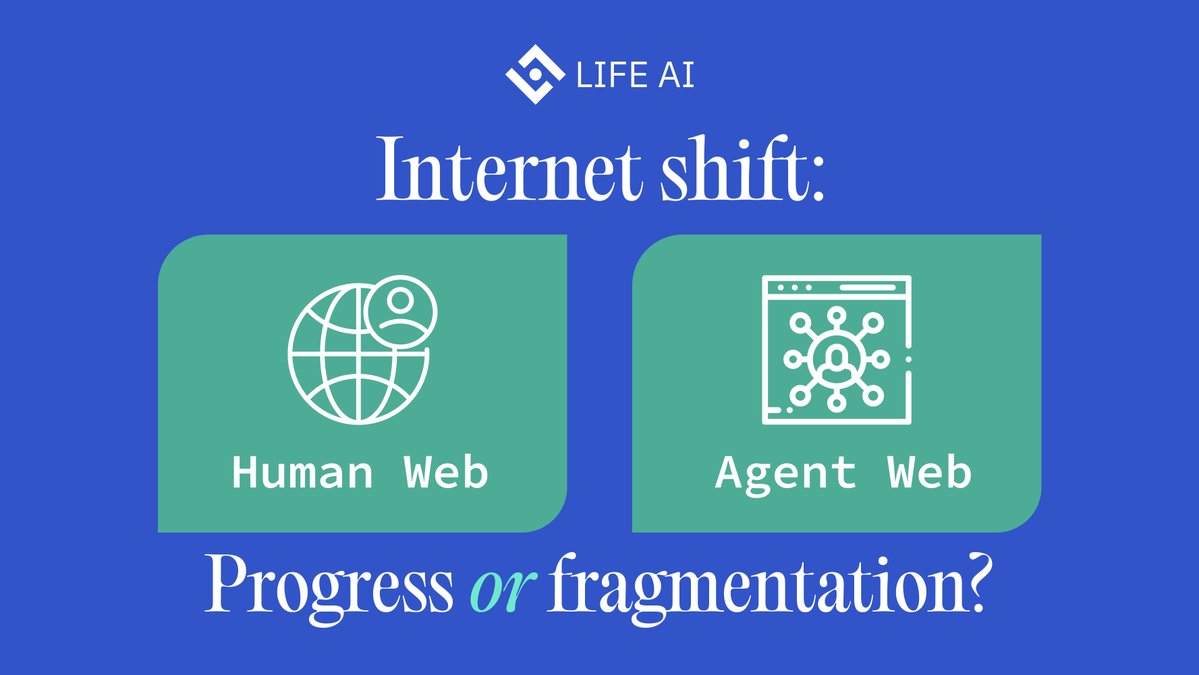
As the internet evolves to support autonomous AI agents, splitting into the Human Web (interfaces for people) and the Agent Web (API-driven infrastructure for machines), will this shift drive innovation and automation, or fragment and dehumanize the online experience?
Viewpoint A: A New Layer of Internet Intelligence
The rise of AI agents interacting directly with digital systems could transform the internet into a more intelligent infrastructure. Agents can automate tasks such as trading, payments, data analysis, and content generation, enabling a new agent economy. This machine-to-machine coordination may significantly improve efficiency, scalability, and innovation across industries.
Viewpoint B: Erosion of the Human-Centered Web
Expanding the Agent Web may reduce the role of the Human Web, as machines increasingly interact through APIs rather than human interfaces. This could create privacy and security risks, weaken traditional web models, and concentrate power in automated systems, potentially leading to a fragmented internet with less authentic human participation.
👇 Drop A or B and share your perspective
🌐 Community Question:
As the internet evolves to support autonomous AI agents, splitting into the Human Web (interfaces for people) and the Agent Web (API-driven infrastructure for machines), will this shift drive innovation and automation, or fragment and dehumanize the online experience?
Viewpoint A: A New Layer of Internet Intelligence
The rise of AI agents interacting directly with digital systems could transform the internet into a more intelligent infrastructure. Agents can automate tasks such as trading, payments, data analysis, and content generation, enabling a new agent economy. This machine-to-machine coordination may significantly improve efficiency, scalability, and innovation across industries.
Viewpoint B: Erosion of the Human-Centered Web
Expanding the Agent Web may reduce the role of the Human Web, as machines increasingly interact through APIs rather than human interfaces. This could create privacy and security risks, weaken traditional web models, and concentrate power in automated systems, potentially leading to a fragmented internet with less authentic human participation.
👇 Drop A or B and share your perspective
Earn by contributing your lived experience
This is where it becomes valuable.
Jump in with @LifeNetwork_AI: https://t.co/P6PwWbajpk
Code: XHDM1BW
#LifeAITestnet#HealthcareAI