Representación zoomorfa del Paleolítico Superior localizada en cueva del Romito (Calabria, Italia). Temática: Uro. Técnica: Grabado profundo. Contexto cultural: Magdaleniense. Cronología: ca. 12.000 años. Se ha representado un Bos Taurus con una gran precisión en todos sus
How many of you know ?
- Temple Entry Movement for dalits in tamil nadu was started by a Brahman advocate A V Iyer
- on 8 july 1939 he along with his 5 dalit friends Entered into Madurai Meenakshi Amman temple
Interestingly, periyar (OBC) called it as a political drama
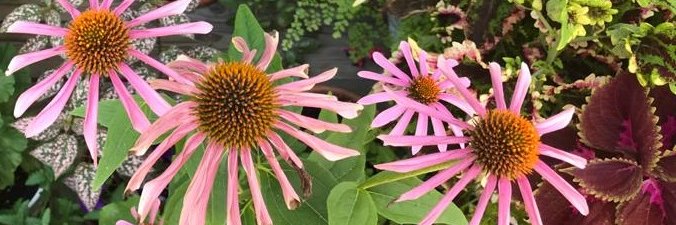
The monarch migration is about to begin.
Along the way, they depend on native flowering plants to rest and refuel. Planting native wildflowers and milkweed in your yard or in your community is one simple way to help these remarkable travelers complete their journey.
“I beg you sir, I will touch your feet and pray….please give me two bags of urea.
I don’t have sons, I don’t know how to do it.
Please give me one bag at least sir”!!!
The wailing man is a farmer from Rangampet, Kolcharam Mandal, Medak District, Telangana.
He is begging the PACS staff to help him with urea.
Ever since the Telangana Congress government moved the fertilizer booking process to a Mobile App, many are struggling.
First, you need a smartphone to do it and the internet connectivity for the same.
Plus, you need to learn how to do it.
Most people this age only know how to use mobiles for calls…and some high-strung Babu, from the comfort of his AC chamber thought “urea booking App”, is the smartest way!!!
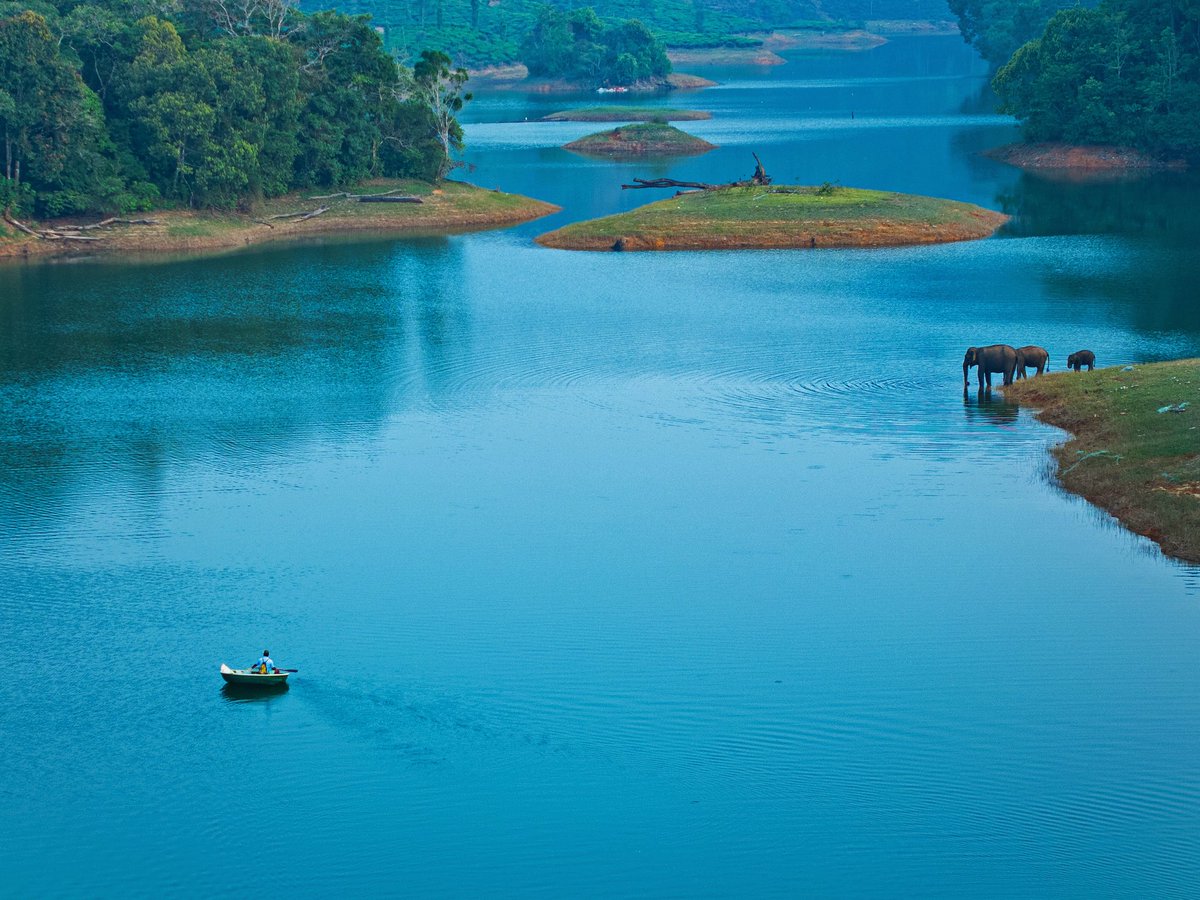
Imagine a world without elephants. Imagine forests without them. They would never be as rich, resilient and alive as they are when elephants roam through them as ecosystem engineers !
India is so lucky to have elephants. The latest Wildlife Institute of India DNA-based assessment estimates 22,446 wild elephants in India, meaning India is home to roughly half of the world’s remaining wild Asian elephants.
Within India, the Western Ghats are the great elephant stronghold. Karnataka (6,013), Tamil Nadu (3,136) and Kerala (2,785) together have 11,934 elephants, more than 53% of India’s entire estimated population. Tamil Nadu has the third-highest elephant population in the country, after Karnataka and Assam.
India’s top five elephant states are: Karnataka 6,013 | Assam 4,159 | Tamil Nadu 3,136 | Kerala 2,785 | Uttarakhand 1,792. Together they account for nearly 80% of India’s elephants.
This #WorldElephantDay, we must resolve to do everything we can to conserve elephants #worldElephantDay2026 #elephants #elephantday Brilliant capture @shanmughanandam
Every New Yorker deserves to live in a community with clean air and green space, no matter their zip code.
That's why my office and The New York Community Trust are awarding $505,000 to 28 community environmental organizations to support pollinator conservation efforts.
Well done Gen Alpha! This is what we need to do—take responsibility of our own future. Adopting peaceful means of protest is our fundamental right. Let us exercise it now. Enough folding hands before public servants! Enough apathy. Enough corruption.
Now it’s time for the ruling class to ANSWER! You answer, or you’re out.
So in Mumbai a few coaching class owners asked their students tp Join the CJP protests and emotionally manipulated kids in 15 to 17 year age group. Most students joined due to fear of being ignored in the class later.
And none of these classes charge less than 75000 a year.
TWO IMPOSSIBILITIES
1. We find ourselves in the tiniest speck of the universe at this time where a sun a moon and a planet line up exactly so all light is for a moment blocked out.
2. We find ourselves under the thumb of a bunch of psychopaths who are going to destroy this planet because we can't get ourselves organised to stop them.
Which one is most impossible?
(Remember to look after yourself: don't look at the sun - or the riot police - directly).
@omarali50@PKulk99@RKzoy Sure. Just setting expectations for the Sabeer Bhatia types on the Indian side and the ‘RSS/BJP want conflict but we are peaceful’ types on the Pakistani side.
Did the poet Iqbal say we are the same people? Did the father of the nation, Mohammed Ali Jinnah say we are the same people? Did Ayub Khan say we are the same people? Did Zulfiqar Ali Bhutto say we are the same people? Did Nawaz Sharif or Benazir Bhutto? Who are you in this list?
Indians and Pakistanis are essentially the same people, divided by borders and kept divided by politicians on both sides who benefit politically—and perhaps financially—from hostility.
Imagine if India and Pakistan signed a real peace treaty. Trade, tourism, investment, culture and human connections could explode.
The economic upside could be enormous.
So I keep wondering: who benefits from keeping us enemies?
@omarali50@PKulk99@RKzoy After independence, through bad times and good, India has not offered a sunshine policy to Pakistan’s Islamic imperialism. Pakistan’s overt or covert Islamic imperialism is inconsistent with India’s belief that we are all one people.
@omarali50@PKulk99@RKzoy After independence, through bad times and good, India has not offered a sunshine policy to Pakistan’s Islamic imperialism. Pakistan’s overt or covert Islamic imperialism is inconsistent with India’s belief that we are all one people.
@RKzoy@dravirmani@omarali50 Did the poet Iqbal say we are the same people? Did the father of the nation, Mohammed Ali Jinnah say we are the same people? Did Ayub Khan say we are the same people? Did Zulfiqar Ali Bhutto say we are the same people? Did Benazir Bhutto or Asim Munir? Who are you in this list?
"Sabji kahan hai?"
Maiyya (my mother)’s voice echoed through the hallway as Pappaji walked through the front door, his hands completely empty.
For as long as I could remember, Pappaji’s afternoon walk was a sacred ritual. Every single day, without a gap, he would walk for 2 hrs and return holding a heavy cloth bag filled with farm-fresh vegetables.
Today, health is no longer on his side. His steps are slow and measured, and those long 2 hour walks are a memory of the past. But that 1 evening, years ago, stands frozen in time.
Pappaji stood at the door with only cloth bag and no vegetables.
Maiyya looked at his empty hands, stunned, and asked again: "Sabji kahan hai?"
Papaji shook his head and said in pure innocence:
"Are, dhokha ho gaya! Park mein baithe the, ek naya stall dikha... socha coffee peete hain. Coffee pi liye, 200 rupya le liya! Ab 200 coffee mein chala gaya, to sabji kahan se laate?"
To a man who knew the exact per kilo price of potatoes across all the shops, paying ₹200 for a single cup of coffee was practically an existential crime.
For Papaji, that was not just ₹200. That was 2 full days of fresh household vegetables. It was the absolute principle of value that his generation built their entire lives upon.
I am not a regular coffee drinker. On the rare occasions I do have one outside / see people tapping their cards for ₹300 paper cups without a second thought, Papaji’s voice instantly echoes in my head.
I look at that cup of milk, water, sugar, and coffee powder, and realize: Deep down, I still cannot logically justify paying ₹200-300 for a cup of coffee.
It is not about whether we can afford it today. It is about a middle class value system taught not through lectures, but through empty cloth bags and shocked, innocent smiles.
Our parents' generation did not measure money in currency notes; they measured it in the sweat it took to earn it and the meals it could provide for the family.
As Pappaji sits quietly in his chair today, taking short, gentle steps around the living room, I look at him with immense pride. Technology and business may have changed our world, but no amount of wealth can replace the grounded, uncompromising value system inherited from a father who thought ₹200 for a coffee was the ultimate dhokha.