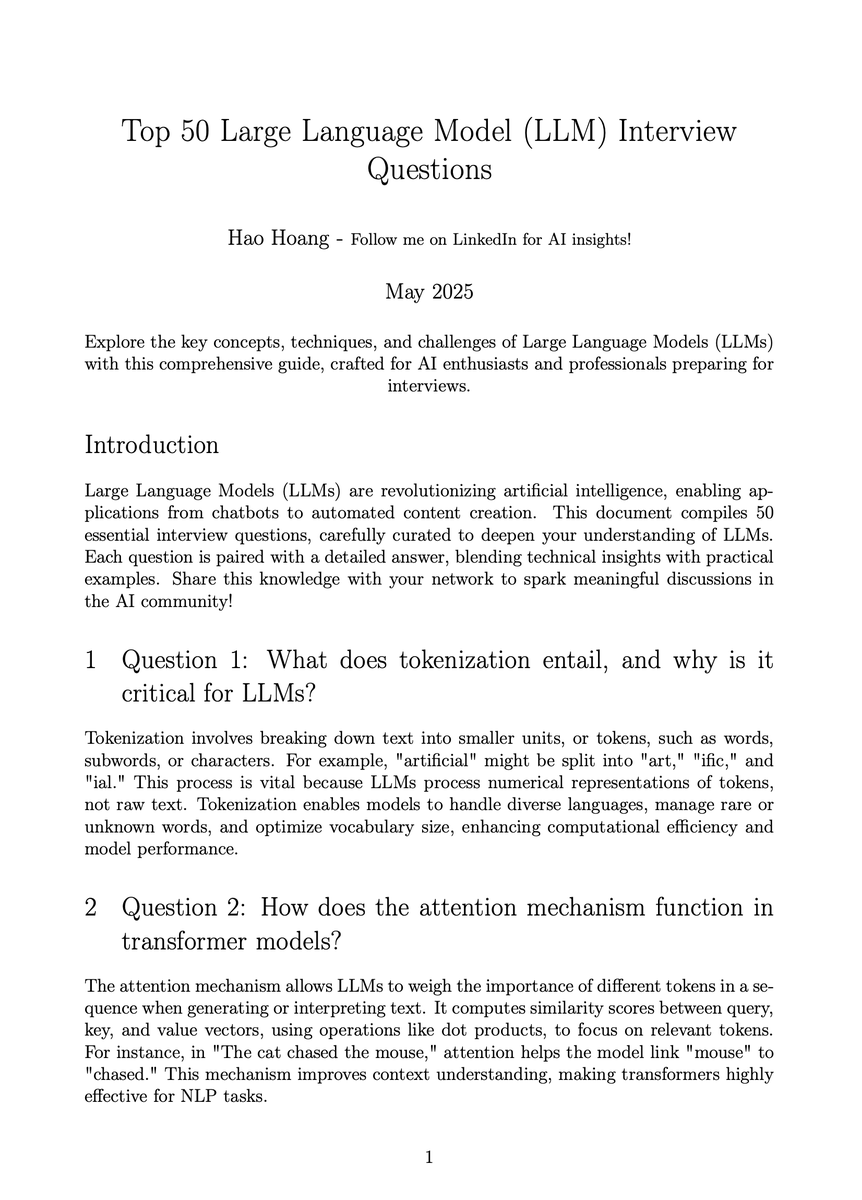
These are literally the kind of LLM interview questions most candidates wish they had seen earlier.
A curated list of LLM interview questions - shared by Hao Hoang
Want this doc?
Follow @techNmak and comment “LLM” - I’ll send it over.
WHAT NEW FOUNDERS GET WRONG IN THEIR ELEVATOR PITCH
so hey - am writing this in the FINAL week before applications close for a16z speedrun 6. The deadline Sep 28, this upcoming sunday. Speedrun is a16z's new program to invest up to $1M in brand new startups, with a 12-week program. Apply here: https://t.co/DZZmyTm1iQ
back to the topic --
so after reviewing a zillion pitches over my time in startup world, you quickly realize that if you can't give a short pitch well (~2min or less) then you probably won't give a 30+ min pitch well. Learning to do this effectively makes it easier to sell, recruit, and yes, to raise money. Here's some high level things that are easy to get wrong in the first version of your new pitch:
- the idea itself is boring. The magic is in the "why?"
- brag way way more about your team than you think
- there's many flavors to traction, learn how to talk about your early traction
- good product demos, and bad product demos
- your story should be simple/elegant, which is a reflection of your strategy, but with enough details to bring it alive
Expanding some additional thoughts here:
The idea itself is boring. The magic is in the "why?"
Yes, we get it, everyone is building "Cursor for X" or "Agents for Y" right now. And when you're in tech and you hear dozens and hundreds of variations of this, it just gets stale and boring.
What's the surprising, provocative, assertive statement you can make at the very beginning of the pitch to grab your audience's attention? What is the new tech breakthrough you're utilizing that makes this possible today but not in prior years. You need to answer this, otherwise you'll get lost in the noise. Compare yourself to big trends, big revolutions. Surprise people.
This is particularly true if you have discovered an "earned secret" from your time in another role, or in building out in the market, that is counterintuitive but compelling. The problem with these standard "X for Y" descriptions is that they are easy to understand, but lack the drama to hook your audience on the "why now?"
The thing that kills your pitch isn't that they hate your idea. It's if they aren't listening at all, because they're too bored or distracted to listen.
Brag way way more about your team than you think
Many of you are long-winded and vague when you talk about yourselves. You can do better. When you have your team slide, I suggest keeping it terse and to the point (we don't need to know you are childhood friends). Make sure you really brag about yourself.
In particular, many of you are missing the ability to add specific facts and figures. If you say that you started a successful company previously, then tell me that you went from zero to X million in revenue. If you worked at a known product, tell me what you did there, and how many millions of users did you serve? Adding little bits of data helps make your resume even more impressive.
I have a longer read on this topic here which discusses why you need to talk about your background in a way that is different than in "real life" — Be "the dinner party jerk." https://t.co/8bt9Gh97EQ
An excerpt:
To figure out if you are properly pitching yourself in your team, run the thought experiment of describing yourselves at a dinner party. If you are pitching yourself hard, then if you are a kind human, you will turn red and blush with wild embarrassment. The reason is that a proper pitch includes many of your credentials, your achievements, the ways in which you and your team are highly unique, and we simply don’t talk like this at dinner parties. And yet this is exactly what you should do when you talk to investors, partners, customers, and potential employees.
There's many flavors to traction, learn how to talk about your early traction
You have to make the best use of your traction. Many of you are at different levels but there's always some kind of story to tell, and being able to talk about traction at some level really punches up people's perception of how far along you are.
So if you have revenue, talk about revenue. If you only have users then talk users. If not, add quotes. Or talk about the traction of similar products and what you've learned. If you need more months of R&D, I suggest bulding a landing page waitlist for your product and at least start collecting emails, titles, company names (for B2B) so that you can talk about your waitlist metrics and what logos are signed up. There's always a traction story, even if it's early, and it helps people imagine what you might be able to do.
You might argue that a brand new startup doesn't need traction. You might have seen me post a framework in the past that looks like this:
Pre-seed- Bet on the team
Seed- Bet on the product
Series A- Bet on the traction
Series B- Bet on the revenue
Series C- Bet on the unit economics
This is all true. However, any glimmer of traction can be a major unlock for peoples' view of what you've built. Especially if you can sneak in a name drop or metric drop that gets people to imagine what's special about what you're building.
There are good product demos, and bad product demos
If you get someone in front of your screen or mobile app, you can do a quick demo. But remember that if you share tiny screenshots of your product, no one will understand what's going on. Share something zoomed in, or make it conceptual. Or if your product is visual, do an animated GIF. Imagine your slides showing to 1000+ people and they can barely read anything under 40pt font. Can they understand what's happening with your product at a high level?
There's something magical about showing a visual difference or transformation as part of your product experience. This is why all the various gen AI tools are so amazing -- you can share a before/after in one go. Or when a new iOS feature unlocks a bit of UX, use it. Or show the product, but show an impressive example of how a real user has worked with it.
The best demos deliver quick "ahas" in seconds, not minutes, and are visceral/emotional. It shouldn't require a lot of thinking. And if tied in with your opening hook, it should provide a big wow moment.
Simplicity is a good thing
I wrote about this before, but repeating here since it's well grouped with these other topics:
The clarity of a startup's story means clarity in their strategy. The story is the strategy.
On the other hand, a confusing, rambling story means that your approach is likely complex, incoherent, and unattractive. If you've ever had someone pitch you a product idea and then needed to ask question after question to understand what they're doing, you know what I mean.
This is a skill. It takes tremendous time and effort to pare back your startup's core ideas into a short series of truths, with strong local connections in between. The process of paring down the idea requires hardcore prioritization -- knowing what parts of the idea are core and must be done right away, and what parts are irrelevant, or can be done in the future. A clear narrative forces clarity in strategic tradeoffs.
It takes no skill to have massive complexity -- we can all brainstorm a ton of ideas, throw all the exciting trendy technologies into our idea, and make a go for it. But these messy stories reflect strategic indecision and avoidance. And the resulting unclear strategy will repel potential customers, investors, employees, and partners. They don't know who you are, or what you're really doing, because you don't either.
the best stories are a form of lossy compression, where they leave out 90% of the operational detail, but still hit the emotional and strategic truth. They ring true as soon as the words leave your mouth. And not because they are obvious statements -- after all, we get tired of hearing the same things -- but rather because they make observations on the reality of the world new way that cuts through the noise. They contain a "secret" that's surprising and compelling. The best narratives tap into feelings, not just logic.
the good news is that you can often figure this all out as you go. Founders and product builders are often are guided by the intuition of what they want to see in the world. Intuition might guide you towards a solid product, even if the initial story is a bit messy. And as you understand your customers' real world use cases, plus how your own customers describe your product, it can get easier to compress down all your ideas/observations/mistakes into a simpler expression of the idea.
today we are launching our grant program @ 24labs
if your building a product and need help scaling
we will
- give u $1-5k
- access to internal growth tools
- content on how to scale
for free
no strings attached
I remember starting out and getting so much help from @fdotinc
its time to pay it forward
we want to see more builders win
to apply rt + dm @24labsai
@naval The founder’s job is to sell three things: the vision to investors, the mission to employees, and the value to customers.
Focus on that and you can lean on human, capital, and tech leverage for everything else.
🚢 Ship-a-ton is back! The mobile hackathon that's all about shipping apps (and making money).
2 months to ship your app.
Over $300k in prizes.
Plus, the satisfaction of finally shipping that thing you've been thinking about.
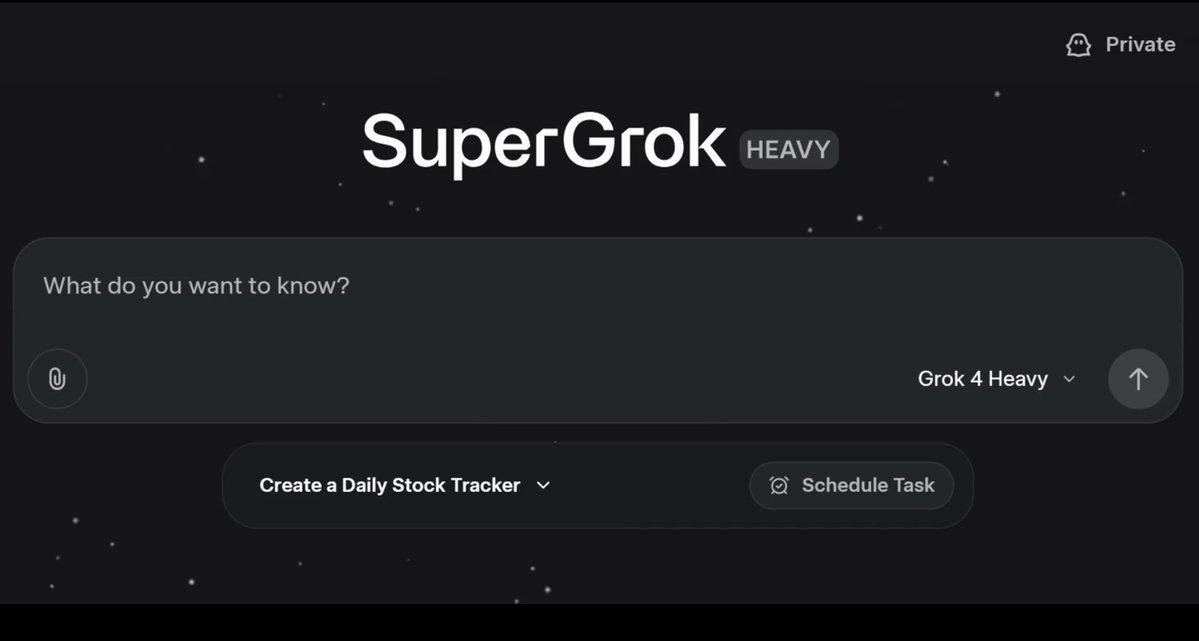
🚨 Grok 4 just broke the internet.
Elon’s team dropped the demos, and now builders are going absolutely wild.
Here are 15 mind-blowing use cases you need to see 👇🤯