From Paris We are here to share the stories of our families who were massacred by UAE. We are here to tell you the stories of genocide and ethnic cleansing.
Who killed the people of El Fasher? Who raped the women in El Fasher?
The answer is clear to everyone, it seems, except a certain class of Sudanese elites whose interests and connections lead back to the UAE.
“Both of them,” was Mo Ibrahim’s answer yesterday in Paris. But that was not an answer grounded in reality. It was a political evasion disguised as a factual judgement.
The reality is documented in dozens of media investigations, UN reports, and eyewitness testimonies. A reality in which the distinction between those who defended tens of thousands of civilians through eighteen months of siege and those whose assault left tens of thousands dead, including more than 6,000 killed in just the first three days of their control could hardly be clearer.
What of the more than 460 patients and their companions reportedly massacred at the Saudi Maternity Hospital on 28 October, after the UAE-backed RSF seized El Fasher? Do their lives count for nothing in Mo Ibrahim's version of the truth?
Truth is not a matter of opinion. Nor does it become negotiable simply because the facts are inconvenient for those who sit on the throne of money and influence. Yet, for Mo Ibrahim, it seems that even the identity of killers and rapists is a matter of political opinion.
Perhaps this is an illusion born of inhabiting a world of extraordinary influence. And Mo Ibrahim’s influence is hardly insignificant. It extends from his trusteeship of influential institutions such as the International Crisis Group (@CrisisGroup) to his own elaborate machinery (@Mo_IbrahimFdn) of governance indices, prizes, and international public relations, a machinery that seems to show remarkably little regard for truth or the realities on the ground. Such influence does more than shape narratives. It can eventually delude those who wield it—and even those who live within its orbit—into believing that the power to manufacture a narrative is equivalent to the power to reshape reality itself.
But reality has a stubborn quality: it neither disappears nor changes merely because influential men find it politically inconvenient. And the Sudanese people know it.
They do not merely know this reality. They live it. They endure it. They bury their loved ones in it. They confront its horrors every single day.
They know the difference between those who defended their lives and those who came to take them. They know the difference between surviving a siege and being slaughtered by the forces that imposed it. They know the difference between life and extermination at the hands of a fascist militia like the RSF.
For Mo Ibrahim, that distinction may be an inconvenience to be negotiated away through the comfortable language of political equivalence. A language that obscures responsibility for atrocities in order to shield the UAE’s role in sustaining the militia from the scrutiny it deserves. A diluted responsibility that distributes the blame over everyone in order to protect the actual perpetrators and by extension their backers.
When the responsibility for documented atrocities is dissolved into indiscriminate blame, political equivalence becomes an instrument of impunity. Hannah Arendt once warned: “Where all are guilty, nobody is.” That is the danger of political equivalence when it indiscriminately distributes responsibility for a documented atrocity. For us in Sudan, this is no intellectual debate, no diplomatic balancing act, and certainly no exercise in political convenience. This is complicity.
And there is no amount of wealth, influence, or international prestige that can conceal the difference between life and death.
Tell the Mo Ibrahim Foundation that truth matters. @Mo_IbrahimFdn
Sudanese businessman @Mo Ibrahim was met with a protest as he left the venue
Today in Paris, during the Peace Forum held at the Human Rights Building, Sudanese businessman Mo Ibrahim was met with a protest as he left the venue. Protesters confronted his presence and chanted against him, expressing their rejection of his political positions and the support they allege he has provided to political forces associated with the Forces of Freedom and Change (FFC), commonly known as Qahat.
Our message is clear: Sudanese people will not remain silent about the issues facing their country, nor will they stop demanding accountability for anyone proven responsible for supporting killings and human rights violations.
There must be no impunity, and there can be no legitimacy for killing and human rights abuses. The voices of the Sudanese people will be heard everywhere, at all times. We will continue to hold those we believe responsible for what has happened in Sudan to account through peaceful protest and the power of free expression.
The Sudanese people are awake and alert… Justice has no statute of limitations.
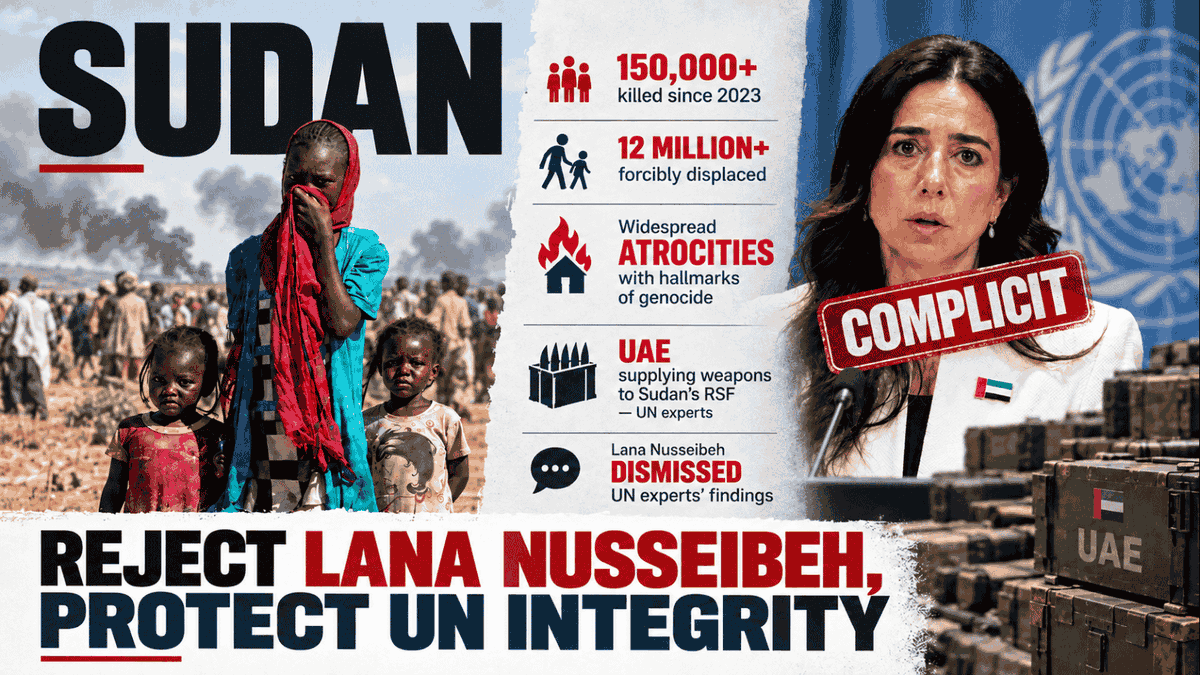
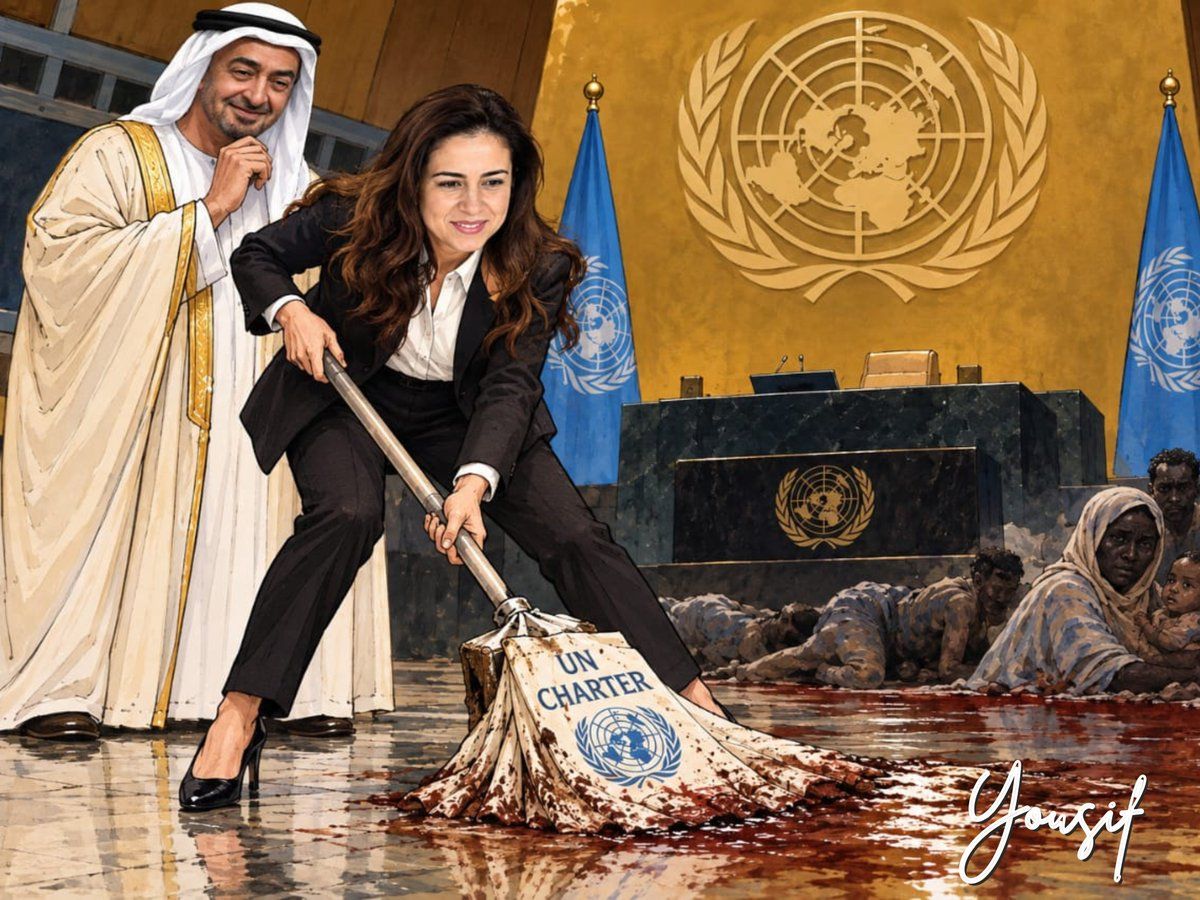
HRF joins international outrage at the UAE’s nomination of Lana Nusseibeh for UN secretary-general. Nusseibeh is not only the soft face of a brutal dictatorship; she has also repeatedly run cover for her country's role in fueling and profiting from Sudan's war, the world’s worst humanitarian emergency. Her repeated denials and refusals to address incontrovertible evidence of the UAE’s arming and financing of the Rapid Support Forces (RSF) rebel militia — which UN investigators have implicated in genocidal violence — should disqualify her.
For well over a year, I have tracked and reported on the role of the UAE in prolonging devastating war in Sudan by means of a cynical, exploitative backing of the Rapid Support Forces (RSF). Despite overwhelming evidence, from a wide range of research and reporting quarters, the UA totally, obdurately refuses to accept any of this evidence. Central in this denial has been Lana Nusseibeh, a senior official of the UAE regime and close to UAE strongman Mohamed bin Zayed. Nusseibeh goes so far as to deny the evidence provided by a UN investigation, even as the UN is the organization she professes to wish to lead:
Nov 9, 2025: A compendium of evidence
https://t.co/PfwLqFPoAR
May 10, 2025: Failure of the EU to call out the UAE for its support of RSF
https://t.co/U49qXWjXxk
Jan 8, 2026: Th abysmal, cynical, and mendacious polities of the Trump admin
https://t.co/zGCnJK0aCM
BUT I HAVE BEEN FAR FROM ALONE: A HOST OF HUMAN RIGHT ORGANIZATIONS, RESEARCHERS, AND NEWS ORGANIZATIONS HAVE BEEN SOUNDING THE ALARM. HEREWITH A SHORT LIST:
Refugees International, April 22, 2026
https://t.co/R7fV5J3XVF
Amnesty International, May 8, 2025
https://t.co/5RFoF0sPAE
Human Rights Research Center, July 16, 2026
https://t.co/74LGctjTKJ
Reuters, January 24, 2025
https://t.co/wXgSFhZZoF
Human Rights Watch, June 18, 2025
https://t.co/tD3BdPK87l
Nesrine Malik, The Guardian, “The UAE is financing and arming genocide in Sudan,” May 13, 2026
https://t.co/VAwvO5Giob
CNN, April 10, 2025
https://t.co/h8GXnkpV7R
Alliance Against Genocide, Dec 8, 2025
https://t.co/WeNlcbfw8r
And many, many other authoritative sources…
We mourn you because every destroyed home holds an unfinished story, every abandoned street carries memories still calling their owners home, and every child deprived of their city is left with a painful question about what homeland means when safety disappears.
We mourn you because the world must remember that behind the maps of war are human beings; behind the numbers are names, faces, and dreams; and behind every victim is a family whose life will never be the same.
But our mourning is not surrender to grief, nor is it a declaration that hope has died. It is a promise to keep your story alive, to ensure your people’s suffering remains in our collective conscience, and to insist that justice for victims, protection for civilians, and the safe return of the displaced must be part of any genuine peace Sudan hopes to achieve.
El Fasher will return to its people when peace and security make that return possible. Children will return to their schools, farmers to their fields, traders to their markets, and mothers to their homes. Survivors will try to build a new life from the rubble—a life worthy of those who lost everything but never lost their right to hope.
Justice must never be allowed to expire with the passage of time. The truth remains a responsibility carried by those who witnessed and documented this tragedy. The victims’ right to justice and accountability must never be abandoned.
Glory and eternal remembrance to the martyrs of El Fasher and to all who lost their lives trying to protect their families and their city.
May mercy and forgiveness embrace all the victims of war in Darfur and Sudan. May their families find comfort, the wounded recover, and all those still enduring the horrors of war find safety.
And tribute to everyone who held on to their dignity, everyone who extended a helping hand to the displaced, everyone who documented the truth, and every voice that refused to let silence become an accomplice to tragedy.
O El Fasher, beloved by all, the pain of Sudan and its living memory!
The night of sorrow may be long, the return may be delayed, and the road to peace may be difficult. But your name will remain alive in the nation’s memory. A city may be wounded, destroyed, and emptied of its people, but it does not die as long as someone carries it in their heart and believes in its people’s right to return, to live, and to reclaim their dignity.
El Fasher did not surrender. It was strangled by siege.
But its spirit remains alive—in the hearts of its people, in Sudan’s memory, and in the conscience of every human being who believes that truth has a voice, justice has a path, and nations can rise again from the rubble.
Peace be upon you, El Fasher, the city that sheltered the frightened, the city wounded by war, the city that will one day return to its people as a home of life and peace.
Peace upon your soil, upon the souls of your martyrs, and upon every heart that still beats with love for you.
You will forever remain beloved by all, and your story will forever defy oblivion.
To the Soul of Martyr El Fasher, Beloved by All
By/ Gaffar MOHAMMUD SAENEEN
Paris 24/10/2026
El Fasher did not surrender. It was strangled by siege and betrayed in broad daylight.
To the soul of El Fasher, the martyred city, the fortress of steadfastness, beloved by all Sudanese. To the souls of its martyrs, who departed with their heads held high, and to its people, who faced death through hunger, thirst, disease, and bombardment, refusing to let their city bow to oppression and humiliation.
Today marks one year since October 26, 2025, a bloody day that will remain engraved in Sudan’s memory and the conscience of humanity—a day on which El Fasher witnessed one of the darkest chapters in its modern history.
To speak of El Fasher is to speak of more than a city, the capital of North Darfur, or the historic seat of the Darfur Sultanate. In the hearts of conscientious Sudanese and free people around the world, El Fasher was a symbol of resistance, steadfastness, and dignity; a home for all who refused to bow before injustice or surrender their right to freedom and human dignity.
El Fasher was not merely a place bounded by roads and borders. It was the story of a people, the memory of a nation, and an epic of resilience written in blood, tears, and patience. Its defenders held on until their final breath, believing that a city’s dignity cannot be negotiated away, that a homeland must be respected, and that every human being has the right to live freely and with dignity on their own land.
Known as Shanab al-Asad—the Lion’s Moustache—El Fasher stood against the storm, caught in a war that had become part of Sudan’s wider tragedy. It resisted siege, confronted death, and endured despite overwhelming odds and the growing scarcity of food, medicine, and the basic necessities of life.
When war erupted on April 15, 2023, many Sudanese fled the flames of conflict in Darfur, particularly from Nyala and El Geneina. Others arrived in El Fasher from different parts of the country, believing they might find refuge from the horrors of war.
As it had always done, El Fasher opened its arms to its people and those seeking shelter. It shared what little food and refuge it had, welcoming the displaced with warmth and generosity despite its own hardship. To those exhausted by fear and displacement, it seemed to say: Jida jeeto—welcome, you are among your own people.
O beloved city, how many hearts sought shelter within you? How many families saw you as their last remaining hope? How many children believed your walls would protect them from the horrors of war?
I am not from El Fasher, but it sheltered people from my hometown, members of my family, childhood friends, and people I met along the journey of life. Its tragedy was never just another news story to read and forget. It was a personal sorrow, an open wound in a memory that knows every city holds stories of love, family, friendship, and belonging.
When the people of El Fasher faced the cruel choice between submitting to the demands of the armed Janjaweed forces besieging their city or continuing to resist at the risk of hunger, thirst, and death, many refused to abandon their home or surrender their dignity.
Their choice was not easy. Heroism did not mean wishing for death. It meant clinging to life and dignity when every avenue of escape seemed to close, and survival itself became a daily struggle against hunger, disease, bombardment, and terror.
For eighteen months, the siege turned everyday life into a battle for survival. Food and medicine became increasingly scarce, thirst intensified, and the suffering of children, the sick, and the elderly grew unbearable. Fear followed people into their homes and shelters as they lived under the constant threat of bombardment and attack.
The rest of the article will be continue on comment section 👉🏾
Then came October 26, 2025, a day of unbearable sorrow. For many who had followed the city’s fate, its fall was more than the loss of a place exhausted by siege. It was the shattering of an entire way of life, a threat to a historic memory, and a tragedy imposed upon people who never chose this war.
El Fasher did not surrender. It was strangled by siege, by hunger and thirst, by disease and bombardment, and by an international silence that failed to protect civilians despite repeated warnings and appeals.
What a tragedy. What a failure that weighs upon the conscience of the world.
Eighteen months of siege were not merely figures in humanitarian reports. They were days and nights of pain, fear, and loss. They were mothers searching for a morsel of food for their children, fathers unable to find medicine for the sick, children forced to grow up too soon, and elderly people weakened by hunger.
They were families asking questions no human being should have to ask: Where can we find food? Where can we find water? How do we escape the bombardment? And where can we go when the entire city has become a vast prison?
No words, however eloquent, can fully do justice to El Fasher’s suffering. No photograph can capture the full anguish of a child searching for a mother, a mother mourning her son, or a father who could not protect his family. Behind every destroyed home were memories, dreams, and lives that would never be the same.
What happened to El Fasher was not the tragedy of one city alone. It was a wound in Sudan’s body, a scar on humanity’s conscience, and a painful test of the world’s commitment to justice and its ability to protect civilians when words and resolutions fail to stop the bloodshed.
Whatever the political and military interpretations of what happened, one human truth must never be lost: the people of El Fasher paid an enormous price. The blood of the innocent demands justice, the rights of survivors must be upheld, and the city’s suffering must never become yesterday’s forgotten news.
Some believed that the fall of El Fasher would end its people’s resistance, that once the city lost its ability to defend itself militarily, it would also lose its place in the hearts of Sudanese people.
But they forgot that cities do not live by stone alone.
El Fasher was never just walls, buildings, and streets. It was an idea carried in people’s hearts, a memory held by families, and a sense of belonging that bombardment cannot erase.
Homes may be destroyed, roads closed, and people displaced. The face of a city may change. But memory cannot be bombed, belonging cannot be besieged, and the longing for home cannot be defeated by guns.
For El Fasher, there are forty million stories in the hearts of those who love it—the stories of Sudanese people who wish for its peace and return to life. It holds a place in Darfur’s soul, in Sudan’s memory, and in the hearts of all who know the meaning of displacement, the loss of home, and the fear of losing loved ones.
El Fasher’s story did not end on a bloody day. It remains unfinished, waiting for its people to return, for its wounds to heal, for children to fill its streets with their voices, for families to bring warmth back to their homes, and for its markets and neighbourhoods to recover the ordinary peace that no one once imagined would become such a distant dream.
O El Fasher, beloved by all! You sheltered the displaced before you became a symbol of displacement yourself. You embraced the frightened before fear chased your own people through every street and alley.
We mourn you today not because we believe your story is over, but because what happened to you deserves to be mourned, told, and remembered by generations to come.
@KholoodKhair
Activist Gaffar MOHAMMUD SAENEEN writes: Kolood Khair, I’ve got you again. And as long as you continue pushing what I consider falsehoods and UAE-oriented narratives, I—and many other proud Sudanese—will continue to call them out without hesitation.
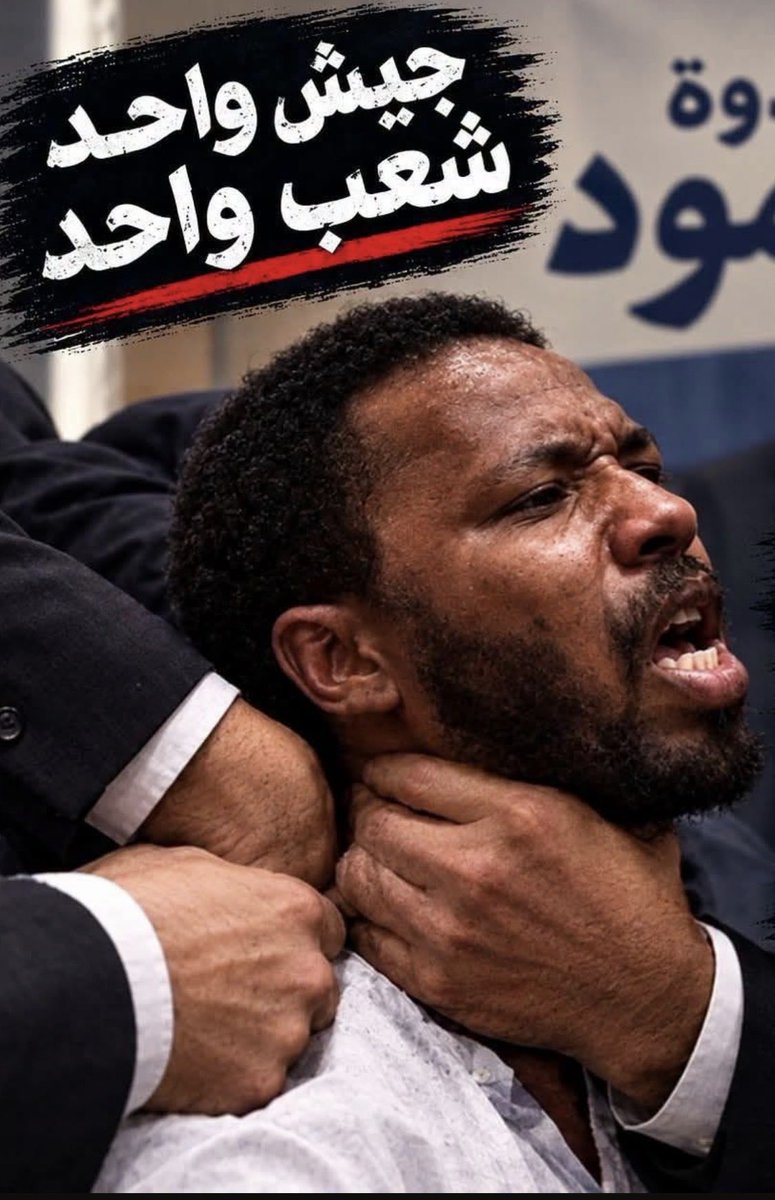
You commented on the Washington incident, where a young Sudanese man attending a Somoud coalition meeting was reportedly grabbed by the neck and violently strangled by supporters of the so-called civil political parties after he challenged former Prime Minister Abdalla Hamdok. Your response was:
“Violence at public events is a hallmark of the pro-SAF crowd, why replicate it? Do better.”
That statement raises some very simple questions.
First, where is your evidence? Show us one documented incident in which people you label “pro-SAF” attacked someone simply because they disagreed with them politically. If you are going to make such a sweeping accusation, you should be prepared to substantiate it.
Second, according to the accounts of the Washington incident, the young Sudanese man was not violent. He challenged Hamdok verbally and, from what has been reported, did so peacefully and in a civil manner. He was attacked while leaving the hall.
So why is your instinct to lecture the alleged victim rather than condemn the alleged attackers?
Why are you so quick to generalize violence as a “hallmark” of one political camp, yet so reluctant to unequivocally condemn violence when it allegedly comes from the people whose politics you support?
And here is where your argument becomes particularly difficult to reconcile.
Less than a month ago, you were in Paris at a seminar organized by the French Ministry for Europe and Foreign Affairs at the Sorbonne University. The hall was filled with Sudanese, including many patriotic Sudanese who strongly disagree with your political narrative and who openly defend their country and the Sudanese Armed Forces.
You were challenged. You were confronted with opposing views. People disagreed with you—strongly.
But did anyone grab you by the neck? Did anyone assault you? Did anyone try to silence you physically?
No.
You were challenged with words.
That is precisely the point you seem determined to avoid: political disagreement does not automatically equal violence, and violence cannot be excused—or selectively condemned—depending on which political camp the perpetrators belong to.
So if you genuinely believe that violence has no place at Sudanese political gatherings, then apply that principle consistently.
Condemn the attacker, regardless of his political affiliation. Defend the victim, regardless of his political affiliation. And stop turning every incident into an opportunity to smear an entire segment of Sudanese society while excusing or minimizing the conduct of those on your own side.
Sudanese people are entitled to disagree with Hamdok, Somoud, the FFC, the SAF, or anyone else without being physically attacked.
If your commitment to democracy is genuine, then defend that principle when it is inconvenient—not only when it serves your political narrative.
@sudanreeves@_hudsonc@Amgad_Fareid
A young Sudanese man was reportedly strangled and forcibly removed from a Somoud coalition meeting in Washington attended by former Prime Minister Abdalla Hamdok.
The young man took the floor and directly challenged Hamdok over his previous resignation, asking: “Why have you come back now? What has changed?”
He argued that Somoud lacks a genuine base among the Sudanese people, particularly among young Sudanese. He also described the RSF as a “militia” and stated that Sudan must get rid of the RSF. He concluded by expressing support for the slogan “One Army, One People.” The hall then echoed the slogan, along with chants of “Allahu Akbar.”
According to accounts of the incident, the young man was then forced to stop his remarks. As he attempted to leave the hall, Somoud members allegedly grabbed him by the neck and forcibly removed him.
This raises a fundamental question: If these so-called civil forces, who claim to represent democracy and a democratic future for Sudan, cannot tolerate the dissenting voice of one Sudanese man in a meeting in Washington, how can they claim they will tolerate the different opinions of more than 40 million Sudanese people?
Democracy is not simply about holding meetings or making political declarations. It is about protecting the right to disagree, especially when the disagreement comes from your own people.
@KholoodKhair
With the utmost respect and consideration for Mrs. Kholoud Khair, I sincerely hope that anger and falsehood never cast a shadow over your heart or bring you sadness.
رفضُ المساومة على حق السودان في إسماع صوته في الجمعية العامة، مقابل هدنة تفتقد لأدنى ضمانات سلامة ووحدة البلاد وعودة المهجّرين قس��ًا إلى ديارهم، رفع من شعبية رئيس مجلس السيادة البرهان. فالقبول يعني تكريس واقع استيلاء آخرين على أراضيهم، لصالح مليشيات تحدّت حتى قرار مجلس الأمن 2637
Since when did the Sudanese people—heirs to one of Africa’s oldest and most distinguished civilisations—come to place their trust in individuals whose credentials appear to rest less on merit, integrity, or public service than on proximity to power and the privileges of patronage?
The belligerents in Sudan must accept a humanitarian truce, the first step towards a durable peace. The Sudanese people deserve the chance to engage in a political process that leads to peace in a unified Sudan.
This is the full in English I delivered in during the demonstration and solidarity gathering in front of the headquarters of the Human Rights Council in Geneva.
#جنيف
المدافع عن حقوق الإنسان جعفر سنين @saeneen من أمام الأمم المتحدة بجنيف: "السودانيون يتعرضون للإبادة.. والمجتمع الدولي متواطئ بصمته"
=======
أحيا ناشطون ��ودانيون ومدافعون عن حقوق الإنسان الذكرى السنوية لحصار ومجزرة الفاشر بوقفة احتجاجية أمام مقر الأمم المتحدة في جنيف حيث مقر انعقاد الدورة الثالثة والستين لمجلس حقوق الإنسان للأمم المتحدة، طالبوا خلالها بتحرك دولي عاجل لوقف الإبادة المستمرة في دارفور التي تنفذها ميليشيات الدعم السريع المدعومة إماراتيا.
وفي كلمة له خلال الوقفة، أوضح الناشط والمدافع عن حقوق الإنسان جعفر سنين في كلمة ألقاها نيابة عن المجتمعين أن ما يجري في السودان "ليس حربا أهلية، بل عدوان على الشعب السوداني ومؤسساته"، مؤكداً أن مليشيا الدعم السريع ورعاتها يتحملون المسؤولية المباشرة عن المجزرة.
وفي خطابه حمل سنين المجتمع الدولي مسؤولية "الصمت المريب" تجاه ما يحدث، ودعا مجلس حقوق الإنسان والأمم المتحدة إلى اتخاذ خطوات فورية على رأسها فرض عقوبات على قادة الدعم السريع والداعمين لهم، ومواصلة التحقيق الدولي في مسؤولية ما جرى ومحاسبة المسؤولين.
كما وجه رسائل شكر لعدد من الدول التي وقفت مع الشعب السوداني، وخص بالذكر المملكة العربية #السعودية وولي عهدها الأمير محمد بن سلمان، وجمهورية #مصر، إضافة إلى #تركيا و #قطر و #الجزائر. و #فلسطين التي يتضامن شعبها رغم مابه من وجع مع الشعب السودان.
كما أعرب عن تقديره لمواقف أعضاء البرلمانات الغربية والبرلمان الأوروبي الداعمة لحقوق الإنسان.. وخص بالشكر النائب كريستوف ماريون @MarionDepute41
وكان لافتا مشاركة مديرة منظمة "مشروع سويسرا- السودان" أنديرا ويدمر المعروفة بنشاطها في الدفاع عنزالقضية السودانية في المحافل الأوروبية، إضافة إلى مشاركة عدد من الناشطين من عدة دول أوروبية.
وتأتي الوقفة الاحتجاجية بالتزامن مع انعقاد جلسات مجلس حقوق الإنسان في جنيف بهدف كسر "التعتيم الإعلامي" حول الأوضاع في السودان.
يذكر أن لجنة تقصي الحقائق التابعة لمجلس حقوق الإنسان قد ناقش تقريره الذي اتهم فيه الإمارات صراحة بالوقوف وراء تسليح وتمويل ميليشيات الدعم السريع عبر شبكة معقدة اشترك فيها عدد من دول جوار السودان، كما سيتم مناقشة الوضع في السودان في عدد من الجلسات المقبلة في الدورة المنعقدة في مقر مجلس حقوق الإنسان في جنيف.
#السودان
This is very rich coming from a man who is viewed as a part UAE led project to destroy Sudan. Mr Boulas the time when people used to be cheated on cheap narratives has gone forever and Sudan of today can’t be bullied no matter rich the mini-state whose history is only two line. Long live Sudan and long live the free people of the world.
من جنيف ✊🏽✊🏽✊🏽✊🏽 ترتيبات وتجهيزات للغد أمام مقر مجلس حقوق الإنسان في جنيف. هنا خيمة السودان… وهنا يوم السودان، يوم السودانيين والسودانيات، ويوم المناضلين الأحرار القادمين من مختلف دول الاتحاد الأوروبي، وحتى من المملكة المتحدة. غدًا، سيُرفرف علم السودان عاليًا في سماء جنيف، وسيصل صوت السودانيين إلى العالم من أمام مجلس حقوق الإنسان. غدًا يومٌ للحرية، للكرامة، ولصوت الشعب السوداني. وعندما يصوّت الأحرار… تهتزّ الأرض تحت أقدام المتشائمين والمهزومين. السودان حاضر… وصوت شعبه حاضر… والراية لن تنحني. 🇸🇩