Truth about untouchability in India
From the book Savarkar (Part 2): A Contested Legacy, 1924-1966
By @vikramsampath
“But it is not just the high castes who persecute untouchables. Persons of one group of untouchables persecute persons of another group of untouchables whom they consider as their inferior or as ‘their untouchables’ with just the same vigour. Consider a hot summer’s day. A Mahar is thirsty, on a village well there are crows and dogs drinking water, but he is forbidden to drink water from that well. He becomes furious and curses the Brahmins and Marathas who will hound him out. When he says they are demons, he does tell the truth. But if a Bhangi was to take water from a well in a Maharwada, the Mahars would also hound the Bhangi with equal wrath. Then the Mahars become Brahmins to that Bhangi. Recently, there was a Satyagraha by Mahars who wanted to enter the Rama Mandir of Nasik. They were badly beaten up by Brahmins and Vaishyas. True, that was terribly unjust. But it should not be forgotten that if a Bhangi were to enter a Mariaii temple of the Mahars, they too would have thrashed that Bhangi just as badly.”
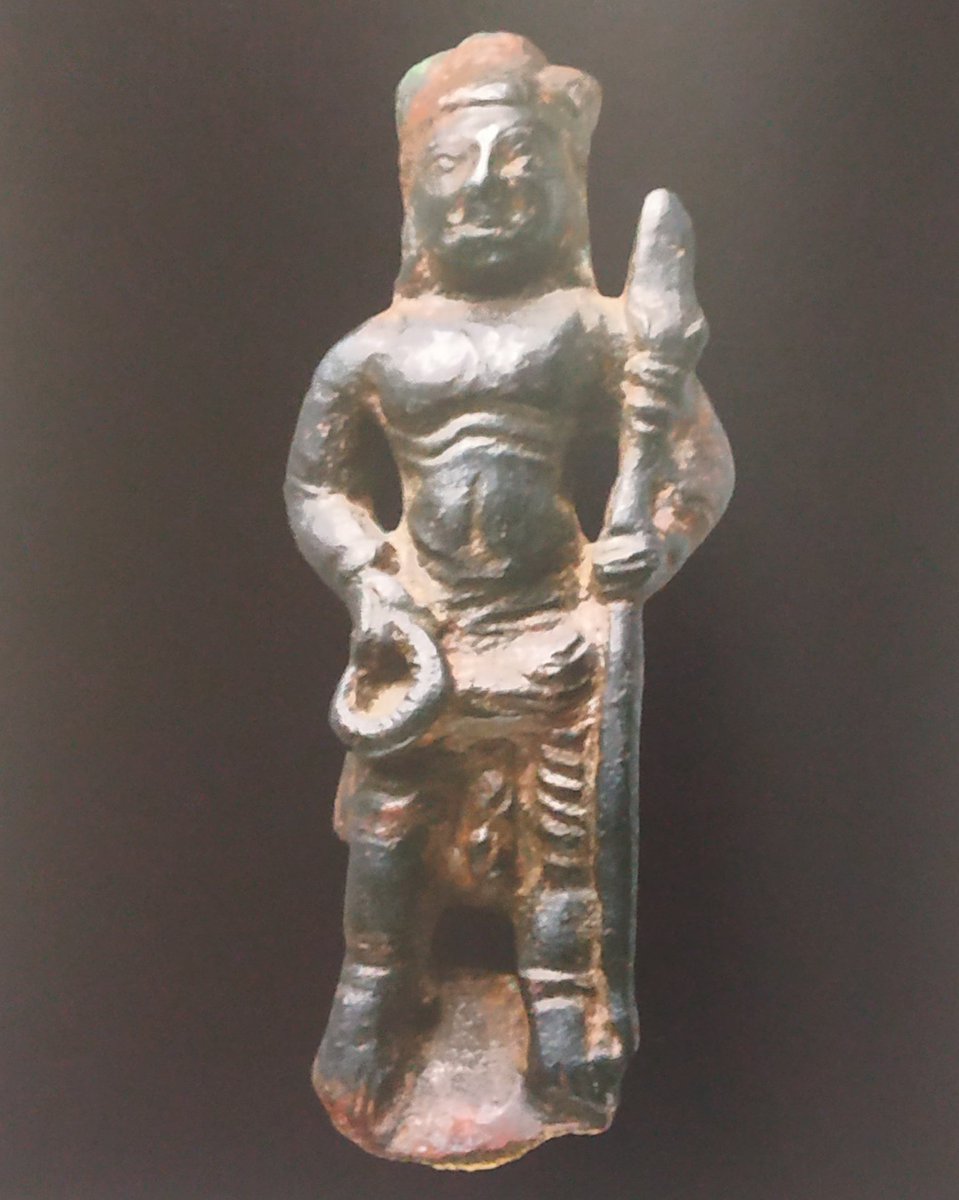
Kartikeya
Date: 1st Century Ce
Gandhar, Afghanistan
Standing bronze Murti of bhagwan Kartikeya holding spear and vel dated 1st Century Ce found in Gandhar region of Afghanistan.
Multi-headed Shiva
Dated: 1st Century Ce
Kushan Era Central Asia (Northern Afghanistan/Iran)
Shiva (Oesho) is frequently depicted in Kushana coins. He was a very popular among Central Asians until islamic invasions.