The terrorist attack in Dera Ismail Khan, following the recent bloodshed in Kohat, is another painful reminder of the terrorism threat Pakistan continues to confront. My deepest condolences to the families of our martyrs and prayers for the injured. The nation stands firmly with our courageous police, law-enforcement agencies and security forces.
Pakistan has defeated terrorism before, and we will defeat it again. Terrorists, their facilitators, financiers and sponsors will be held accountable, and no territory beyond our borders will be allowed to serve as a sanctuary for terrorism against Pakistan. We will neither be intimidated nor divided. Pakistan will prevail.
تھر کول پاور پروجیکٹ صرف بجلی کی پیداوار کا منصوبہ نہیں، بلکہ تھر کے عوام کو بااختیار بنانے اور ان کے وسائل سے انہیں براہِ راست فائدہ پہنچانے کا عملی سفر ہے۔
تھر سے 3,000 میگاواٹ سے زائد بجلی نیشنل گرڈ میں شامل ہو رہی ہے، جبکہ اسلام کوٹ کے شہریوں کو 100 یونٹ تک مفت بجلی فراہم کی جا رہی ہے۔ ساتھ ہی مقامی لوگوں کے لیے روزگار کے مواقع پیدا کیے جا رہے ہیں اور خواتین کو بااختیار بنانے کے لیے انہیں ٹرک ڈرائیونگ کی تربیت بھی دی جا رہی ہے۔
یہ وہ خواب ہے جو شہید محترمہ بینظیر بھٹو نے تھر کے عوام کے لیے دیکھا تھا، جسے صدر آصف علی زرداری اور چیئرمین پاکستان پیپلز پارٹی بلاول بھٹو زرداری کی کاوشوں سے عملی تعبیر مل رہی ہے۔
تھر آج صرف پاکستان کو توانائی فراہم نہیں کر رہا، بلکہ تھر پاکستان کی قسمت بدل رہا ہے۔
@BBhuttoZardari
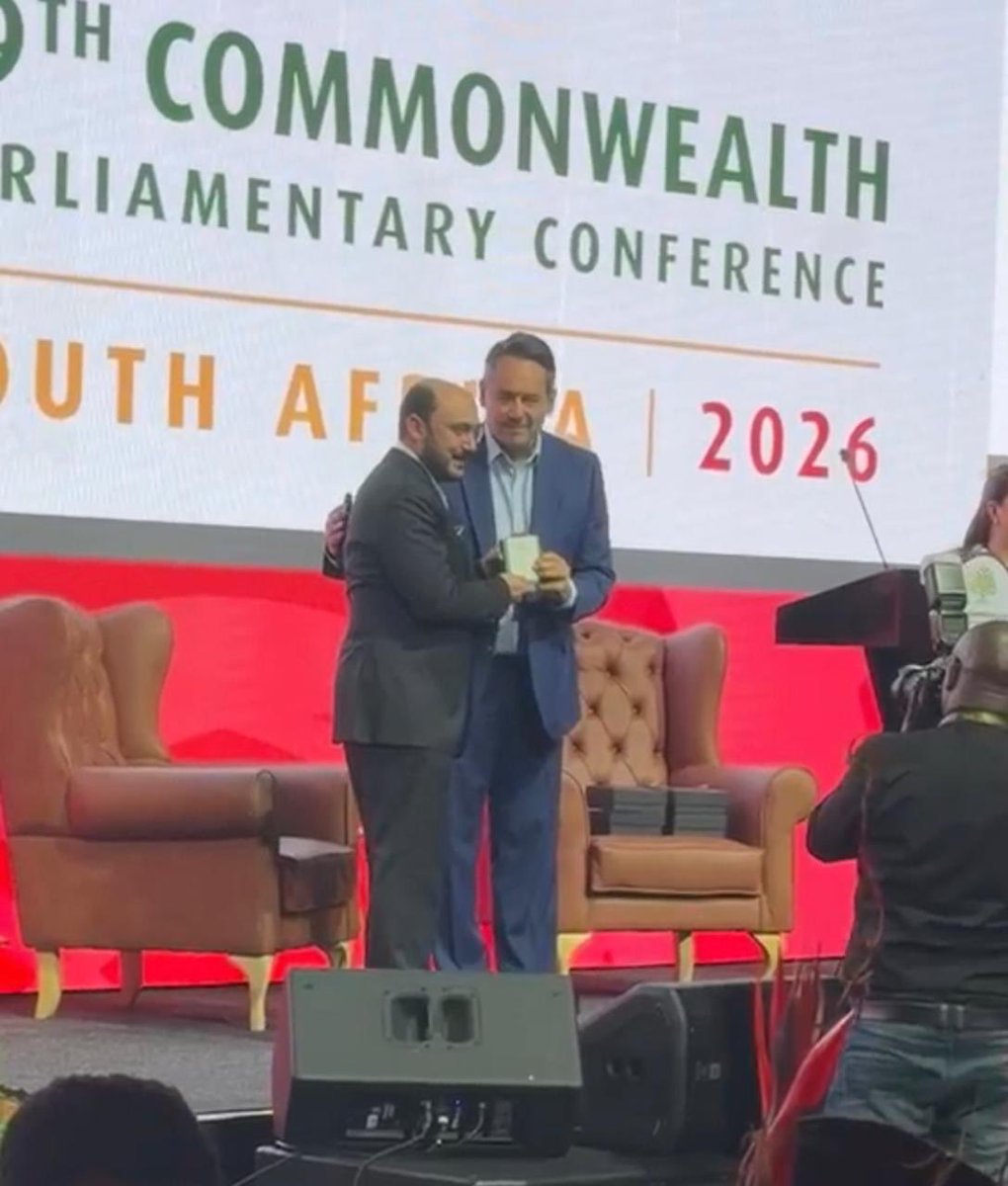
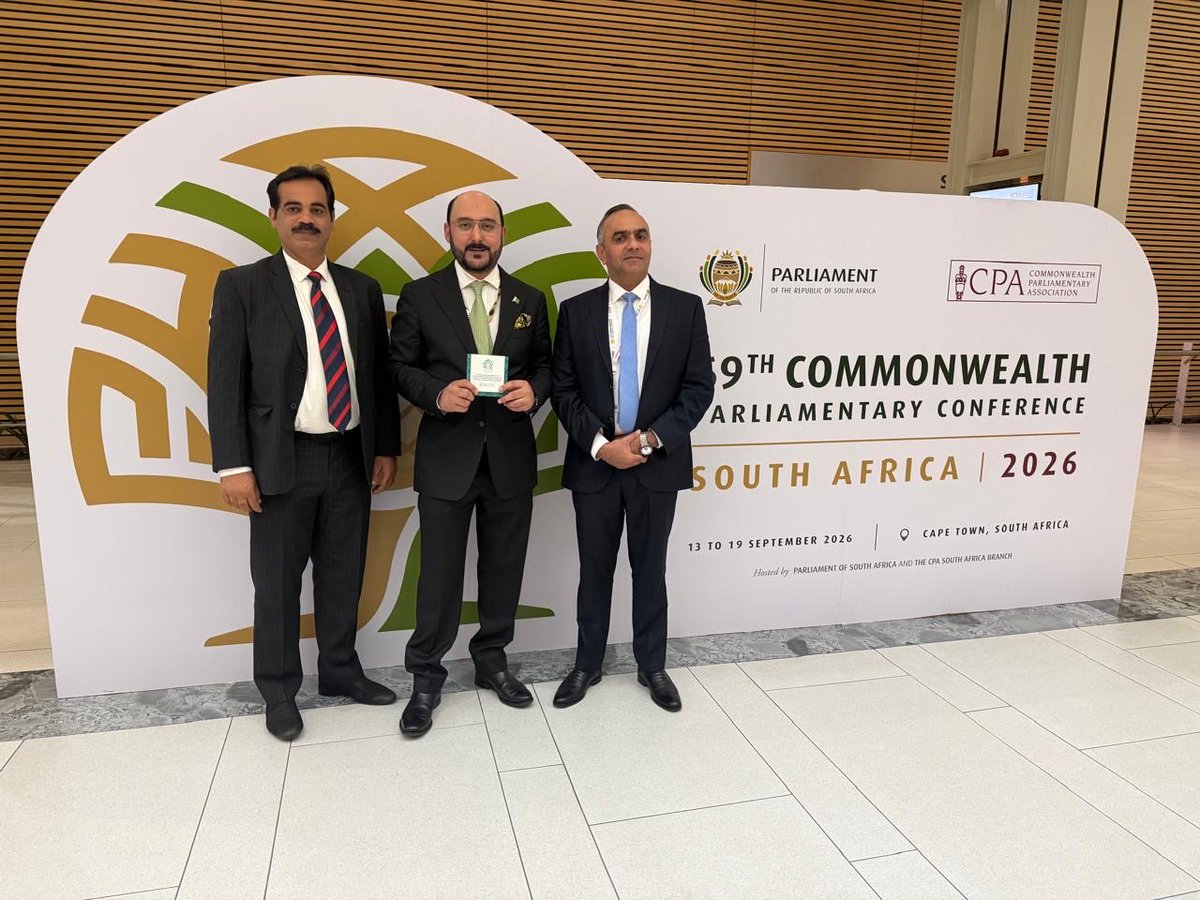
Proud moment for Punjab assembly at the 69th common wealth parliamentary association held in Cape Town South Africa. I have recieved the green mace award on behalf Speaker Mohammad Ahmed khan , members and Secretariat of the Punjab assembly Pakistan.
PM of Malaysia @anwaribrahim exposing Indian propaganda, in India on Indian tv. The truth is India started a war based on a lie and lost miserably. India now stands exposed internationally. India must live up to its commitments made at the time of the ceasefire; to discuss all friction points with Pakistan. So we can together bring peace, prosperity and stability to our region.
یہی بات ہم ہمیشہ سے کہتے آئے ہیں کہ مسلم لیگ نون بار بار بہاولپور صوبے کا مطالبہ سامنے لا کر جنوبی پنجاب صوبے کے قیام کو سبوتاژ اور کمزور کرنے کی کوشش کرتی ہے۔
Alhamdulillah, after almost two years of struggle, we have managed to secure some relief for smartphone users who have been struggling with exorbitant taxes on imported smartphones.
Instead of paying a lump sum of around Rs. 100,000–250,000 in PTA taxes, users can now pay approximately Rs. 8,000–17,000 per month in instalments, making the burden more manageable.
InshaAllah, we will continue fighting for greater relief and more concessions for the public.
Our bureaucracy was designed in 1858 for a very different era. It cannot effectively govern a nation of over 250 million people in the digital age.
Young Pakistanis are tired of slow, outdated processes and endless red tape. They expect government to be responsive, efficient and accountable, not trapped in a colonial era administrative model.
Pakistan needs a leaner, faster and more citizen centric bureaucracy.
Total of 6 votes were cast in Layyah across two constituencies—LA-34 (Jammu) and LA-42 (Valley).
PPP secured all 6 votes. PML-N received zero.
A small but clear result. 🇱🇾✊
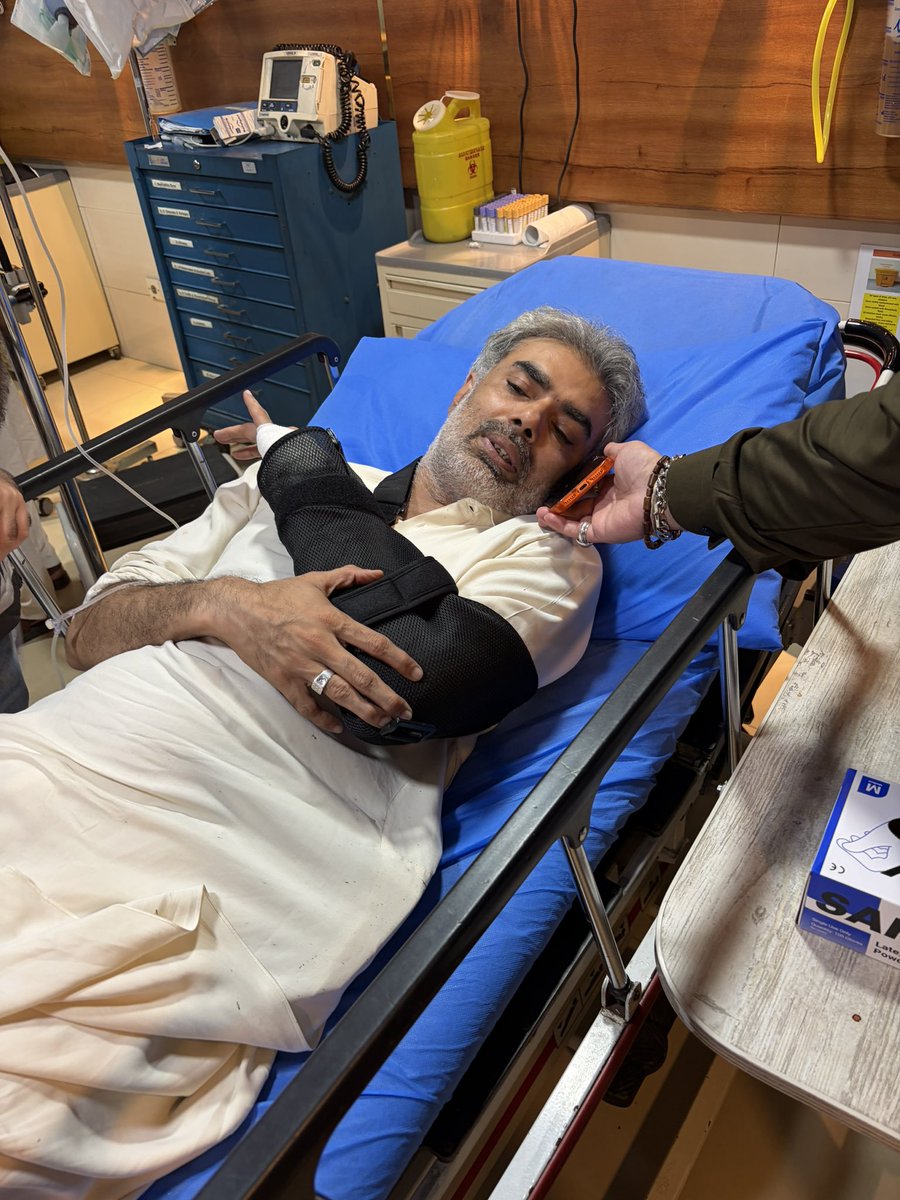
Visited MNA Salahuddin Junejo at Maroof Hospital in Islamabad, where he is preparing to undergo surgery. I also met two others who sustained minor injuries. By the grace of Allah, his brother Ghias Junejo narrowly escaped harm as the bullet passed through his clothes without injuring him. Praying for Salahuddin Junejo’s successful surgery and a speedy recovery.
آج اسلام آباد کے معروف ہسپتال میں ایم این اے صلاح الدین جونیجو کی عیادت کی، جہاں وہ سرجری سے گزر رہے ہیں۔ اس واقعے میں زخمی ہونے والے دو دیگر افراد سے بھی ملاقات ہوئی، جنہیں معمولی چوٹیں آئی ہیں۔ اللہ کے فضل و کرم سے ان کے بھائی غیاث جونیجو محفوظ رہے، گولی ان کے کپڑوں کو چیرتی ہوئی گزر گئی مگر وہ زخمی نہیں ہوئے۔
اللہ تعالیٰ سے دعا ہے کہ صلاح الدین جونیجو کی سرجری کامیاب ہو، انہیں جلد اور مکمل صحت یابی عطا فرمائے، اور تمام متاثرین کو اپنی حفظ و امان میں رکھے۔ آمین۔
Report of the Commission for Creation of New Province(s) in the Province of Punjab:
Background
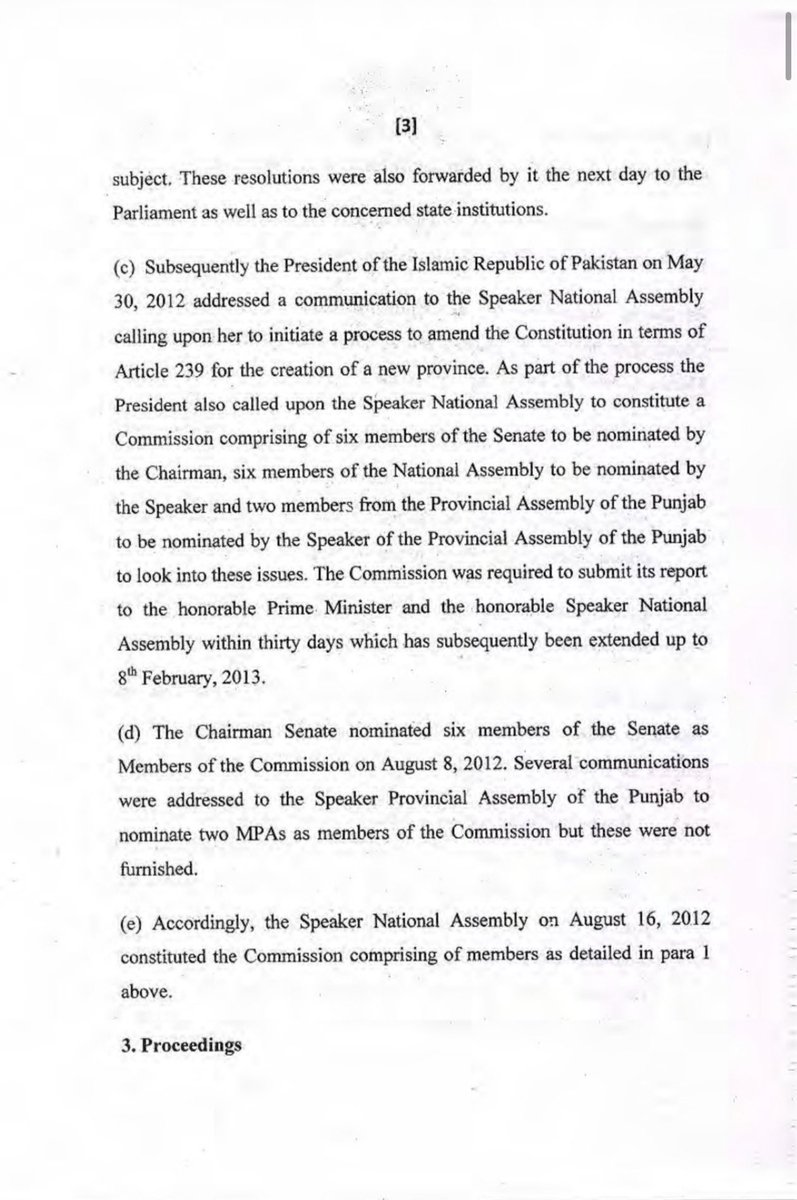
Following resolutions passed by the National Assembly and the Punjab Assembly in May 2012, President Asif Ali Zardari wrote to the Speaker of the National Assembly on 30 May 2012 asking her to initiate the constitutional process under Article 239 for the creation of a new province.
The President proposed a 14-member Commission consisting of:
6 Senators,
6 Members of the National Assembly,
2 Members of the Punjab Assembly.
The Punjab Assembly did not nominate its two members, so the Commission was constituted on 16 August 2012 without them.
Formation and Proceedings
The Commission held its first meeting on 28 August 2012.
Senator Farhatullah Babar was unanimously elected Chairman.
Before beginning substantive work, the Commission framed rules governing its procedure.
Constitutional Questions Examined
The Commission first sought legal clarification on three issues:
Whether the Speaker could legally constitute the Commission.
Whether the Commission had the authority to summon witnesses and obtain documents.
Whether Article 239(4) allows the creation of entirely new provinces.
Opinion of the Law Minister
The Minister for Law and Justice advised the Commission that:
The President’s message to the National Assembly was constitutionally valid under Article 56(2).
The Speaker was legally empowered by the House to establish the Commission.
Because the Commission included Senators and (intended) Provincial Assembly members, it could not simply be constituted as a parliamentary committee.
The Speaker could authorize the Commission to exercise powers similar to those available to parliamentary committees for taking evidence and calling documents.
Article 239(4) permits creation of new provinces because the word “alter” includes changing provincial boundaries, which may involve establishing a new province.
However, other constitutional provisions—including Article 1 and related articles—would also require amendment.
Constitutional Procedure Identified
The Commission was informed that the constitutional steps would be:
A Constitutional Amendment Bill passes one House of Parliament with a two-thirds majority.
It passes the other House with a two-thirds majority.
It is then approved by the concerned Provincial Assembly with a two-thirds majority because provincial boundaries are being altered.
Finally, it receives the President’s assent.
Procedural Directions
On 3 December 2012, the Speaker directed that:
The Commission could make its own procedural rules.
Rule 227 of the National Assembly Rules (regarding taking evidence and calling for documents) would apply to the Commission.
The Commission unanimously adopted its Rules on 10 December 2012.
Overall Significance
These pages primarily establish the legal and constitutional foundation for the Commission’s work. They conclude that:
The Commission was lawfully constituted.
Parliament has constitutional authority to consider creating a new province in Punjab.
Creation of a new province is constitutionally possible under Article 239(4), provided the required constitutional amendments are approved by:
both Houses of Parliament with two-thirds majorities, and
the affected Provincial Assembly with a two-thirds majority.
Case for a New Province
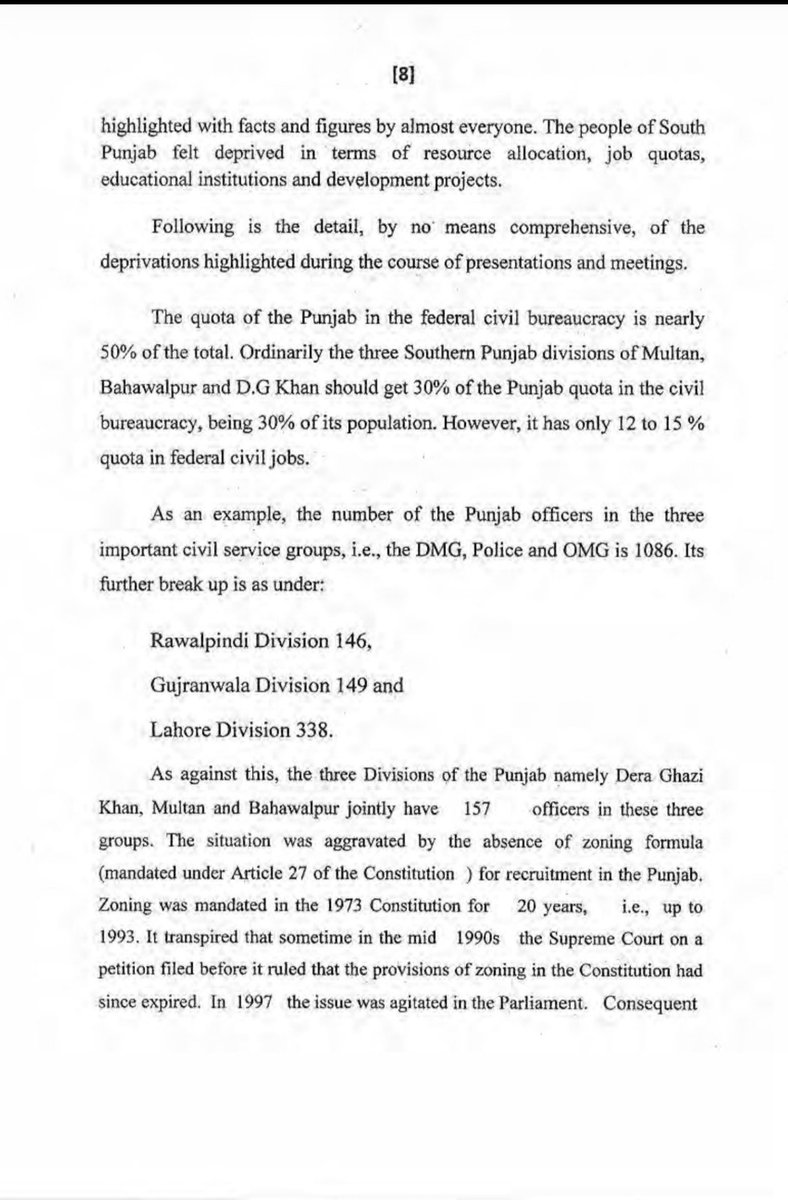
The Commission found that nearly everyone who appeared before it highlighted a consistent pattern of deprivation in South Punjab, particularly regarding:
Allocation of government resources
Federal and provincial employment quotas
Educational institutions
Development projects
Civil Service Representation
The report highlighted severe underrepresentation of South Punjab in the federal bureaucracy.
South Punjab (Multan, Bahawalpur and D.G. Khan Divisions) comprises roughly 30% of Punjab’s population.
Accordingly, it should receive approximately 30% of Punjab’s share in federal civil service positions.
Instead, it held only 12–15% of federal civil service jobs.
Examples cited:
Lahore Division: 338 officers
Gujranwala Division: 149 officers
Rawalpindi Division: 146 officers
Compared to:
Multan + Bahawalpur + D.G. Khan combined: only 157 officers
The report also blamed the expiry of Punjab’s constitutional zoning formula (Article 27) for worsening regional imbalance.
Only One New Province Recommended
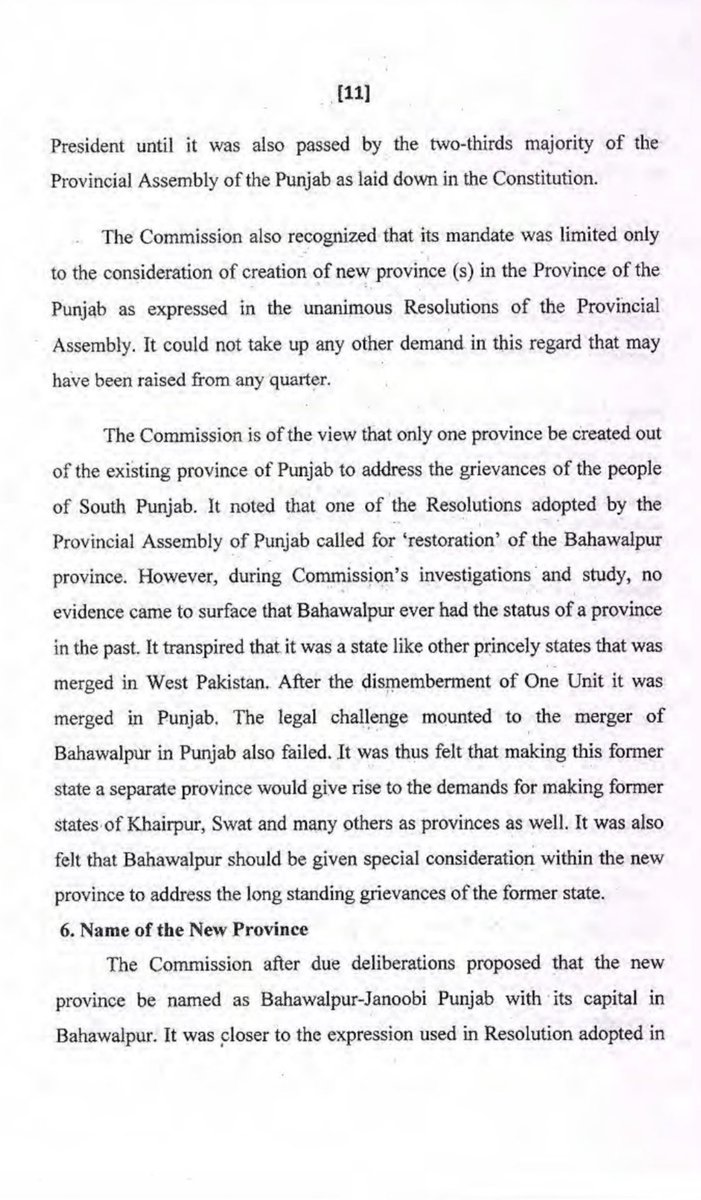
The Commission clarified that its mandate was only to consider creating new province(s) within Punjab, not broader constitutional restructuring.
After examining evidence, it concluded:
Only one new province should be created, rather than multiple provinces.
Bahawalpur Issue
The Commission examined demands to restore Bahawalpur as a separate province.
It concluded:
Bahawalpur historically had the status of a princely state, not a province.
It merged into West Pakistan during One Unit and later became part of Punjab.
Legal challenges against this merger had already failed.
Restoring Bahawalpur alone could encourage similar demands from former princely states such as Khairpur and Swat.
Instead, the Commission recommended:
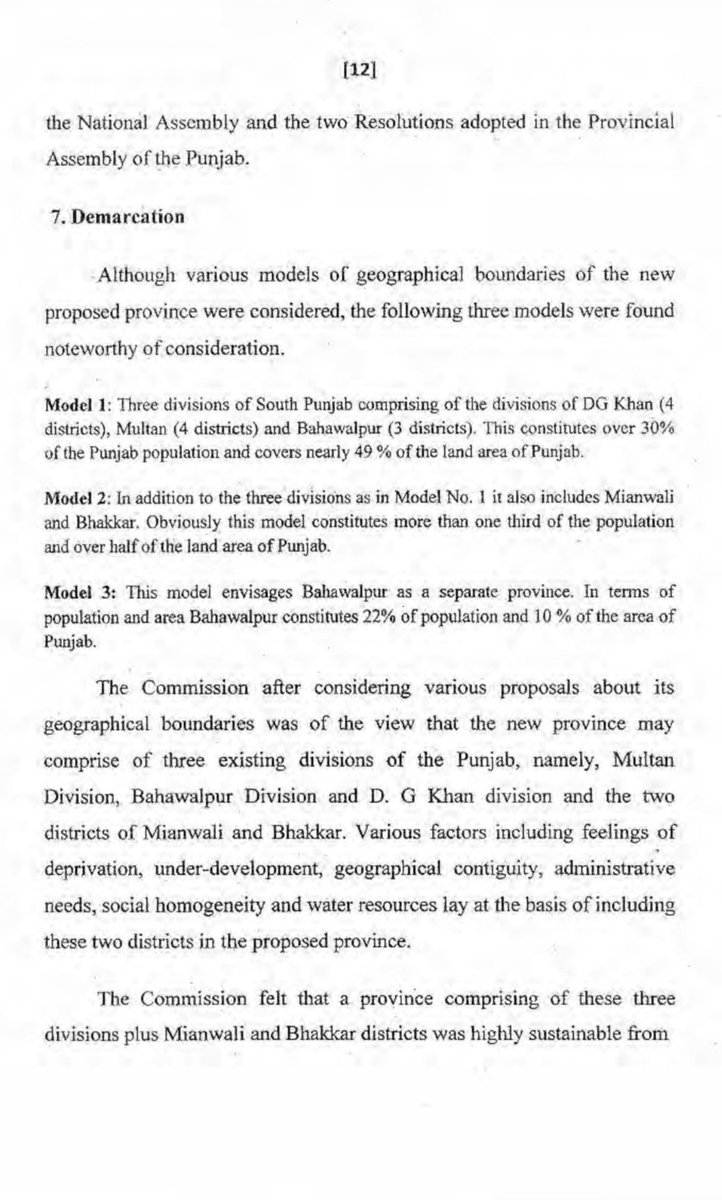
Bahawalpur should receive special recognition and consideration within the new province, not become a separate province.
Constitutional Amendments Required
The Commission identified several constitutional provisions requiring amendment before the province could be created, including:
Article 1
Article 51
Article 59
Article 106
Article 175A
Article 218
These amendments would adjust provincial representation, parliamentary seats, and related constitutional provisions.
⸻
Draft Constitutional Amendment
The report concludes this section by stating that a draft Constitutional Amendment Bill had already been prepared to implement the creation of the proposed province.
Overall Conclusion
The Commission unanimously concluded that:
South Punjab had suffered long-standing administrative and developmental deprivation.
Creating one new province, rather than multiple provinces, was the appropriate constitutional solution.
The recommended province should be called Bahawalpur–Janoobi Punjab, with Bahawalpur as its capital.
Its preferred territory should comprise Multan, Bahawalpur, D.G. Khan, Mianwali, and Bhakkar.
The proposed province would be economically viable, administratively workable, and constitutionally achievable through the prescribed amendment process.