Wall Street models power prices like stocks. The grid doesn't care. Using 2021–2025 ERCOT settlement data and Extreme Value Theory, Mac and I benchmarked Binary Event Contracts against traditional power hedges: https://t.co/RuKjiGNOSc
@DamianBlack888 Good point. Think I was focusing more on the power-side critical path, but I would imagine GPU delivery and deployment can be modeled almost like parallel dependecies. Or maybe networking and commissioning too could apply.
@ShanuMathew93 Notable that all 45 GW of Batch Zero still sits outside Oncor's base capital plan. I'm curious whether large data center developers actually fund those transmission upgrades to hit timelines or would everything stall until the Dec'26 audit clears? (Also, fellow Illini here!)
U of Illinois' Gies business school is launching a *play-money* prediction market for students. It will "allow students to take positions on a wide range of topics, from the S&P to whether Luke Altmyer...will trim his signature mullet."
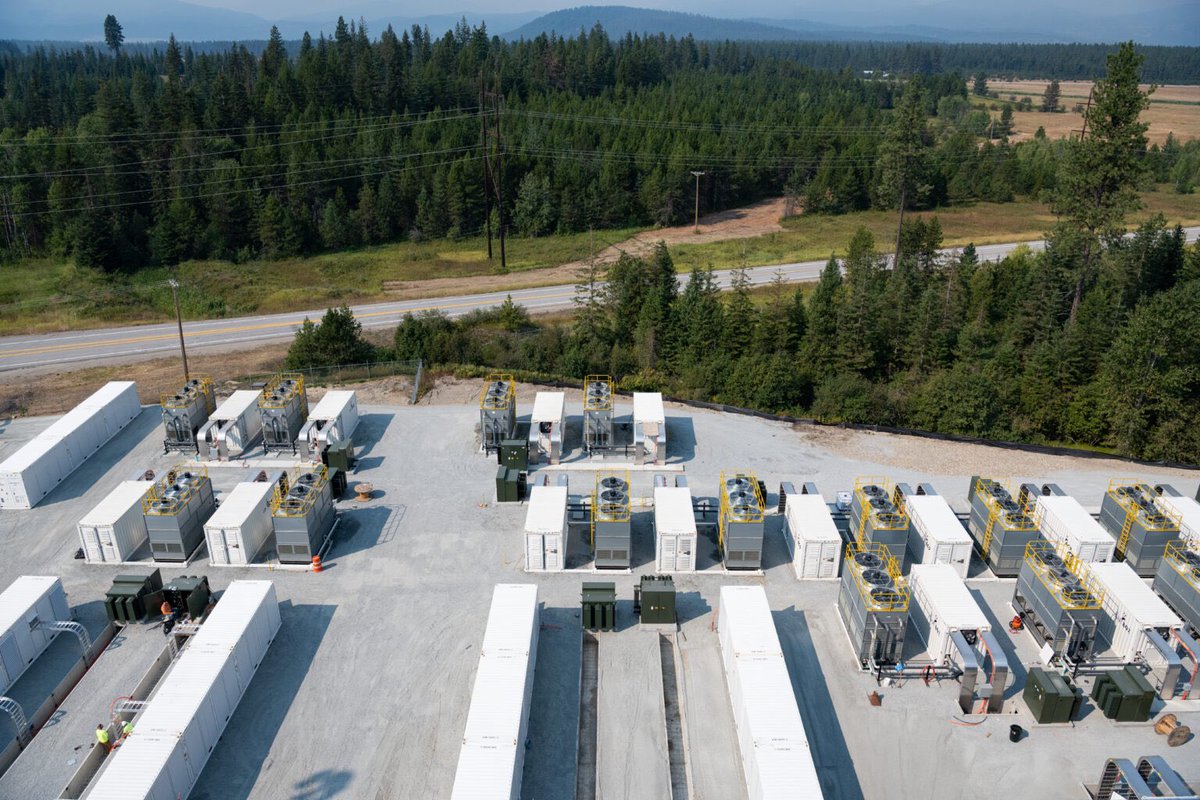
Power at the forest edge isn’t a side bet on the compute trade.
It is the trade.
Chips sit idle in warehouses. Grid queues stretch for years. Bitcoin miners already spent a decade learning the hard part: show up where the electrons already are. Hyperscalers are still catching up.
@patrickrooney very interesting. was just writing on interconnection queues with data centers in the Midwest. Do you think forest-edge or remote off-grid sites can support distributed AI training clusters without prohibitive fiber backhaul costs?
Good point. I think the nuclear fleet answers for physical capacity for data centers that legacy transmission doesn't answer for, along with MISO's Expedited Resource Addition Study (ERAS) that provides fast-track tariff structures for integration - that does make expansion viable.
@TheMitHooks Certainly that's a concern in the status quo w/ PJM, but I think there are opportunities with behind the meter PPAs at nuclear facilities and funding merchant transmission upgrades to thump stalling.
@patrickrooney@ILL_Blockchain@MacM81924135 pretty much - the difference with event contracts compared to traditional swaps is in how it's settled and payoffs along with other variables
Wall Street models power prices like stocks. The grid doesn't care. Using 2021–2025 ERCOT settlement data and Extreme Value Theory, Mac and I benchmarked Binary Event Contracts against traditional power hedges: https://t.co/RuKjiGNOSc