Better headline: Waymo manages to emergency brake fast enough that it only minorly injures a child that would near certainly be dead if a human were driving in the same situation
Something I think people continue to have poor intuition for: The space of intelligences is large and animal intelligence (the only kind we've ever known) is only a single point, arising from a very specific kind of optimization that is fundamentally distinct from that of our technology.
Animal intelligence optimization pressure:
- innate and continuous stream of consciousness of an embodied "self", a drive for homeostasis and self-preservation in a dangerous, physical world.
- thoroughly optimized for natural selection => strong innate drives for power-seeking, status, dominance, reproduction. many packaged survival heuristics: fear, anger, disgust, ...
- fundamentally social => huge amount of compute dedicated to EQ, theory of mind of other agents, bonding, coalitions, alliances, friend & foe dynamics.
- exploration & exploitation tuning: curiosity, fun, play, world models.
LLM intelligence optimization pressure:
- the most supervision bits come from the statistical simulation of human text= >"shape shifter" token tumbler, statistical imitator of any region of the training data distribution. these are the primordial behaviors (token traces) on top of which everything else gets bolted on.
- increasingly finetuned by RL on problem distributions => innate urge to guess at the underlying environment/task to collect task rewards.
- increasingly selected by at-scale A/B tests for DAU => deeply craves an upvote from the average user, sycophancy.
- a lot more spiky/jagged depending on the details of the training data/task distribution. Animals experience pressure for a lot more "general" intelligence because of the highly multi-task and even actively adversarial multi-agent self-play environments they are min-max optimized within, where failing at *any* task means death. In a deep optimization pressure sense, LLM can't handle lots of different spiky tasks out of the box (e.g. count the number of 'r' in strawberry) because failing to do a task does not mean death.
The computational substrate is different (transformers vs. brain tissue and nuclei), the learning algorithms are different (SGD vs. ???), the present-day implementation is very different (continuously learning embodied self vs. an LLM with a knowledge cutoff that boots up from fixed weights, processes tokens and then dies). But most importantly (because it dictates asymptotics), the optimization pressure / objective is different. LLMs are shaped a lot less by biological evolution and a lot more by commercial evolution. It's a lot less survival of tribe in the jungle and a lot more solve the problem / get the upvote. LLMs are humanity's "first contact" with non-animal intelligence. Except it's muddled and confusing because they are still rooted within it by reflexively digesting human artifacts, which is why I attempted to give it a different name earlier (ghosts/spirits or whatever). People who build good internal models of this new intelligent entity will be better equipped to reason about it today and predict features of it in the future. People who don't will be stuck thinking about it incorrectly like an animal.
I am unreasonably excited about self-driving. It will be the first technology in many decades to visibly terraform outdoor physical spaces and way of life. Less parked cars. Less parking lots. Much greater safety for people in and out of cars. Less noise pollution. More space reclaimed for humans. Human brain cycles and attention capital freed up from “lane following” to other pursuits. Cheaper, faster, programmable delivery of physical items and goods. It won’t happen overnight but there will be the era before and the era after.
Agency > Intelligence
I had this intuitively wrong for decades, I think due to a pervasive cultural veneration of intelligence, various entertainment/media, obsession with IQ etc. Agency is significantly more powerful and significantly more scarce. Are you hiring for agency? Are we educating for agency? Are you acting as if you had 10X agency?
Grok explanation is ~close:
“Agency, as a personality trait, refers to an individual's capacity to take initiative, make decisions, and exert control over their actions and environment. It’s about being proactive rather than reactive—someone with high agency doesn’t just let life happen to them; they shape it. Think of it as a blend of self-efficacy, determination, and a sense of ownership over one’s path.
People with strong agency tend to set goals and pursue them with confidence, even in the face of obstacles. They’re the type to say, “I’ll figure it out,” and then actually do it. On the flip side, someone low in agency might feel more like a passenger in their own life, waiting for external forces—like luck, other people, or circumstances—to dictate what happens next.
It’s not quite the same as assertiveness or ambition, though it can overlap. Agency is quieter, more internal—it’s the belief that you *can* act, paired with the will to follow through. Psychologists often tie it to concepts like locus of control: high-agency folks lean toward an internal locus, feeling they steer their fate, while low-agency folks might lean external, seeing life as something that happens *to* them.”
I’m eating lab grown meat the second it’s mass market ready. It’s biologically identical to animal meat and will reduce suffering more than any technology in the history of our planet as long as enough people switch over from factory farmed meats.
Today I’m joining the Army Reserve, alongside some of the titans of the tech world: @boztank, @kevinweil, and @bobmcgrewai.
Our mission: help the Army transform for future missions and adopt bleeding-edge tech.
America wins when we unite the dynamism of American innovation with the military’s vital missions. This was the key to our triumphs in the 20th century. It can help us win again.
I’m humbled by this new opportunity to serve my country, my home, America. 🇺🇸
A couple reflections on the quantum computing breakthrough we just announced...
Most of us grew up learning there are three main types of matter that matter: solid, liquid, and gas. Today, that changed.
After a nearly 20 year pursuit, we’ve created an entirely new state of matter, unlocked by a new class of materials, topoconductors, that enable a fundamental leap in computing.
It powers Majorana 1, the first quantum processing unit built on a topological core.
We believe this breakthrough will allow us to create a truly meaningful quantum computer not in decades, as some have predicted, but in years.
The qubits created with topoconductors are faster, more reliable, and smaller.
They are 1/100th of a millimeter, meaning we now have a clear path to a million-qubit processor.
Imagine a chip that can fit in the palm of your hand yet is capable of solving problems that even all the computers on Earth today combined could not!
Sometimes researchers have to work on things for decades to make progress possible.
It takes patience and persistence to have big impact in the world.
And I am glad we get the opportunity to do just that at Microsoft.
This is our focus: When productivity rises, economies grow faster, benefiting every sector and every corner of the globe.
It’s not about hyping tech; it’s about building technology that truly serves the world.
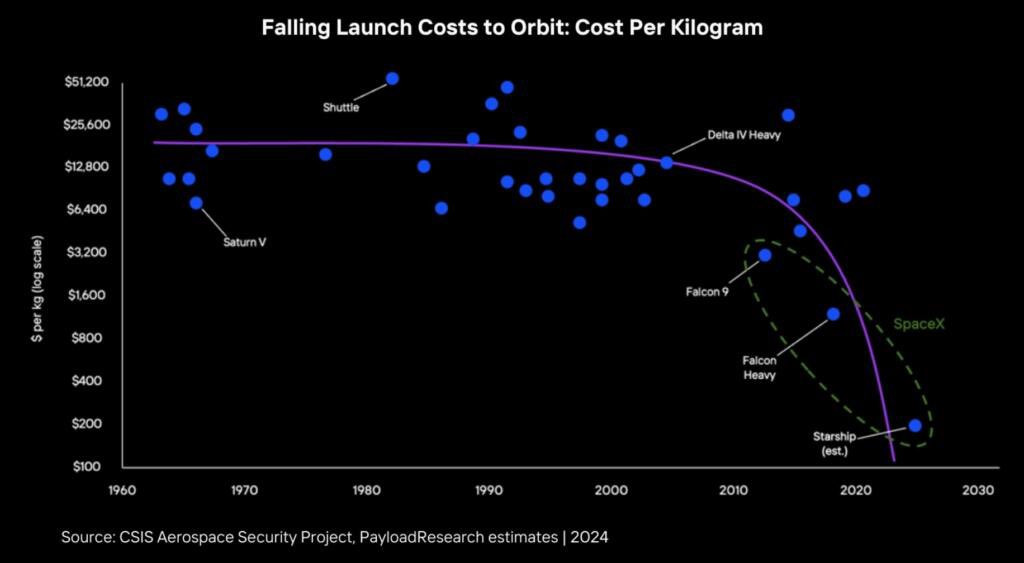
What the SpaceX team grasped from the early days that basically no one else understood is that if price to launch changes by orders of magnitude entire markets are opened up.
Starlink is just one example; it wasn’t even an idea when SpaceX was founded.
Starship’s fifth flight test lifted off with our most ambitious test objectives yet as we work to demonstrate techniques fundamental to Starship and Super Heavy’s fully and rapidly reusable design.
And on our first try, Mechazilla caught the booster → https://t.co/hibmw2lVv1
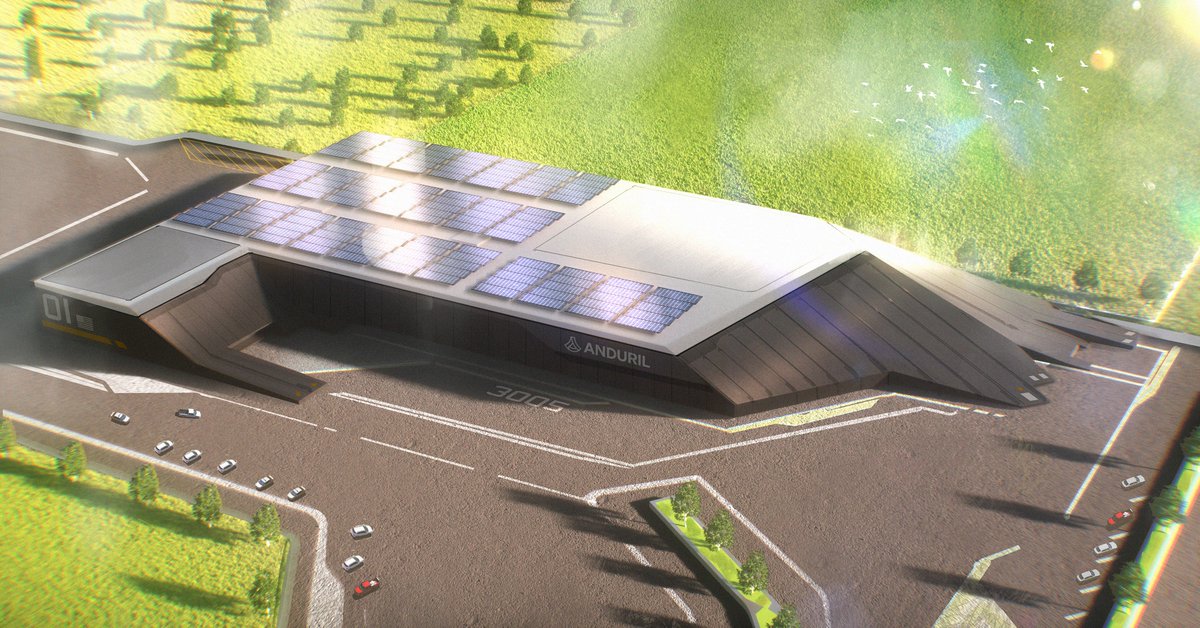
Anduril has secured $1.5B in Series F funding to hyperscale defense manufacturing. Introducing Arsenal-1, a 5M+ sq ft state-of-the-art facility to produce autonomous weapons systems. Learn more: https://t.co/ieEDejVhVb
A few years ago, I realized I wasn’t unhappy anymore.
The main change: living life noting “good days” and “bad days”.
Then, looking for the things I could control that happened on good days.
Then, deliberately repeating them.
This lead me here:
1) I eat the same stuff. This minimized bad food experiences and kept me in shape. Which always made me feel better than not being in shape.
2) I lift weights with people I like. I noticed I always had good days if I worked out with people I liked.
3) I work on something I could see visible progress on (I write everyday). I noticed when I did that, I felt some larger accomplishment.
3.5) Later I realized if I did that activity with a friend, it made it even more enjoyable. Which is what has given birth to @DrKashey and my daily writing sessions.
4) I unwind with a nice view. I noticed when I had a dedicated place to sit quietly and read or reflect my days went better.
That’s about all I’ve got that actually made me less unhappy.
Simply paying attention to what happened on good days then trying to recreate it might’ve been one of the most valuable things I’ve done for myself.
TLDR: I spend as much time as I can doing things I like with people I like and ignore as much of everything else as I can.