Here is the statement from their Harvard guru after our Rakhigarhi genetic evidence proved it beyond doubt that Indians are indigenous and Indian civilization developed indigenously India.
For history chronologically development is important not percentages.
Modern genetic evidence (that is based on what we carry) established that our genetic heritage is derived from our Founding ancestors 73 KYA (Thousand Years Ago). There is a linear evolution from the Founders Male C and Female M to our generation through genetic history.
The next step was to find Ancient genetic evidence and see if it supports this linear continuity within our genetic history or was it broken by some invasions or migrations. So they got the skeleton that roughly corresponds to that period (1900-1600 BCE).
They really hoped to find some evidence to support their invasions or migrations theory. But, alas! Our Rakhigarhi grandmother from 16000 years ago showed an indigenously evolved genetic clade U2B2. This genetic clade evolved in India is entrenched and found among a variety of populations including many castes and tribes (see my paper on genetic history to understand the linear evolution and spread of this clade among Indians).
So, all their hopes of finding some invasion or occupation were dashed to the ground. They retreated their theories of invasions and migrations occupying, destroying our original culture to impose their culture that they claimed to have brought with them. Rakhigarhi grandmother showed them the facts to the contrary. All our culture evolved indigenously from the individuals living in India.
They began saying “some people like Greeks and Persians came later”. Sure, they might have come. But that’s not an issue because the came with love and admiration for India. They assimilated so much into Indian culture that they learned Sanskrit, became Hindus of Buddhists, and lived happily in India. They are as Indian as indigenous Indians were. Some Hindu temples of 400 BCE and Buddhist stupas contain the dedicatory inscriptions of these Indianized Greeks and Persians.
So, no! No one from outside conquered or occupied India to impose their culture on India. If anyone came, they came and assimilated.
The central question here is did any alien group invade or migrate to India between 1900-1600 BCE to alter and impose their culture on India? The resounding answer is in negative.
Indian civilization is developed indigenously in all its aspects through the centuries meticulous process by the indigenous people living in India. It is a marvelous feat to preserve the Vedas over millennia!
All their falsehoods are exposed!
Question #ColonizedMinds #ReclaimHistory
Please watch what the psychiatrist below is saying first. Or just read the caption by Sahana.
Now, we need to understand this is the main reason for the DS and its Red-Green cabal to attack India's festivals while trying to brainwash India's young from celebrating them.
Why?
The DS literally run studies in many labs to understand human psychology and how to weaponize it. They really know the power of Indian festivals.
They know our festivals are designed to promote psychological well-being. They create a belonging with Indian culture, civilization, society, and boost our economy.
All these are undesirable for the India destabilizing forces. It impedes their cause. Hence they attack Diwali, Holi, Navaratri, Sankranti, you name it. They demonize Indian festivals to Indians.
They invest a lot to program young Indians to feel celebrating Indian festivals is superstitious, not cool, polluting, patriarchal, etc.
Unfortunately, many young and idealistic fall for this psyop as these DS forces appeal to the environmentalist, animal lover, feminist, or altruist in them.
India's festivals are its biggest strength. Central and state govts must make an effort to celebrate all the festivals nationwide to help more Indians to celebrate their culture and enjoy themselves.
Already, we see how UP is doing this in a grand way in Ayodhya and Kasi, and people around India feel good about it. The govt incentivized public celebrations must be brought to every city and every public square for every festival.
The spaces the DS and its red-green cabal use to destabilize India must be made into spaces that unite and celebrate India.
You've seen this photo since childhood, haven't you? Can you tell me the name? No, you can't!
This is -Bhai Mati Das, who was sawn in half on this very day, 9 November 1675, because he refused to convert, that is, to become a Muslim.
Bhai Mati Das, Bhai Dayala and Bhai Sati Das were killed in the Chandni Chowk area of Delhi on the orders of Emperor Aurangzeb, just before the martyrdom of Guru Tegh Bahadur.
Bhai Mati Das was tied between two pillars and cut into two pieces.
Today Aurangzeb is called "great," with cities and roads named after him, and the Congress and its allies bow at Aurangzeb's grave. And Mati Das? No one even takes his name.
The Mughal emperor Aurangzeb issued decrees to demolish temples and gurdwaras and to stop idol worship. Under his orders, many temples and gurdwaras were destroyed. The idols in temples were smashed to pieces, and cows were slaughtered in temples.
Aurangzeb ordered everyone to adopt Eslam and assigned the officials concerned to carry it out. He decreed that no Hindu be appointed to any high position in state affairs, and that jazya (a tax) be imposed on Hindus.
Many new taxes were imposed only on Hindus at that time. Out of fear, many Hindus became Muslems. Hindu worship, aarti and all religious practices began to be shut down.
Temples were demolished, mosques were built, and many pious people were killed. A saying from that era goes: "Aurangzeb would eat his meal only after having a sava man (about 50 kg) of sacred threads removed every day."
Aurangzeb said: "Tell everyone: either accept E slam or embrace death." With this coercion, life became difficult for people of other faiths. Hindus and Sikhs were forced to adopt Islam by every means: temptation, fear and punishment.
When Guru Tegh Bahadur refused to accept E slam, he was arrested on Aurangzeb's orders. Three Sikh warriors, Dayala ji, Bhai Mati Das and Sati Das, were also imprisoned in Delhi along with the Guru. Aurangzeb wanted the Guru to become a Muslim. To frighten him, these three were tortured to death, but the Guru was not shaken.
On 9 November 1675, Aurangzeb first ordered Bhai Mati Das to be sawn in two. He was clamped between two large wooden planks and a saw was run down through his head. When the saw had sunk two or three inches into his head, the Qazi said to him: "Mati Das, accept e slam even now. The royal surgeon will heal your wounds. You will be given a high position at court, and you will be married five times."
Bhai Mati Das asked sarcastically:
1/2
Learn Sanskrit.
Even 10 minutes a day is worth it.
You're not just learning a language. You're unlocking an entire civilisation's intellectual operating system.
A lot of people ask me how to learn Sanskrit properly.
Here is a source -https://t.co/HrR29ltvgc
Dr. Sridhar Subbana's method is one of the most methodological that I have come across.
They have both an online + short term residential program.
I have personally seen people from ages benefitting immensely from it.
Why do Western intellectuals so often despise Sanatana Dharma, and why do they seem to be so dismissive of (practicing) Hindus and Hindu faith? When it comes to Sanatana Dharma, there is certainly none of the romanticizing Western Orientalism that we find with regard to Islam (cf. "Lawrence of Arabia"), Shinto (despite WWII), Chinese religion (witness the highly respectful tone of most Sinology), or even Buddhism (which though originating in Sanatana Dharma is seen in the West as an elite religion). Even Western academics who study Sanskrit no longer seem to admire the religion it embodies, though things may have been different in centuries past. Elite Western antihinduism really does seem to be something "sui generis" -- of its own kind.
I don't have a research-based answer, though I do have a guess. I suspect it is related to a residual iconoclasm in the post-Christian West, especially in Protestant countries. Jewish lore has it that Abraham founded his religion by smashing all the idols in his father's shop. Like most Muslims, Protestant Christians have embraced this inherent iconoclasm. Today it's not only Hindu idols that they smash; they also deface and pull down their own statues. Look at civic art in the West today: except when it explicitly defiles the Western inheritance, it is all abstract. Even Mohammed would approve.
I have told Jewish audiences that elite Western antisemitism has its roots in a civilizational shame at having appropriated the Jewish God. I suspect something similar is at work with regard to antihinduism. Hindu worship is, after all, a reminder of the West's pre-Christian past. The towering classical figures of Western literature (Homer, Herodotus, Aeschylus, Sophocles, Thucydides, Plato, Aristotle, Plutarch, Virgil, Horace, Cicero, etc.) would all have felt quite at home in a Hindu temple. They would have felt equally at home performing puja in a typical Hindu home. Ancient Greco-Roman worship was essentially the same as ancient Hindu worship -- and contemporary Hindu worship. It is Hindus who have kept the classical tradition alive.
There is thus, perhaps, also a deep-seated civilizational shame in the West at having repudiated the religion of our forefathers. Might we instinctively recognize that we have embraced (indeed: appropriated) a Middle Eastern god who is not our own, and adopted Middle Eastern practices (monotheism, iconoclasm, zealotry) that are not native to our culture? At first reading that just sounds crazy, but consider the fact that Christianity has repeatedly sought to cleanse itself of recurring idolatry, just as Persia (another ancient Indo-European culture) has been the focus of repeated cleansings of Islam. Might it be that the West's folk culture has always been in tension with the iconoclasm of elite intellectualism?
The desire to burn a candle in front of an idol (of Mary or a saint), or to burn incense in a home shrine (not just for air purification) seems to run deep in Western folk spirituality.
All of this is of course highly tenuous. But I do find it plausible that there is an inertial cultural complex (not a psychological "race mind") that, having evolved over millennia, still has not after 2000 years fully assimilated the imposition of Christianity. The very fact that the ancient (Pagan) world is considered "classical" indicates that it is still a cultural touchstone for our civilization. Yet the West (and especially the intellectual vanguard of the West) is in perpetual conflict with that classical inheritance. Just look at Nolan's Odyssey to see that. We have inherited a classical literature but we recoil at a classical morality.
Hindus (or at least: the core proponents of mainstream popular Hindu faith) do not recoil at their classical inheritance, or at ours. The morality of the Bhagavad Gita does not differ much from the morality of Plato or of the Iliad, but all of these are completely at odds with the morality taught by Jesus -- or in Western schools. Traditional Christian morality and modern secular morality are very different, but they both represent a repudiation of the Indo-European classical inheritance. In short, Hindus remind us of our purer selves, or at least of our original selves. They represent the faith of the old gods from which we have strayed.
Today, Western intellectuals are clearly able to admire non-Western religions that do not remind them of their own classical inheritance. They seem, however, to display a visceral aversion to Sanatana Dharma, especially in its continuing contemporary practice. Those Western intellectuals of the 18th and 19th centuries who did embrace Sanskrit literature (British orientalism, American transcendentalism, German romanticism) seemed to have done so precisely because they yearned to repudiate their Christian cultural overlay. For today's Western intellectuals, Shinto and Buddhism can feel like refinements, whereas Hindu faith seems retrograde.
The colonized mind, of course, perceives this, but misinterprets the Western intellectual's revulsion at Hindu worship for mere disdain. The post-Hindu anti-Hindu looks down on the Sanatani's faith. But the post-Christian anti-Hindu recoils from it. Whereas post-Hindu intellectuals feel embarrassed by their Hindu inheritance (and Hindu neighbors), post-Christian intellectuals feel humiliated. Hindus are an unwelcome reminder of the religion they have long since lost.
There are of course other elements that feed into Western intellectual antihinduism: colonialism, racism, elitism, fear of the unfamiliar, etc. But its visceral nature seems to me to be much more consistent with shame. I feel personally certain that shame lies at the core of Western antisemitism. I think it likely that a parallel but opposite shame lies at the core of Western antihinduism. With regard to Jews and Judaism, the shame of having appropriated the Hebrew god results in a combination of adulation and hatred. With regard to Hindus and Sanatana Dharma, the shame of having repudiated our own gods results in a combination revulsion and resentment.
There never was a Hindu Holocaust under Western colonialism, yet neither was there much concern over tens of millions of Hindu deaths, whether due to starvation, disease, or Muslim violence. Western intellectuals don't hate Hindus the way so many of them seem to hate Jews. But they do seem to resent the mere existence of Hindus, to the point that they might prefer to see Hindus erased from history. That may sound like an extreme overstatement of Western antihinduism. If you think so, read any Western academic journal of Hindu studies and compare it to those focused on Buddhist, Shinto, Confucian, or even Muslim studies, and you'll see my point.
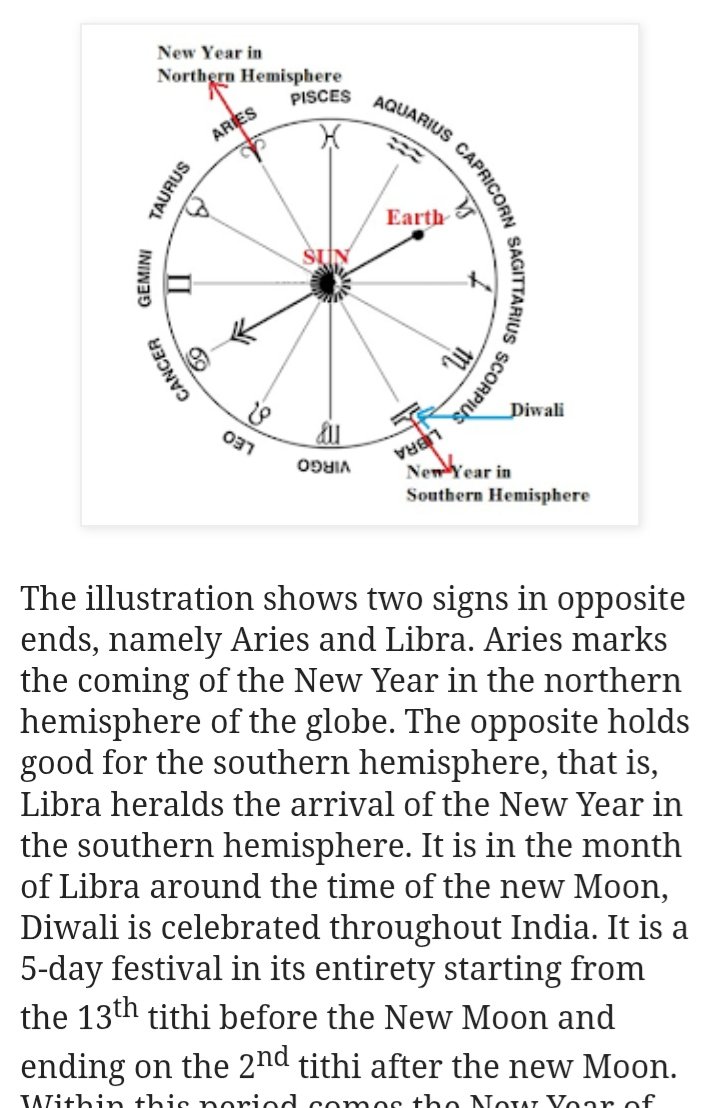
Diwali is not merely a festival of lights; its roots reach deep into the antiquity of Hindu civilization.
What does the astronomical evidence reveal about the long history of this sacred festival? Discover how ancient traditions preserve clues to our civilizational past.
Read my article:
https://t.co/xNRbfV3cWw
Pranaam. 🙏
The https://t.co/YnDMwbqZRT app for iPhone is ready for testing.
You can now get all the details: pañcāṅga for your city, the Kāla Chakra, your kundali chart, Nāḍī Śodhana meditation and the Jñāna Kośa on your mobile.
I'm looking for 5 to 10 people to try it before release (iPhone, iOS 17+).
DM me with the email of your Apple ID and tell me what breaks.
Note: This is for iPhone users only for now.
Here's the preview:
Hello everyone,
I just discovered Swastik, a website that shares simple ways to bring Ayurveda into your daily routine, from food ideas to movement and mantras for different times of the day.
I liked how it connects these ideas to things we already do, like having morning water, chai or lunch.
Check it out: https://t.co/GUTy1bnTrt
Very intrigued to see the number 432000 in this equation. Guess why?
The yuga calculation runs on the basis of 432000 years.
1x is Kali yuga.
2x is Dvapara yuga
3x is treta yuga
4x is krta / Satya yuga.
Together 4.32 million years is one mahayuga. 1000 MY is Brahma's day.
Indeed, the discovery of the long-forgotten astronomy in the Rigveda was most surprising and unexpected.
It opens many doors to the understanding of esoteric aspects of the Vedic texts.
Interesting. Hindu festivals are designed around the very things that psychologists have identified as essential for our happiness. https://t.co/aXeTJNFyKu
Remember Jai Sai Deepak argued in front of courts & judges as why bursting of firecrackers during Diwali is not a mere celebratory activity, it's a ritual back in 2015
He had go back & quote texts from Vedas, Puranas, argue for days to prove his point just so Hindus can celebrate Diwali in this only Hindu Nation we have
Only then the judges agreed & didn't banned firecrackers during Diwali
Use ur legal right to celebrate this Diwali, Burst crackers all u want !
It is extremely rare to find two people who can converse with each other exclusively in Sanskrit, with no other language to fall back on. Yet, there is a growing tribe of people who can think, articulate and express themselves in Sanskrit with a naturalness that perhaps no other language can quite replicate. The inherent genius of Sanskrit lends itself to remarkable precision and succinctness.
If this is not the revival of Sanatana Parampara, I don’t know what is!
Thank you, @prathoshap@kmadathil , for this! what a joy to witness Sanskrit being lived!
🚨BREAKING🚨: Scientist says the sun may be conscious, intelligent plasma clouds may transmit semantic information across outer space, and ball lightning seems to behave intelligently, mimicking biological life.
Rupert Sheldrake, a biologist known for constructing morphic field theory, which involves inherited learning across generations of species beyond genetics and epigenetics, says organized plasma might support a mind without a brain. He points to magnetic plasma filaments stretching between galaxies and describes a theory from independent researcher Robert Temple: a cloud at the L5 Lagrange point between the Earth and Moon might be intelligent enough to return radio signals seconds after transmission (explaining the “Long Delay Echo” phenomenon in the early 20th century at the advent of the radio).
Sheldrake’s other investigations into morphic fields, consciousness outside the body and “the sense of being stared at” have drawn attention from British intelligence. He has long documented the idea of “scopeasthesia” (the sense of being stared at) by subjects in controlled experimental conditions. He says a visitor from MI5, Britain's domestic intelligence agency, asked whether terrorists could learn to sense security cameras.
His theory of morphic resonance goes further, proposing that nature inherits patterns of behavior across time and distance. Sheldrake cites rat water-maze studies in which rats at Edinburgh and Melbourne began at the level reached by Harvard rats after generations of “training” to follow the correct route in a maze. He interprets this as possible evidence of shared memory. To illustrate how invisible fields can influence chance, he uses magnets to change the distribution of steel balls falling through a Galton board.
Sheldrake wants practical tests of these unusual abilities. He proposes a global app collecting reports of strange animal behavior before earthquakes, and is surveying firefighters who say they wake moments before unpredictable alarms. He believes he can construct a workable model for presentiment that may become practical for specific use cases.
Full conversation live now. https://t.co/NNLUoYp8Kh