Bibliophile, Logophile,
Lacto-fermenter, Aquaponics enthusiast, Beast tamer, Sub-contractor. I listen to NPR and Eclectic elevator music bandcamp scratchula
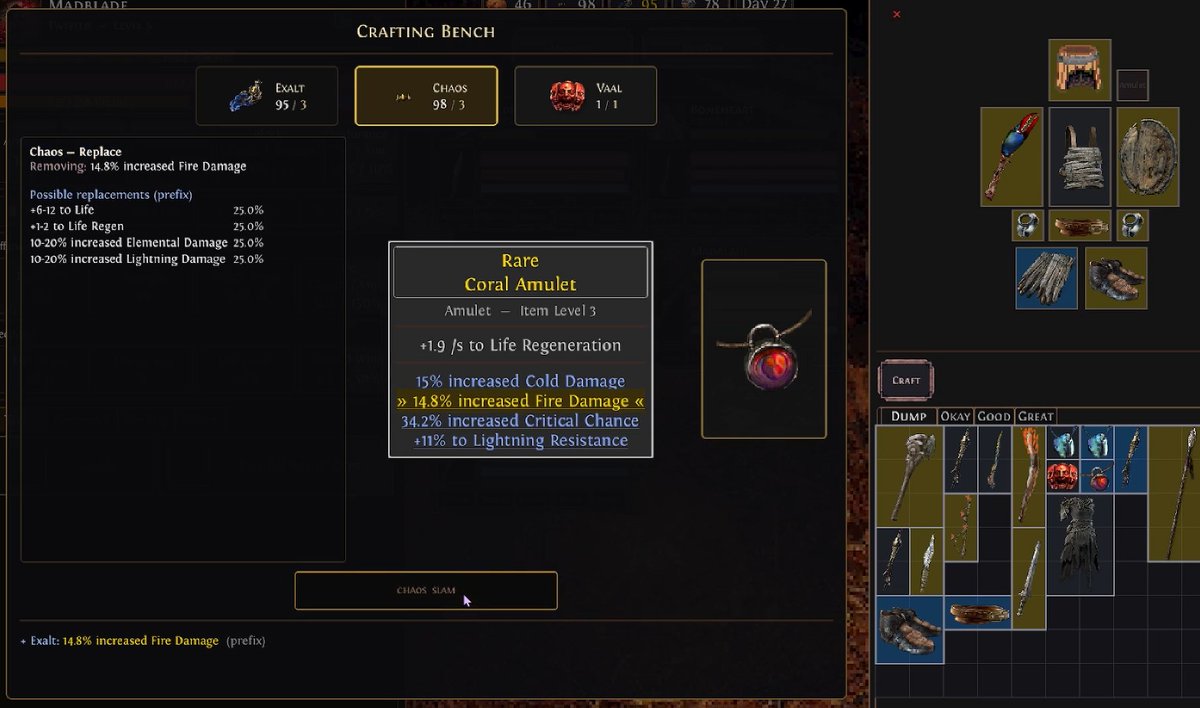
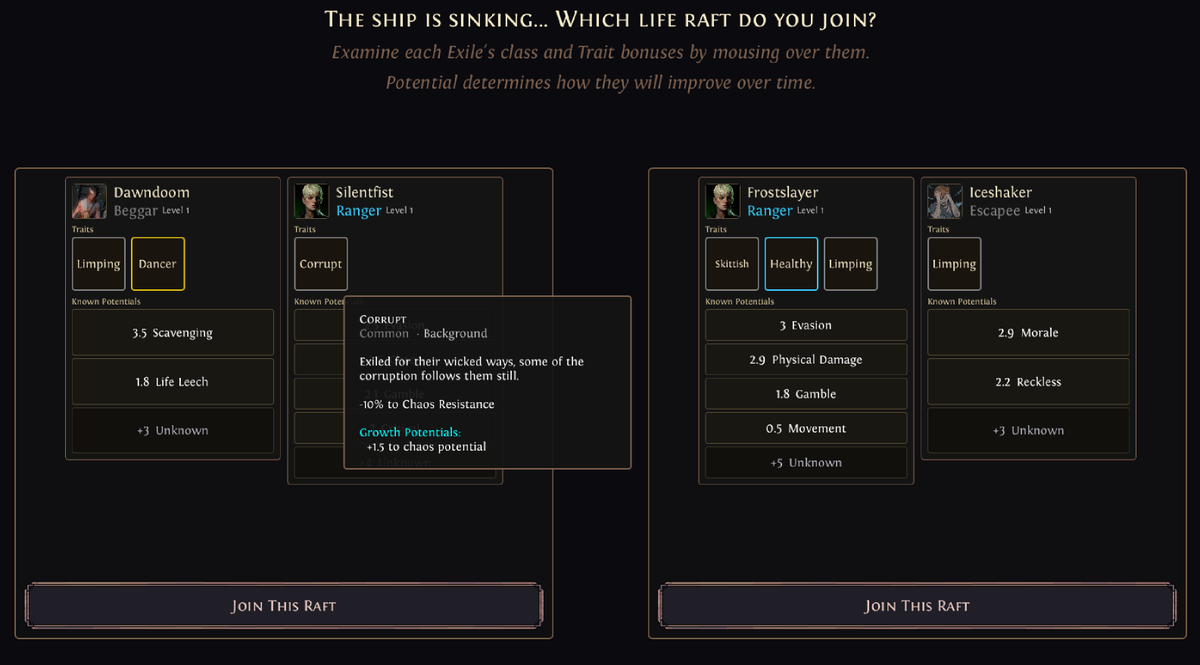
Exiled Guild Manager - my Path of Exile-inspired sim is live with it's first prototype build on itchio!
Recruit exiles, gear them up, level them, anaylse their performance and adjust their strategy. Craft gear, corrupt it, and send them to farm more!
Live itchio link below!
Before TOOL, in 1987, Maynard James Keenan was in C.A.D. - Children of the Anachronistic Dynasty. Here they are playing ‘Burn About Out’, a proto, early version of TOOL’s ‘Sober’. The Grand Rapids GRTV Public Access crew were in for a preview treat that day!!
Toru Miyazaki gave 11 cats with advanced kidney disease an experimental injection. 15 others didn’t get it. A year later, 9 of the 11 treated cats were alive. Only 3 of the 15 untreated cats survived. He just filed for approval, and the drug fixes a defect only cats have.
Most cats die from one thing: their kidneys fail. By age 10, 4 in 10 cats already have chronic kidney disease, and by age 15, the rate doubles to 8 in 10. Once diagnosed, a cat has about 2 years left.
The reason kidney disease hits cats so hard is a broken protein in their blood. All mammals carry a protein that helps the kidneys clean out waste. In humans and dogs, the protein floats freely and goes to work when the kidneys are in trouble. In cats, it stays stuck to another protein and can’t get loose. So the waste piles up, and the kidneys eventually give out.
Miyazaki originally found the protein in 1999, back when he was at the University of Tokyo. He figured out the cat-specific glitch in 2015. The paper he published in the Veterinary Journal in February laid out the trial. The injection is a working version of the missing protein. His company, the Institute for AIM Medicine, filed the approval paperwork with Japan’s Ministry of Agriculture on April 24, 2026. If the review clears, the drug goes on sale in spring 2027.
The 30-year lifespan figure in the tweet is Miyazaki’s own projection of what cats could reach without kidney disease. The trial only ran a year, and the average cat today lives 15. Most die from the same disease this injection treats.
The research almost died in 2020. After running out of funding during COVID, Miyazaki went public. Cat owners across Japan responded by sending in 300 million yen, around 2 million dollars total. He resigned from the University of Tokyo and worked on the drug full time. The treatment in front of regulators today exists because cat lovers refused to let the research die.
Bob Saget was a notoriously vulgar comedian. His fatherly Full House role was often an area of conflict for him.
While everyone tried to roast Bob Saget with equally vulgar jokes, Norm Macdonald roasted him with clean dad jokes. Very few comedians understood what was happening. Bob Saget got it. Other comedians got it. But the crowd didn't. You never heard that because the TV edit added laughter when there was very little, which took away from the hilarious nature of the awkward room.
I'm thankful Comedy Central released this full clip without the fake laughter so we could hear the room and realize just how much of a genius Norm really was.
MrBeast reveals he accidentally took all the scaffolding in America building Beast Games
“We use so much scaffolding in our set that there’s like no scaffolding in the world we use more scaffolding than the Olympics”
“Other production companies were calling us and complaining because in their 50 years of doing movies and stuff they’re like no one’s ever taken all the scaffolding in America like what the fuck they’re like we need scaffolding”
“I didn’t intentionally like come to Scaffolding Mafia I just had like these big sets like tell the scaffolding companies to make more scaffolding I don’t know what to tell you”
“I was having to apologize to other companies cause I was messing up their shoots because they’re like what do we do I was like I don’t know but you can have this in like 4 weeks”
Basit ve güzel bir anlatımla " tüm çokgenlerin dış açılarının toplamının neden 360 derce olduğunun ispatı. Hiç bir çocuk bu şekilde anlatıldığında bunu unutmaz.
The school textbooks tell you the settlers crossed the Atlantic for religious freedom.
Some of them did, partly. What the textbooks leave out is the thing that sits in the actual letters, in the sailors' accounts, in the merchant pamphlets circulating in English ports from the 1580s onwards: a major reason people came to America was the wild game. Meat you could take. Meat nobody owned. Meat that walked into camp.
For a population legally separated from the animal for five hundred years, this was the whole pitch.
Consider what they were leaving.
A family in a Devon cottage in 1618 eats pottage. Oats, barley, an onion, whatever greens grew near the back door. No meat in it this week. No meat in it last week. There will be meat in it on Christmas Day, God willing, if the chicken is still alive by then. The deer in the forest at the end of the lane have been the king's property under the Forest Laws since 1066. Taking one is a hanging offence. The father has never taken one. His father never took one. The institutional memory of not taking one goes back five hundred and fifty-two years.
Then the stories arrive. From sailors. From ship's captains. From merchants returning through Bristol and Plymouth.
The birds come in flocks that darken the sky for three days. Not an afternoon. Three days. Passenger pigeons in numbers later estimated at three to five billion in a single flock, making a sound early settlers compared to the roar of a river that refused to stop. A man with a net could take five hundred in an afternoon. The king of England had no claim on the sky over Massachusetts.
The rivers, the captains said, ran so thick with salmon that the water appeared to boil. The deer walked into camp, looked at the fire, and were shot. The oysters on the Atlantic shore came the size of dinner plates, piled in reefs you could lean over the side of a boat to harvest. Turkeys weighing thirty pounds stood in clearings with the fearlessness of an animal that had never been hunted by anything on two legs. Bison herds on the plains took four hours to cross a ford.
And nobody, crucially, owned any of it.
The father in Devon lies awake that night thinking about the sky going dark for three days. He is also thinking about religious freedom. Theological persecution was real. The Mayflower passenger list included genuine dissenters. That was part of it. It was not, for most of them, the biggest part.
The biggest part was that the animals in the captain's story belonged to nobody, and the family had been watching animals that belonged to somebody else walk past their cottage for twenty generations.
Between 1620 and 1640, roughly 20,000 people made the crossing. By 1700, 250,000. By 1900, fifty million Europeans had crossed, most of them peasants from cultures where meat had been restricted for centuries, most of them arriving within the first generation at a standard of eating their grandparents would not have believed.
A labourer in Pennsylvania in 1750 was eating more meat per week than an English nobleman had eaten in 1450. An Irish emigrant's grandchild in Boston in 1900, whose great-grandmother had starved in 1847 while Irish cattle were shipped past the coffin ships to English markets, was eating steak on a Tuesday and not thinking about it.
At the centre of the great migration was hunger. Specifically, hunger for meat. Enforced since 1066, reinforced by Enclosure for another four hundred years, reinforced by the quiet understanding that the venison belonged to the lord and the pottage belonged to you.
They crossed an ocean because, finally, you could go somewhere the deer walked into camp and the pigeons blocked out the sun and nobody had a legal claim on any of it.
You could eat like a lord without owing a lord anything.
They crossed an ocean for that.
And having got to it, they did not give it back.
It’s totally wild that geologically the Scottish Highlands and the Appalachian mountains are part of the same Pangea-era mountain chain. And then when the first Scots arrived in early America, they flooded directly into Appalachia in large numbers, as if they knew.