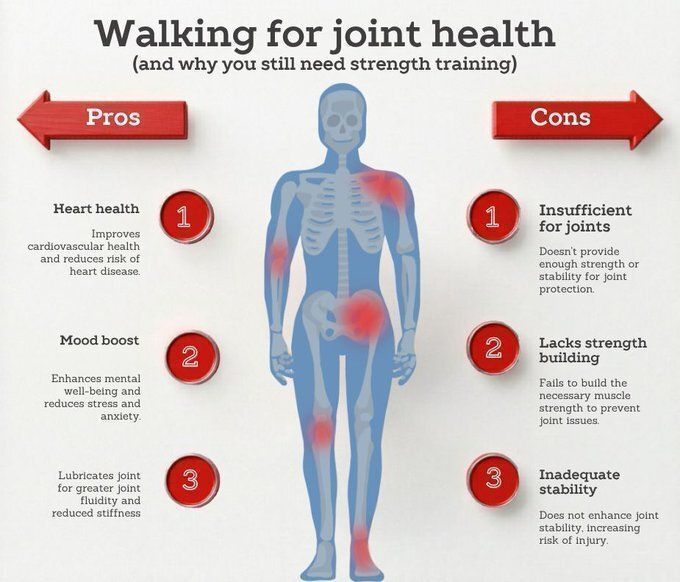
Walking is wonderful for your heart and mood. Still, it’s not enough to protect your joints.
It doesn’t build the strength or stability needed to prevent arthritis, tendinitis, or chronic pain.
Strength training is the real long‑term safeguard.
Think of walking as the warm‑up, not the whole plan.
No weights? Try doing bodyweight exercises, like:
1.Push-Ups
2.Squats
3.Lunges
4.Wall Sits
5.Planks
Walking gets you moving, but strength keeps you moving.
Which of these five exercises are you adding to your routine?
#JointHealth
#StrengthTraining
Most people stop their fast too soon...
A study published in Nature Metabolism (PMID: 38429390) followed 12 healthy people who completed a 7-day, water-only fast.
The researchers tracked approximately 3,000 proteins and discovered a massive biological shift that occurred around day three...
A mentor once told me this: Fall in love with feeling like a work in progress. Resist the urge to look polished. You don’t need to pretend you have it all figured out. Nobody does. Embrace your unfinished form. Just commit to getting a better each day and trust where it leads.
Something I realized when I became a parent is there's a window of time when your parents are healthy, your kids are little, and everyone gets to experience multiple generations of family spending time together. Cherish this time and don’t take a single moment of it for granted.
THE NUMBERS ARE IN. Processed food is dying a slow death and BIG FOOD is crumbling. There's a massive shift happening.
Look how much processed food companies have LOST in value in the last 22 months.
Stock value lost since August 2024:
* Campbell's: DOWN 54.9% (Goldfish, Pepperidge Farm)
* Conagra: DOWN 54.2% (Chef Boyardee, Slim Jim)
* General Mills: DOWN 47.6% (Cheerios, Lucky Charms, Totino's, Pillsbury)
* Kraft Heinz: DOWN 29.6% (Oscar Mayer, Jell-O)
* Lamb Weston: DOWN 25.8% (Frozen fries at McDonald's)
* PepsiCo: DOWN 17.6% (Lay's, Doritos, Cheetos, Quaker)
* Mondelez: DOWN 15.5% (Oreo, Ritz, Chips Ahoy)
* Hershey: DOWN 10.4% (Reese's, Kit Kat, Twizzlers)
People are actively shifting away from ultraprocessed foods.
Real food sales are outpacing ultra-processed sales by 7%.
This is proof that we are changing the food industry.
We have the power in our own hands.
Every time you refuse to buy an ultraprocessed product, you are voting with your dollar and sending a strong message.
Ultraprocessed foods are killing people every day.
This is why we need to keep sharing the truth with everyone we know.
The more people who find out that ultraprocessed food is poisoning them, the better chance we have to save our friends and family.
Against the odds, nature is fighting back. Thanks to growing wildflower conservation efforts, pollinators are finding food, habitats are recovering, and ecosystems are beginning to heal. The recovery has started let's keep it going.
Andrew Huberman just shattered the “eat more fiber” mantra on Chris Williamson’s podcast.
Some fibers actually increase inflammation and gut issues for many people. But low-sugar fermented foods (sauerkraut, kefir, kimchi) reliably slash body-wide inflammation.
A Stanford study by Sonnenberg & Gardner showed fermented foods significantly outperformed extra fiber for lowering inflammatory markers across the body.
Huberman drinks sauerkraut brine straight after every workout and calls it one of the most effective tools he uses.
This one really made me stop and think. We’ve been told fiber is universally great for decades, but the reality is far more individual. (Personally, I love kimchi and sauerkraut, they’ve become daily staples for me.)
The right fermented foods might be a much smarter lever for reducing inflammation than just forcing down more vegetables.
Have you noticed fermented foods helping you more than extra fiber?
Check this out: Effects of a ketogenic diet on mitochondria 🔥
In animals, a ketogenic diet was sufficient to increase energy expenditure and induce weight loss by increasing brown fat activity.
What is shown is electron microscopy of brown fat tissue. The key feature I want you to focus on is “M” which stands for mitochondria.
Under ketogenic diet conditions, shown on the right, the mitochondria are larger and more abundant compared to those in animals on a standard chow diet.
They contain more mitochondrial proteins and more uncoupling protein, indicating greater thermogenic – heat producing and energy-burning capacity.
Now, look at “L.” These lipid droplets become smaller and more numerous, increasing their surface area and making them more readily accessible for energy use.
In other words, the ketogenic diet forced the brown fat tissue to undergo structural remodeling.
The mitochondria essentially bulk up, increasing their energy-burning capacity, while fat droplets become more accessible fuel sources.
The net result was that the animals burned more energy despite consuming the same number of calories.
And I’m sorry if makes some bomb calorimeters cry.
Details in today's full letter, linked at the end of the attached thread. 🔗👇
"Develop the strength to do bold things, Not the strength to suffer." - Machiavelli
Putting up with garbage isn't heroic,
Taking action against it, is.
"Fructose has unique metabolic effects that promote triglyceride synthesis & fat accumulation [arising] from fructose’s well-known role as a signal of metabolic plenty. Under modern conditions of overnutrition, chronic excess fructose drives features of metabolic syndrome."
Sitting on the floor is one of the single highest-leverage habits you can have for staying mobile into old age
The inability to get up and down off the ground unassisted is one of the top reasons people end up in nursing homes, yet most adults haven't practiced it in decades
With this, you start restoring the end-range hip, knee, and ankle positions modern life strips away
20–30 minutes a day is all it takes
This article came out in @Telegraph this morning, and it’s already gaining significant traction, apparently reaching top three on the site within hours or release.
https://t.co/DYBBwh3bsd
There’s clearly a lot of engagement, so since I won’t be able to respond to every comment, I want to clarify a few things upfront.
First, I am not, nor have I ever been, anti-pharmacotherapy. What I am against is a lack of nuance. I don’t believe it’s my place to say something as simplistic as “X drug is overprescribed,” (some editorial liberties were taken). However, my concern is that they are prescribed without sufficient individualization and thoughtfulness.
My critique is not of pharmaceuticals themselves, but of a system that too often operates algorithmically, rather than with the precision each patient deserves.
Having personally experienced the downsides of that kind of care (multiple times), I feel comfortable speaking to it with the authority of a patient, MD PhD or not.
Second, I did not request, solicit, or pay for this article in any way. I was approached for it just as I was for an upcoming lecture at the @UniofOxford Longevity Summit, hosted at Rhodes House this weekend. I did no approaching, nor do I get any sort of kickbacks.
Third, this is not an article I wrote, nor is it intended to be an academic dissertation. If you’re looking for deeper nuance, I’d encourage you to explore my broader body of work, on YouTube or through my Substack, which covers dozens of articles on heart health and synthesizes hundreds of studies and human trials.
https://t.co/qkwEm0kQv9
And thanks for making is #2 Overall Best-Selling in Science on Substack, Globally. That's heartening :).
But I’ll leave you with this: What is a consensus worth… when the status quo it represents has failed to meaningfully improve public health?
Lift weights, prioritize protein, avoid alcohol, sleep well, and mind your junk food intake, and before you know it you’ll be the one in your friend group with “good genes.”







![fleroy1974's tweet photo. "Fructose has unique metabolic effects that promote triglyceride synthesis & fat accumulation [arising] from fructose’s well-known role as a signal of metabolic plenty. Under modern conditions of overnutrition, chronic excess fructose drives features of metabolic syndrome." https://t.co/dnJMj5L9wJ](https://pbs.twimg.com/media/HG5g2GcaMAAyyaA.png)


