Remember when there were real concerts at the Kennedy Center? Rufus Wainwright led a singalong of Piano Man, joined onstage by Garth Brooks and Don Henley.
BTW: @kencen You have eleven days to remove that godforsaken name from the Kennedy Center, per court order.
One of the greatest Kennedy Center Honors performances ever: Ann and Nancy Wilson of Heart, Jason Bonham on drums, and Shane Fontayne on electric guitar. It moved Robert Plant to tears as he watched alongside Jimmy Page and John Paul Jones.
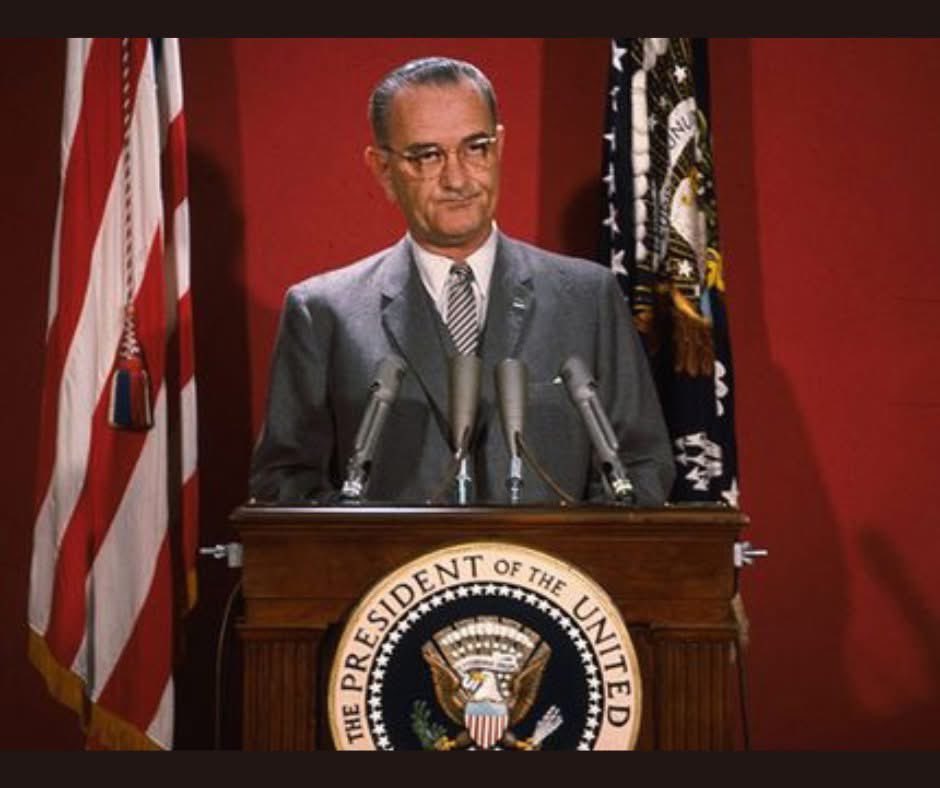
On July 30, 1965, Lyndon B. Johnson did something no American president had ever done before.
Instead of signing historic legislation at the White House, he boarded a plane and flew to Independence.
His destination was the Harry S. Truman Presidential Library and Museum.
And waiting there was Harry S. Truman the man who had first proposed national health insurance for elderly Americans nearly twenty years earlier.
Truman had introduced the idea back in 1945.
At the time, many people mocked it as impossible.
Critics called it “socialized medicine.”
The American Medical Association fought it aggressively.
Congress repeatedly blocked it.
Year after year, Truman kept pushing for healthcare protections for older Americans.
And year after year, he lost.
But Lyndon Johnson never forgot who planted the idea first.
So when Medicare finally passed Congress in 1965, Johnson decided the moment didn’t belong only to the president signing the bill.
It also belonged to the president who spent decades fighting for it before the country was ready.
Johnson flew senators, representatives, cabinet members, and guests to Missouri for the ceremony.
Then, standing beside the 81-year-old Truman, he signed Medicare into law.
The moment carried enormous symbolism.
One president had planted the seed.
Another had finally made it bloom.
After signing the bill, Johnson turned toward Truman and did something deeply personal:
He officially enrolled Harry Truman as Medicare’s very first beneficiary.
Johnson handed Truman Medicare card number one.
Then he handed Bess Truman card number two.
The room reportedly filled with emotion.
Truman looked at the card and told Johnson:
“You have done me a great honor in coming here today, and you have made me a very, very happy man.”
It was more than a political ceremony.
It was one generation honoring the unfinished work of another.
Within six months of Medicare becoming law, millions of older Americans had already received hospital coverage through the program.
Today, tens of millions of Americans rely on Medicare for healthcare.
And it all traces back to that warm afternoon in Missouri when two presidents sat side by side one who dreamed of the idea, and one who finally made it reality.
History often remembers the person who crosses the finish line.
But sometimes the most meaningful moments happen when the person who finishes the work pauses long enough to honor the person who started it.
Thank you, @WFPChief Cindy. Thank you for your unwavering commitment to the poor, the vulnerable, and the forgotten around the world.
You stepped forward when the world needed leadership, bringing light, compassion, and attention to people facing unimaginable hardship.
I am proud to call you my friend. Your husband is surely looking down on you with great pride—and so am I.
Thank you for your service, your courage, and your humanity. ❤️
@FluteMagician Rapid, that word is what worries me. SpaceX has done some awesome stuff with bringing rockets back down on a launching pad, but it's 1 at a time. We have 1000s of flights across this nation daily.
@adgirlMM So this money spent for newspaper subscriptions are a separate line item or is this part of each congress person's office budget? The get an expense acct for staff and all necessities to run their offices in DC and back home.
18 years ago today, Prince blessed us with the greatest Super Bowl halftime show of all time….don’t even remember the teams that played the game that night but will forever remember the show he put on
@mjfree FDIC is in jeopardy. It was put into place by Federal reserve sys and FDR in the 30s to insure your savings if the bank collapsed. Banks were collapsing partially due to bank runs because people were afraid of their savings disappearing so they'd go close out their accounts.