The best way to teach children how to be critical thinkers about social media (or any new information) is for schools to:
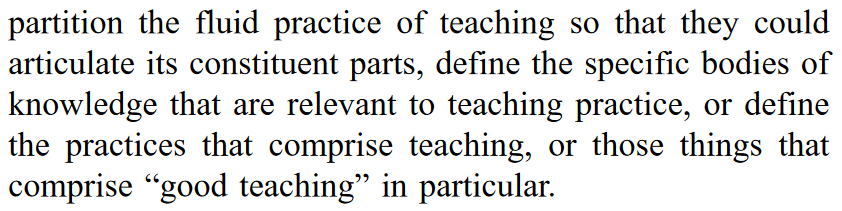
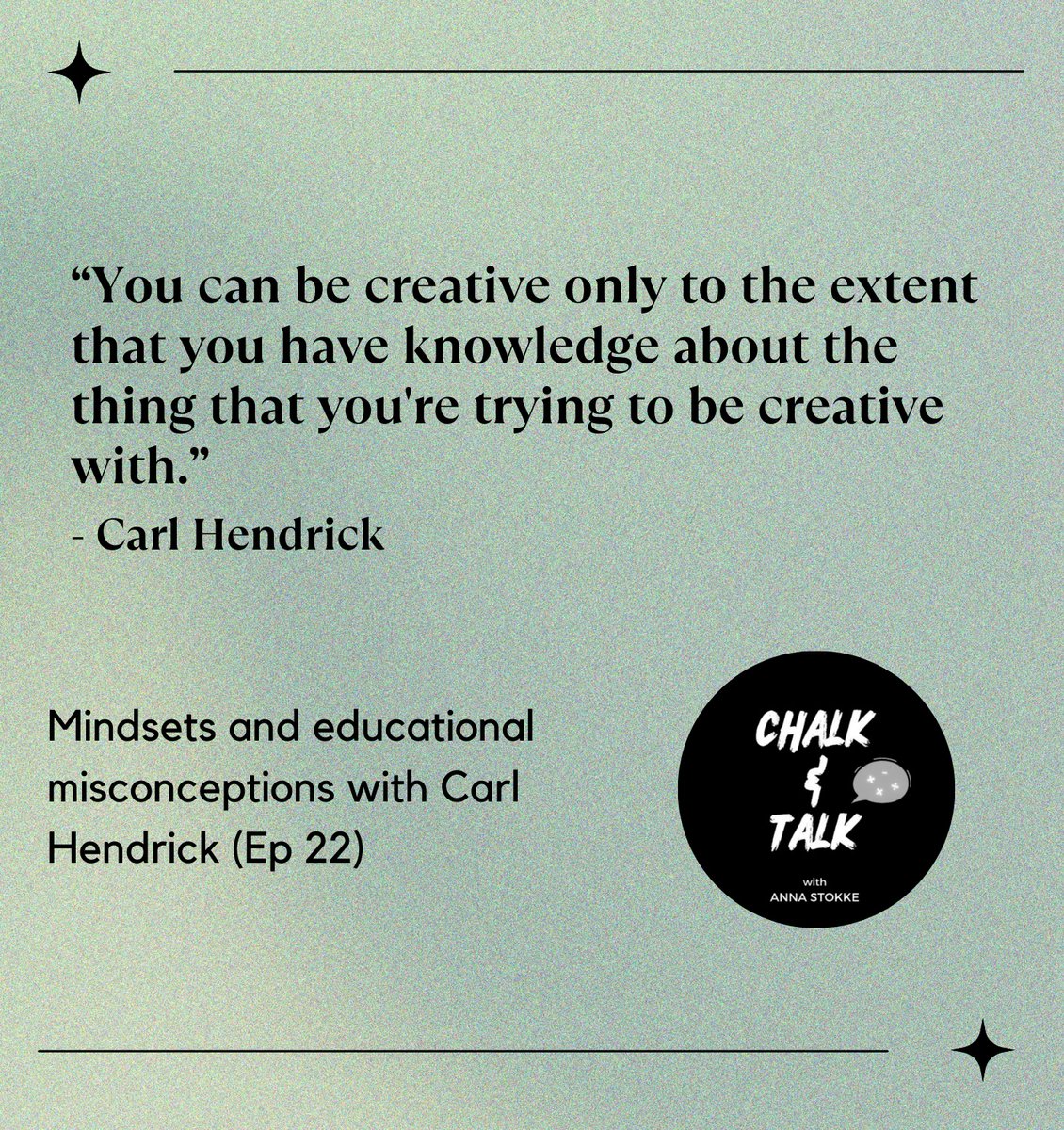
1. Make sure they know lots of core knowledge about science, history, language, etc so that false information is easier to challenge, and they possess robust frameworks of existing information
2. Teach them how to formulate logical arguments and syllogisms, and identify faulty reasoning.
A few assemblies on fake news won’t cut it. The best way to nurture generations of informed critical thinkers, is by teaching them acres of knowledge-rich domain content, and how reasoning works. Critical thinking isn’t a skill separate from these things; it is composed of them.
Charlotte Pottinger's Retrieval Practice at @RiversPrimary is pure gold- and you can see her students think so as well. Video and notes here:
https://t.co/m24BLYzLUJ
Last call for our FREE webinar with @daisychristo
tomorrow at 7pm GMT, "Using Formative and Summative Data Effectively."
Register now so don't miss out!: https://t.co/Hk8nER594N
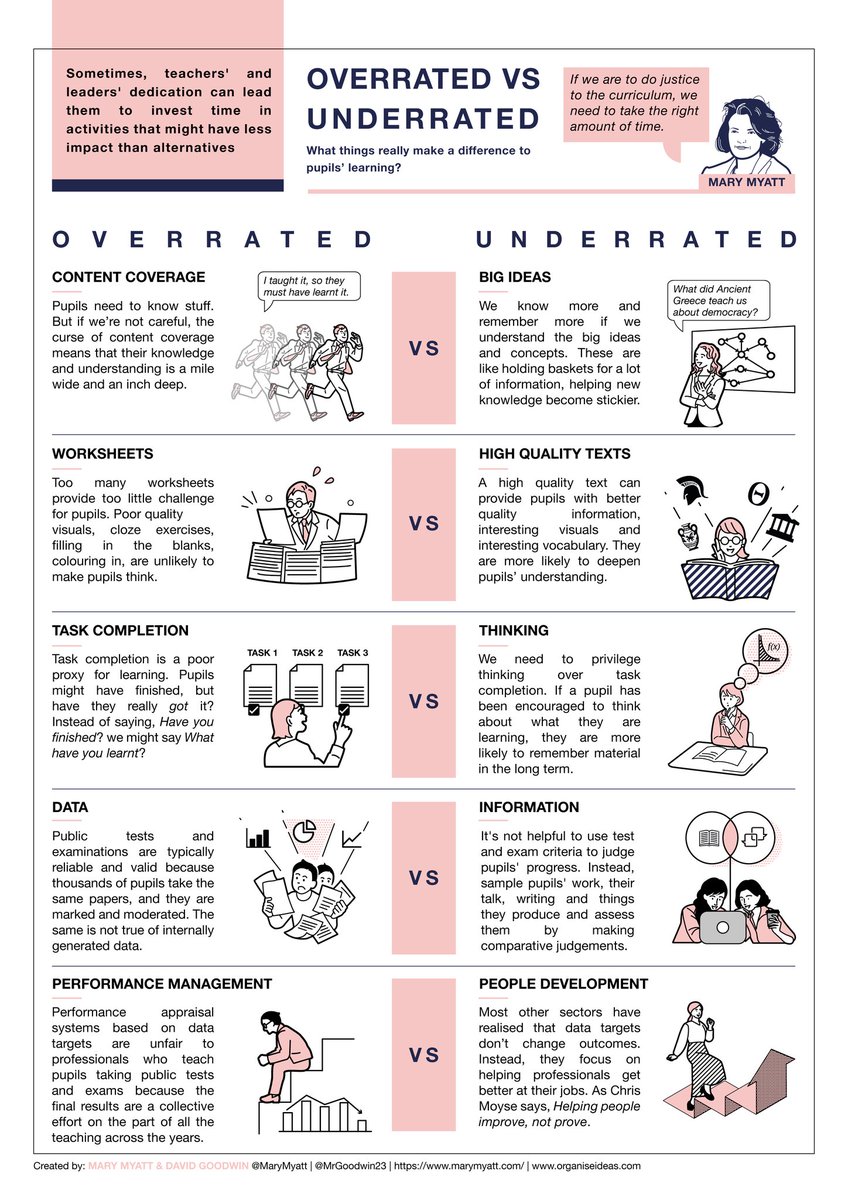
@VallanceTeach And you still get people downplaying knowledge and promoting critical thinking and creativity etc without taking pains to stress the need to establish the knowledge foundations for these things. That said, curriculum is often way too full - leading to a shallow whizz through.
📣 Exciting news!
This summer terms brings a Steplab webinar series designed to help you supercharge your PD programme.
They’re open to anyone interested in great PD, hosted by our brilliant team @Josh_CPD, @HFletcherWood@MrsBallAP, @rs_sewell and @AniaTownsend.
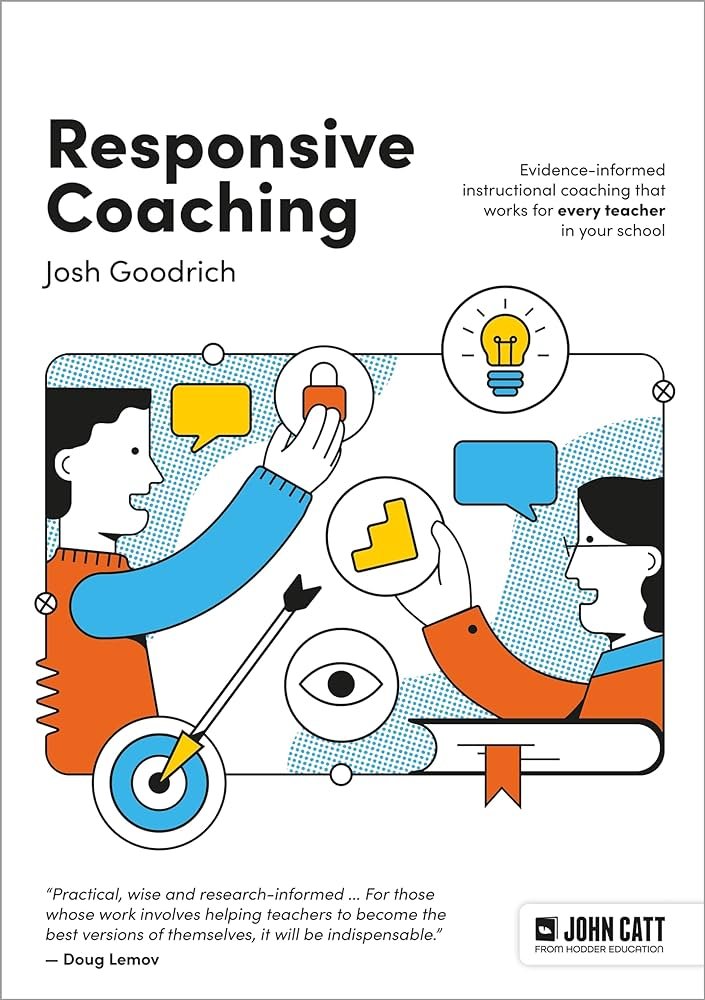
@Josh_CPD's book, Responsive Coaching, is one of the two best education books I've read in the last year. It's available here: https://t.co/v1NR5PYXZv
The other is @Kris_Boulton's magnum opus, which he'll be coming on the podcast to discuss with me soon.
I'm very, very lucky!
"Our data suggest that for classes in which retrieval practice occurred, 92% of students reported that retrieval practice helped them learn and 72% reported that retrieval practice made them less nervous for unit tests and exams." https://t.co/QxjNTO50GS
If you allow students to select the challenge they prefer, don't be surprised if the furthest behind don't make very much progress. But you can hug yourself, knowing how groovy you are
Nice to talk about inquiry learning in international schools… the abundance of after school tutoring on foundational skills combined with the good behavior of the children can mask that the students aren’t learning from it.
https://t.co/nlI5CYqWRJ
Custom KS2 arithmetic tests are here!
https://t.co/X2leWyX81o
Please watch and share if you find this useful.
Massive thanks to all the members that now support the site. It wouldn't be possible without you! https://t.co/kiWSwQeQUs
Small steps matter.
And when you break complex skills down into small steps , those small steps often look like what we'd call knowledge!
https://t.co/D4wY4C6cGA
You favour inquiry learning but the evidence supports explicit teaching. What do you do? Try this.
1. Argue using personal anecdotes that nobody can refute
2. Suggest inquiry learning is better for vague things that cannot easily be measured
3. Argue, without evidence, that inquiry learning already includes all the good bits of explicit teaching
4. [Similar to three] Argue that it’s all a false choice and sophisticated people understand nuance etc.
5. Construct a straw man. Assert that advocates of explicit teaching claim that 100% of students will learn everything 100% of the time by using the approach then point out that’s unlikely
6. Claim advocates of explicit teaching are male, ignoring all the female ones, and then imply there’s something toxic about that
7. [Similar to six] Claim that explicit teaching is somehow right wing
8. Suggest advocates of explicit teaching are authoritarians who like the sound of their own voices and just want to tell kids what to do
9. Argue, without evidence, that explicit teaching won’t work for some children. If you have a child yourself, deploy them now.
10. Point to evidence that degraded forms of explicit teaching, such as straight lecturing, are not as effective as conditions that are also not inquiry learning.
11. Argue in pejorative cliches such as ‘just tell ‘em,’ ‘drill and kill,’ ‘rote memorisation of disconnected facts,’ etc.
Have I missed anything?