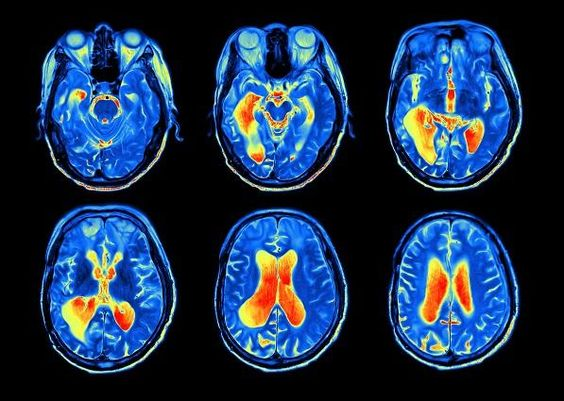
All Paid Courses (Free for First 4500 People)
𝗣𝗮𝗶𝗱 𝗖𝗼𝘂𝗿𝘀𝗲 𝗙𝗥𝗘𝗘 (PART - 3)
1. Artificial Intelligence
2. Machine Learning
3. Cloud Computing
4. Ethical Hacking
5. Data Analytics
6. AWS Certified
7. Data Science
8. BIG DATA
9. Python
10. MBA
(72 Hours only )
To get-
1. Follow @darshal_ [MUST]
2. Like & Retweet to get DM
3. Reply " All "
Rest in Peace, Jane. An honour to have met and learnt from you over the years. Today, your words ring deeper than ever:
"We have not inherited this Earth from our forefathers; we have borrowed it from our children."
@JaneGoodallInst
In these days of mega franchises like MI, CSK and KKR, I can never forget the first franchise team I read about!
It featured H G Wells, Rudyard Kipling, Arthur Conan Doyle, P. G. Wodehouse, G. K. Chesterton, Jerome K. Jerome and A. A. Milne and assorted professors, architects, big game hunters and painters.
Their captain and founder was the writer of Peter Pan, James Barrie.
The team's name was a portmanteau of Barrie's name and the mistaken belief that 'Allah akbar' meant 'Heaven help us' in Arabic, very apt, given that they were wonderful authors and terrible though hugely enthusiastic cricketers.
But Barrie always encouraged his players. He praised one teammate's performance by observing that "You scored a good single in the first innings but were not so successful in the second."
His selection policies were also unique. In his words, “with regard to the married men, it was because I liked their wives, with the regard to the single men, it was for the oddity of their personal appearance.”
He was a canny captain. He would never allow his players to practice on the ground just before a game as the sight would invariably boost the confidence of the opponents.
He would also remind his players that, “should you hit the ball, run at once. Do not stop to cheer."
It was tough captaining the Allahakbarries. As it was the easiest position to field, most of the fielders would go to long on, sometimes as many as seven would gather there with huge gaps in the rest of the field.
The team played all their matches in the magical pre-war era, and some of them lost their lives later in the great war of 1914.
But the story of the Allahakbarries remains an inspiration to all cricket enthusiasts, and Barrie's book about the team had a foreword by Sir Donald Bradman when it was re-released in 1950!
I'm 36.
Stress controlled me for years so I turned to neuroscience.
After 1200+ hours studying elite athletes, CEOs & psychologists, my toolkit is now full of powerful neuro-hacks.
Here are the top 7 that will change your life:
Lost hands & legs to polio as a kid, doesn't give up, qualifies as mechanical engineer, goes on to win gold in paralympics, turns entrepreneur to give employment to many disabled people.
He is Shri KS Rajanna from Karnataka, incredibly determined and resilient #PeoplesPadma
Kane Williamson's childhood coach speaks to Sriram Veera about how he got ready for this World Cup after that nasty injury, and how he is like away from the limelight. Lovely read: https://t.co/DMkDIPOJlf
THE BASICS WORK IN INDIA
Rohit is right about India.
1) First, the basic daily loop of a tech worker is now easy in India. Wake up, hit the gym, open laptop, get coffee, call an Uber, hang out with some friends, etc — that’s all there. Reliable power, internet, air conditioning, roads, airport…all the basics are present. Sounds trivial, but it’s not — a lot of infrastructure has to come together for that to be true. And it wasn’t as present a decade ago.
2) Second, the public goods are also there. Unlike SF or LA, the streets aren’t filled with people that NGOs have addicted to drugs. In fact, they’re cleaner every day, and the transit infrastructure is improving too. The crime rates are lower, the community spirit is stronger, people are more positive and optimistic. You don’t see all this in the numbers, but it matters.
3) India is fundamentally an ascending world country. It’s not perfect of course. I don’t think pollution in South India is actually that big a deal, but the paperwork in particular is still something that needs improvement.
4) Still, as a launchpad for the world? India is absolutely there now. The Indian engineer doesn’t 10X their standard of living by leaving, as they did 40-50 years ago.
5) Sure, the most ambitious may still go diasporic until GIFT City[1] becomes as business-friendly as Singapore or Cayman. But the baseline has *vastly* improved and that changes everything.
[1]: https://t.co/O4XCpN3DcO
@bhogleharsha would love your insights on the 2 upsets we’ve seen so far. Is it sub-continent pitches, complacency / lack of preparation from ENG & SA, or downright being outplayed by AFG & NED? And any predictions for upcoming potential upsets? #CWC23#ICC#AskHarsha
Don't miss this powerful tribute by Amit Chandra (among India's leading professional philanthropists) to Charles Feeney (Founder, General Atlantic & Duty Free Shoppers)
“Warren Buffet famously said, ‘Chuck's been a model for us all…he is my and Bill Gates' hero.’"@ATEChandrafdn
In a tribute to Chuck Feeney, the multi-billionaire who passed away this week, Amit Chandra, chairperson, Bain Capital India Office & Founder @ATEChandrafdn, recollects how the entrepreneur and philanthropist continues to be an inspiration https://t.co/SmQddaiBr6
@farzyness There were often minor / poor versions before they got to where they are today. Plus, not everything world changing is always visible or frequently spoken of. For instance, the move to Apple Silicon from Intel is world changing for the chip industry and innovation. (2/3)
@farzyness Not everything you do will make the highlight reel no matter the org/ceo/sportsperson. Even Apple in its heydays to which you are apparently referring. Most of its products-iPhone/iPad/MacBooks/watch/retail stores took several years to become ubiquitous and life-changing. (1/3)
Grades Matter
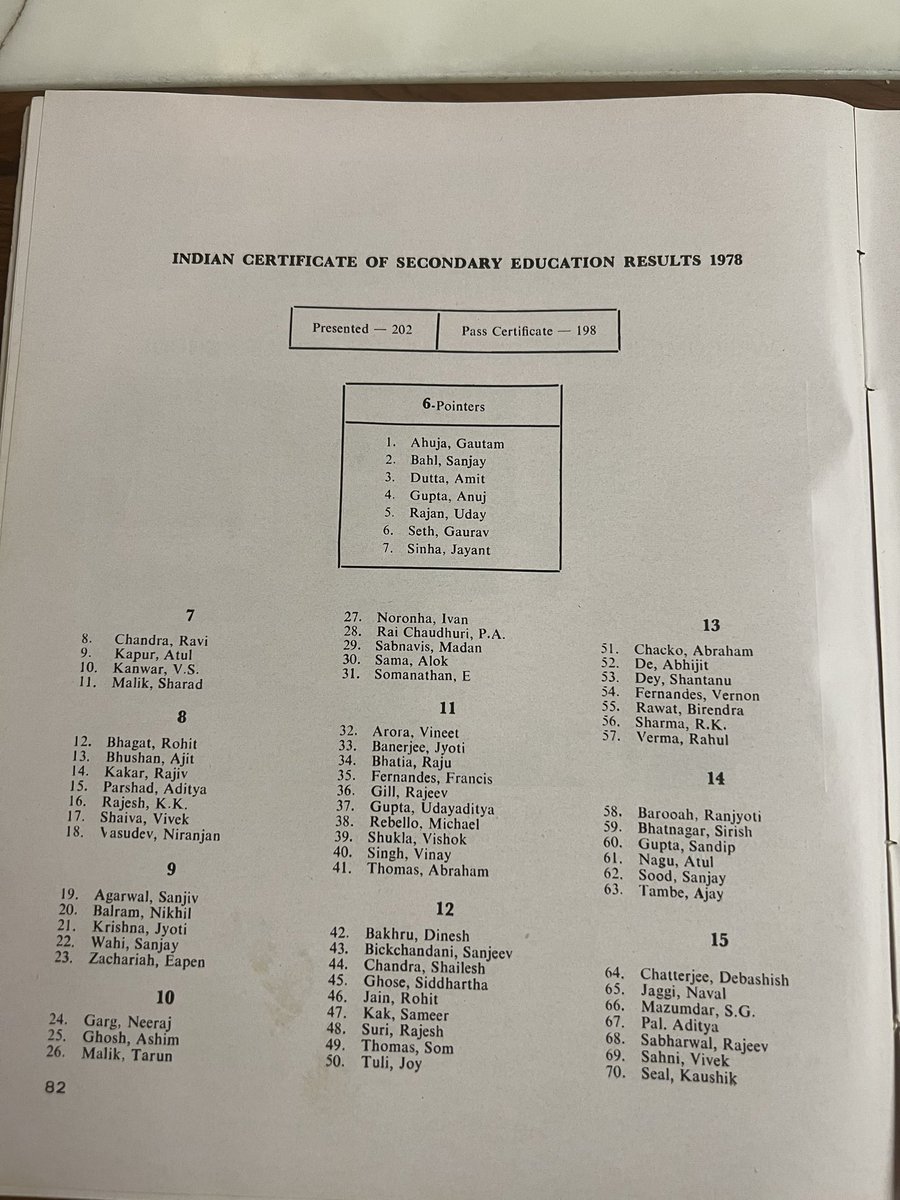
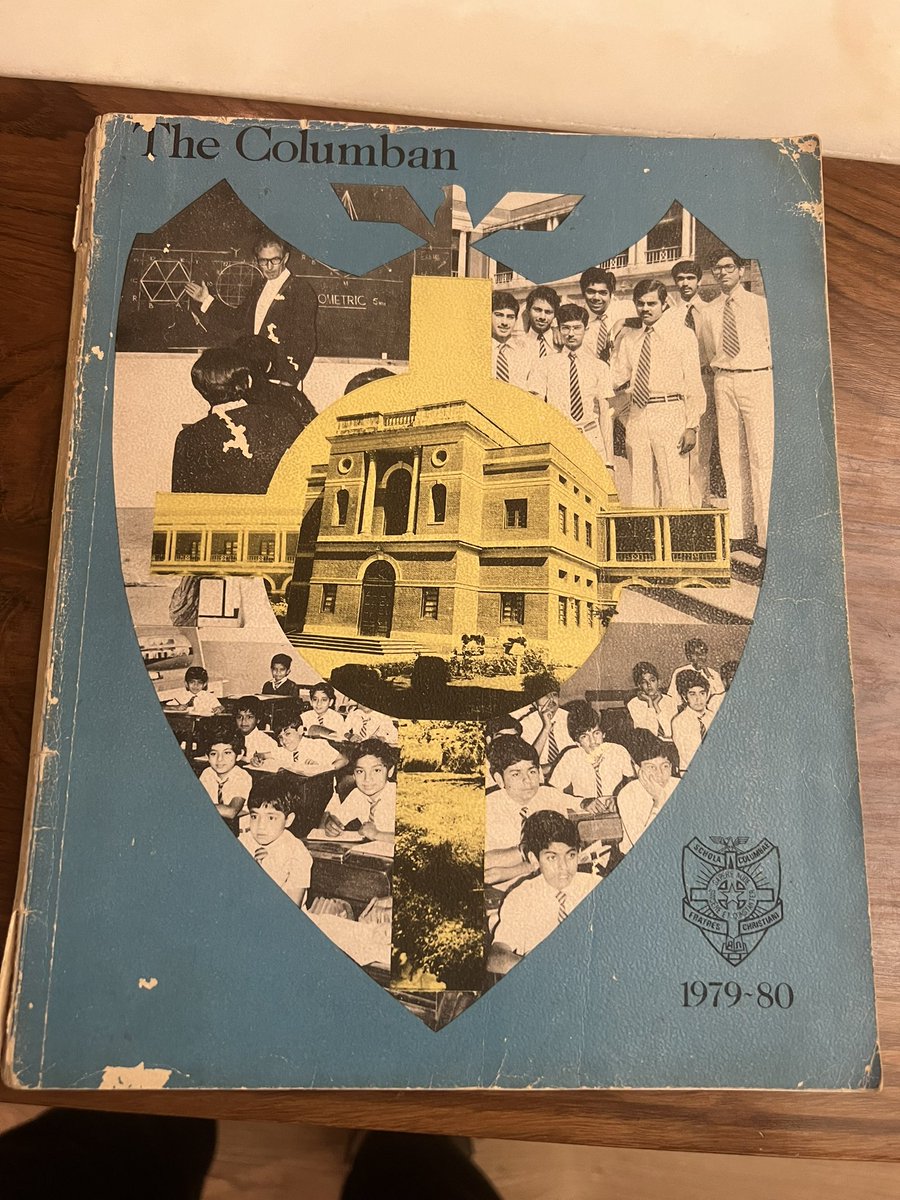
These two photographs are from the 1978-79 issue of my school magazine The Columban.
In that era grades were not private and they were published in our school magazine.
In 1978 around 200 students in my batch wrote the Class 10 Board exam.
The list in the picture shows the academic performance of the top seventy students.
The cohort is now averaging approximately sixty years of age. A good time to take stock of the career trajectories of people.
If I look at the top fifty students by academic standing and try and piece together their careers here is what I see.
Two have passed away and I have no news of another six.
Out of the remaining forty two eleven studied Economics at St. Stephens. Thirteen went to IIT. Seven went to IIM Ahmedabad. Another six went to other business schools including Harvard, Wharton, Kellogg and Carnegie Mellon. I see seven PhDs from the leading universities of the world (Berkeley, University of Michigan, Harvard, Stanford, Yale among them). I see a gold medallist and a distinguished alumnus from IIT Delhi. I see a Delhi University record holder in mathematics. I see that almost all the others went to other excellent colleges - SRCC, AIIMS, MAMC, BITS and others.
I see people working as professors at Princeton, University of Texas and Cornell. I see entrepreneurs and senior executives and bankers. I see a former President of SoftBank, a former India head of BCG, a former partner of McKinsey, a two term Lok Sabha MP and former Minister of State for Finance and a former Minister of State for Civil Aviation, a founder of Everstone Capital, a former India CEO of Coca Cola, three medical doctors, a photographer and a musician and a nationally ranked squash player.
Almost all of these fifty have had stellar careers in their chosen field and all of them got to where they did by dint of their effort and their academic accomplishments.
To the best of my knowledge none of them did drugs and nobody did politics and aandolans in college.
The point I am making is that good grades open doors. Unless you are from an already wealthy family and can look forward to an inheritance or if being financially successful is not one of your aims and you don’t really want to get into the next good institution of learning or get a job in a leading organisation you should be focusing on academics as your most important priority.
Good grades open doors. The effort you put in to achieve these grades adds intrinsic value to you. This is old fashioned advice but it is true.
However you will need to be patient and toil diligently and consistently for a longish period of time for the payoff’s to come. You will need to attend every class, read every reading, prepare for every exam and work hard on every assignment. You will need to focus and be committed.
Having said this I acknowledge that there are different yardsticks to measure success and the type that my class has demonstrated could be dismissed by some people as blinkered and so so middle class and conventional. @AshokaUniv
Your call
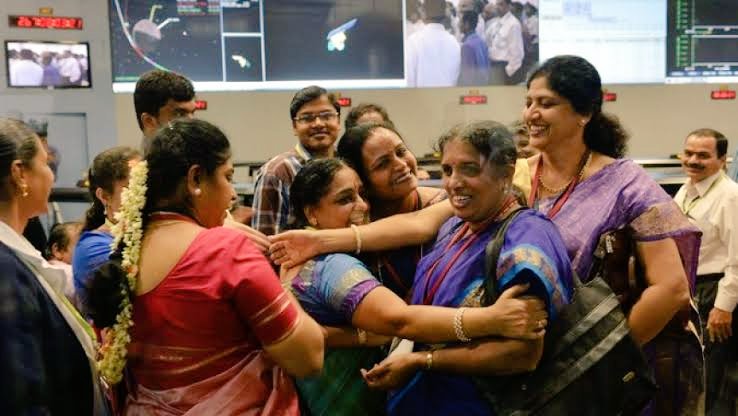
Really?? The truth is that, in large part, our poverty was a result of decades of colonial rule which systematically plundered the wealth of an entire subcontinent. Yet the most valuable possession we were robbed of was not the Kohinoor Diamond but our pride & belief in our own capabilities. Because the goal of colonisation—its most insidious impact—is to convince its victims of their inferiority. Which is why investing in BOTH toilets AND space exploration is not a contradiction. Sir, what going to the moon does for us is that it helps restore our pride & self-confidence. It creates belief in progress through science. It gives us the aspiration to lift ourselves out of poverty. The greatest poverty is the poverty of aspiration…




![darshal_'s tweet photo. All Paid Courses (Free for First 4500 People)
𝗣𝗮𝗶𝗱 𝗖𝗼𝘂𝗿𝘀𝗲 𝗙𝗥𝗘𝗘 (PART - 3)
1. Artificial Intelligence
2. Machine Learning
3. Cloud Computing
4. Ethical Hacking
5. Data Analytics
6. AWS Certified
7. Data Science
8. BIG DATA
9. Python
10. MBA
(72 Hours only )
To get-
1. Follow @darshal_ [MUST]
2. Like & Retweet to get DM
3. Reply " All "](https://pbs.twimg.com/media/G6fE5blbwAAcay0.jpg)