1/🧵Navin Fluorine & Chemours 🌬️💻
Navin Fluorine is now the SOLE global manufacturer powering Chemours' Next-Gen AI Liquid Cooling Venture!
As 3M entirely exits the data center cooling landscape, Navin Fluorine steps in to plug a multi-billion dollar monopoly gap.
CMP Rs 7494
Market Notes - June 2026
I cover:
1. Indian Markets
2. New Cycle?
3. How to play the cycle?
4. Private Capex
5. Nifty vs Rest
6. Going Global
7. Earnings Digest
Link: https://t.co/0ubkQYosjK
The Indian battery chemicals value chain, and the FEOC bet sitting underneath it 🔋
First, the cost breakdown of a li-ion cell (BOM):
Cathode: 30 to 40% of cell cost, the most expensive piece. This is where the LFP vs NMC fight plays out.
Anode: 10 to 15%, mostly graphite today, with silicon slowly creeping in.
Electrolyte: only 6 to 10% of cell value, but the part everyone underrates.
The rest: separator, copper and aluminium foils, binders, conductive carbon and casing.
The electrolyte itself has three layers:
Solvents (organic carbonates): the bulk of the volume.
Lithium salt (mainly LiPF6, with LiFSI as the premium option): the hardest piece to actually manufacture.
Additives (VC, FEC and others): a tiny fraction of volume, but punch way above their weight on cycle life, safety and margin.
Now the players, mapped to where they sit:
Cathode and anode: Himadri (HSCL) on LFP cathode plus silicon anode via its Sicona stake, and Epsilon Carbon on synthetic graphite and carbon black.
Iron phosphate (the LFP precursor): Sudeep Pharma.
Formulated electrolyte: Gujarat Fluorochemicals and Neogen Ionics.
Electrolyte salt (LiPF6): Neogen via the Morita JV, and GFL.
Electrolyte additives: Acutaas (the old Ami Organics), the first additive maker outside China.
-Now the actual bet these cos are making is on FEOC which stands for Foreign Entity of Concern, a US rule that decides whether an EV qualifies for the clean-vehicle tax credit.
-Battery components from a covered nation were banned from 2024, processed critical minerals from 2025. The covered list is China, Russia, North Korea and Iran, but in reality this is about China.
-Electrolyte salts, additives and anode graphite got a temporary pass because they're hard to trace, but that exemption runs out at the end of 2026.
-From 2027, supply chains have to move to non-FEOC suppliers, and international customers are already shifting through this year to get ahead of it. China still dominates LiPF6 and electrolyte, so this is a real scramble.
Essentially, it's a regulatory arbitrage. Otherwise, these chemicals are over supplied in the world from China. Lets see what happens to their margins as the capacities start commissioning from FY27 end to FY28.
Milking the Quarter & Starving the Decade.
Take the Board of Cricket Control of India. A tax free billion dollar revenue machine. In return it is supposed to maintain stadiums. Unless you watch it from VIP boxes or carry your own sofa to it have you seen the experience at the stands? On a recent IPL match next to me in the Vijay Merchant stand sat a family of three. The man is a security guard who has brought his wife and young daughter to the game. 3 tickets would have put him back by a month’s earnings and in return an ergonomically impossible plastic bench where unless you are size zero you will struggle to fit in comfortably.
The BCCI is supposed plough it back into the sport from where it earns. Instead it is milking the franchise for extra juice. The pitches have been flattened to a level that I am convinced I can also give Bumrah a whack or two before he castles my stumps! I miss the battle of wits between the bowler and a batsman.
India’s top 10 IT Companies were valued at $400 billion in Dec’24 and today at about $235 billion have nearly loss half their value.
Peel the onion and you see the same pattern. In decadal good times instead of investing, fat dividend payouts were made.
The automobile guys have done a relatively better job with electric cars but when you visit plants in India and those in China it appears we operate in a different century!
Pharma we played the Process vs Product patent and on generics became the pharmacy to the world but over 75% of our APIs come from China. Great start but then we remained there instead of going up the value chain and playing the R&D game.
Commodity manufacturing company CEO will tell you they are hesitant to invest in new capacity because that will mean diluting equity and servicing debt until commercial production starts in the new facility. In the immediate the stock will take a hit.
A bank CEO close to end of his tenure is incentivised to cut costs, stop expansion of branches and stop investing in technology so that he can retire on a high.
Which voter does not like free money, electricity, loan waivers etc. So is it a surprise we seeing competitive redistributive economics at play with voters almost conducting an auction on who can give them more. Long term consequences be damned.
Finance minister knows that cutting spending or raising rates creates immediate pain, printing currency stops the headache right now, so what if it causes cancer later!
Tax departments seek to maximise their short term targets even if it comes at the cost of survival of the businesses.
Our Institutions, Corporates, Bureaucracy and Private Citizens all have to re-orient themselves towards getting the long term right.
Let's make a beginning at the corporate level which is more under our control. Can we get the decade right even if it comes at the cost of a few quarters? Pandering to market means baby steps instead of leaps.
India has to realise there is no gain without pain.
Attended a few sessions at the ET Markets Summit today. Some really interesting and sharp statements made there by industry stalwarts, sharing a few of those. May be worth paying attention to:
As an aside, must mention that the moderation of the panels was really superb!
General observations:
1. Banks, Pharma seem to be universally liked, and IT seems to be a universal cautious stance.
2. Bottom-up stock picking emphasized
3. Mixed view on manufacturing
4. Directionally positive consensus view on Nifty even in short term
FM specific views:
1. Sunil Singhania: i) Can't react to every noise (in the context of daily swings on the US-Iran narrative). ii) Lot of quality stocks have given zero returns for long periods. Importance of choosing the right stocks. iii) Likes banks (esp private banks), pharma, mfg. IT is maybe a tactical bounce
2. Sailesh Bhan: i) Consumer sector while still not very cheaply valued, is running very low on expectations. ii) Virtually no one believes the sector can grow more than single digits. Perfect setting for a positive surprise. iii) The best of the banks in India today are trading at bankruptcy valuations. iv) There is no free money in equities. You need patience and a longer term time frame to make returns.
3. Utpal Seth: i) Deep value for both banks and IT services but resurgence on lending side will be much faster and better. Sustained credit cycle growth 10-15 years. Financials he has max conviction. ii) If you combine an inflation shock and a growth shock you will send economy into negative spiral. RBI unlikely to do that hence does not believe there will be rate hikes.
4. Sridhar Sivaram: i) High inflation may be a transient phenomenon; does not need a rate hike. ii) IT may continue to get derated with low growth.
5. Sandeep Tandon: i) Very positive on markets especially positive on smaller market cap stocks. ii) Quasi passive strategy will not be very effective. Need to stick head out and focus on alpha. iii) Won't be surprised to see 64 and even 48 USD levels in Silver in next 1 year. iv) Thesis of buy and hold is passe. Need to be more active in portfolio churn. v) Look for underowned names. vi) Depreciation cycle may be peaking out. Prefer Pharma to IT though, to play this. Underweight on Manufacturing given all the supply chain volatility. vii) Nifty may see significant new highs by Nov 2026.
6. Hiren Ved: i) Manufacturing can assume leadership role in the next bull cycle. ii) He has created his own index of 12 Indian stocks to play the AI theme. Few names I could pick up - ABB, Hitachi, Siemens, Bluestar, Polycab, Cummins, Apar. iii) Banks say no better time to lend to corporates than now.
Any mistakes in the above are likely due to comprehension or interpretation errors on my part.
There was a lot of concern when we had filed the DRHP as to why we are investing in additional capacity already. Back then, we were at 30-40% utilization, and investing in capacity which would 2x or 3x that, seemed like a crazy idea.
Fast forward to today:
we've crossed 90% utilization and will have to try and find ways to go above 100% in the coming weeks!
The new factory can't go live fast enough!
Excited about Factory 3.0 at Chhatrapati Sambhajinagar now
Time for some more interesting market observations
1. Interesting observation by a friend - "PE owned stocks are the new PSUs" - there's always a selling overhang
Multiple tailwinds for INR (to appreciate towards 92-94 levels)
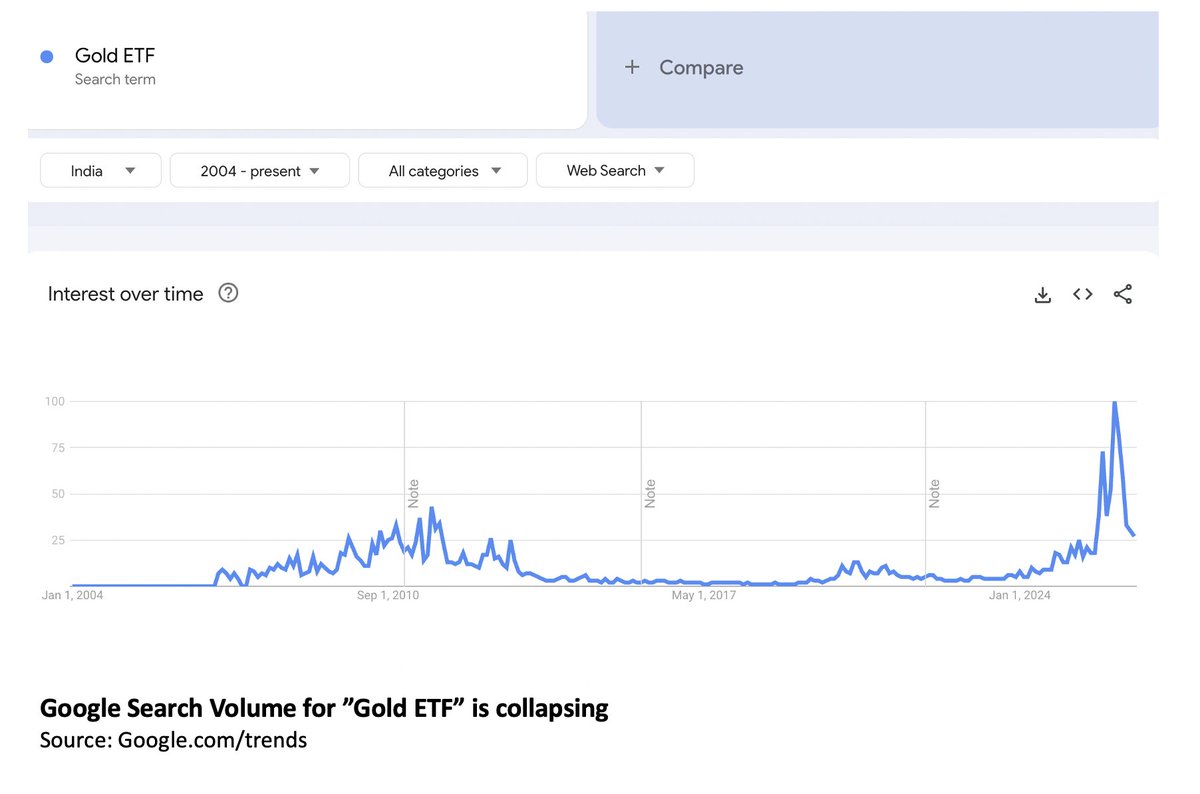
1. Gold imports collapsing: Exchange schemes very popular at Jewellers, and ETF flows dropping
2. Foreign & domestic air travel is down
3. RBI's Forex Swap facility for PSU Banks
A self-taught Irish schoolteacher wrote a book in 1854 that almost nobody read for 80 years, until a 21-year-old MIT student picked it up and realized it could be used to design every computer in human history.
His name was George Boole. The book is called An Investigation of the Laws of Thought.
Boole was born in 1815 in Lincoln, England. His family was poor. He left school at 16 to support them. He taught himself Latin, Greek, French, German, and Italian.
Then he taught himself mathematics. By 19 he had opened his own school. By 24 he was publishing original papers in the Cambridge Mathematical Journal, competing with men who had spent decades inside the best universities in Britain.
He never had a degree. He never had a mentor. In 1849, Queen's College in Cork hired him as a professor anyway.
In 1854, he published his masterwork. What he built inside it was something nobody had attempted before at this scale. He turned logic into algebra.
Before Boole, logic was philosophy. You argued in sentences. You reasoned in paragraphs. It was powerful and completely impossible to automate, because there was no formal system underneath it, just language.
Boole stripped it down to arithmetic. He showed that every act of human reasoning could be reduced to operations on two values. True or false. One or zero. AND, OR, NOT. If both conditions are true, the result is true. If neither is, the result is false. Every judgment a human mind makes, every decision, every deduction, could be written as an equation following those rules.
Logicians read it. They found it interesting. Engineers building machines had never heard of it.
For 83 years, the book sat there.
Then in 1937, a 21-year-old MIT master's student named Claude Shannon was working on a thesis about electrical relay circuits. Switches that could be open or closed. Current that either flowed or didn't.
He read Boole and understood something nobody had connected before.
An open switch is a zero. A closed switch is a one. A circuit with two switches in series only carries current when both are closed. That is AND. A circuit with two switches in parallel carries current when either is closed. That is OR. Shannon proved that every possible logical relationship Boole had described could be physically built using wire and switches.
That single insight is the foundation of every computer ever made.
After Shannon, chip designers stopped thinking about electricity and started thinking about logic. Every transistor on every processor running right now is implementing a Boolean operation. Every if-statement in every codebase is Boolean logic. Every database query using AND or OR. Every neural network threshold that fires or doesn't fire. All of it is running the algebra of a self-taught schoolteacher from Lincoln who died 160 years ago.
The strangest part is what happened to Boole at the end.
He was walking to class in November 1864 when he got caught in a rainstorm. He lectured for hours in wet clothes. He went home sick. His wife, Mary, believed in homeopathic medicine and thought the cure should mirror the cause. She wrapped him in wet sheets and poured cold water over him repeatedly.
He died a few days later. He was 49.
He never saw a transistor. He never saw a circuit. He never saw a single physical machine run a single one of his rules.
His book is in the public domain. Free to download. Most engineers use the word Boolean dozens of times a week. Almost none of them know who they are saying.
The man whose logic runs inside every phone, every server, and every AI model on Earth died soaking wet in a small Irish town, 83 years before anyone figured out what he had actually built.
Locked out of the ₹25,938 crore PLI Auto scheme, Ather Energy is tapping the Centre’s ₹1 trillion RDI fund for low-cost (2–3%) long-term financing of EV R&D. A notable policy shift: support is moving beyond manufacturing incentives toward funding technology development and commercialization.
Alright lads, listen up.
RhyGen (@rhygentech ) is hiring founding engineers in Pune.
We’re building tech that hybridizes energy for efficient operations. Currently, we are working on high-performance hybrid powertrains for commercial vehicles and are currently testing our prototype vehicle on-road and on the dyno.
We’re looking for people who like building complete systems, not just working on isolated components.
Roles we’re hiring for:
Powertrain Controls / Simulation
Working on:
* Energy management algorithms
* Hybrid control strategies
* MATLAB / Python simulations
* Digital twins for powertrain validation
* Dyno testing + data analysis
* RL-based optimisation policies for vehicle behaviour
This role sits directly at the intersection of software, controls and electromechanical systems. So if you like conjuring up alternate situations for physical systems and to see how they'd work, come join us!
Automotive Electronics Hardware
Working on:
* Full PCB design lifecycle
* Automotive electronics design
* HV/LV harness architecture
* EMI/EMC considerations
* Component sourcing + vendor coordination
* Prototype bring-up and debugging
* AIS compliance processes
You’ll own hardware from schematic to production-ready systems. Come join us should you have an innate interest in the world of Automotive Electronics!
Some general requirements:
* Physical presence in Pune
* Graduating by Aug 2026 OR 1-2 years experience
* Ability to build independently
* Comfort with ambiguity and fast-paced execution
If your idea of fun involves oscilloscopes, dynos, thermal simulations, CAN traces, drivetrain modelling, firmware debugging or spending unhealthy amounts of time understanding how systems fail, DM me.
Send:
* background
* projects/work
* GitHub/portfolio if any
* role you’re interested in
If you seem like a fit, I’ll send the application form privately.
Without research, can India hope to catch up with US/China?
First, some context.
I was in Chennai for two events. A small gathering of ultra rich investors & a larger one with thefynprint community.
In the first, Unifi GIFT team delivered a fascinating presentation. Overview:
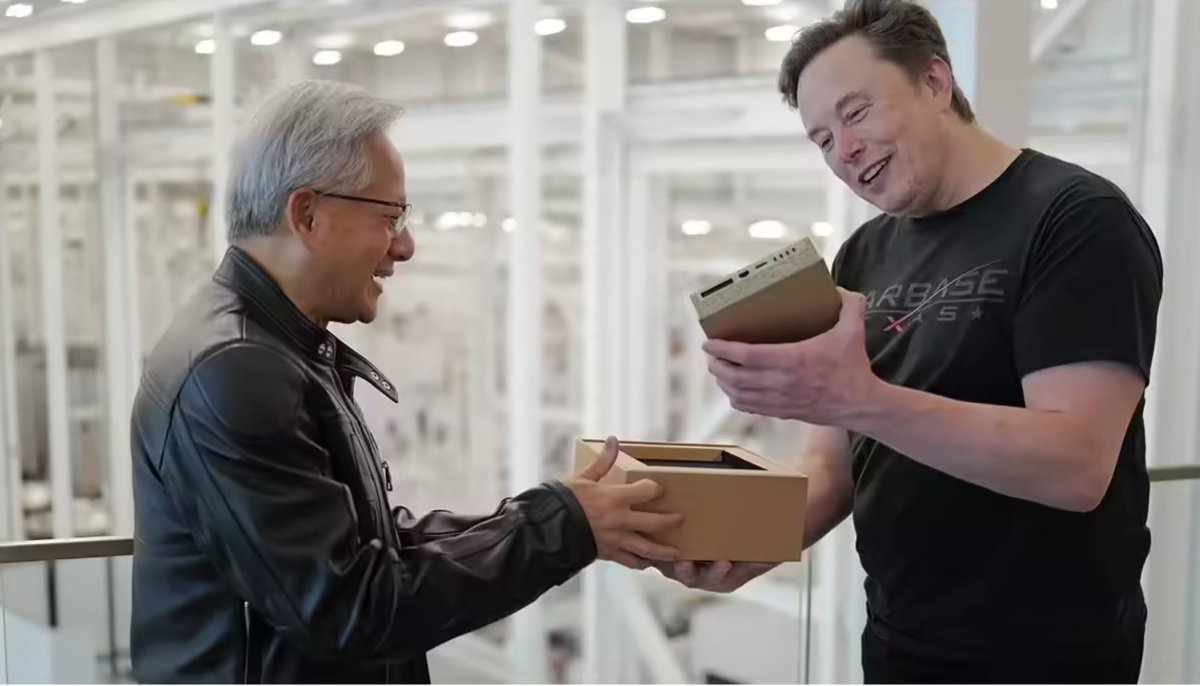
🚨Michael Burry just said Elon Musk and Nvidia's deal is built on fake numbers.
Burry published a detailed breakdown calling the entire structure "Fugazi", his word for fake.
He is alleging that billions of dollars in Nvidia chips are being hidden off balance sheets, and that American retirees are unknowingly funding the whole thing.
Nvidia, the world's largest AI chip company sold $5.4 billion worth of its most advanced GPUs, the GB200, to a company called Valor.
Valor is not a real operating business. It is a special purpose vehicle, a shell company created specifically to hold these chips and nothing else. Nvidia also invested $1.9 billion of its own money directly into Valor on top of the sale.
Those 100,000+ chips are now physically inside xAI's data center. xAI is Elon Musk's artificial intelligence company, the one that builds Grok. xAI is using every single one of those chips right now to run its AI models.
But here is what Burry is flagging.
Neither Nvidia nor xAI owns those chips on paper. Valor, the shell company holds legal title. That means $5.4 billion in GPU assets do not show up on Nvidia's balance sheet as inventory.
They do not show up on xAI's balance sheet as assets. They are legally invisible to both companies.
Nvidia gets to book the $5.4 billion as a completed sale and record it as revenue. xAI gets full use of the chips without owning them. And the risk disappears into a shell company in the middle.
Now here is where American retirees enter the picture.
Valor needed $3.5 billion in debt to fund this structure. Apollo provided it. Apollo is one of the largest asset managers on earth with $1.03 trillion under management and $834 billion specifically in private credit.
Apollo raised the $3.5 billion, packaged it into debt securities, and sold those securities to Athene.
Athene is Apollo's own insurance company. It sells fixed and indexed annuities, retirement savings products, to ordinary Americans.
When a retiree buys an Athene annuity, they believe their money is sitting in safe, stable investments. That money is now inside a structure funding Elon Musk's AI data center.
The numbers inside Athene are most alarming.
Athene holds $74.2 billion in reserves. It has moved $217 billion in assets into a captive insurer based in Bermuda, meaning those assets sit outside normal US insurance regulation and oversight.
Of the entire portfolio, 34.7%, equal to $103 billion, is classified as Level 3 assets.
Level 3 is an accounting classification that means there is no observable market price for these assets. No outside party can independently verify what they are actually worth.
The leverage sitting on top of those unpriced assets is 16 times.
Burry's says:
Every step of this structure is technically legal and publicly disclosed. But the entire thing was deliberately engineered across 8 to 12 steps to move credit risk off balance sheets and away from any market pricing.
- Nvidia books the revenue.
- Apollo collects the fees.
- xAI gets the computing power.
- And retirees sitting at the bottom of a 16x leveraged Bermuda insurance structure, holding $103 billion in assets with no market price carry the risk without knowing it exists.
This is an unbelievable piece of work by Sarthak and something that requires amplification.
Let me explain what he found, in simple terms.
Sarthak is a Class 12 student from the 2025-26 batch, one of the 17 lakh students whose answer sheets went through CBSE's new On-Screen Marking system.
He spent days reading through CBSE's evaluation tenders, scraped all 576 tenders CBSE has issued, and tracked how the rules changed across three versions of the same tender.
The core finding is that the company that won the contract to scan and grade 17 lakh students' answer sheets is Coempt Eduteck.
Coempt used to be called Globarena Technologies. Globarena was the company behind the 2019 Telangana intermediate exam disaster, where software failures led to 3.8 lakh students getting wrong or missing marks, and 23 students died by suicide.
A government committee found systemic failure and negligence. Six months later, Globarena rebranded to Coempt Eduteck.
So a company with that track record won a contract to handle 17 lakh CBSE students. Sarthak's investigation is about how the rules were rewritten to let that happen.
The tender was issued three times.
> First tender, February 2025. It existed, then disappeared from the public GeM portal. Sarthak scraped all 576 CBSE tenders and this one was missing from the archive entirely.
> Second tender, May 2025. Four companies applied including TCS and Coempt. All four failed the technical evaluation. Cancelled.
> Third tender, August 2025. Coempt won. Between the second and third tender, a series of rule changes happened, and every single one made it easier for Coempt to qualify.
Here is what changed, one by one.
01. The old rules disqualified any company with a history of abandoning work, failing to complete contracts, or financial weakness. The new rules deleted this clause entirely. Coempt's Telangana history stopped being a barrier.
02. The old rules disqualified any company that was "blacklisted earlier." The new rules changed this to "currently blacklisted." Because Globarena rebranded after Telangana, removing the word "earlier" effectively erased their past.
03. The rules required Rs 50 crore average turnover over three years. Coempt's exact average came to Rs 50.86 crore. They cleared the bar by less than 1%. Earlier, a smaller company had asked CBSE to lower the bar to Rs 30 crore for fairer competition. CBSE refused. So the bar was kept high enough to block small players, but sat exactly low enough for Coempt to scrape through.
04. Software maturity is measured on the CMMI scale, 1 to 5. The old rules required Level 5. The new rules dropped it to Level 3. Coempt is a Level 3 company.
05. The cooling-off period for engaging retired CBSE officials was cut from two years to one. This makes it easier to use recently retired insiders to influence the process.
06. The old rules required experience with large projects of at least 5 lakh students each. The new rules removed the student count and counted cumulative answer-book volume across small projects instead. Coempt has many small fragmented university contracts. This helped Coempt and hurt TCS.
07. The old rules required bidders to own their own data centre and disaster recovery centre on Indian soil. The new rules allowed third-party MeitY-empanelled cloud hosting. Coempt runs on AWS and Azure. This helped Coempt and hurt TCS, which owns its own data centres. It also means student data is no longer on sovereign, Indian infrastructure.
08. The old rules required the bidder to own or control the complete source code of its software. The new rules deleted this. Coempt's platform runs on Microsoft's proprietary IIS, which they don't own.
09. A last-minute corrigendum, issued right before bid submission, removed CBSE's own power to blacklist the firm if its software failed catastrophically. So even a Telangana-scale failure couldn't get Coempt banned from future government tenders.
10. The penalty structure shifted from punishing mistakes to punishing delays. The old rules fined the vendor for wrong scanning, merged pages, and unscanned books. The new rules dropped those and instead levied Rs 50,000 per day for delays. This incentivises rushed scanning over accurate scanning.
11. The old rules had a hard accuracy threshold, error rate not to exceed 0.5%. The new rules removed this number entirely.
12. The old rules specified proper book and robotics scanners. The new rules just say "sufficient scanners." The definition was vague enough that, as Sarthak notes, the scanning could be done with a phone on a stand.
13. On the security side, the contract required a VAPT (vulnerability and penetration test) certified by CERT-In before go-live, and a restricted beta phase before launch. The system clearly wasn't restricted, because the other researcher, Nisarga, was able to access it and find vulnerabilities four days before go-live. So the mandatory security audit appears to have been bypassed.
These are more than a dozen rule changes, all between the failed tender and the winning tender, all pushing in the same direction, all benefiting the one company with the worst track record in the field.
The security holes Nisarga found last week now have an explanation. The system was built by a vendor that was specifically allowed to skip the security certification, the source code ownership, the data sovereignty, and the quality thresholds the original rules demanded.
Following things need to happen immediately;
1. An immediate CAG audit of the tender process.
2. A parliamentary debate on the topic.
3. An independent investigation into
> Why the first tender vanished?
> Why the disqualification clauses were deleted?
> Why the turnover bar was held exactly where it was?
> Why the security level was dropped?
> Why the blacklisting power was removed at the last moment?
Sarthak, this is genuinely exceptional investigative work. Far better than most journalists with full resources ever manage. Take a bow. :)
Respected @nsitharaman ji and @FinMinIndia ,
Suggestion 1 of 3 for strengthening India's capital markets:
Long-term capital gains tax on listed equities should be abolished.
A long-term shareholder is not a speculator but a provider of patient risk capital. By investing in and holding businesses, investors help companies expand, create jobs, innovate and contribute to India's economic growth.
India requires enormous amounts of long-term capital to build world class enterprises, infrastructure and global champions. Tax policy should encourage households to move savings from passive assets, including imported stores of value such as gold, into productive businesses that create jobs, generate tax revenues and build national wealth.
The appreciation in a company's value is not created in isolation. During its growth journey, the government already collects corporate tax, GST, income tax from employees, customs duties, stamp duties and numerous other levies. Long-term capital gains are often the final outcome of economic activity that has already generated substantial tax revenues.
Most importantly, tax policy should clearly distinguish between investment and speculation. A long term shareholder is a partner in wealth creation, not merely a participant in market transactions. Tax policy should reward long-term ownership of productive businesses and distinguish it from short-term speculation.
India needs more patient capital, more entrepreneurship and more long term investing. Abolishing long-term capital gains tax on listed equities would be a powerful step in that direction.
Respectfully submitted.
What you see in this video is the blood stains of a young boy who was brutally murdered by a gang of five near the Meenakshi Amman temple in Madurai.
Drug peddlers, Sexual assaulters, and murderers have a free pass in Tamil Nadu. The State police seem to have learnt no lessons from the past, & the new TVK govt is yet to emerge from its celebratory mode and confront the grim realities unfolding on the ground.
What level to buy?
I understand from personal experience that the first question which comes to mind whenever a stock is running is:
“It already ran away… now what level should I buy at?”
You look at TD Power, this question comes up. You look at MTAR, the same question comes up again. You look at Sterlite, HFCL, KSH International, or Yash Highvoltage , and once again, the same question keeps coming back!
Trust me when I say this, I have been in that bucket myself. I would constantly look for someone to tell me the “right” buying level.
Sometimes it was Moneycontrol, sometimes it was a research report, sometimes it was a YouTube video creator, and sometimes it was a fellow investor.
And honestly, that’s natural. We are humans. Deep down, we all want some voice to reassure us, “it’s good, go ahead” or “this would work.”
But over time, I realized something important:
Any level can be a good level or a bad level depending on your conviction and mindset.
If I am a value-conscious investor, even 35 P/E may look expensive.
But if I have done deep research and built strong conviction, I may still see value even at 70 P/E.
From my personal experience, two parameters matter the most here:
Who am I?
What is my mindset as an investor?
Am I a deep value investor, a GARP investor, or a growth chaser?
How high is my risk appetite?
Is my maximum allocation capped at 5% per stock, or am I comfortable going up to 20-25%?
Am I comfortable booking losses, or do I panic when stocks correct?
How much effort do I put in?
When I study a company, how deeply do I really go?
Do I only track Revenue/EBITDA/PAT estimates?
Or do I go deeper into product-level metrics like EBITDA/ton, Price/KG, Price/MW, etc.?
Do I track global pricing trends and sector dynamics?
Have I done proper peer-to-peer analysis?
Do I know the 3-4 key variables that will determine whether the thesis is intact or broken?
The answers to these two questions will ultimately determine:
• What to buy
• At what level to buy
If I buy a stock simply because someone else said it was a good price, and it falls 15-20%, I will panic, sell, and blame the person who gave those levels.
But if I buy a stock after truly understanding the story, the theme, and the opportunity, then a 15-20% correction may actually make me more excited to add further.
That’s why the decision of what to buy, and at what level to buy, has to be a personal choice.
Anyone can help summarize information so you can consume it faster.
But the final decision is always yours.
Happy weekend!